
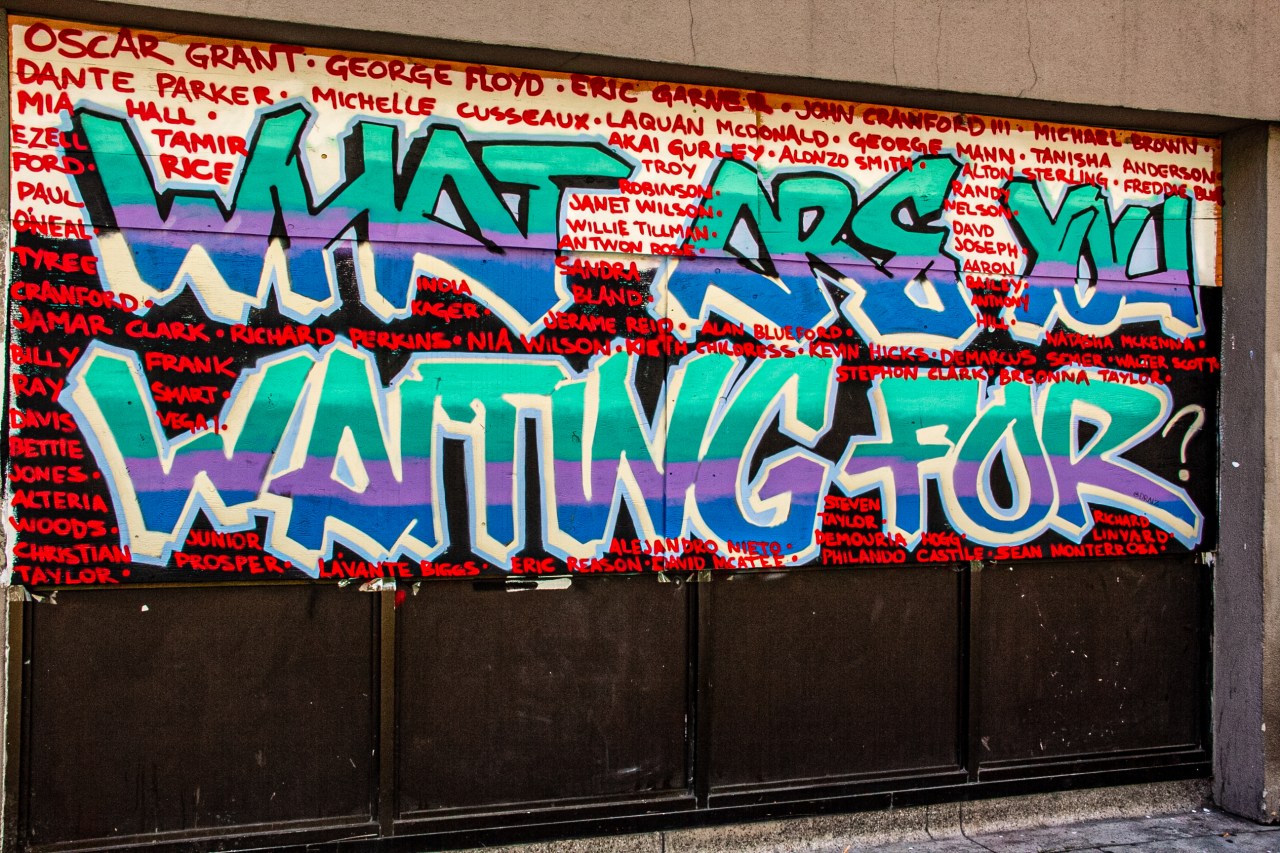
I began this post long ago in the days just following the murder of George Floyd and since that beginning it’s been subject to a score of rewrites and questions. Part of the reason is that I’ve felt the need to really get this right. The other part, maybe the greater part, is that it’s not an easy thing to admit to six decades of apathy. This is a personal story, one of avoidance and indifference, a story that should resonate with much of white America even if much of white America chooses to deny it. I’ve always considered myself a liberal and yet for most of my life I’ve avoided an open discussion of race and racism. Indifference, it’s a virus that’s not uncommon to the liberal white community. Excuses are easy to come by. If I’m not being discriminated against then how I could I possibly have a proper perspective? What could I possibly add to the discussion? What could I possibly know or say about racism if I’m not subject to it? And then of course there’s the old, “I don’t see color” or just plain, “I’m not racist.” The problem with the rationalizations is that being a part (even an unwilling part) of the group (white America) that’s doing the discriminating carries with it an obligation and moral charge to acknowledge racism and speak out. Maybe it’s just that I’ve been too damned intimidated by the topic. It’s part of that triumvirate that we avoid; race, religion and politics, right? And so this isn’t a story that I take pride in relating, but it’s a story that has to be told. It’s a story that’s demanded of white America because the fight for racial justice won’t be won until white America speaks out. It’s like the twelve steps. You have to acknowledge the problem before you can begin to solve it. As journalist Don Lemon asserts in the title of his podcast, Silence is Not an Option.
When I started this I had some vague notion of where I wanted it to go but no true direction. That’s until I heard a sports talk show in which one of the hosts said , “Race was never an issue.”
Race was never an issue. Now, I don’t mean to say that race wasn’t an issue in a universal sense. In the context of American society as a whole in the 1950’s and 60’s, race was very much an issue. It just wasn’t an issue where I grew up. And yes I was living in America; comfortable, white, suburban America. My cozy childhood corner of the nation was in the hills west of the town of San Mateo, about 20 miles down Highway 101 from San Francisco. It bears repeating that in my own little slice of America race was not an issue.
Up the highway in San Francisco, race was an issue. Across the bay in Oakland, race was an issue. It was even something of an issue in eastside San Mateo where most of the community’s Black population called home – “the other side of the tracks,” is how the saying went.














 The Life in My Years