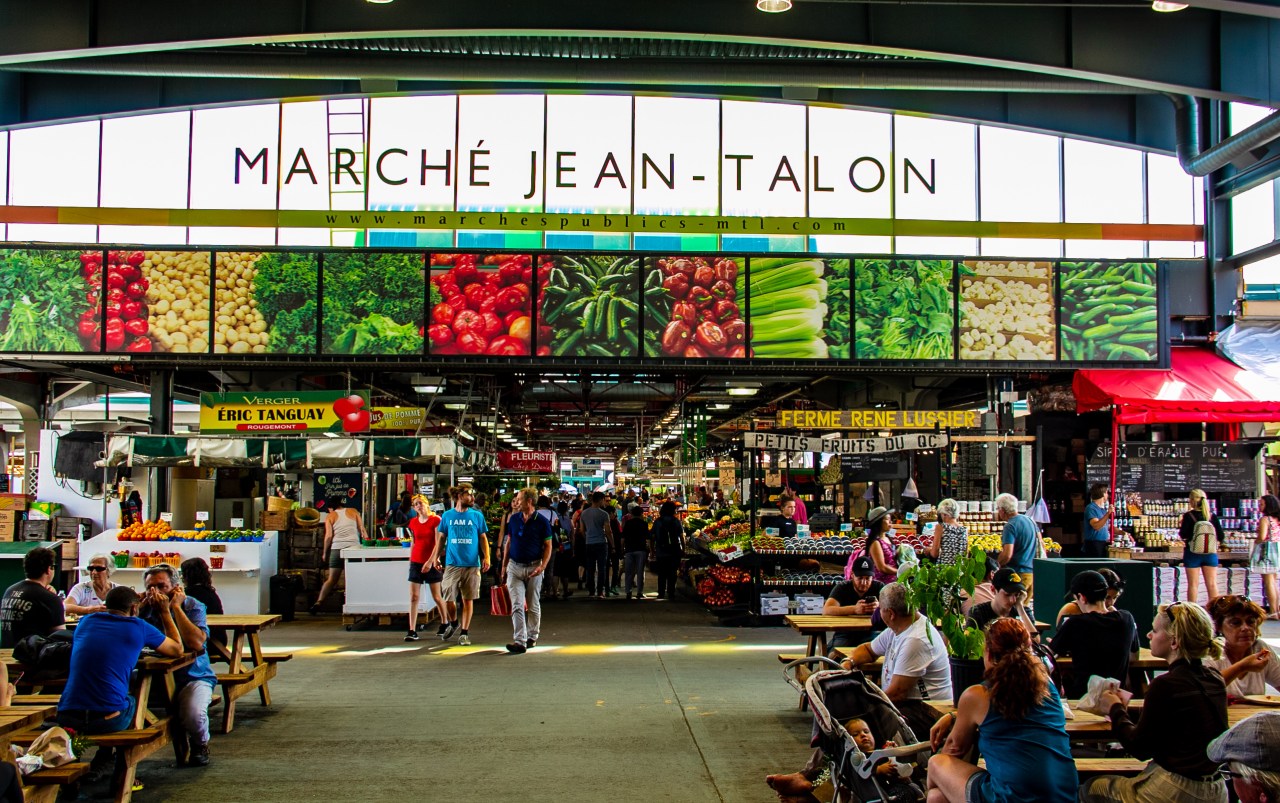
Part of our first day in Montreal was spent strolling up and down the aisles of Marche Jean Talon, a public market located in the city’s Little Italy district. Window shopping; I can take it or leave it. That is unless we’re at a farmer’s market. Then I’m all in, as I was when we went to the Jean Talon Public Market.
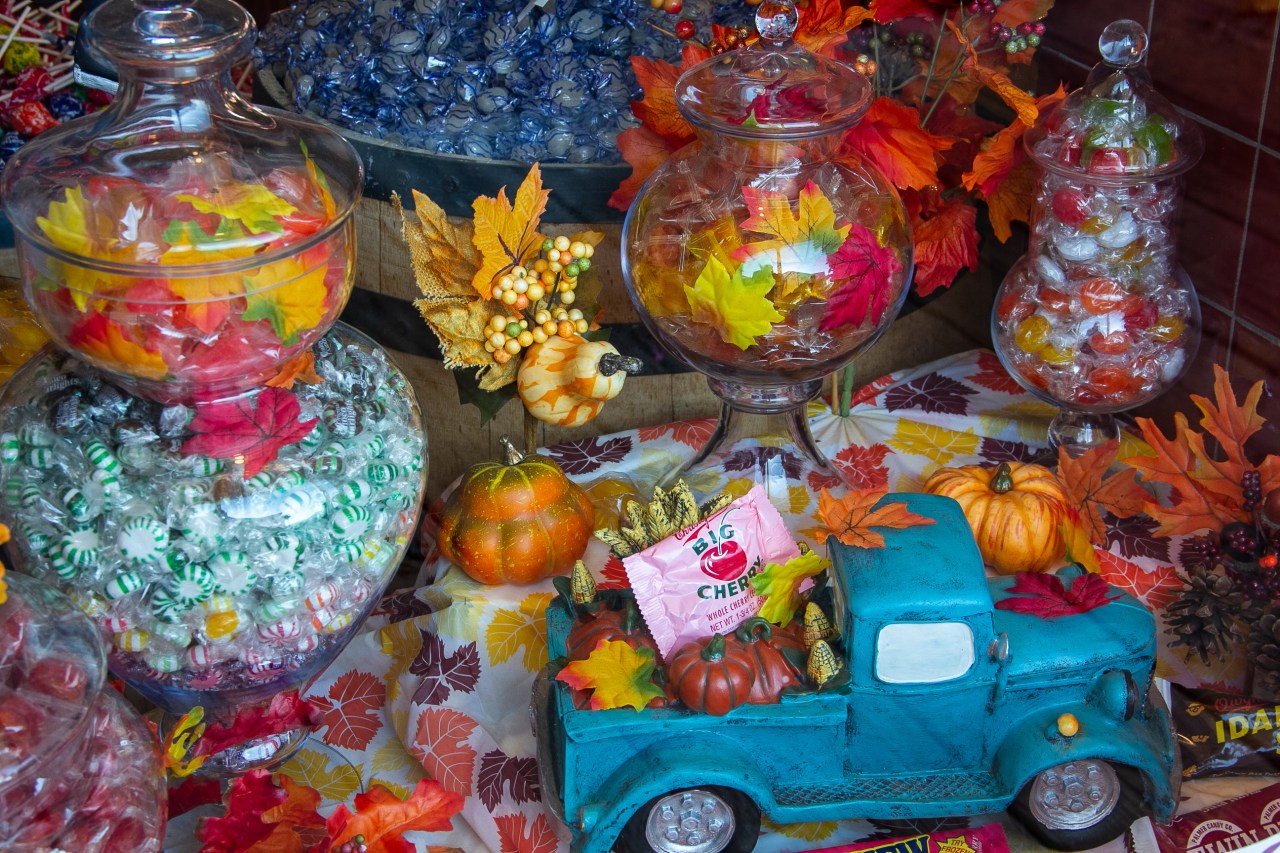
Jean Talon is a gastronomic playland, an amusement park that excites all the senses; the vibrant colors of flowers, pungent perfume of the cheesemonger, the crunch of a crusty loaf of bread, the warmth of a cup of cappuccino cradled in you palm and a myriad of tastes, from the sweet maple syrup candies to a savory crepe of mushrooms, bechamel, ham, and cheese.
Opened in 1933, Marche Jean Talon is one of Montreal’s oldest public markets.
Below: Colorful bouquets and plants offered by the flower merchants.
When you enter the gates of the San Francisco Botanical Garden you exit the urban turbulence of the city. It’s acres of quiet paths, manicured lawns and gardens with over 9000 different plants from around the world. It’s Eden in the city; Eden that is without a naked couple discussing the pros and cons of eating apples. It is San Francisco though so there’s a better than even chance that you might run across a naked couple.
This edition of Friday Fotos focuses on the San Francisco Botanical Gardens with a green theme.
This is mining country. One hundred and sixty years ago people came from around the world prospecting for riches from the earth – silver, tons of it, millions of dollars worth, lay beneath the rolling Virginia Range. The mines, except for the ones that are open for tours are all shut down but the lure of mining still attracts people from around the world. It isn’t the ore, it’s the lore; of history and frontier America. Within the city limits of Virginia City there are two mines that offer tours; interesting and informative.
Gold Hill
For a feel of history untarnished a two or three minute drive south of Virginia City brings you to Gold Hill. Gold Hill was never touched by the celluloid fame of movies and television like Virginia City so the tourists have more or less just blown it off. While Virginia City is full of history, a walk down C Street still feels like a walk through Disneyland’s Frontierland. Standing on C Street in front of the year round Christmas store sipping on your walkaway bloody Mary you can try and get the feel of a 19th century mining town but no matter how much vodka you’ve absorbed the place won’t let you fully absorb 1800’s America. Not Gold Hill though. Gold Hill feels old, a place lost in another place that doesn’t necessarily want to catch up. No souvenir shops, no cocktails to go and no staged gunfights.
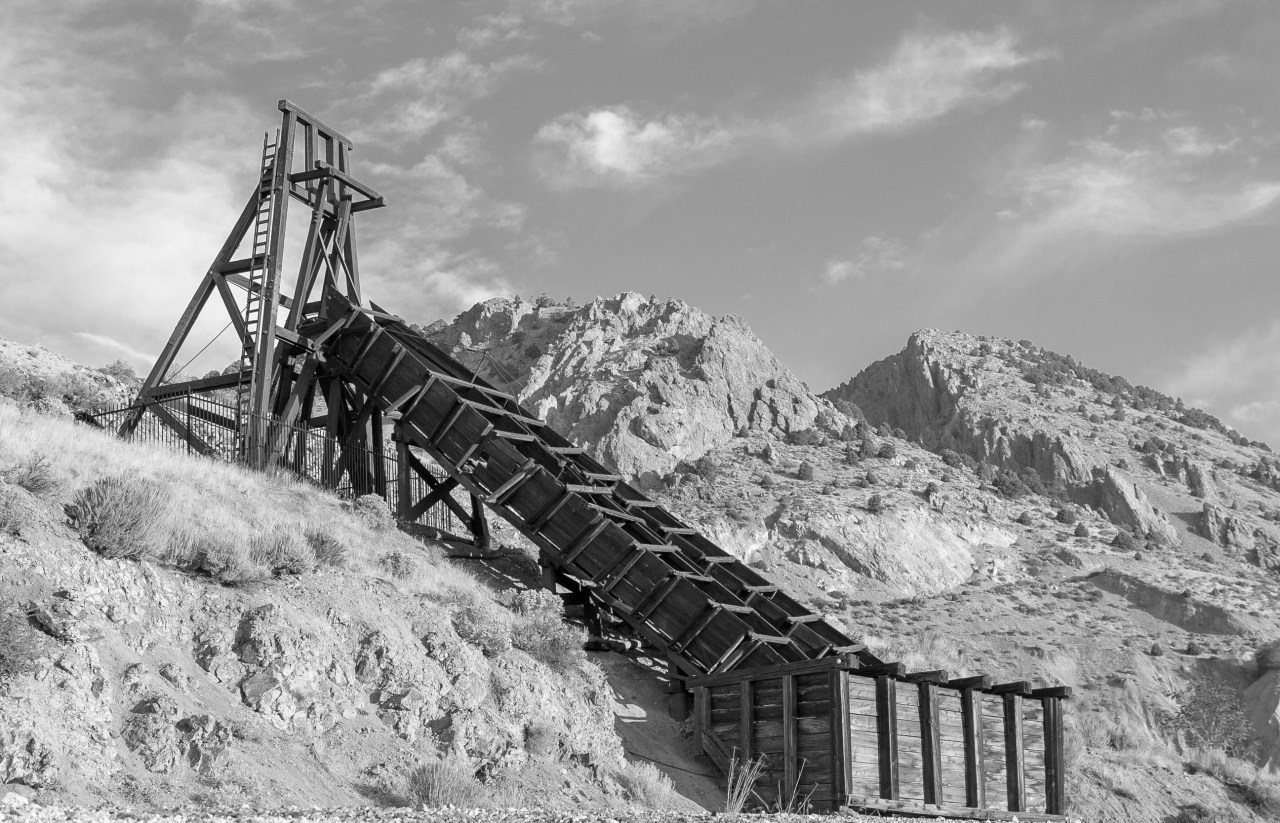
Don’t expect anything breathtaking in Gold Hill. Gold Hill requires the visitor to put in the effort to take in its aura. If you want to be force fed history go back to Virginia City. If you want to meditate on the past and feel it then drop in on Gold Hill. Find a place to park and walk past the old brick post office and then follow the slope from the old Gold Hill Hotel. Just beyond the hotel you run into the remnants of the Yellow Jacket Mine. Further up is the headframe of the New Yellow Jacket mine that was dug in 1876 to an eventual depth of 3,000 feet. Here in the company of a band of wild horses you can spirit yourself away to 19th century Nevada without the distractions of t-shirt shops and the Trump-O- Mobile just up the hill.
The headframe of the New Yellow Jacket Mine located above the town of Gold Hill. To the left of the ladder is fencing installed to keep the overly curious out of the mine entrance.
“Having been in the restaurant business, our job in the restaurant business is to be responsible for our customers’ happiness. It’s the nature of the hospitality business. You need to take care of people. You take care of customers above all others. Customers are your lifeblood.” ~ Andrew Zimmern
It almost never fails that a trip, long or short, manages to produce at least one of those, “we’ll look back someday and laugh about it,” moments. Consider the time that an airline ticketing agent booked Cora and I out of Portland, Oregon instead of Portland, Maine where we just happened to be. We still look back on that one but we haven’t reached the laughing stage yet. And so it was that lunch at a little cafe in Virginia City, Nevada provided us with another of those moments. This one managed to produce laughs before we’d even digested our food.
We arrived in the little silver mining town of Virginia City, Nevada, mid-afternoon of an autumn Saturday, eager to stroll the town and soak in the mining and wild west history. Before the fun though there are those customary duties to see to when you pull into your destination. Those are the mundanities of travel; finding your accommodations, made easier in these modern times by Google; checking in, inspecting the room and then emptying the car of anything that can be stolen in a smash and grab, also made easier during these modern times because modern day thieves brazenly eschew the bothersome formality of stealth. Why go through the time and trouble of picking a lock when a brick through the window is so much quicker and easier? After all, time lost is larceny lost.
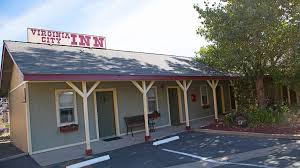
The Virginia City Inn is a quaint little single level motel on the edge of town. It’s a no frills place with simply furnished rooms, each with a different historical theme. We were assigned the Miner’s Room, decorated with some paintings of 19th century miners and a few pieces of mining implements.
At the Virginia City Inn you won’t be getting a spa, plush robes or marble counters. There are no little little bars of frou frou soap or mini bottles of designer lotions that you can stash in your bag to put in that little basket sitting in your bathroom at home (C’mon, you know you do it). The Virginia City Inn doesn’t provide a complimentary breakfast buffet like you get at the chain motels; single serve boxes of Sugar Frosted Flakes, mini yogurts resting in an ice bucket, hard bagels and scrambled eggs that look suspiciously like molded rubber.
The innkeeper at The Virginia City Inn is a friendly, hospitable and helpful guy who seems to take pride in his place and just wants to make an honest buck while making you feel at home. His is a simple, non-corporate, old school, family owned motel that provides a comfy bed, a fair sized flat screen and the comfort of knowing that you aren’t sharing your bed with creepy crawlers. It’s the kind of nostalgic place that helped shape the lore of Route 66. We checked in and then went foraging for lunch. It was at lunch that we were served a heaping helping of the “unforgettable moment.”
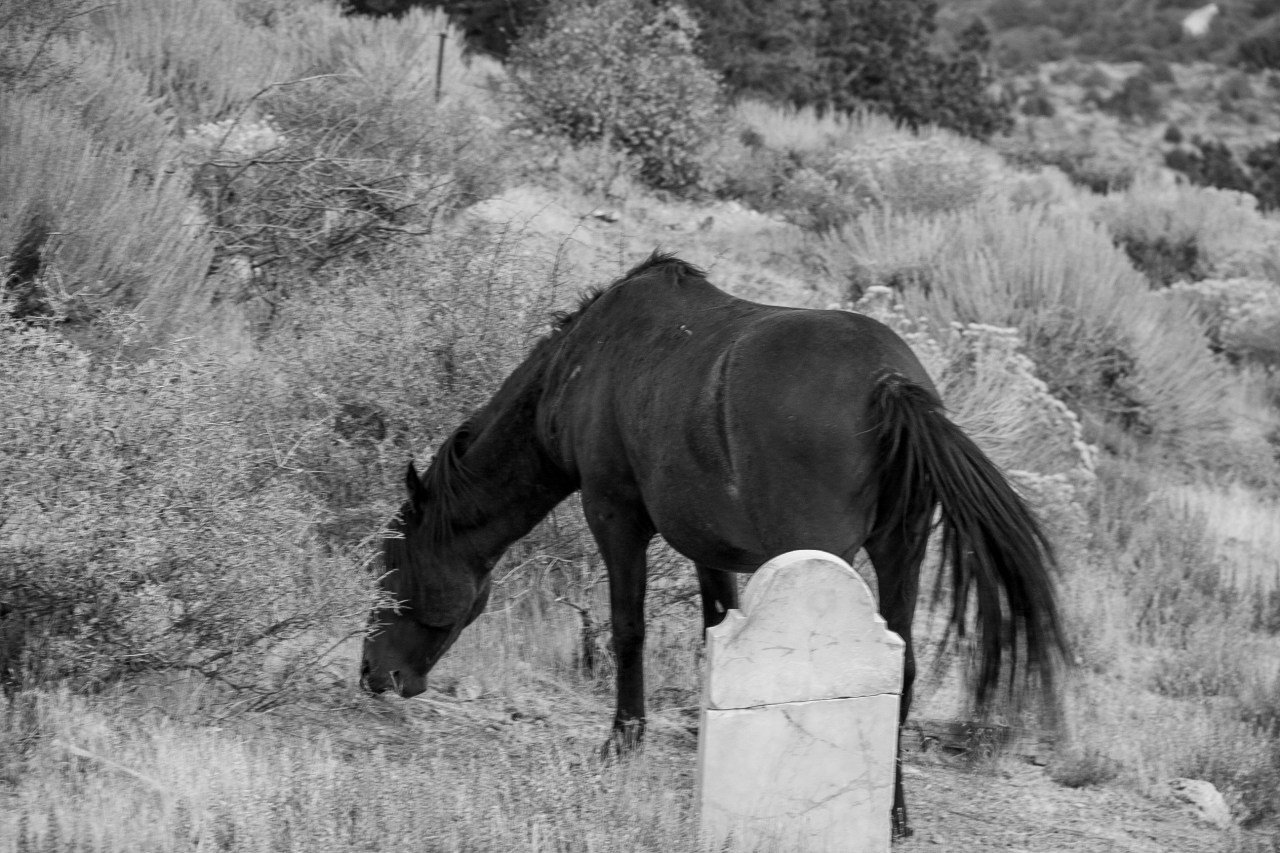
For someone like me who’s had a lifelong fascination with the American West it was an enduring site; a look back at a scene that was surely played out time and again over a century ago in places like Deadwood, Tombstone or Dodge City. This time it was right in front of me in Virginia City, Nevada a former mining town with its own wild west credentials. While photographing the cemetery I saw, just downslope, a wild horse wandering among the decaying gravestones, stopping occasionally to graze on the yellow and gray patchwork of brittle sagebrush.
I wasn’t in love with the shot that presented itself from where I stood. Even with my long lens the lighting was far less than ideal. I needed to be on the other side of the horse, and hopefully closer. The photographer’s dilemma of taking a chance with the sure shot that I had or get greedy and try to position myself for a better one. There was the possibility of that frameable photo or of the horse moving on and taking the opportunity along with him. I opted for greed and took a long circle around the horse, managing to get within about 20 yards of the animal, still ambling around the gravestones. The horse continued to graze pausing now and then to glance at me as if making sure that I wasn’t intruding into his no fly zone. At times I wonder if these horses have it in their minds to patiently tolerate we humans before deciding that they’ve given us enough of an audience before trotting away; “Hurry up and get your picture taking done.” I got some shots that I’m not entirely thrilled with but still they are iconic, calling up a uniquely American story.
Below: This trio of horses meandered through the cemetery grazing on the sagebrush. Note the wound (common on mustangs) on the left side of the black horse.
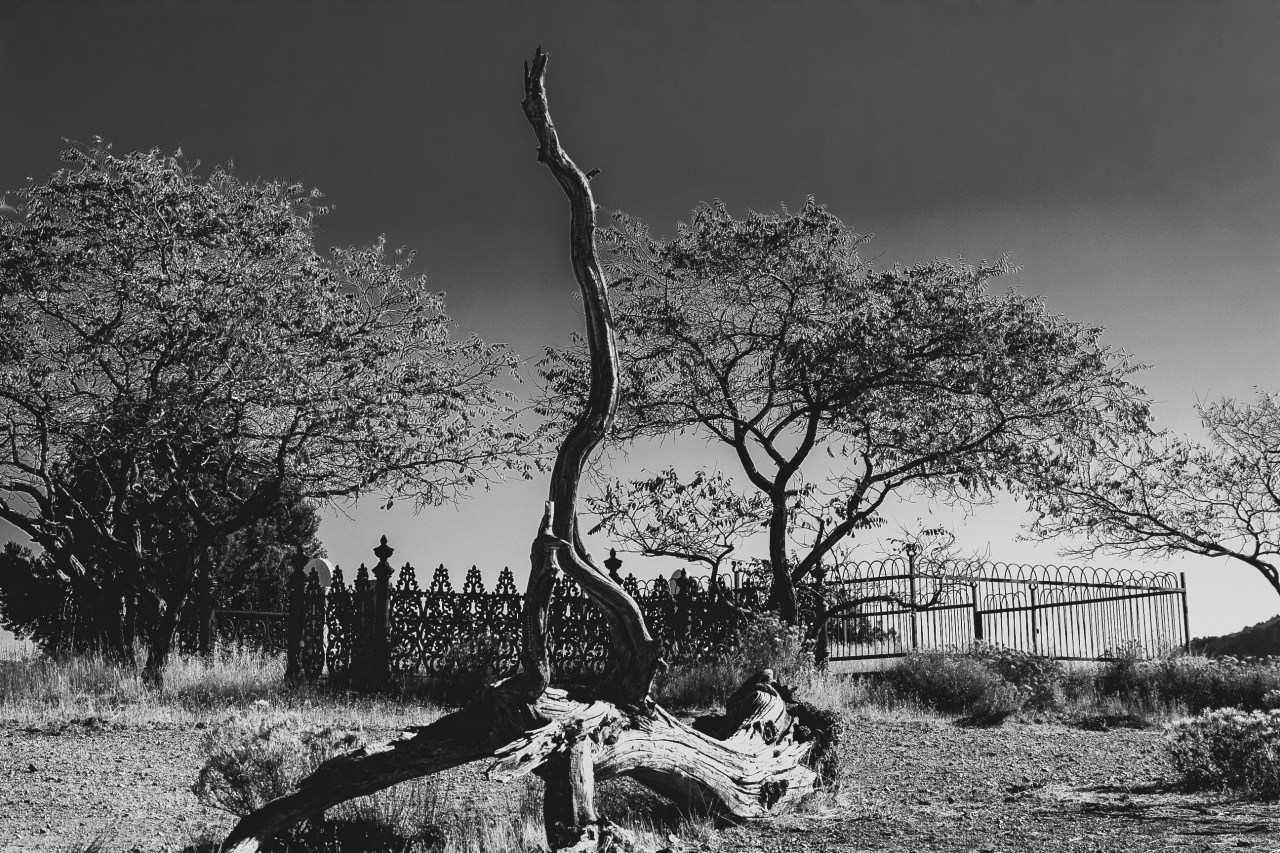
Note: Photographs were all shot in color. Many of the photos shown in this post were edited for color effects or in monochrome.
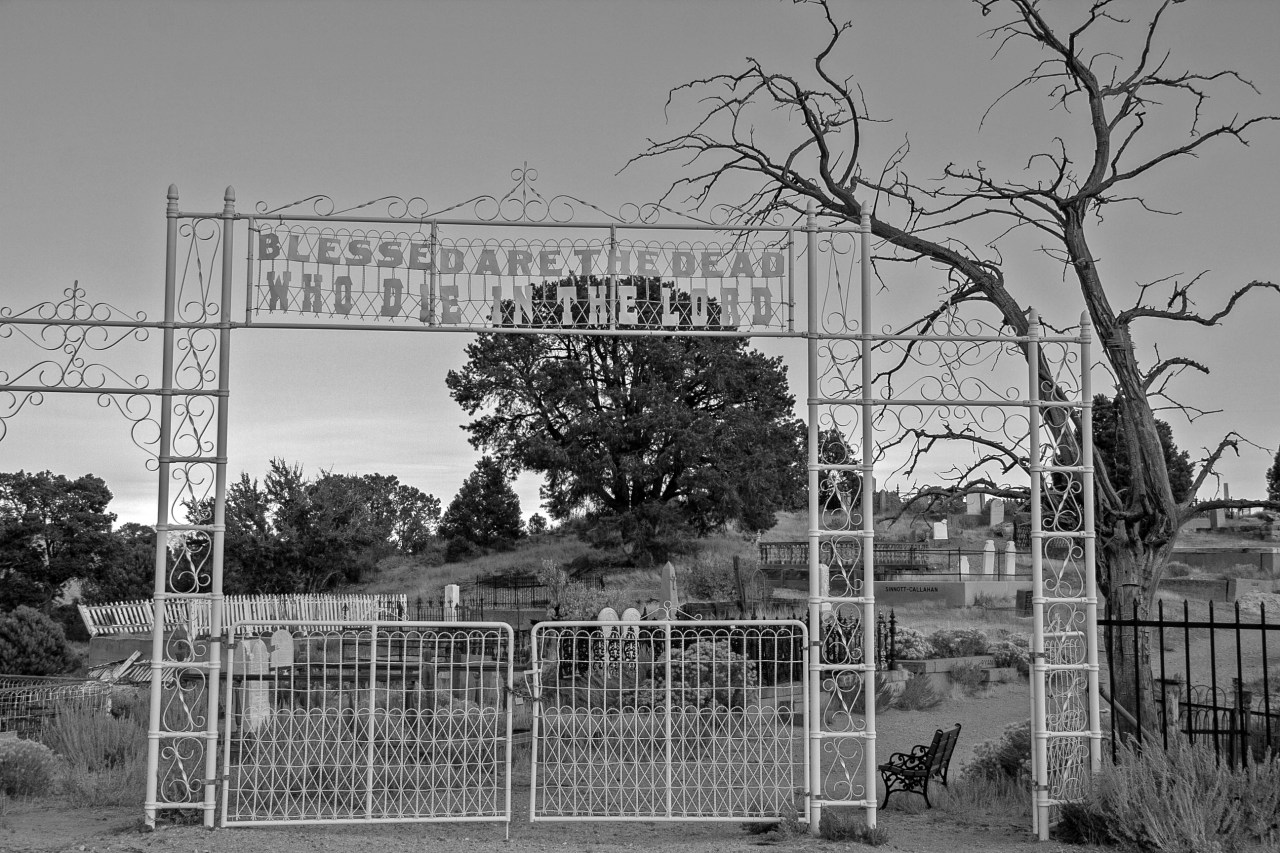
The name of the place is Silver Terrace Cemeteries. It’s located on a section of rolling hills on the northeast corner of Virginia City. As you head north out of town just before C street turns into Highway 341, a winding two-lane road that was carved through the rugged, rocky hills you wouldn’t even know there’s a cemetery but for the almost nondescript green sign that points to the right: CEMETERY.
Silver Terrace; seems almost a misnomer to me. It’s hardly terraced, more like undulating hills weaved together by foot paths. The silver part? That’s easy. Virginia City exists because of the precious metal discovered in this area in 1858 and again in 1873. But for silver Virginia city wouldn’t have dotted the map.
Still Silver Terrace sounds more like a retirement home; the place where you bide your final time above ground. “Make an appointment to see Silver Terrace Retirement Community today. Our amenities include a pet friendly environment, a fitness center, self-improvement classes, shuttle services and landscaped outdoor courtyards with fountains and gazebos.” In a perverse sort of way Silver Terrace Cemetery is a retirement home; the last one. Nowhere to go from here.
Contrary to what the green sign tells you Silver Terrace is known by the plural rather than the singular. Silver Terrace is a collection of cemeteries, each occupying a section of the rolling hills and each dedicated to a particular civic, fraternal or religious group; Masons, West Coast Pioneers, Knights of Pythias, Improved Order of Redmen, Firefighters, Roman Catholic and the city and county.
“Even the devil would be homesick in Nevada.” ~ Mark Twain
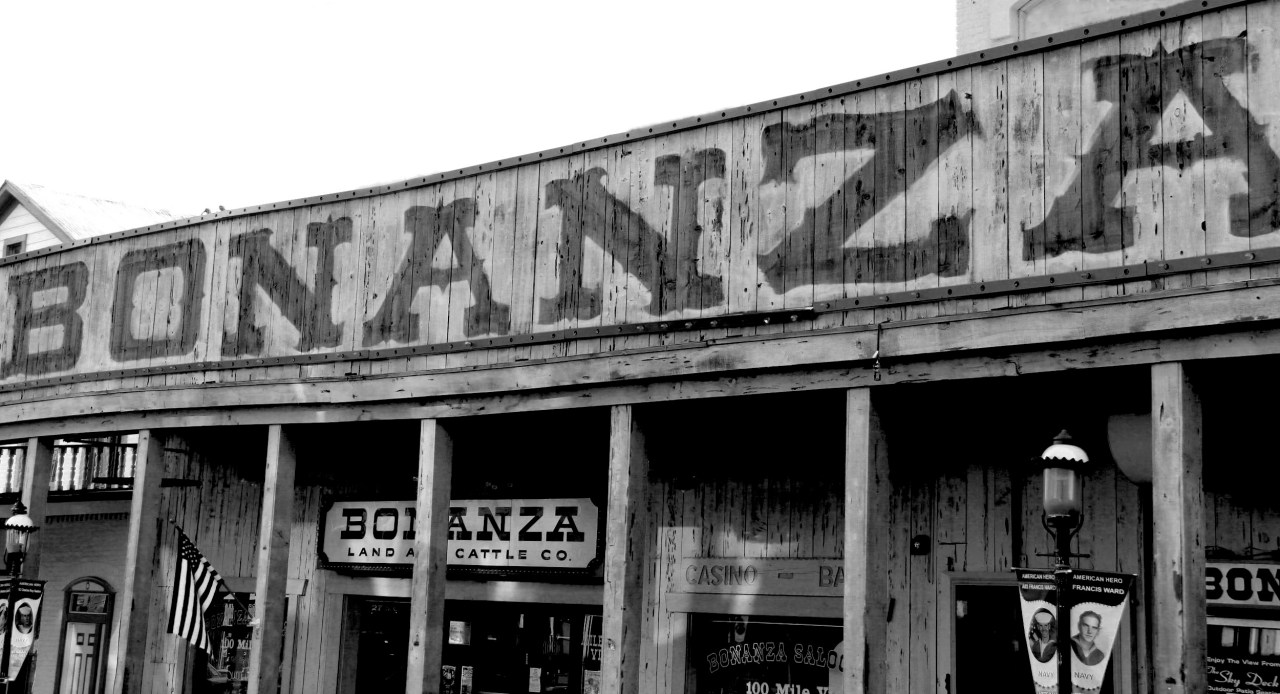
Bonanza: a situation in which people quickly become very rich, successful, or lucky. ~ Macmillan Dictionary.
“I’ll have a bloody Mary to go please.” Did I hear that right? Cora and I were having lunch in a little Virginia City cafe when I overheard the customer at the counter ordering what my dear aunt Bonnie often referred to as “a traveller.” Sure enough the man left with a cocktail in a plastic cup – just like a frappuccino, only more fun. Take that Starbucks. Virginia City is indeed a unique and interesting little town.
Tucked in the Virginia Range of western Nevada’s Storey County, with Mount Davidson looming above is the little silver mining town of Virginia City. It’s a solitary little place, the nearest population centers being Carson City 16 miles to the southwest and Reno 26 miles northwest. As soon as you leave the town itself you’re in rugged country; hard, rocky and dry, patched with a tattered rug of sagebrush. In an apparent afterthought, nature threw in a few pine trees for variety.
But a close look past the first impression of parched, flinty isolation reveals a unique beauty. The cliffs and crags don’t limit themselves to the monotony of browns and grays but often radiate reddish and mahogany tones splashed with the bright yellow of blooming sagebrush. At sunrise the hills and bluffs gleam with the golds and yellows of the new day.
Sunrise lights up the bluffs of The Virginia Range
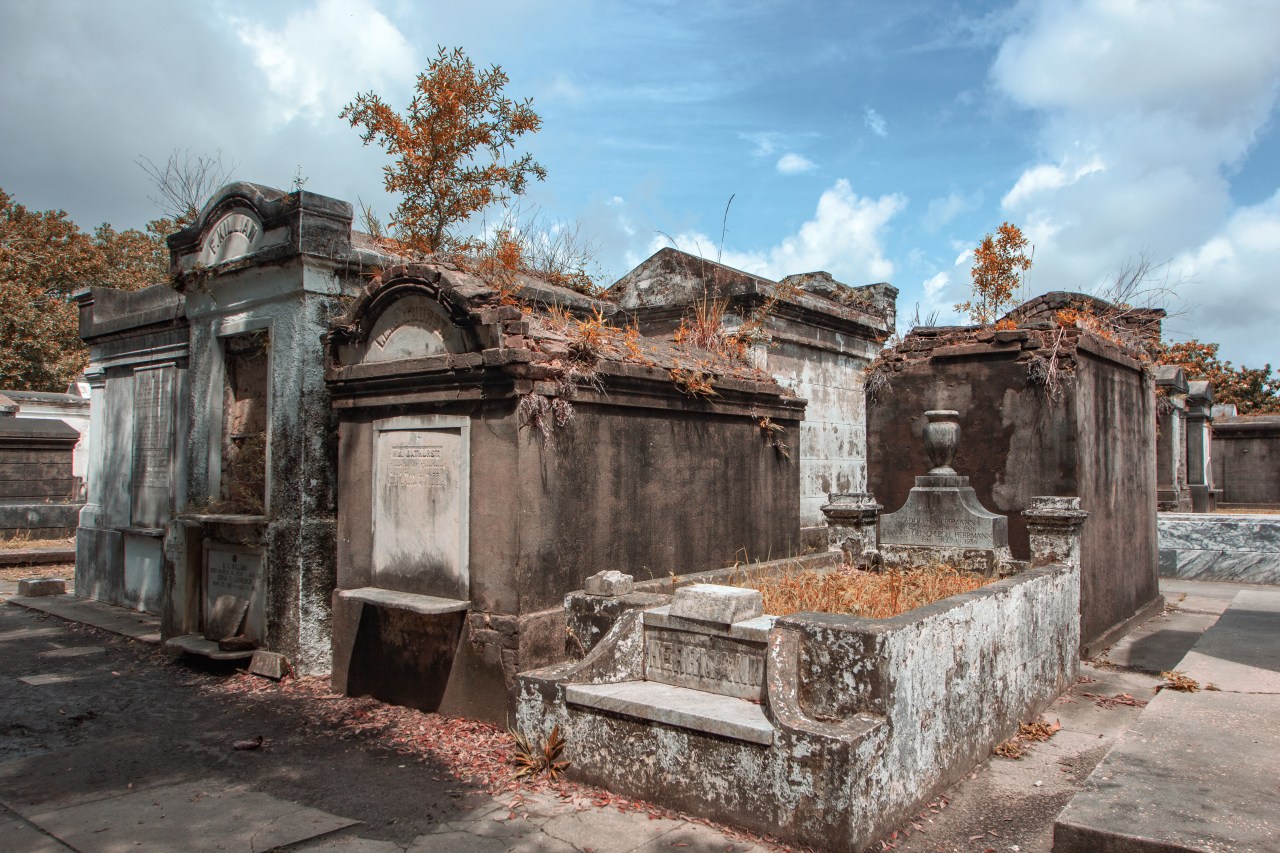
Cora and I strolled the “streets” of Lafayette Cemetery during our visit two years ago. A year later I chronicled our visit to Lafayette Cemetery. Here is a revisit to that city of the dead that was founded in 1833 and to this day still welcomes new residents. This post reprises some photos from the previous posts along with some new images. Some of the images in this and the previous posts are as originally shot, either in color or monochrome. Others have been edited to depict different moods.
New Orleans’ Garden District is a historic neighborhood that dates back to 1832. In the midst of a district noted for its many historic old mansions is one of the small “cities” within New Orleans. Those are the cities of the dead, the historic cemeteries that dot the Big Easy. You can do bawdy Bourbon Street, the music clubs on Frenchman Street, go steamboatin’ on the Mississippi River and have a beignet at Cafe du Monde but if you don’t visit one of NOLA’s cities of the dead you’ve missed out on one of her most fascinating attractions.
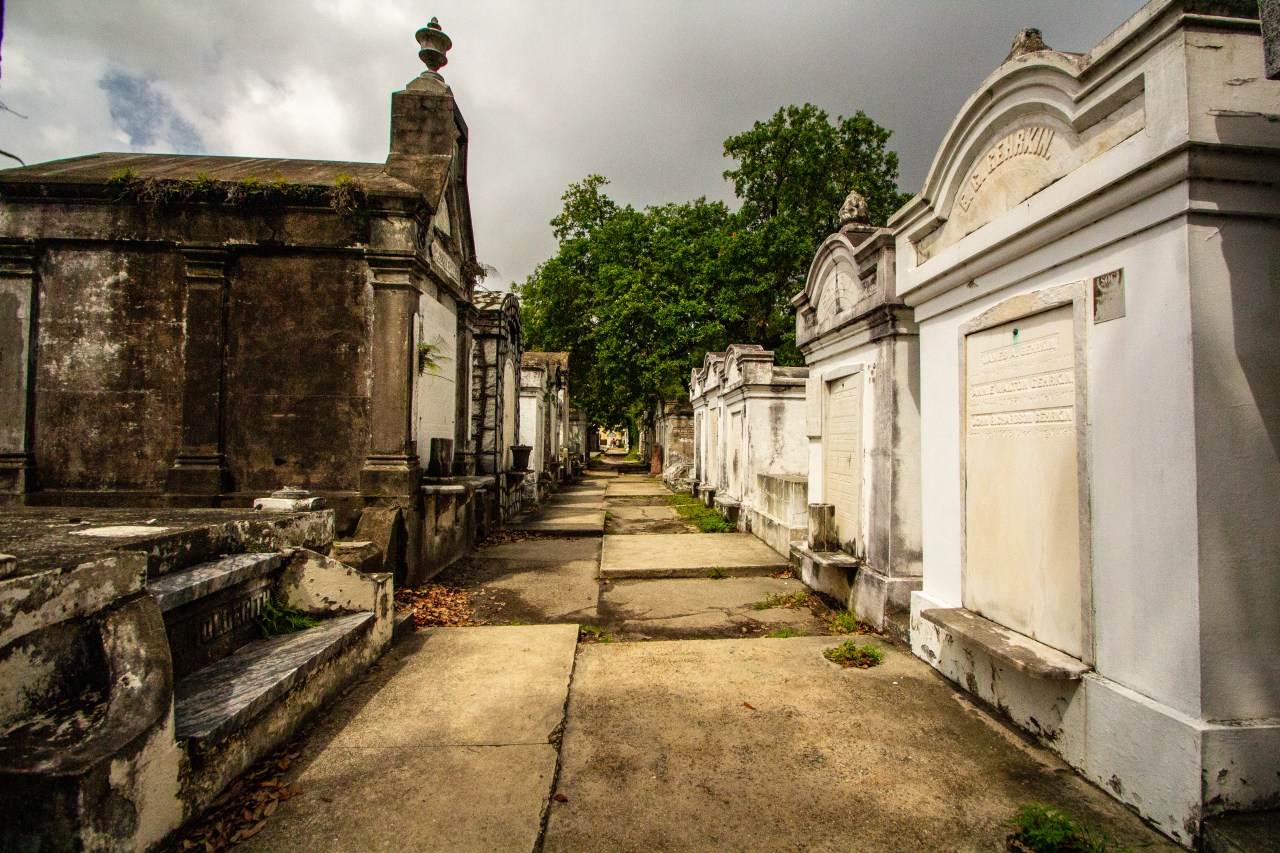
Lafayette like NOLA’s other cemeteries is indeed a city. The buildings are the eternal homes of the departed. Since New Orleans is below sea level it was necessary to build above ground resting places. Wealth and poverty determined the size and embellishment of these everlasting homes.
The cemetery is laid out in a grid plan with “streets” or “lanes” that run at right angles forming city blocks of buildings just like many typical cities.
Note: Some of the photos in this post were taken with my phone and others with my camera so the quality and consistency is not what I would normally post. The photos are a necessary ingredient to be able to fully appreciate the story.
Cora and I were just pulling out of the historic silver mining town of Virginia City heading north to Reno. We had just left our motel and passed the old fourth ward school building when we saw a small band of wild horses grazing just off the road.
It’s October, the month of Halloween and the start of the more solemn Day of the Dead. As a tribute to those holidays I will be posting The Cities of the Dead, stories and photos of various cemeteries. A former co-worker once reacted in shock when I told her that I’d visited a cemetery in New Orleans. Macabre, she thought. Old cemeteries are fascinating. They tell stories of people and their times.
Rue St. Jean was our evening hangout during our stay in Quebec City. St. Jean is a lively, eclectic mixture of restaurants, shops; boutiques, bars, churches and history. You can do some shopping, have a quick drink at Bar Le Sacrilège where the seats are church pews; dine at one of St.Jean’s many restaurants; people watch while enjoying some gelato and then close out the night listening to some live music at Fou-Bar. The next morning you can ask forgiveness for your sins at Notre-Dame de Québec Cathedral-Basilica. It’s all there. And in the midst of all the lively goings on is a cemetery – a fascinating old historic graveyard.
During the early 19th century, Quebec City was one of the most important ports in North America for immigration from Great Britain. By the mid-nineteenth century nearly half of Quebec City’s population was English speaking. In need of a cemetery to serve the Anglican and Protestant community, St Matthew’s was opened for it’s grim business in 1771. The oldest cemetery in Quebec City, St. Matthew’s is the eternal home for some of Canada’s earliest settlers.
Looming over the cemetery is St. Matthew’s Church which had it’s beginnings in the early 19th century when an Anglican priest celebrated mass for parishioners in the gravedigger’s house. Later renovations that included arched windows and a dome officially turned the old home into a chapel. The chapel was destroyed by fire in 1845. A new chapel was erected in 1849 with a capacity of 500. Between 1870 and 1882, architect William T. Thomas designed changes that transformed the chapel into the church that now presides over the graveyard.
During the 20th century the city’s Anglican population began to dwindle and in 1979 the city was asked to take charge of both the cemetery and the church. With their acquisition the church was turned into a library and the graveyard was designated a city park.
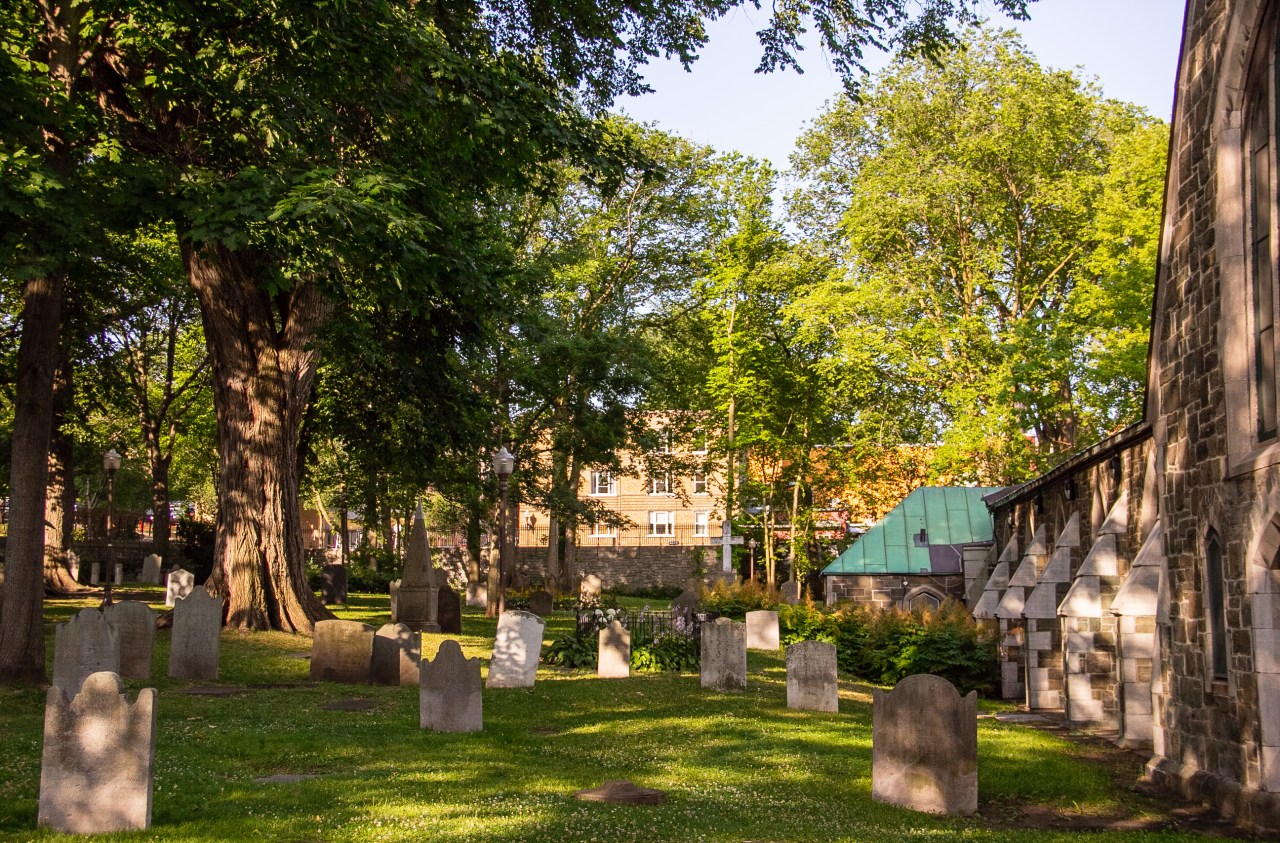
The park is a hangout for locals who meet and chat on stone benches under the many ancient trees. Dogs chase balls on the patches of grass, weaving around the many old tombstones that still remain.
I paid the park an early morning visit with my camera and then again with Cora one evening just before heading to dinner.
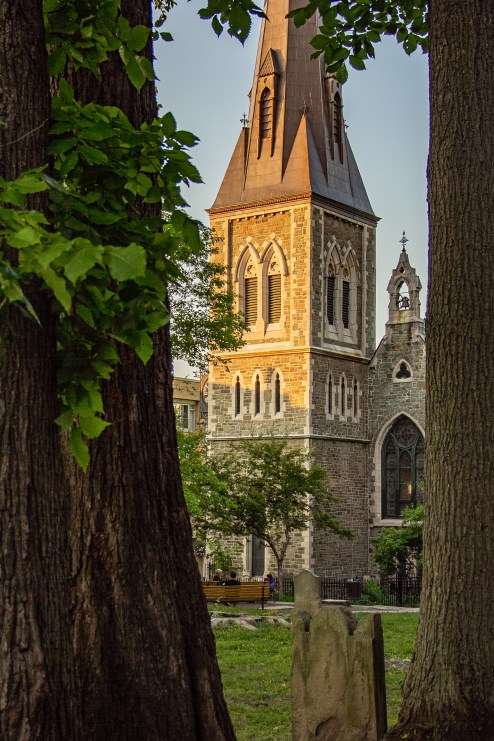
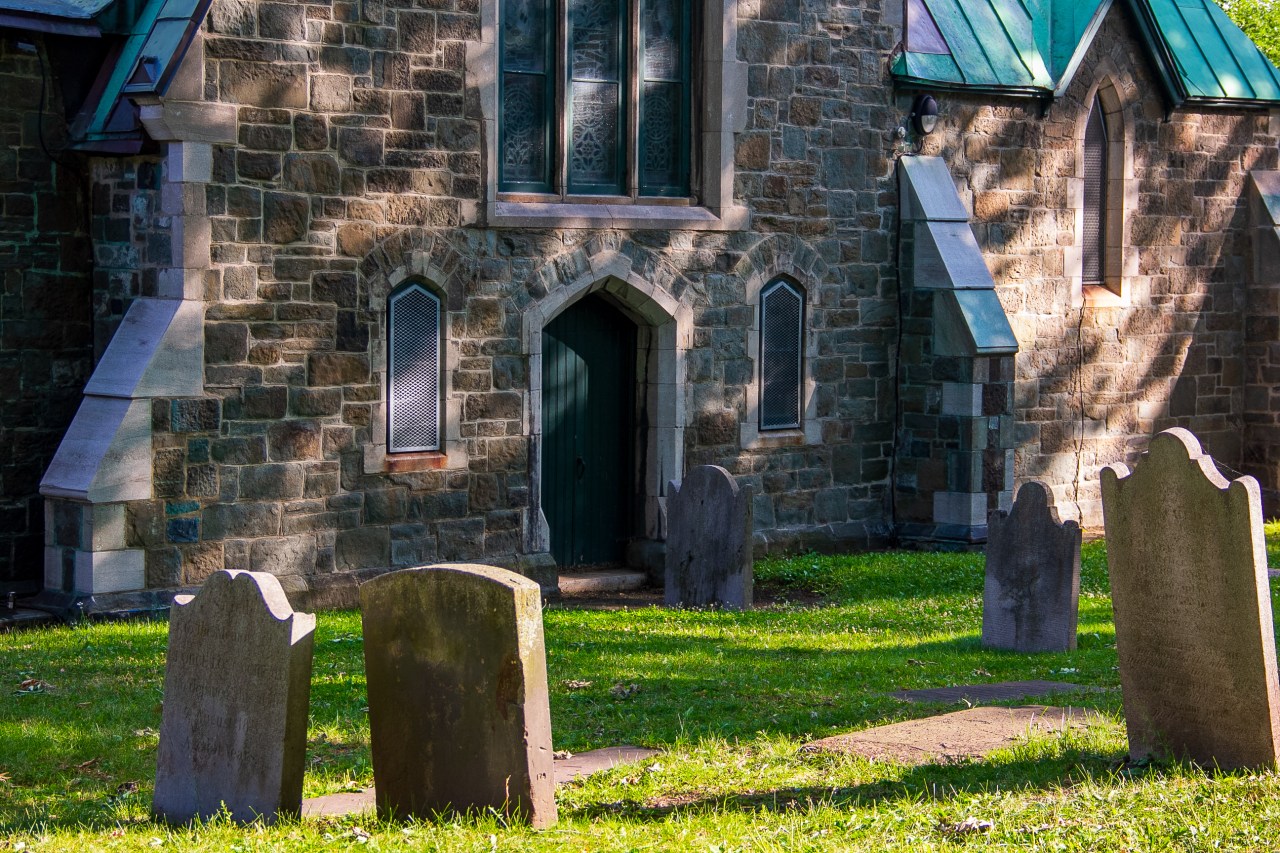
Above, aglow in the evening light, St. Matthew’s church is framed by a pair of old trees in the former cemetery, now park. In the two photos below, old grave markers flank old St. Matthew’s.
There are 314 gravestones in St. Matthew’s Cemetery representing 580 souls. The cemetery is the final home for some 6,000 to 10,000 people. However, given the limited space available people were buried in layers. So many residents yet so few gravestones. Why? Most of those buried in the cemetery (or their next of kin) would not have been able to afford a monument.
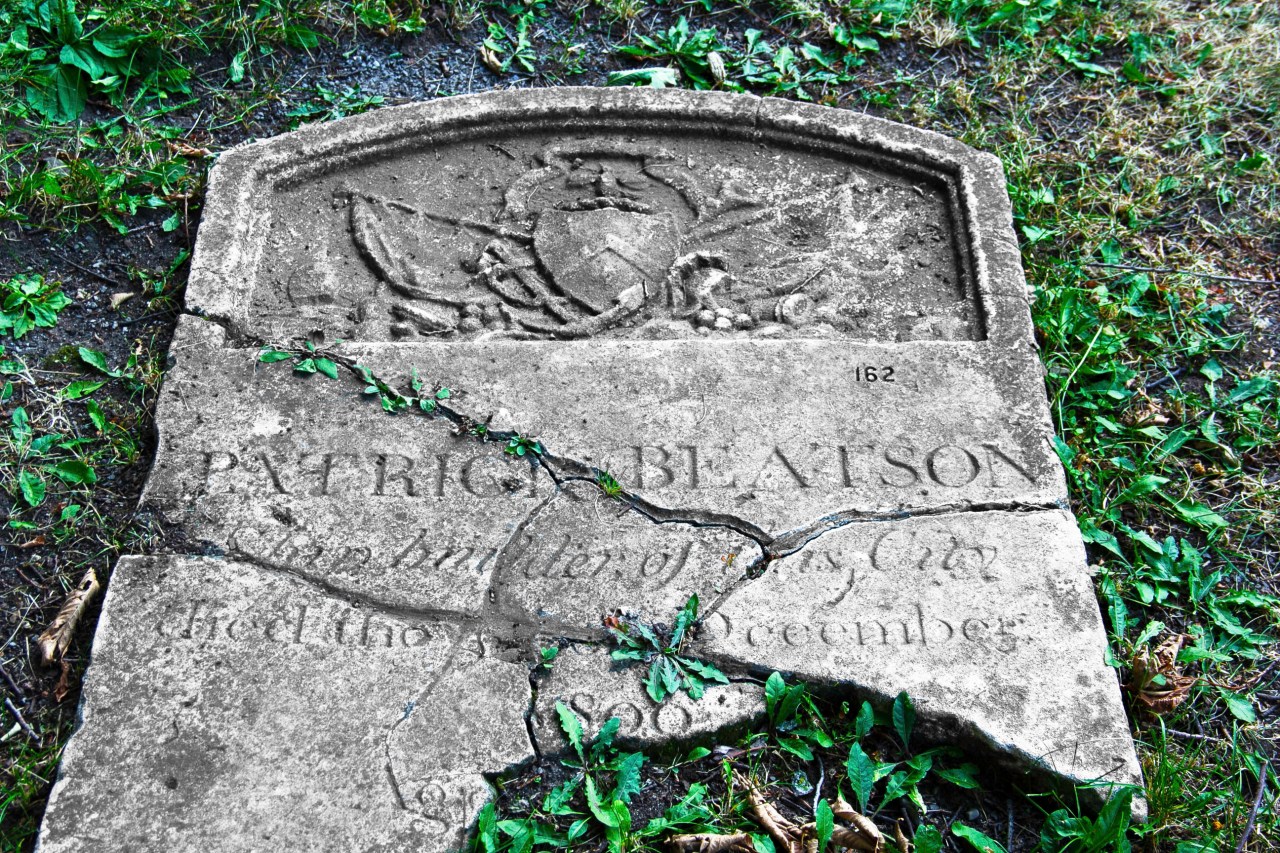
As with any cemetery the markers tell stories of life, death and the occupations of Old Quebec’s residents. Many of the markers are the victims of time and weather; broken, cracked, tilting and inscriptions worn.














 The Life in My Years