The Life in My Years

An anthology of life

“The average dog is a nicer person than the average person.” ~ Andy Rooney.

The San Francisco Bay Trail is an ambitious work in progress; a planned 500 mile long hiking and cycling path encompassing the entire San Francisco Bay, touching all nine San Francisco Bay Area counties and 47 cities. To date, 350 miles of the trail are complete. In nearby Pinole the Bay Trail takes flight as a bridge that rises up in a curving arc from a waterfront park. The bridge passes high over the Pinole wetlands and the Union Pacific railroad tracks providing a sweeping view of San Pablo Bay and the Marin County hills. With just the right sunset, San Pablo Bay is transformed into a colorful sheet of rainbow sherbet colors. The Pinole bridge and the Bay Trail are frequent courses when I go running with my dog Lexi.

On one recent Saturday, Lexi and I were just completing mile five, descending towards the end of the bridge into Waterfront Park. We approached a man walking in the same direction with his Golden Retriever. The man heard us coming from behind and pulled his companion a little closer allowing us ample space to pass. As Lexi and I passed and rounded the final bend dropping us into the Waterfront parking lot I saw a loose black lab mix just as he spotted Lexi and I.

As the dog barked and bolted toward us I slammed on the brakes, “Oh shit.”

The dog’s owner called the dog and the dog brushed the man off as if he were an annoying flea, then took a quick sniff at Lexi and rushed at the man and the Golden. I called out to the offending owner that there’s a reason for leash laws. The man with the Golden tried to shoo away the black dog who’d stopped him and his dog in their tracks.
“Go on get outta here. Hey,” he shouted at the owner, “call your dog.”
My run was on hold because to continue running would’ve just had the loose dog chasing after us. “Call in your dog.” I shouted.

The paunchy man with a wise guy grin called back, “Take it easy.” Here’s where he applied the usual inconsiderate dog owner bromide. It’s the one with multiple choice excuses. “Don’t worry he’s (fill in the blank); just playing / just a puppy / just saying hi / just a little excited / just being playful. My favorite though is, “He’s never bitten anyone before.” The options are almost endless but the one thing that they all have in common is they never include the words I – am – sorry.

Instead of apologizing for the doggy ruckus he caused he called me and the other man “a couple of drama queens.”

The other man was still trying to shed the black dog from his own, “You see what happens? Call your dog.”

“Take it easy drama queen.”
We’d now reached that point in which any chance for a calm discussion about dogs, leashes and leash laws was just so much dog poop. I asked the man if he was special. “You must be special. The laws don’t apply to you I guess.”
“Shut up old man.”
Old man? Did he just call me old man? Only one person calls me old man and that’s my wife – the old woman. Of course you know mister, this means war.
“I might be old but at least I’m not hiding a basketball under my shirt. Oh wait, there’s no courts at this park so that can’t be a basketball. You’re just fat.”

More words, a good many of them bad and beginning with the letter “F” were exchanged as I walked out of the park and he got in his car. Lexi and I started running again.
“Have a heart attack old man!” he called.
“Have another donut tubby!” Continue reading

“Pardon my French” is a common English language phrase ostensibly disguising profanity as words from the French language.

Québec is a predominantly French-speaking province in eastern Canada with 2 vibrant cities in its south, connected by the Chemin du Roy highway along the Saint Lawrence River.
~ Wikipedia

Prior to our trip to Quebec Province I was told by a fellow, and in no uncertain terms, that I would have to “parlez vous Francais” in order to get by and get around. It turns out that what he told me was a canard and I don’t mean French for “duck,” I mean English for fabrication. That’s a good thing because Cora and I didn’t spend but about 5 minutes trying to learn French.

Along with Spanish, Italian, Portuguese and Romanian, French is one of what are called the Romance Languages. Cora being familiar with Spanish couldn’t bluff her way into French because while they’re all derived from Latin the similarities seem fewer than the differences. So she basically said the hell with it, or as the Quebecois might say, “l’enfer avec ça.” I wasn’t much better but I did make the minor effort of an occasional “bonjour,” and “merci.”

Continue reading

North Hatley is located in a corner of Quebec Province known as The Eastern Townships (Cantons de l’Est) which rubs up against the borders of Vermont, New Hampshire and Maine. Starting about 50 miles east of busy Montreal this area is a quiet area of mountains, green forests, vineyards and picturesque villages. Well, quiet if you don’t count the tourists and visitors from Montreal looking to get away from it all and relax.

The village North Hatley, 83 miles east of Montreal, is like something that might have jumped out of a Rick Steves’ dream for its quaint colorful charm. Cora and I took the side trip to North Hatley on our way to Quebec City. Located on Lake Massawippi, North Hatley’s population is listed as 750 but on any given day that number fluctuates much higher if you throw in the tourists.

On our way to North Hatley we stopped at a winery, Le Cap d’ Argent that was recommended by Fodors. We took away a dessert wine called The Archer, a blend of red wine, brandy and maple syrup, because what’s Canada without maple syrup.

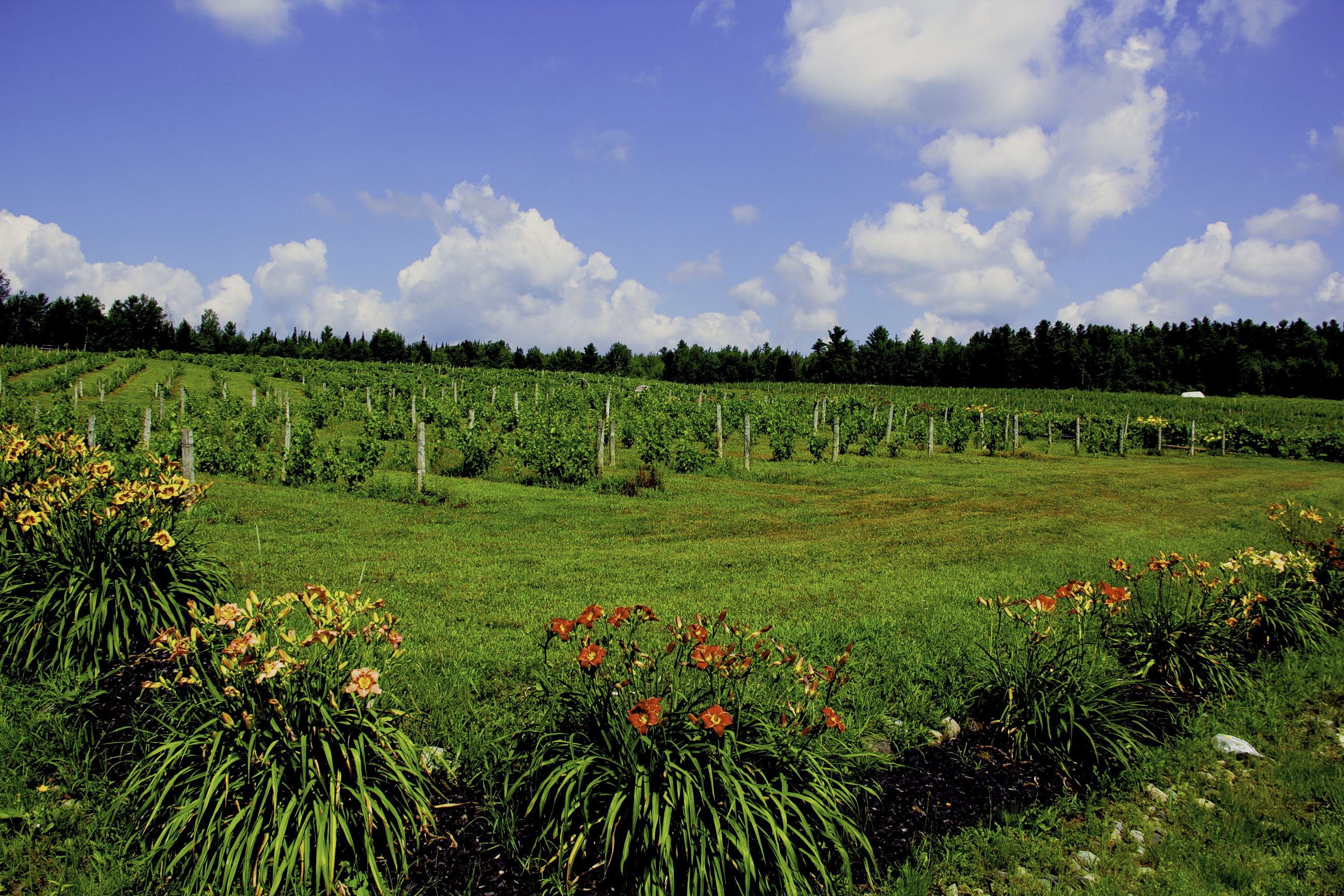
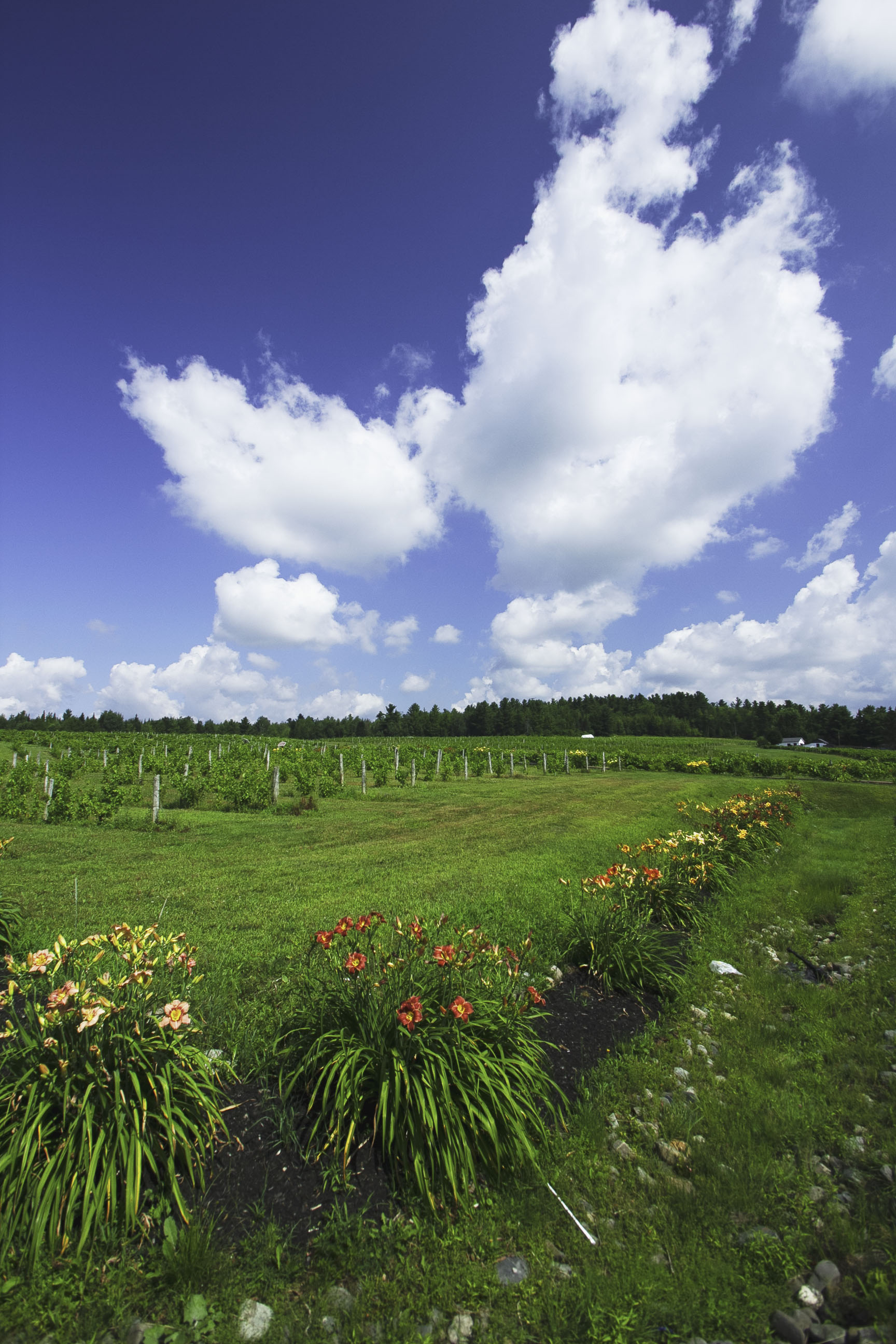
Below, two views of the vineyard of Le Cap d’ Argent. 

Le Cap de Argent fields 2

Le Cap de Argent fields

Continue reading

The first full day of our trip began with the short two hour drive from Burlington, Vermont to Montreal, Canada. Our first stop was the Roman Catholic Basilica, the Oratoire – St. Joseph (St. Joseph’s Oratory). The church, located on the northwest slope of Mont-Royal, is Canada’s largest. 

After touring the church itself, Cora and I walked through the Passion Garden. For me this was the highlight of our visit to the church and it’s grounds.

The path traces the 14 stations of the cross, each station featuring limestone statues approximately 9 feet tall.

IMG_0674

It took the sculptor, Ercolo Barbieri, 6 years to carve the 42 figures that make up the stations.

A rolling path meanders through lawns, trees and shrubs in a variety of green hues splashed with a medley of colorful flowers.

IMG_0713

The garden, located on the east side of the church covers 200,000 square feet.

Continue reading

It’s entirely possible that Burlington (Vermont) International is my all-time favorite airport. BTV, as it’s called in airport jargon, was the final destination on our outbound flight from San Francisco (SFO) and the start of our vacation.

220px-BTV_AirportSign_20150714_(22572597720)

Continue reading

Friday Fotos is back! Back after the technical issue of a crashed photo editing program and my subsequent foot dragging on deciding on a new program.

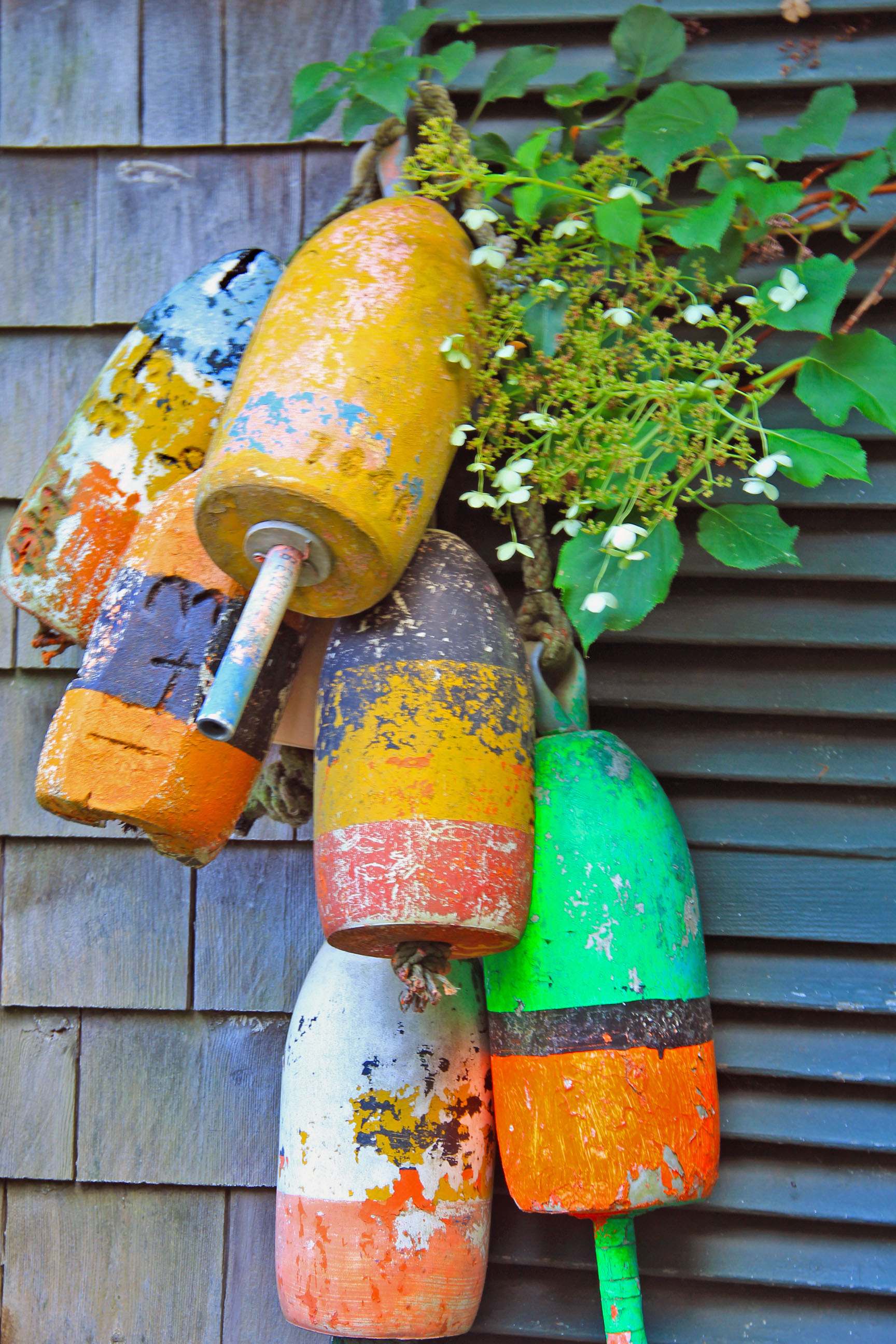
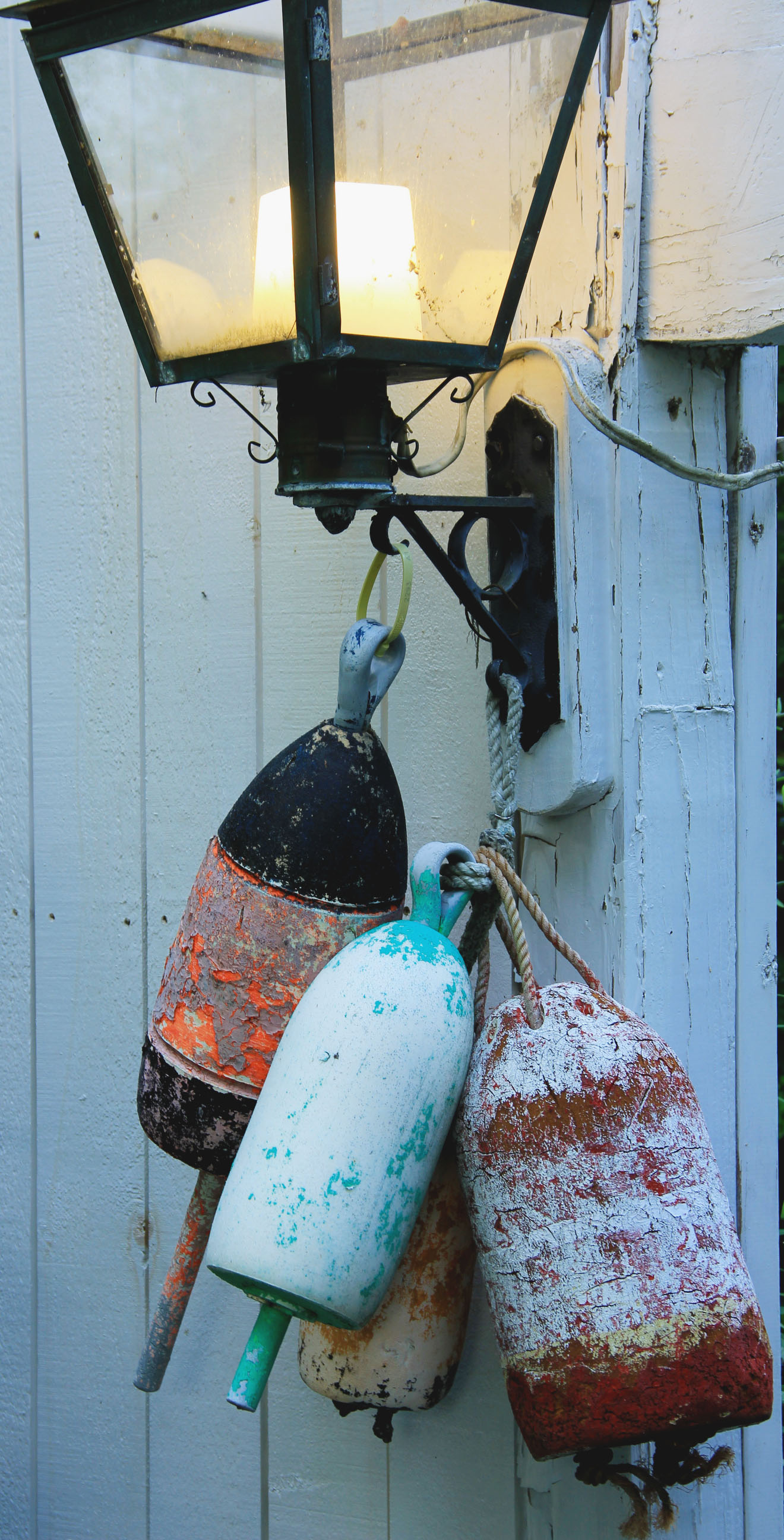
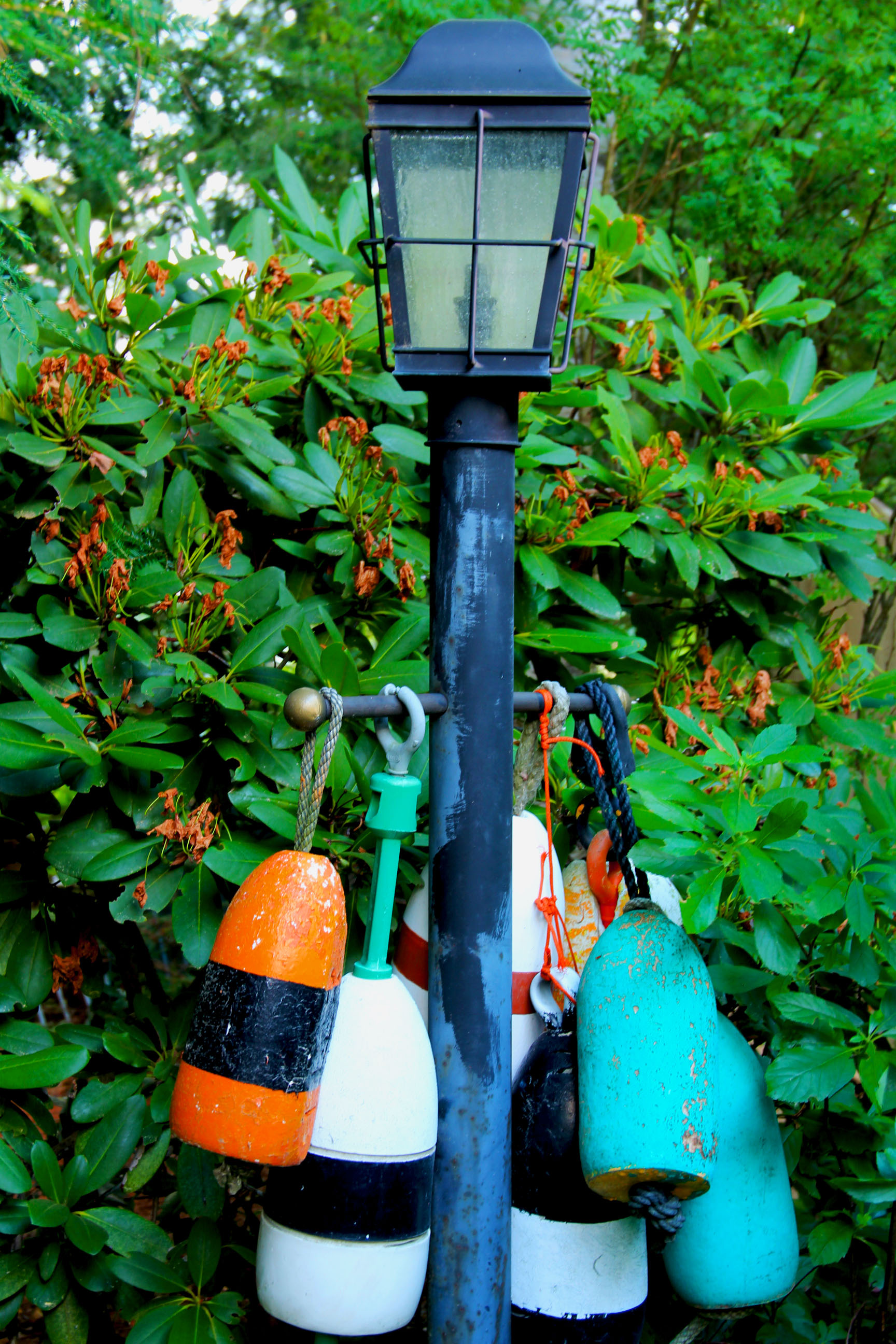
This reboot celebrates a fixture that Cora and I saw almost everywhere we went in the beautiful state of Maine. It’s quintessential Maine. It’s a tool that can be used as a unique, colorful ornament and it symbolizes one of Maine’s most popular culinary contributions – lobster. It’s the lobsterman’s buoy.

The buoy is attached to a lobster trap or set of traps and marks the spot where a lobsterman has placed his traps. The distinctive colors and patterns of the buoy identify its owner. Each lobsterman’s buoy has his own distinct color pattern. Think of it as an aquatic version of a cattle brand. Not only must the buoy display a distinct color pattern but the owner’s fishing boat must also display the same color pattern. The color design can be displayed on the hull’s two sides.

To see lobster buoys in Maine you don’t have to go to the docks. Mainers use them as ornaments and you can see the buoys hanging out just about anywhere; at restaurants, storefronts, from trees, lampposts, mailbox posts and porches. I’ve even seen them made into birdhouses. And they make for colorful photo subjects!

I got the lowdown on lobsterman’s buoys from the website Lobster Anywhere. If you want to learn more follow the link to their article Lobster Buoys Mark the Spot.

IMG_1667


Bouys lamp

Bouys in tree


buoys on a lamp post


buoys on a lamp post close


Bouys in tree close up


“Dress up. Montrealers take pride in their appearance, always preferring to be over – than underdressed. If there was ever any time to pack those fancy designer heels or stylish slacks, this would be it. No running shoes please. Men should wear a jacket for restaurants in the $$$$ range.” ~ Fodor’s Travel; Montreal and Quebec City. 

“I think fine dining is dying out everywhere… but I think there will be – and there has to always be – room for at least a small number of really fine, old-school fine-dining restaurants.” ~  Anthony Bourdain


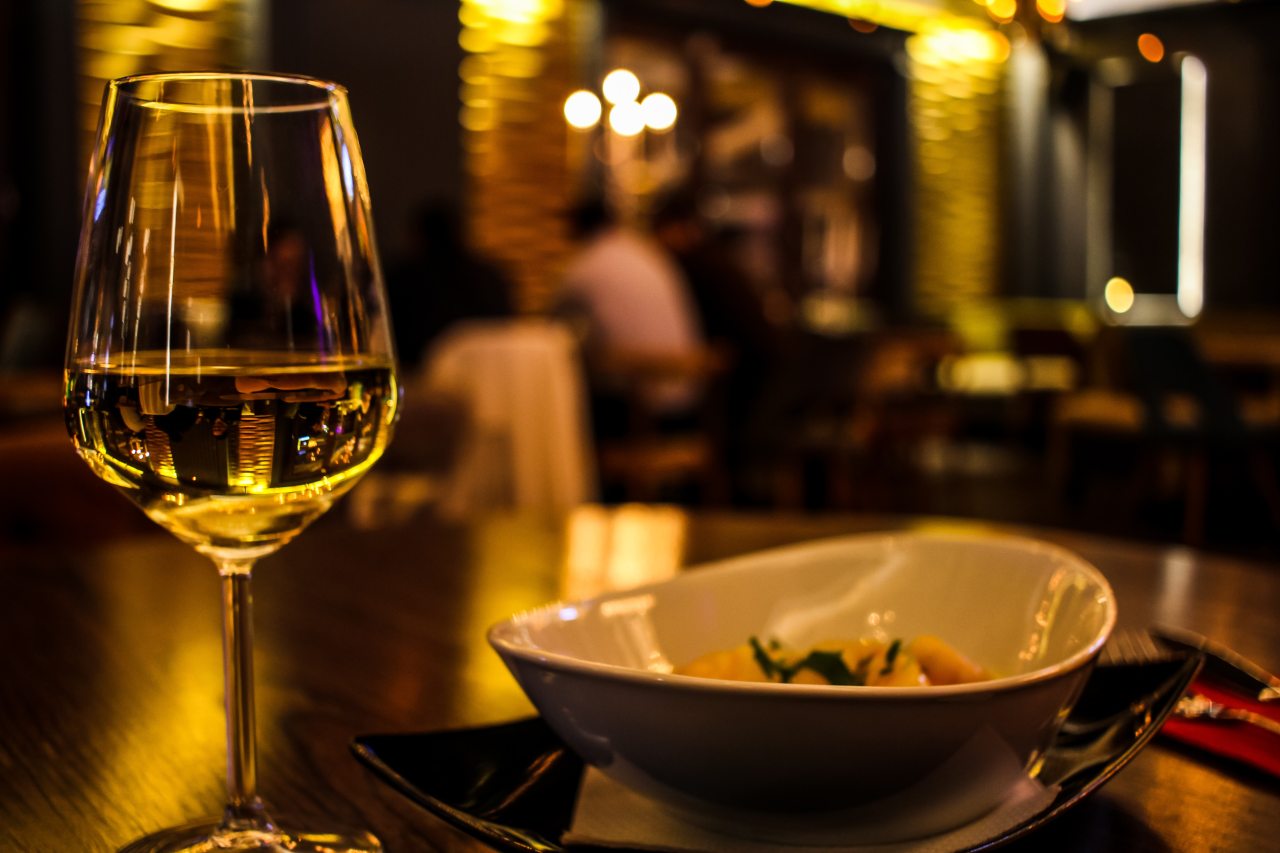
There was a time, back in what many in my advanced generation call the “olden days,” when dining out was an event that included a whole series of formal elements, one of which was dressing up. The whole rite could seem just short of a coronation; reservations made a month or more in advance, the laying out of clothes, dressing up, and arriving at the restaurant with an anticipation that was fitting for the special experience.

Entering the restaurant we would approach the maitre d’s station as if it were a judge’s bench and announce ourselves. With a stern, officious manner he (it was always a HE) would run a rigid finger down the list of reservations glancing up now and again in appraisal of our appearance. Once satisfied that we were worthy of gaining entrée he would snap into an about face and, walking ramrod straight as if it were a changing of the guard, lead us to our table. Once at the table he would pull out chairs for the ladies and present each of us with a menu, treating the bill of fare with all the reverence befitting an official document.

The server, often outfitted with a starched white apron and a white linen napkin draped over an arm would take the cocktail order and explain the specials in a manner only slightly less affected than the maitre d’s. No there would be no perky, server bouncing to the table and chirping, “Hi I’m Brittany and I’ll be taking care of you tonight.”  


Continue reading

Tire fire; (chiefly US, idiomatic) A disaster; a chaotic person, thing, or situation. ~ Wiktionary.
Before all you travel bloggers, all of you friends of travel bloggers, all of you who read travel blogs, all of you apostles of Rick Steves, all of you who watch Travel Channel 24/7, all of you who travel extensively, all of you who travel vicariously and all of you who possess a measure of common sense and caution pose the question you’ll be aching to ask after reading this post, let me give you the answers.
Yes, I was penny wise and pound foolish and next time I’ll buy travel insurance. I know I’m uprooting the fun of clucking at me for a conscious blunder that cost me a couple thousand dollars. And yep, I’m admitting to my financial malfeasance and in promising never to do it again I’m pooping the “I told you so” party before the first chips and dip have been set out, but to quote that annoying new fangled phrase, “Sorry, not sorry.”
Waldoboro, population 5,000 give or take, is classic, serene, vintage old coastal Maine. It’s a downtown strip of brick buildings. It’s the inescapable, at least in rural Maine, whitewashed Protestant wooden church fronted by a whitewashed steeple tucked in a surrounding green countryside. It’s a bucolic place dotted with farms, worn barns, aged homes and white picket fences all frequently and unabashedly splashed with the red, white and blue of American flags, banners and bunting. It’s a clearly proud patriotic area with a history that goes back to the 18th century. Located on the Medomack River, Waldoboro became a shipbuilding city where tall ships were constructed in the shipyard and then at high tide floated to the mouth of the river and out into Muscongus Bay.
Le Vatout is a bed and breakfast located just outside of downtown Waldoboro. Our innkeepers Dominika and Linda are gracious hosts running the inn housed in a former farmhouse that was built in the 1830’s. There’s a bit of charming funkiness to the place, particularly the large garden which provides a small green nook where I relaxed one evening with a mystery novel. The grounds are decorated with an assortment of colored lights and gewgaws, particularly the ubiquitous colorful lobster buoys that lobstermen use to mark the location of their traps. The buoys are a common decoration, seen hanging in gardens, from lamposts, on front porches and anywhere else that might seem appropriate to display this symbol of Maine’s crustacean bounty. It was here in this ideal of quiet Americana on a muggy early morning that our vacation turned into a tire fire.

Continue reading

“A vacation is what you take when you can no longer take what you’ve been taking.” – Earl Wilson
Here it is late July and I’ve done almost nada as far as the blog goes. Life gets in the way. I would add work but I’m retired. Now work consists of household chores. The jury, being my own whims, is still out and arguing about whether or not I like retirement. There are times when I feel like my time can be better spent than puttering about the yard and cleaning the toilet bowls. And when I’ve grown sick of chores and projects there are times when I want to tear my eyeballs out just to relieve the boredom. And then there are times when I think retirement is a gift from god. Okay let’s give credit where credit is due because god had nothing to do with it. Retirement has been a gift from FDR for Social Security (such as it is) and LBJ for Medicare.
One of the definite perks of retirement is being able to take a three week vacation and not worry about all the work related madness. For the first time in over 40 years I’m taking three weeks. There’s only been one time in my work life when I took three weeks off and that was to take a trip to Italy. I was single at the time and the job wasn’t one that I was particularly married to, so when my boss denied my request I told him I was going anyway. I added that if he thought that he could hire and train someone to my experience level before three weeks expired then he was certainly a better man than I. He bade me bon voyage and told me my job would be waiting for me when I got back. I never again had the sand to try to pull off that kind of power play.

Continue reading

The long (for some) Independence Day weekend is approaching its waning hours. Independence Day and the long weekend (for some) that goes with it is our yearly observance of all that is perceived as good in America and is supposed to honor what has long been called the great governmental experiment. Characterized by picnics, parades, barbecues, concerts and fireworks (both legal and not so much) we’re encouraged every year to take a moment and put down the hot dog and beer and reflect on The Declaration of Independence, that groundbreaking document that started it all.
We hold these truths to be self-evidentbegins the second paragraph of the American Declaration of Independence. Two hundred and forty-three years ago this weekend that document defined those truths; men (and women since at some later point in the continuum we decided that women are people also) are created equal and they are endowed by their Creator with certain unalienable Rights, that among these are Life, Liberty and the pursuit of Happiness.
The whole notion of self-evident should assume that these truths are the low hanging fruit of rights. But it seems that we’re struggling, can’t seem to snatch the apples right in front of the national face. I could turn this into an elaborate treatise about how we’ve been buggering that part of the Declaration for two and a half centuries….but I won’t. I’m leaving that to the pundits and bloggers who like to get their hands (or any other parts) dirty.

Instead I’ve taken a more tongue in cheek route and challenged myself to come up with some other truths that should be self-evident to any reasonable person with manners and taste.

Continue reading