The Life in My Years

An anthology of life

A chapter in an occasional series of posts documenting an autumn 2021 road trip through the Midwest. A continuation of the post, Highway 52 – Southbound To ‘Heaven’

“The people who come here will be drawn…” He stops, searching for words. “Have you ever been walking down the street and stopped in mid-stride and turned in at a bookstore or a gallery you never knew existed?” People will decide to holiday in the Midwest for reasons they can’t fathom or express. ~ J.D. Salinger in the book Shoeless Joe.

Isn’t that how it goes sometimes? You find yourself drawn to a small town that you wouldn’t have known existed if not for some haphazard, disjointed string of events that happened over the course of nearly half your lifetime. Okay, maybe that’s how it rarely goes.

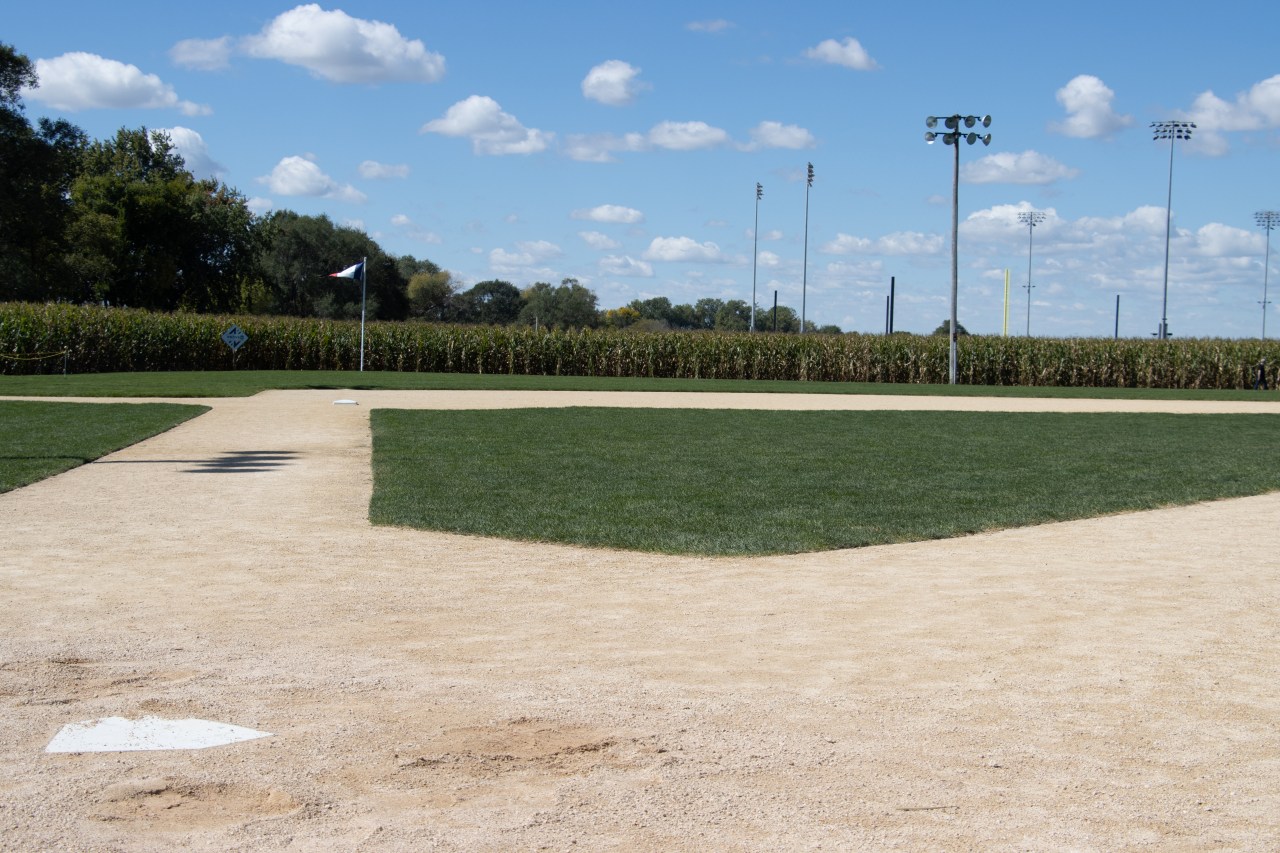
In the autumn of 2021, I found myself in Dyersville, a small town in eastern Iowa. A few months prior I didn’t know there was such a place. And yet my visit wasn’t a random event, one of those, ‘Oh look, Dyersville. I think I’ll jump off the highway and look around,’ sort of things.

Dyersville could have been just another one of the thousands upon thousands of small towns, dots on a map all over America that most of us have never considered visiting, never even heard of. We might, on occasion, take a second’s note of some random, tiny burgs. Maybe the name catches the eye and we wonder how there came to be an Accident in Maryland. What’s so cheery about Cheer, Iowa? Would I want to live in Boring, Oregon? Why is there Hell in Michigan and from what seed did Weed sprout in California? Maybe they’re little places we breeze past, on the way to somewhere more important. Mostly though, those small towns, those little black flecks on the map are the ciphers we ignore – cartographical white noise.

Dyersville could be one of those places but it’s not. Dyersville sucks people in because Dyersville is an example of life imitating art. Like most of the Dyersville pilgrims I wouldn’t have visited had it not been for a movie and a book.

Continue reading

A chapter in an occasional series of posts documenting an autumn 2021 road trip through the Midwest.  A continuation of the post, “The Road to Lansing and the Divine Revelation”

“I just feel like the most important conversations I’ve had in my life have been at a diner counter.” ~ Ramy Youssef

October 23rd, Lansing, Iowa.

It was a sparse crowd in NutMegs when I walked in for breakfast and to figure out what to do with my day.

NutMegs. It’s a proper coffee shop. When you walk into a proper coffee shop you see stools in front of a counter; you hear chatter; you likely hear an argument or two, local gossip, local politics and naturally, sports; you hear the clink of a spoon on a sturdy white coffee mug; the sizzle of a flattop hard at work. And the smells; breakfast meats and strong coffee. On weekdays, old timers finish a light breakfast and then hang around chatting with other old timers seated nearby or, hell, even across the room. Weekends bring the families, before a sporting event or after church. The moment you walk into a proper coffee shop, even on a chilly Midwest morning, you feel its singular warmth.

Yeah, NutMegs is a proper coffee shop. At least it seemed so to this stranger from the Pacific Coast.

Plain, straightforward, knotty pine walls, maybe fake knotty pine walls. I can never tell the difference. Walk in, and to your right is a display case overloaded with empty but still delicious calories; donuts, fritters, bars and assorted pastries. To the left, a set of shelves holds some prepackaged cookies and porcelain likenesses of milk cows – Midwest kitsch.

I took a seat at a counter that was worn and shiny, the erosion of scores of satisfied elbows.

A few stools over a burly man, an empty plate before him, sat nursing a few final sips of coffee. He wore the vestments I’d become used to seeing in small town middle America; faded denim work pants (preferably overalls) a flannel or denim shirt and work boots.

This attire was always topped off with a faded, sweat stained well worn cap, sometimes pulled low, other times, like in a proper coffee shop, worn back on the head, the better to look people in the eye when chatting. Never though, is the cap worn backwards (a good friend of mine holds the firm belief that only baseball catchers and submarine commanders should wear a cap backwards. Being a photographer, admittedly one of no repute, I firmly disagree. Try aiming a camera with a brim fighting your hands for space).

Worn back or pulled low, these caps are usually emblazoned with some farm equipment logo; John Deere, Case, or Tractor Supply.

It’s a raiment I came to call, Midwest business casual. I’d yet to see a suit but I hadn’t yet visited a church and didn’t figure to. I imagined that even attorneys, accountants, bankers and the undertaker must wear some form of this Midwest business casual.            Continue reading

This week John, author of the site, Journeys with Johnbo, leads the Lens-Artists Photo Challenge, choosing the topic flights of fancy. I was stumped and ready to bow out of this one until I realized how easy this one could be for me.

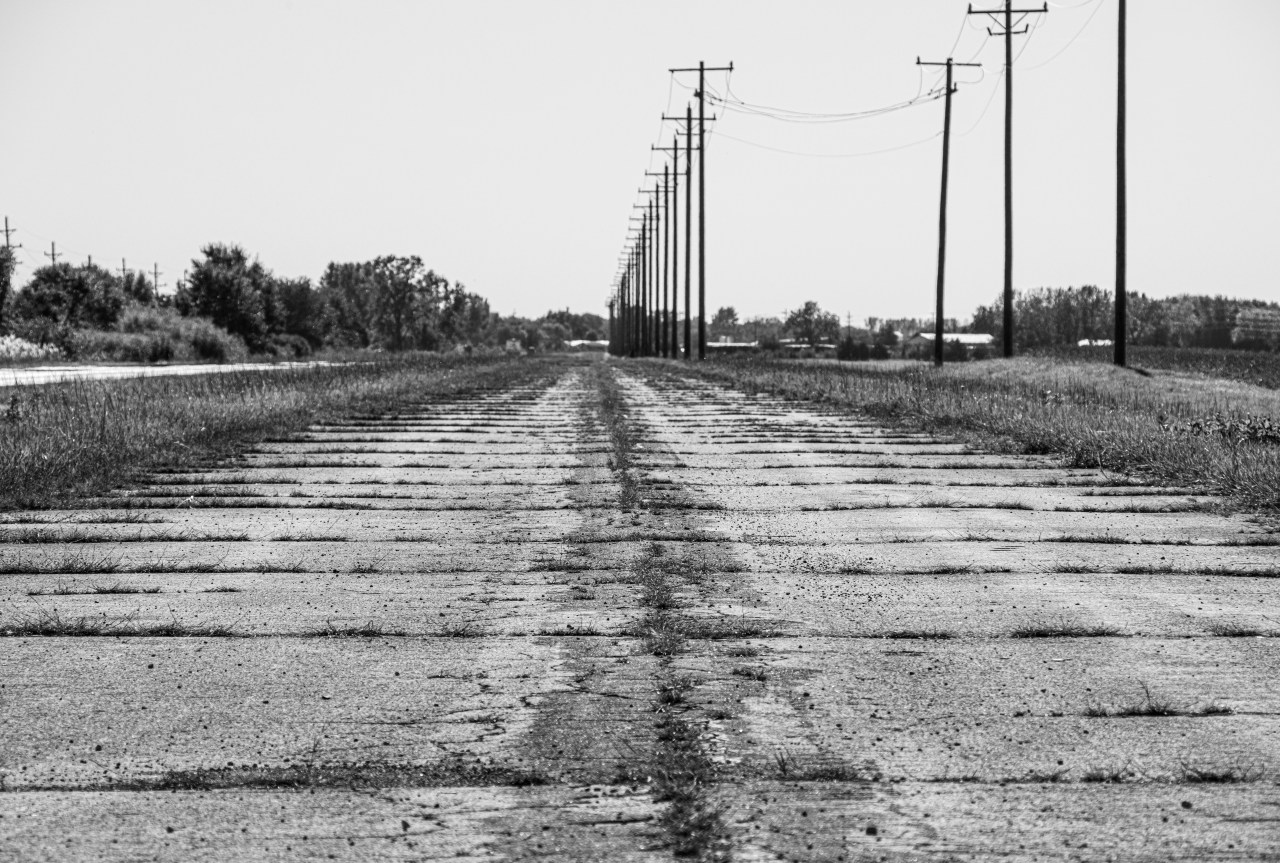
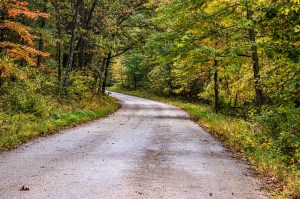
My flight of fancy has been the road. The road; cobbled roads; dirt roads; highways; country roads; farm roads; busy roads; lonely roads. Roads have led me to places that I’ve dreamed of seeing and places that I never dreamed existed.

“The Road goes ever on and on
Down from the door where it began.
Now far ahead the Road has gone,
And I must follow, if I can,” ~ J.R.R. Tolkien, The Fellowship of the Ring

Roads have carried me to interesting and beautiful places, but the road itself possesses its own singular beauty and character.

A road less travelled. Saxeville, Wisconsin

It’s the road that’s allowed me to experience places of matchless grandeur and beauty and to share them with my wife. If not for roads I would have never experienced the twin pleasures of viewing nature’s handiworks and Cora’s joy and awe.

I don’t know which was more beautiful, the Black Hills or Cora’s awe in seeing them.

Continue reading

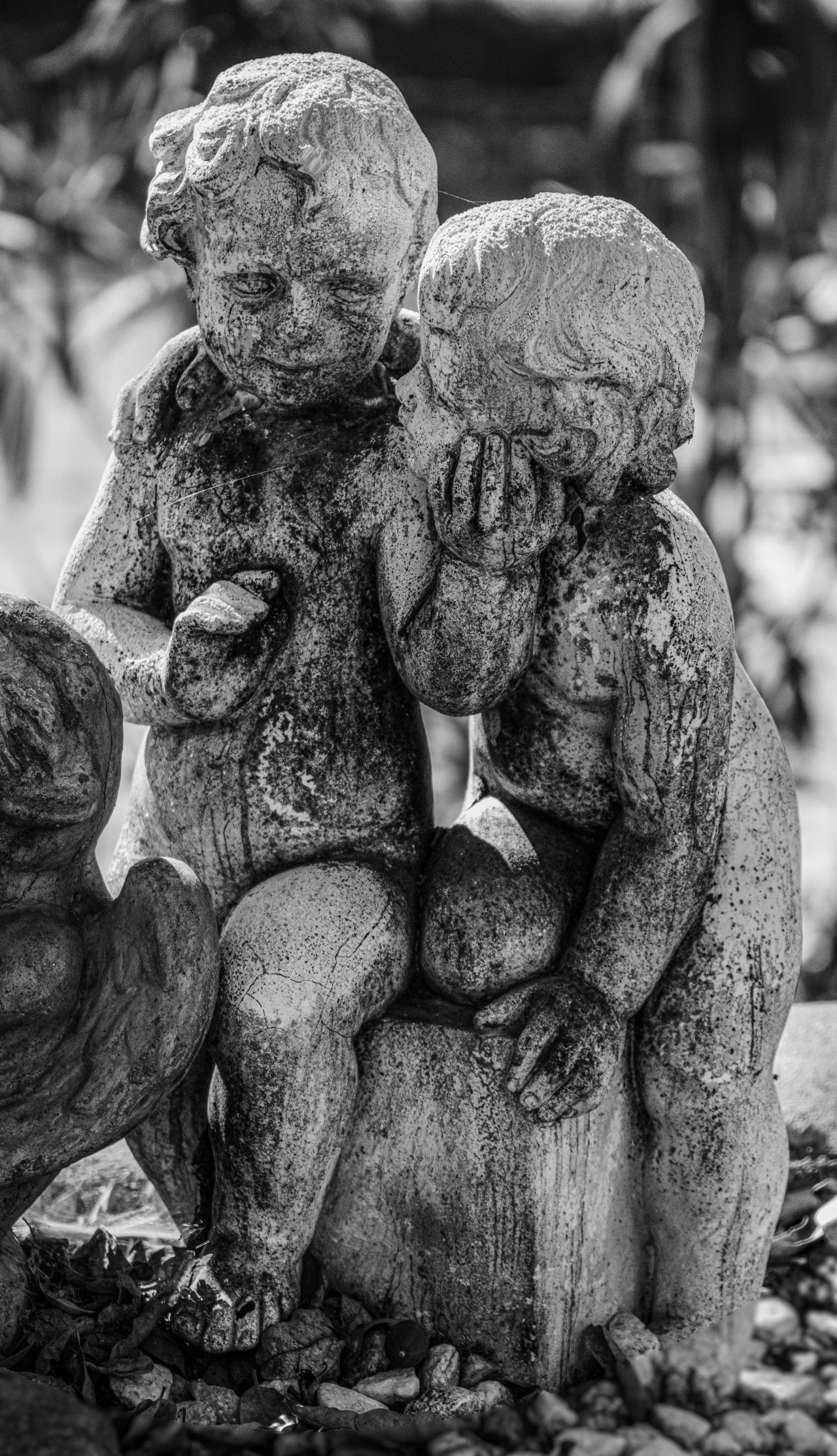
Being October, and being that Halloween is less than two weeks away, it’s only appropriate to add another graveyard episode to the Monthly Monochrome series (for the previous charnel chapter click this link).

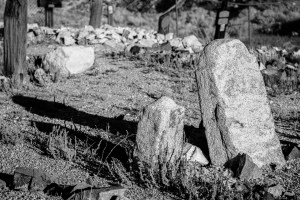
As I indicated in my previous graveyard post, a graveyard can be a cemetery, but a cemetery can’t be a graveyard until time, nature and lack of attention have weathered the old charnel.

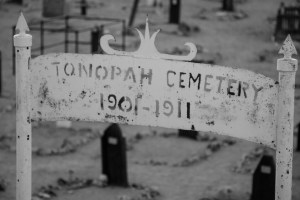
Tonopah Cemetery
Located in the high desert of Nevada, 211 desolate miles from the glitter of Las Vegas, sits Tonopah, Nevada.

Nevada is appropriately named the Silver State because many of its cities, towns, ghost towns and ruins were birthed by silver. In 1900, Jim Butler discovered silver at a site that would produce one of the biggest booms in the west and with it, the high desert town of Tonopah.

Old cemeteries are repositories of history. They speak, as silently as a grave, of lives and times long past.

Among the epitaphs of the residents of Tonopah’s old graveyard:

In 1909, Leonard Black fell from a freight wagon loaded with three tons of grain and was run over. Leonard was eleven years old.

In 1906, Alfred Anderson succumbed to a gunshot wound after having assaulted a woman in, as the epitaph describes, her bagnio.

Kentuckian William Allen Montgomery was a pioneer, stockman, and teamster. Born in 1838, he died at age 62.

In 1916, Peter Mandich was careless while riding in a mining skip (car). According to the Reno Evening Gazette, “Peter Mandich, a Servian, 25 years of age, was instantly killed in the underground incline shaft of the Tonopah Extension Mine, Saturday morning about 10:30 o’clock. He stood up in the skip and his head coming in contact with the timbers, his neck was broken and his head badly crushed.” All the way from Serbia to seek his fortune only to perish at a too young age.

Unmarked gravestones cast long shadows in late afternoon.

Continue reading

This week Tina of Travels and Trifles has challenged us to a Treasure Hunt. She’s proposed a list of treasure items which includes:
A pet or pets (yours or someone else’s)
The moon or the sun (extra credit for both in one image)
Clouds (extra credit if you also include rain or snow)
A reflection
A child (extra credit if with other family members)
An umbrella (extra credit if you include a person using it)
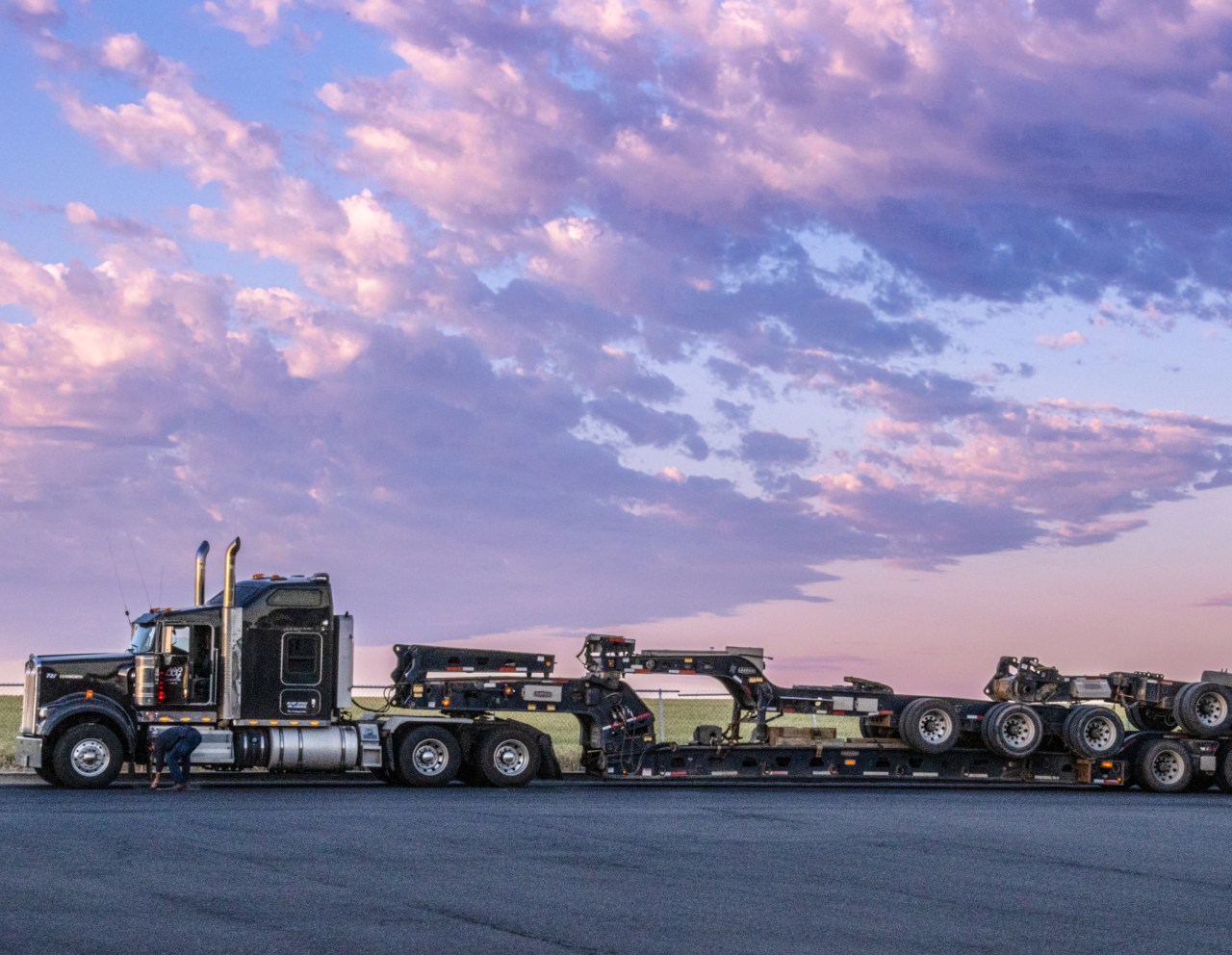
A truck (extra credit if you include the driver or what the truck is hauling)
Autumn foliage (extra credit if it’s something that only blooms in the fall)
Something fun you found on a walk

I can’t manage the extra credits above but there’s plenty of double dipping.

Clouds
Below is an alpine meadow near the summit of the Beartooth Highway a scenic 68 mile drive that begins in Red Lodge, Montana and ends at the northeast corner of Yellowstone National Park.

Below, Early morning at Port Clyde, Maine.

Reflections
Banner image is of a random lake I passed by while driving through Wisconsin.
Below I’ve reflected on the urban scene. The first image is a reflection of the grand Le Château Frontenac, located in Quebec City’s Upper Town. The window is in a building located on Rue du Petit-Champlain far below Upper Town.

The TransAmerica Pyramid in San Francisco is one of my favorite architectural subjects, with it’s unique shape and numerous beams and angles. The photo below is a reflection in one of the Pyramid’s windows of traffic on Columbus Avenue.

Continue reading

Parke County, Indiana. Looking for the Mill Creek Covered Bridge, I turned left when I should’ve turned right. The road winds through some cornfields until the cornfields end and the road dips into a dark, woody hollow. It’s a foreboding place. A twinge of anxiety in my gut. Just about to the bottom of the hollow, I look to my left and there’s a shack, an old single wide, scrap part of things and stuff on a sloping lot. A guy tending a leaf fire looks up and glares at me through the smoke. It’s a dead end at the bottom. I turn around and driving past the sloping lot I notice a Confederate flag flipping in the breeze. The man’s glare hasn’t left his angry visage. A chill runs through me and I can only imagine how a lone Black man would feel. Actually no – I couldn’t imagine it.

***

Wisconsin is dairy country and where there’s dairy there’s naturally milk, and where there’s milk it’s just a short hop to cheese. Wisconsin is passionate about its cheese. Chauvinistic. In Green Bay football fans don cheese head hats, gigantic yellow wedges of foam ‘cheese’, to games.

Cheese curds are ubiquitous here. Pubs, restaurants, supermarkets, mom and pop stores, the household fridge and even, as I came to learn, the car’s dashboard.

The Buffalo River meanders through the southern edge of Mondovi, Wisconsin. The town is named after the Battle of Mondovi, where Napoleon’s army defeated the army of the Kingdom of Sardinia-Piedmont. How a town in Wisconsin came to be named after a Napoleonic tussle is a mystery to me.

In the Mondovi IGA grocery store, holding a package of cheese curds, studying it like one might puzzle over a Rubik’s cube.

A woman paused nearby.

“Excuse me,” I said. “I’m not from here.”
“Oh, welcome,” she said kindly.
“Thank you.” Holding up the package of curds I asked her, “What exactly do you do with these?”
“Well, they’re very good deep fried.”
I thought, well, no shit, everything, with the possible exception of liver, is good deep fried.
Since I didn’t bring a deep fryer along with me I asked, “Can they be microwaved?”
“Yes, but not for too long. They’re good as is. If you’re on a road trip you can set them on the dashboard and let the sun warm them up.”
In the end I bought them. During the course of a few days I had them microwaved and cold but they never saw the top of my dashboard. They were good I suppose. And then I was sick of them – and they weren’t good anymore. But I hadn’t had them deep fried yet.

***

Gumby’s Bar and Grill, in downtown Mondovi. Mostly square, plain. A brick structure with a log façade and a sign that sports Gumby, that guy with the bulging eyes who looks like a stick of green gum partially split lengthwise. Gumby’s got his usual smile. Of course he does. He’s hoisting a mug of beer. That’s not the Gumby I remember. A Schlitz Beer sign over the door. I remember Schlitz. Do they still make it? “Schlitz, the beer that made Milwaukee famous, simply because it tastes so good.” How could I forget that old slogan from the days of my childhood? Me, and three old boys on their lunch break seated in a row at a plain Formica bar. Pizza sounded good. A bacon cheeseburger pie; beef, bacon, mozzarella and cheddar, and dill pickles.
“I’ve never had pickles on pizza before.”
“Neither have, I” replied the bar keep. “It’s the only pizza on the menu I haven’t had.” Not exactly a testimonial.

He was a tall young man, bearded with glasses. A sort of preppy, grad school look about him. Working his way through college, drawing beer and making small talk with barflies?

In the appetizer section, something called a cheese bomb.

I asked the bartender what a cheese bomb was.
”It’s a big square cheese curd. Good but greasy.”
“Deep fried?”
“Oh, yeah. Not something you should eat every day.”

In the end, I ordered the bacon cheeseburger pie and went away happy with dill pickles on pizza, but wishing I’d had the cheese bomb for desert.

Continue reading

This week, Tina Schell of Travels and Trifles hosts the Lens-Artists Challenge and the topic is opposites.

There are two possible takes on this topic. I would like to say that I could offer a selection of photos showing opposites in the same image. And maybe I have some of those. Certainly a personal challenge for the future.

And so I’m going with what is for me the path of least resistance; pairs of images at opposing poles.

Sweet and pungent

The two photos below were taken at the Marche Jean Talon in Montreal.         

Continue reading

A chapter in an occasional series of posts documenting a Spring 2021 road trip.

Continued from the post, Route 66: Diners, Twin Arrows And Trading Posts, (link here).

The van rocks and bumps as it grinds out of the dirt lot near Twin Arrows, Arizona. Lexi, my canine backseat driver is standing behind me, peering over my shoulder as we get back on Highway 40. She shifts glances between me and whatever we happen to be passing, tail swishing, nose twitching.

While Cora’s back at the motel, sleeping in, Lex and I are eastbound, on the way to Two Guns.

If you’re at highway speed and looking for it, Two Guns isn’t hard to miss. Unaware of the old stone ruins, though, they might flash briefly in the corner of your eye as an apparition from an era long past. You think to yourself, ‘What in the hell was that?’

It’s a momentary presence that flashes back to a scene from an old western; the climactic gunfight in the ruins of an old Southwestern town.

You might double back to confirm that what you thought you saw was what you really saw.

Highway exits? They’re like doors that lead to rooms off the main hallway. Exit signs convey the basics of what’s behind those doors. They tell you if there’s food: if there’s lodging; if there’s a gas station.

What exit signs don’t reveal are the sights, the stories and the lore locked in some of those rooms. Sometimes you just have to speculate whether or not there’s something worthwhile beyond the door.

But isn’t that the essence of a road trip? You see an exit sign, steal a glance off the highway and in the quickly waning moments before you’ve passed the exit, you either veer off or go on. In the case of the former you might stumble onto a rare find.

The latter? You’ll never know, will you.

In most cases you do pass by and press on. But the name Two Guns is compelling, a little bit mysterious, and very much Wild West. Hard to resist the urge.

The exit sign is simple.
Exit 230
Two Guns

Nothing else. Nothing hints of the tales of Two Guns.

The recent history of Two Guns (recent being 1920) is a version of the usual story of someone trying to make a go of it along the course of once popular Route 66 in the barren Southwest. Just another rendition of the many narratives that stretch from Oklahoma to the Pacific Ocean; of dreams, plans, success, failure and a final surrender to the onslaught of progress.

That’s the unspectacular. The rest?

Continue reading

This week’s Lens Artists Challenge, selected by Sofia is Urban Environments (click on the link for Sofia’s take and other takes on Urban Environments).

Urban environments?

Well you’ve got your New York; your Boston; your Montreal; your Las Vegas; and your Los Angeles. All swell towns in their own right, and I’ve been to ‘em all..

But…

Give me San Francisco. And don’t call it Frisco, and really don’t call it San Fran.

There’s three routes in, and two of those require a bridge. The Bay Bridge enters The City from the East Bay.                                   

The Bay Bridge dumps you into downtown and the high rise canyon.

View up Sacramento Street from Embarcadero Center.

Embarcadero Center High Rise

Continue reading

I’m a regular reader of the blog site, Anne the Vegan. Anne’s posts are usually about running or food but every now and again she writes eloquently about society; about events of the day; about justice and injustice.
This evening she published a piece which stems from public criticism of Eliza Fletcher’s decision to go for an early morning run by herself. Ms. Fletcher was abducted and murdered, and in some circles the finger of blame has been pointed at her for doing something that I, a white male, have done, and felt safe doing, for over fifty years.
As Anne points out in her piece, a flaw in our society holds women to a different standard. I can’t begin to understand or communicate the frustration and anger that women must feel, but Anne does so in a piece that is well written and powerful. Please scroll down to a link to Anne’s thought provoking piece. 

I went for a 7 mile run yesterday, per my marathon training plan. Did I think about safety? I always do. I can’t afford not to. I’m a woman. I also thought about the abduction and death of a female runner as I ran. And I ran alone. On a college campus. And I couldn’t […]

Why does society still blame the victim? — Anne the Vegan