A photo accompaniment to the postSpain: Beginning at the End
It’s Sunday, our last day in Barcelona. Cora is sitting in on Sunday mass at Iglesia De Santa Maria del Mar, a grand 14th century church in the Ribera District. It’s an opportunity for both of us. It’s been three weeks since she’s been able to attend mass and what better place than in such a grand and splendid church. For me, it’s an opportunity to strike out and explore.
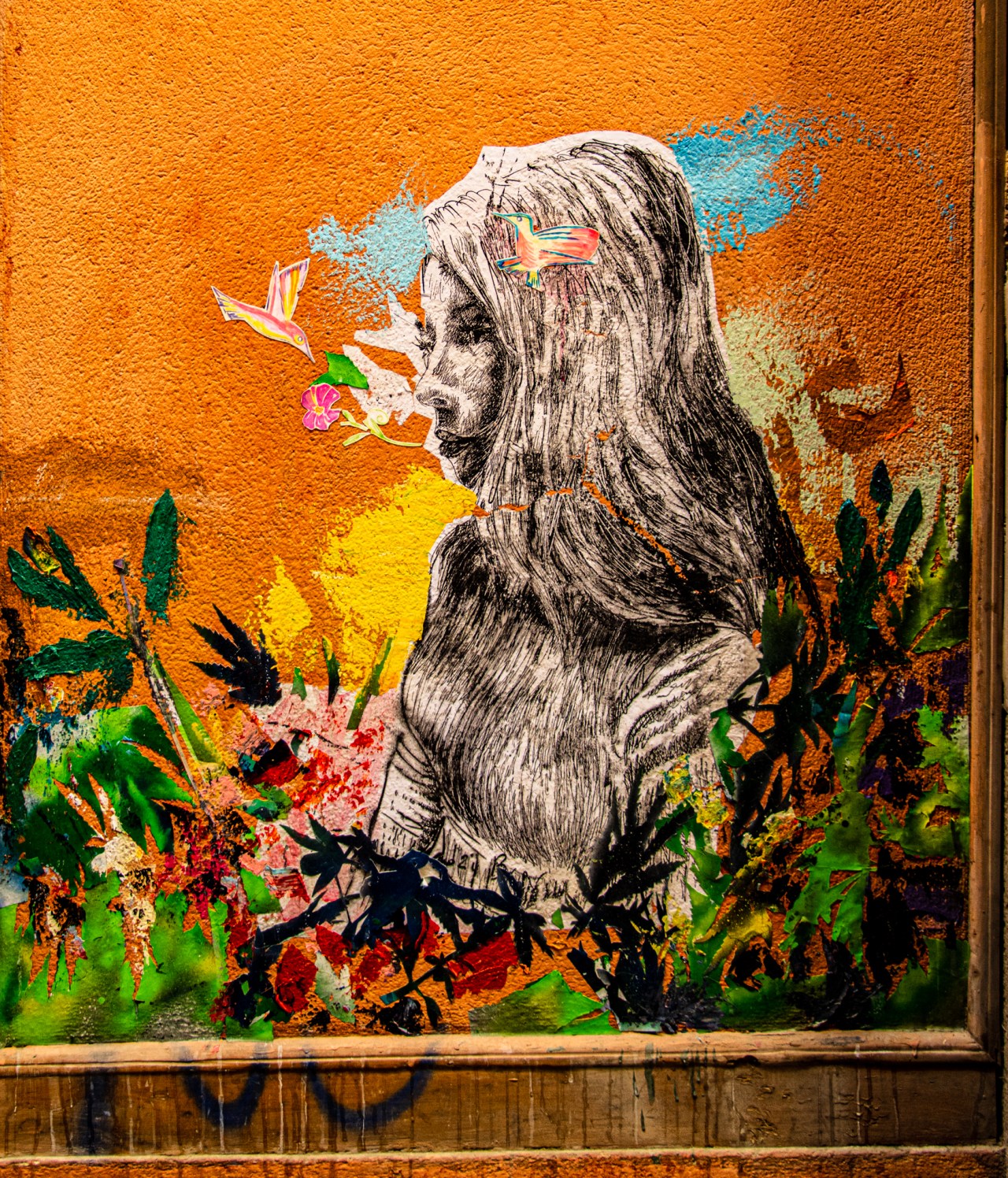
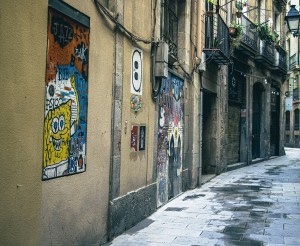
After walking a few blocks I glance off to my right and see a narrow street that’s barely more than an alley. It’s another of those tight lanes that have attracted me since we arrived in Madrid three weeks ago. In America, I might hesitate to step into such a mysterious, narrow, sun starved little street. Here in Barcelona, there’s no anxiety. These little streets have always led to some treasure or another and on this early afternoon, I’m not disappointed. I’ve discovered the portal to El Born and its outdoor gallery of street art.
Spain’s cities and towns contain webs of little streets and alleys and I’ve found that it isn’t hard to get lost. And that’s a good thing. Getting lost is the best way to discover hidden gems and accidentally wander away from the places where tourists roam. Within minutes, you’ve gone from a noisy street to a stone quiet passage where all you hear is the splish of your footsteps in the remnants of the previous night’s rain, and maybe a few stray notes of a conversation coming from a window above. You round a corner to hear the clatter of plates and glad voices coming from a little bar. Round another bend and it’s quiet again.
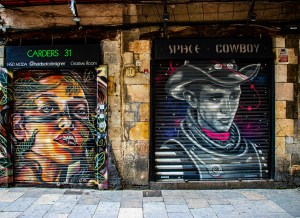
During closing hours, most storefronts are shuttered with corrugated steel rollup doors, and most of those doors are turned into after-hours canvasses by would-be artists, from taggers to accomplished muralists.
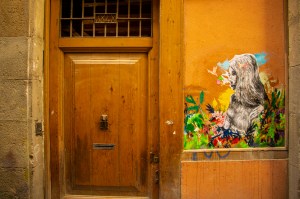
In El Born, as in many other of Barcelona’s districts, it isn’t just the corrugated doors that get a coat of urban art. Below, two works of art compliment each other; a fine old door polished by age and the work of a street artist.
Anne, of Slow Shutter Speed may have been reading my mind when she came up with this week’s topic for the Lens-Artists Photo Challenge. For months I’ve been rat holing my photos of buildings, all the while meaning to incorporate them into a Monthly Monochrome post.
This week, Anne chose the topic — Buildings.
Maybe Anne was saying, ‘Well, what are you waiting for?”
At least that’s the message that I got.
Buildings. They don’t simply house people and businesses and things. They also house messages. Certainly, the architect had a message in mind when he/she was sitting at the drafting table or in front of the computer. And just as certainly we have our own interpretation of a message when we look at a structure.
Trujillo, Spain.
Sometimes the message is clear, concise and straightforward.
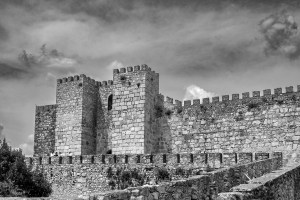
High on a hill, a castle looms above the town of Trujillo, in Spain. Built between the 9th and 12th centuries the message encased inside the castle’s huge blocks is, ‘proceed at your own peril.’
It was less than a month ago that Cora and I visited this castle. On a hot day, it’s a prodigious climb from the modern and, frankly less interesting, flatlands to the promontory. In a sense the climb is like time travel. Once the flats were around the corner behind us, it was as if we’d crossed into the Middle Ages. As we proceeded up the hill, through a maze of narrow streets, we passed buildings that got progressively older.
It’s early morning in Barcelona. Without looking out the hotel window I can tell by the sound of cars sloshing through puddles 3 floors below on Via Laietana that it rained again last night,
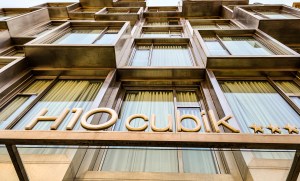
We’re staying in the Hotel H10 Cubik in Barrio Gótico, just around a long corner from La Rambla. Like its name suggests, the Cubik’s decor and brutalist architecture plays with geometric shapes, and, in the lobby, plenty of mirrors. There’s also a vast library in the lobby that is more for show than for guests to actually select books from to read. I mean, you’re in a four star hotel in Barcelona and you’re sitting in the lobby reading? The lobby is also dotted with glass vessels that contain gummi candies. During our first two Barcelona mornings, before Cora gets up, I’ve been going down to the lobby to have coffee, rob the glass jars of handfuls of candy and read. So there you have it. I’m staying in a four star hotel in Barcelona and I’m having coffee and candy and reading in the lobby. Loser.
Beginning on the third morning the serve yourself coffeemaker has disappeared from the lobby. That’s a problem because I’ve found that in Spain it can be hard to score an early morning cup of coffee. True, early morning can be a relative thing, but my morning clock is clearly at odds with Spain’s morning clock. For me, early is 4:00, 4:30 is tolerable, 5:30 is just about right and if I’m rising at 7, well, I’ve overslept. Unless you’ve got a personal coffeemaker, 6 AM coffee in Spain is as hard to find as a bologna on white bread sandwich (not that I’ve had occasion to seek out the latter). This morning, I’ve gone beyond oversleeping. It’s 7:20 and Google tells me that there’s a Starbucks that opens at 7:30 and just a few minute’s walk from the hotel (Yes, not satisfied with exporting the king, the clown and the chicken colonel, America has also exported the siren).
The skies are clear as I step out onto the sidewalk. It’s been intermittent rain for all four days that we’ve been in Barcelona and the forecast is for rain later in the afternoon. Still I’m hoping, but not too confident, that the day will be free of rain. I’m also hoping, but not too confident, that Google Girl will actually lead me to Starbucks. It should be easy an easy shot, just up Via Laietana and across Ronda de Sant Pere, but Google Girl can turn easy into impossibly lost, within the space of half a block. I’ve dutifully, and foolishly followed her instructions and right in the middle of a dark block, Google Girl announces, “You have arrived.”
“Google, you’re such a dumbass.”
I do a reset and run another fool’s errand that takes me to another mysterious corner of Via Laietana. One or two more runs at it and once again I’ve proven that old definition of insanity as “doing the same thing over and over and expecting different results.”
Bag the coffee.
By the time I’m back to the room, Cora is up and ready to go.
Go where? That’s the question.
From the start, months ago, when I was laying out an itinerary, this last day in Spain would be an open, let’s just do something on the fly, kind of day. And it still is.
It’s early morning in Barcelona’s Barrio Gòtic, a neighborhood at once trendy and medieval, bright and darkly mysterious. While my wife is back at the hotel sleeping, I’m winding through narrow streets and alleys that were built centuries ago to accommodate carts and pedestrians. I’m looking for a kiss. Not just a kiss, I’m looking for the kiss. I mean why settle for just a kiss.
I know that the kiss I’m hunting is somewhere in Gòtic’s confusing web of alleys and small placas (the Catalan word for plaza). I’m just not certain that I’ll find it. I’m depending on Google Girl to get me to the kiss, but given her recent history of sending me on snipe hunts and roads to dead ends, I’m feeling that my trust is misplaced.
Early morning can be the best time to explore the warren of ancient alleys and streets. But for a few street cleaners, early rising shop owners, and a smattering of tourists, El Gòtic is empty just after sunrise. In the early light, puddles from the previous night’s rain reflect the dark, ancient buildings, adding to the mystique of the old district.
I’ve got some serious misgivings as I follow Google girl’s instructions. “In 190 meters turn right on Placa Dels Pexios.”
In Google girl’s defense, during three weeks in Spain I’ve learned that finding street signs and placa designations can be a challenge, as the signs are often posted (sometimes camouflaged) on the sides of the old buildings. The mistake is an easy fix when you’re walking. Driving past a sought out street can lead to the drive of the damned.
“In thirty meters, turn left towards Carrer dels Capellans.” Stop. Look. Follow – and hope.
“Slight left onto Placa D’ Issidre Nonell.”
“You have arrived.”
Okay, I’ve arrived – at Placa D’ Issidre Nonell. At least so I’ve been told by a Google Girl who, for all I know, has sent me on a wild kiss chase. In front of me, there’s nothing. To my right is the street that I just came from, and to my left a bar, waiting to be opened. I’m just about to call BS on Google Girl yet again as I turn around to gaze on El Peto de Joan Fontcuberta.
The sixth in a series of occasional posts about tripping along U.S. Highway 395. Please note, this installment differs in tone from the previous chapters in this series.
One of the wonderful things about travel is the opportunity to experience those places that excite in us a sense of wonder. In 2015 I took my wife, Cora, to Yellowstone National Park. I’d been there three times before, and since my first visit, during my childhood, Yellowstone has been one of my favorite places on Earth. During my last visit, the one with Cora, Yellowstone blessed me with a new joy as I watched Cora’s reaction to that amazing place. In 2021, we took a road trip that brought us to the Grand Canyon. The panorama literally brought us to tears. Devil’s Tower, the Black Hills, a stand of ancient redwoods and Mount McKinley at sunset. The grandeur and beauty of these places touches something in all of us.
And then there are those places that touch us in a different way. These are the sobering places. I remember the afternoon when I stood on Little Round Top at Gettysburg. It was a steamy July afternoon, exactly 135 years after Joshua Chamberlain’s 20th Maine Infantry, ammunition and numbers depleted, held off repeated Confederate charges. At Antietam I stood at the Sunken Road where over the course of three hours two armies suffered over 5500 casualties. At the Lorraine Motel in Memphis I stood at the very window where Martin Luther King Jr. stood when he was assassinated. The most profound jolt among the many at the Holocaust Museum is in the final room where the shoes of 4,000 victims are on display. It’s an exhibit that one not only sees, but also smells. Places such as these can be unpleasant and emotionally draining, yet they are vitally important to our understanding of the human story.
Visiting Manzanar
Just eight minutes out of the little town of Independence, California, on Highway 395, those heavy emotions revisit me as we drive beneath a guard tower and through the gates at Manzanar.
A visit begins at the museum where the visitor learns of the early history of the area. While the exhibits cover the period from 1885 to the present, the focus is on the war years and the camp’s history as a concentration camp.
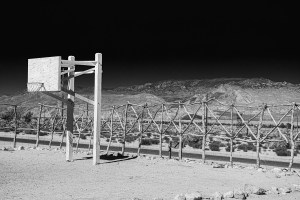
A self-guided walk through the grounds includes visits to two barracks, a mess hall and a women’s latrine.
This is a harsh area of sagebrush, and sand and rock, where temperatures can reach 100 degrees in the summer and drop down into the 20’s in the wintertime.
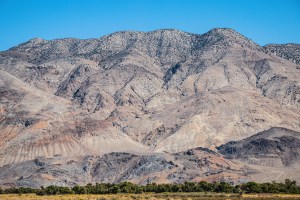
The hills on the eastern side of the Owens Valley
The Spanish word, Manzanar, means apple orchard, a description that conjures pleasant images of crisp fruit, freshness, sweet fragrance and good health. There is none of that within the confines of what was once a concentration camp, in which American citizens, summarily stripped of their rights, were detained.
Decades before the barbed wire was strung, the rude barracks built and the guard towers erected, this area in the Owens Valley, in the shadow of the eastern slopes of the Sierra Nevada, was an apple farming community. Before that it was cattle country.
This week, Siobhan, author of the site Bend Branches hosts the Lens-Artists Photo Challenge, and she has chosen the topic, glowing moments.
With the exception of three photos, the first and the last two, all of the images for this challenge were taken just before or after sunrise, when the glow is particularly spectacular and the opportunites are fleeting.
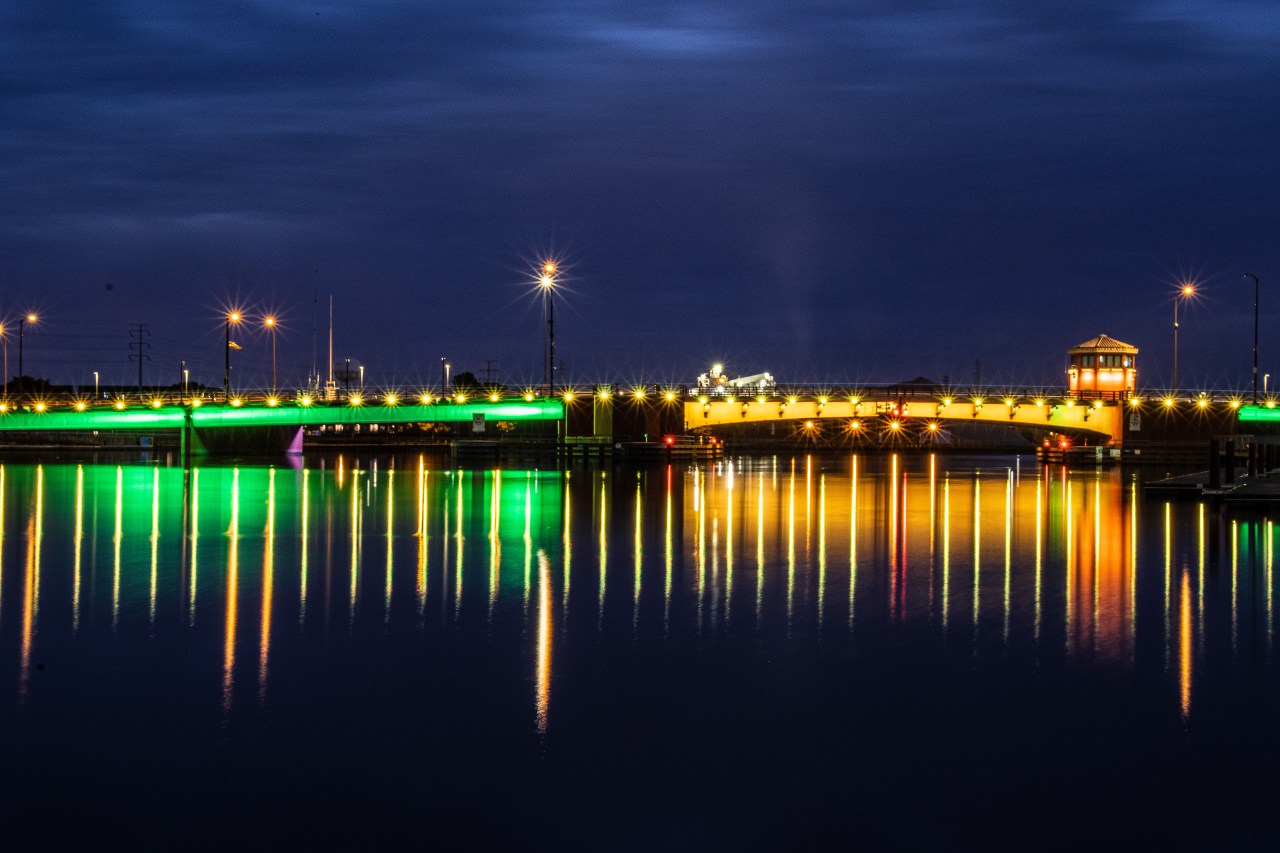
The photo below of a bridge over the Fox River in Green Bay, Wisconsin, was taken after sunset. I took this photo in September when (American) football is getting into full swing. The bridge, just like everything else in Green Bay during autumn, is illuminated in the team colors of the Green Bay Packers football team.
Pescadero is located on the Central California Coast, about an hour’s drive (depending of course on traffic) from my home. Here, there is a large wetland where Pescadero Creek drains into the Pacific Ocean. The photo below is of the wetland carpeted with brilliant Pickleweed.
The photo below was taken on my front porch. After a night of rain, drops glow and glisten in the morning sunlight. One dangling drop reflects a brick pillar.
Whenever my phone vibrates it can be anything, from a message from a Nigerian prince looking for someone to share his fortune with, to breaking news. I was reading on the couch in my office when I picked up the phone to learn that it was the latter and that, in a matter of moments, the crap would be hitting the fan.
The New York Times was breaking the news that a Manhattan Grand Jury had indicted former President Trump for some alleged skullduggery that took place in a hush money payment to a porn star over an alleged episode of some rolling in the hay between Trump and the porn-ette. To be clear, a straight hush money payment is not against the law, but to cook the books in order to hush up the hush money is.
My first reaction? “Good.” Finally someone was charging this corrupt scofflaw with something, even though this case is a minor league one compared to the ongoing investigations by a federal special prosecutor and Fani Willis, the district attorney of Fulton County Georgia. I fantasized seeing Trump, cuffed and wearing a jumpsuit that coordinates with his spray on tan, getting thrown in a cell with a 400 pound serial killer sporting a “Born to Lose” tattoo across his neck.
By the next day my fantasy had lost its luster. Certainly it’s a good thing to know that a former president is not above the law. Unfortunately this equal portioning of justice is coming at a high price.
“We’re not gonna fix it.” ~ Rep. Tim Burchett (R-TN)
That was the gist of Tim Burchett’s response to the killing of three, nine year old children and three members of the staff at The Covenant School, in Nashville, Tennessee.
Given that there have been more mass shootings in America in the year 2023, than the number of days, and given that mass shootings have become a sort of ho-hum, what else is new kind of event, I’ll give Burchett some credit for telling it like it is. Not gonna fix it.
I tell my wife more or less the same thing every time there’s a mass shooting and she says, “They really have to do something about these guns.”
My response to her is always , “They won’t. This is how it is and this is how it’s going to be. The NRA owns the cowards in the Republican Party.”
Yep, I agree with Burchett, but not for the same reasons that he put forth. After, “We’re not gonna fix it,” I hopped off the Burchett bullshit train.
Burchett elaborated by making a nonsensical comparison of school shootings to suicidal Japanese soldiers in World War II. “It’s a horrible, horrible situation, and we’re not going to fix it,” Burchett said. “Criminals are gonna be criminals. And my daddy fought in the second world war, fought in the Pacific, fought the Japanese, and he told me, he said, ‘Buddy,’ he said, ‘if somebody wants to take you out, and doesn’t mind losing their life, there’s not a whole heck of a lot you can do about it.’”
Does that tell anyone how bad it’s gotten when a sitting member of Congress compares a World War to an epidemic of school shootings? It’s an absurd flight of fancy that flies in the face of reason and in fact flies in the face of history.
What Burchett left out in his World War II analogy was the inconvenient fact that American soldiers, in the face of a fanatical enemy, took on the horror, the punishment and the casualties and did something about it. They didn’t throw up a white flag and say, ‘nothing we can do about it.’ If America and its brave soldiers had shared Burchett’s can’t do attitude we’d all be speaking Japanese right about now.
It’s quite possible that Burchett’s “daddy” might be looking down and shaking his head in disgust over his son’s cowardice and defeatism.
Why don’t we just take Burchett’s attitude at face value, stop making laws and repeal every law on every book? Despite laws, people commit murder, they steal, they vandalize and they sure as shit speed and text while driving. Think of the possibilities if we follow Burchett’s lead. Think of all of the policing costs, court costs and costs of incarceration we could save. What a bonanza!
Ah, but Burchett wasn’t done. He opined that we, as a nation need to pray on it, “I think you got to change people’s hearts. You know, as a Christian, as we talk about in the church, and I’ve said this many times, I think we really need a revival in this country” Well, glory, fucking, hallelujah, there you go, it’s that simple. Let’s have a good old fashioned national evangelical tent show and God will make it all go away.
I’m starting to be of the opinion that maybe there should be a religious test given to people who run for office. No, not in the sense that’s popular with the right wing, that in order to run for office one should be an upright, God fearing Christian. I’m of the opposite opinion that if you want to run for office and you think this country “needs a revival,” then maybe you should be disqualified from office. I firmly believe that next to guns and fascism, religion, and specifically Christianity, is one of the greatest threats to America. It’s clear that in America, the three, fascism, guns and Christianity, often travel hand in hand in hand.
During his interview Burchett had a tone deaf moment, because, that’s what Republican politicians do. Burchett was asked, “What else should be done to protect people like your little girl from being safe in school?”
“Well, we homeschool her,” he responded with a shrug. “But you know, that’s our decision. Some people don’t have that option and frankly, some people don’t need to do it. I mean, they don’t have to. It just suited our needs much better.”
Translated that means, ‘Oh, the little woman has to work? Sucks for you then. Buy the kiddos some body armor.’
The fifth in a series of occasional posts about tripping along U.S. Highway 395.
Bridgeport is our home base for three days and two nights. We’re keeping it simple. In a town as small as Bridgeport, with few businesses, and some of those closed for the season, the choices are nominal. So keep it simple, baby.
Dinner on the first night is leftovers that we brought from the previous night’s dinner at home. Cora and I aren’t about throwing away food so we packed it in the cooler to be heated up in the microwave. There’s a small communal dining area with a microwave in the Cain House where we’re staying. We heat up the leftovers and suddenly it doesn’t smell quite as good as it did the first time. In fact, it might be as rank as nuked leftover fish (something that’s a mortal sin in the workplace lunchroom). Luckily we’re the only ones in the dining room when the stink bomb goes off. I imagine the next guest in will be wondering who stashed a dead body in the dining room.
There are two drive-in fat vats in Bridgeport. A place called The Barn, is burgers, Mexican and the usual selection of dairy desserts. Jolly Kone is burgers and dairy.
There are a couple of sit down places in Bridgeport, The Rhino Bar and Grill, and The Bridgeport Inn. Like I said, we’re keeping it simple so we stick with The Barn both nights.
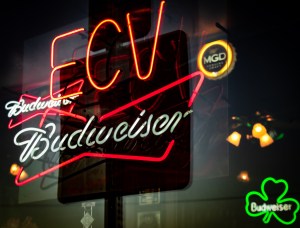
The Bridgeport Inn advertises itself, in a neon ECV sign, as a Clamper hangout. What exactly is a clamper? That’s a good question, and I’m not certain that I’m qualified to explain. I’m not certain that anyone is qualified to explain, unless that person is a bona fide Clamper. I mention the Clampers because out here in Gold Rush Country, the Clampers are something of an institution.
“ … your position and power in life do not matter: no one is above the law … “ ~ South Carolina Attorney General Alan Wilson following the conviction of Alex Murdaugh.
“I could stand in the middle of 5th Avenue and shoot somebody and I wouldn’t lose voters.” ~ Donald J. Trump, January 23, 2016.
***
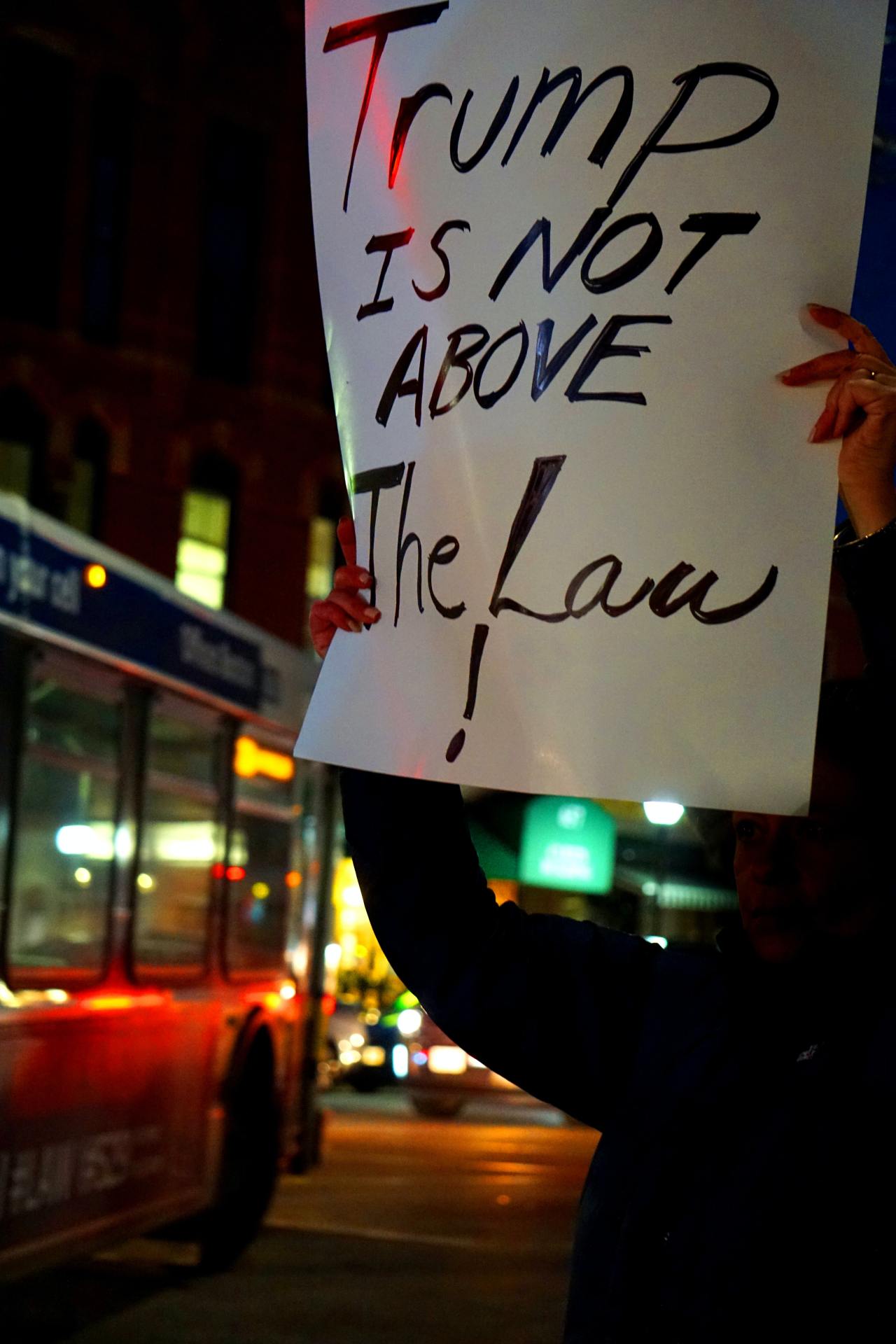
If the two statements above seem to you to be at odds with each other, well, you’re right.
Can’t go a week without hearing some version of the former statement, “Nobody is above the law.” It’s usually delivered with a self satisfied harrumph and can come from just about any mouth; politician, pundit, law enforcement official, or just the average citizen. Van Jones said it. Gloria Allred said it. John Yang, Leon Jaworski and, ironically enough, Andrew Cuomo said it.
We’ll come back to the quotes a bit later, but first, let’s get to Donald Trump’s recent bloviation, delivered on Saturday via his chicken shit media platform, Truth Social (“truth” is a seldom found commodity on that platform).
In a statement delivered all in caps (because that’s how Donnie rolls), Trump said that he will be arrested (correction: ARRESTED) on Tuesday by the New York D.A. over his alleged hush money payment to porn star, Stormy Daniels. As if that wasn’t bad enough, Trump ended his statement by urging his followers to take to the streets and protest. We saw this movie on January 6th, 2021 and it didn’t end well. In fact, it hasn’t ended. January 6th is the never ending story without apparent resolution.
But Trump wasn’t done. Feeling the need to pour more gasoline on the fire he went back on Truth Social, and posted, “WE MUST SAVE AMERICA! PROTEST, PROTEST, PROTEST!!!”







 The Life in My Years