
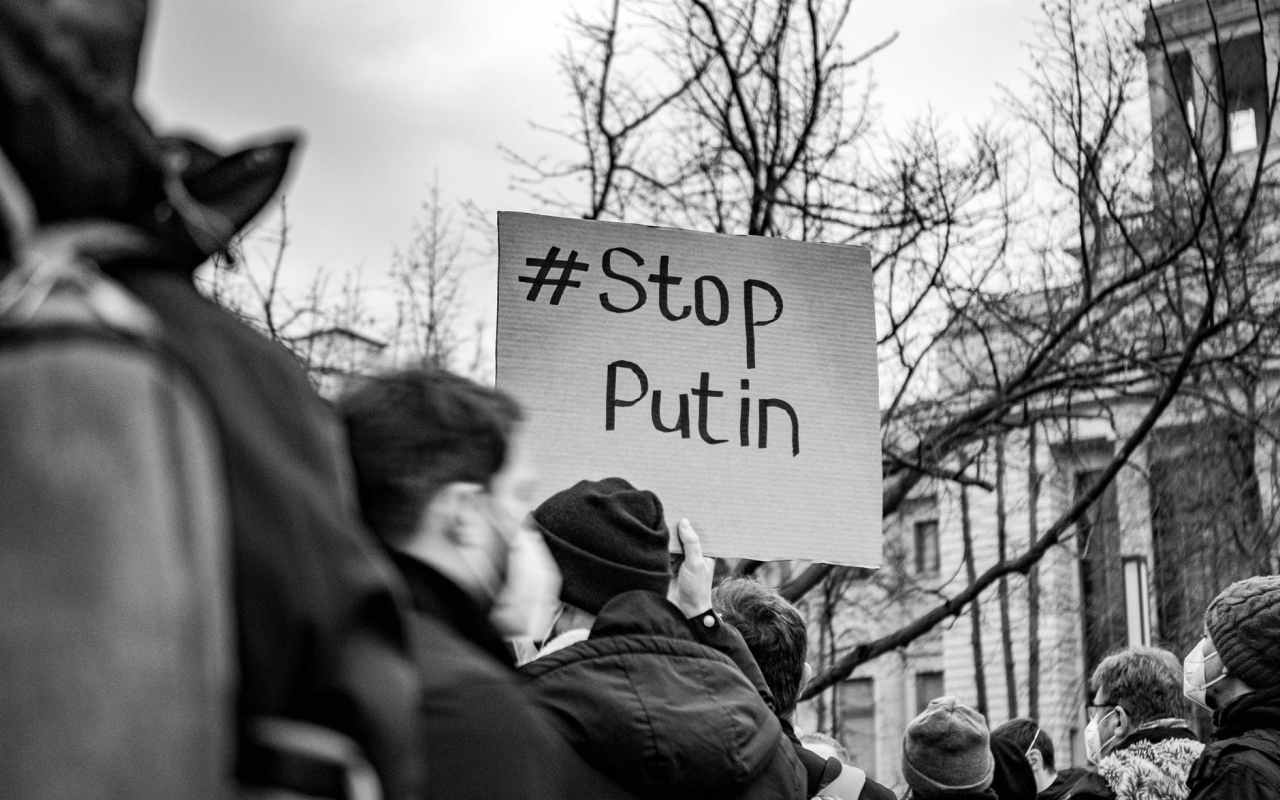
Blood and destruction shall be so in use
And dreadful objects so familiar
That mothers shall but smile when they behold
Their infants quarter’d with the hands of war;
All pity choked with custom of fell deeds:
And Caesar’s spirit, ranging for revenge,
With Ate by his side come hot from hell,
Shall in these confines with a monarch’s voice
Cry ‘Havoc,’ and let slip the dogs of war;
That this foul deed shall smell above the earth
With carrion men, groaning for burial.
~ William Shakespeare, Julius Caesar
What exactly is it that motivates a man to “let slip the dogs of war,” on an innocent nation, a country doing nothing but minding its own national business?
The injured nation possesses nothing that the attacker needs; no resources that can’t be otherwise secured, no riches in particular. The attacker doesn’t need the land for colonization, what Hitler termed lebensraum.
But there’s a sin, one unforgivable sin perpetrated by the injured nation, a decades-long transgression conjured up in the twisted mind of a narcissistic madman; the sin of existence.
After months of amassing a huge army on his country’s border with the Ukraine, and spinning a yarn of war games and exercises, Vladimir Putin let slip his Russian Army.
Why?
It’s the question that Putin has answered only with fury and more fables, and pundits have tried to answer with theories.
My own?
Ukraine long ago took up residence in Putin’s head. The Ukrainian national anthem must be the earworm that disturbs Putin’s sleep at two o’clock every morning.
That Ukraine exists as an independent sovereign must, for decades, have been more than he could take. Putin probably looks at a map of Europe, sees all of those former Soviet republics and cries in his borscht, nostalgic for the “good old” cold war days of an intact Soviet Union.
As he sips his vodka maybe he waxes over those glory days of TU-95 bombers cruising off the coast of Alaska, nuclear submarines peeping at Boston Harbor through periscopes and the Kremlin casting its ominous shadow over the vast Soviet land mass.
When the Berlin Wall came down, Putin was a young KGB agent in Dresden, in what was at that time East Germany. The dissolution of the Soviet Union was, for Putin, a traumatic event that would stay with him and shape his life (Germany’s defeat in World War I and the subsequent Treaty of Versailles were traumatic events that shaped the life of a particular German corporal).
If Putin’s goal is to reestablish the old Soviet Union, what better place to start than the second largest country in Europe. Continue reading









 The Life in My Years