“Sign, sign Everywhere a sign Blockin’ out the scenery Breakin’ my mind Do this, don’t do that Can’t you read the sign?”
Songwriter: Les Emmerson
Released in 1970 by The Five Man Electrical Band.
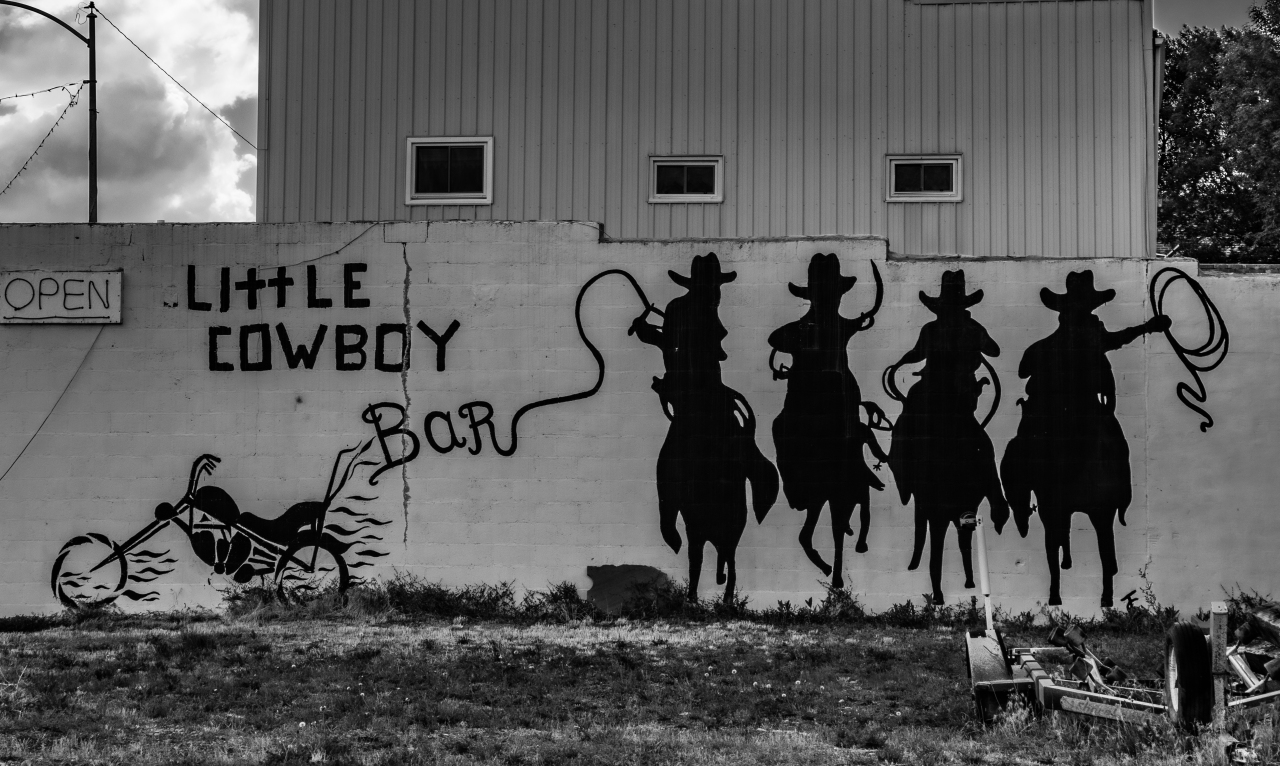
The Monthly Monochrome for August celebrates the sign, one of the most excellent of photo subjects.
Why such high praise for the simple sign?
Why indeed.
When I want to take a picture of a sign, it doesn’t give me a ration of grief like my tweener grandchildren do. Unlike dogs and tweeners, signs don’t fidget in the middle of a shot – unless you count neon signs that blink or flicker. They don’t complain about having to pose or stand still. They don’t look at the photo and get all pissy because they didn’t smile or because they blinked (even the neon signs don’t complain when they’ve blinked). In fact, they don’t complain about anything.
A photo of a sign always has a story attached to it. Otherwise what’s the purpose in putting up a sign?
Signs can be clever; they can be funny or they can be off putting; they can be quirky; they can be attractive; they can be confusing and confounding, and they’re usually, but not always, informative.
Signs can be like people. And why not? After all, people make them. Signs come in various sizes, shapes and colors – just like people. Just like people they can make you happy or piss you off. They can have their own politics and religions.
A sign can be bossy and stern like your, “No Trespassing – Violators will Be Prosecuted” placard, or, a sign can be polite, such as “Please Clean Up After Your Dog.”
But enough of this palaver. Let’s get to the main event.
Green Bay, Wisconsin.
Attorney for John Barleycorn’s defense?
“Most writers like to maintain some sort of anonymity.” ~ Sheryl Crow
Sheryl’s dead wrong if you’re a blogger trying to interact with readers. That interaction has been exceedingly difficult on WordPress lately.
“Anonymity is the calling card of the fearful and the courage of the cowardly.”
~ Beem Weeks
I don’t know about that Mr. Weeks, but starting in this month of August, anonymity has been the blogger’s vexation. For me it began on August 10th when I noticed a comment on one of my photo blogs. The commenter wrote, “Great great GREAT monochromes. You are a master.” It was signed “anonymous” but the wording of the comment told me that the writer was a gentleman who has often commented on my photo blogs.
Shortly thereafter, my posts were being inundated by “anonymous” commenters and like the gentleman mentioned above, the wording of many of these anonymous comments seemed to hint at regular, known commenters.
Over the past weekend, I contacted two bloggers via email and found that they were having the same issue. One of the bloggers had contacted Jetpack, and she was told that she must’ve changed her settings (she hadn’t).
Two days ago (August 22nd), I contacted the WordPress help desk, described the problem and offered the suggestion that they actually look into the problem and not provide a “canned” explanation such as, ‘the commenter might not have been logged in”.
(Note: You should not appear as “anonymous” if you are a WP blogger and you are signed into your WP account. If you are not signed in you will indeed appear as “anonymous.”). Continue reading
A chapter in an occasional series of posts documenting a Spring 2021 road trip.
Today in America time is money and very few have time and money to call their own. If you work, the chances are that work won’t bless you with the time or the money to take the great American road trip. Whether by personal choice or the pressures of life, the destination has become the ambition and the journey an impediment. Indeed, the road trip is becoming a lost piece of the American jigsaw puzzle. ~ The author.
“The best travel throws sameness aside for a spell and seeks reprieve from the monotony of undeviation and bends the straight lines of our days into the thrill of unexpectation.” ~ Nathaniel Trenant in O America, by William Least Heat-Moon
May, 23rd, 2021. Flagstaff, Arizona.
The wind that’s followed us for days has finally blown itself out or, as my dad used to say, “blown this town,” whipping somewhere east where it can torment travelers in New Mexico and Texas.
It’s early morning, I’m up, Cora’s still asleep, and Lexi is bouncing around the room wanting to go out. She’s telling me that there’s adventures out there to be found.
It’s the usual routine every morning since we left home; I search around a dark room for my clothes, while trying to keep Lexi quiet, and then once I’ve collected everything I get dressed in the light of the bathroom, still trying to keep Lexi quiet.
Getting myself together in the dark is a much easier proposition than keeping Lexi quiet. Gordon Setters have their own canine language which consists of various tones, lengths and decibels of “rooo – rooo” and Lexi is talkative, every – damn – morning. Once I’ve got it together I gather my camera, leash up Lexi and we’re off.
After Lexi has taken care of business we take a drive, looking for things that we don’t know are out there.
Anne Chandler leads this week’s Lens Artists Challenge and she asks the burning question, “What’s your photographic groove?” (Please visit Anne’s website, Slow Shutter Speed, for her take and those of others).
Grooves? I’ve had more grooves than a 33 RPM album.
I’ve done macro, landscape, reflections, sports, oceans and other assorted bodies of water grooves. There’ve been clouds, bugs, railroads, old barns, broken down cars and brand new skyscrapers.
And now?
Well, now I’m grooving on monochrome, incorporating some of the old passions and adding others, most notably cemeteries – or more accurately, graveyards. For an explanation of the difference between a cemetery and a graveyard, go back two months to one of my previous posts.
I rarely shoot in black and white, preferring instead to shoot in color and then edit into monochrome. A color image can always be converted to black and white but the converse is not possible. As Emeril once said, “You can always add, you can’t take away.” Remember that the next time you have a jar of cayenne pepper in your hand.
Why black and white?
Because it lends itself to some of the moods I’m drawn to; the old, the forgotten, the decrepit, the desolate and the dreary. Yeah, I’m the life of the party. Old Edgar Allen Poe has nothing on me.
Some of the images in this post have appeared in previous posts.
Desolation
A road trip through the American Southwest can deliver you to places lonely and forsaken.
Below: Part of what’s left of the old mining town of Goffs, California in the Mojave Desert.
Goffs, California
Below: In Grants, New Mexico there’s no service at Charlie’s Radiator Service.
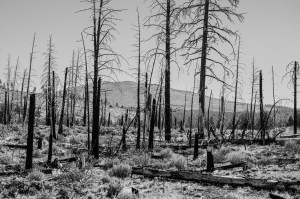
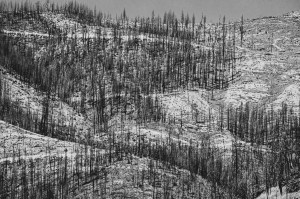
Can color properly convey the devastation wrought by a wildfire? Below: During the last leg of a 2021 road trip, we came upon the bleak remains of a forest in Northern California.
Roads
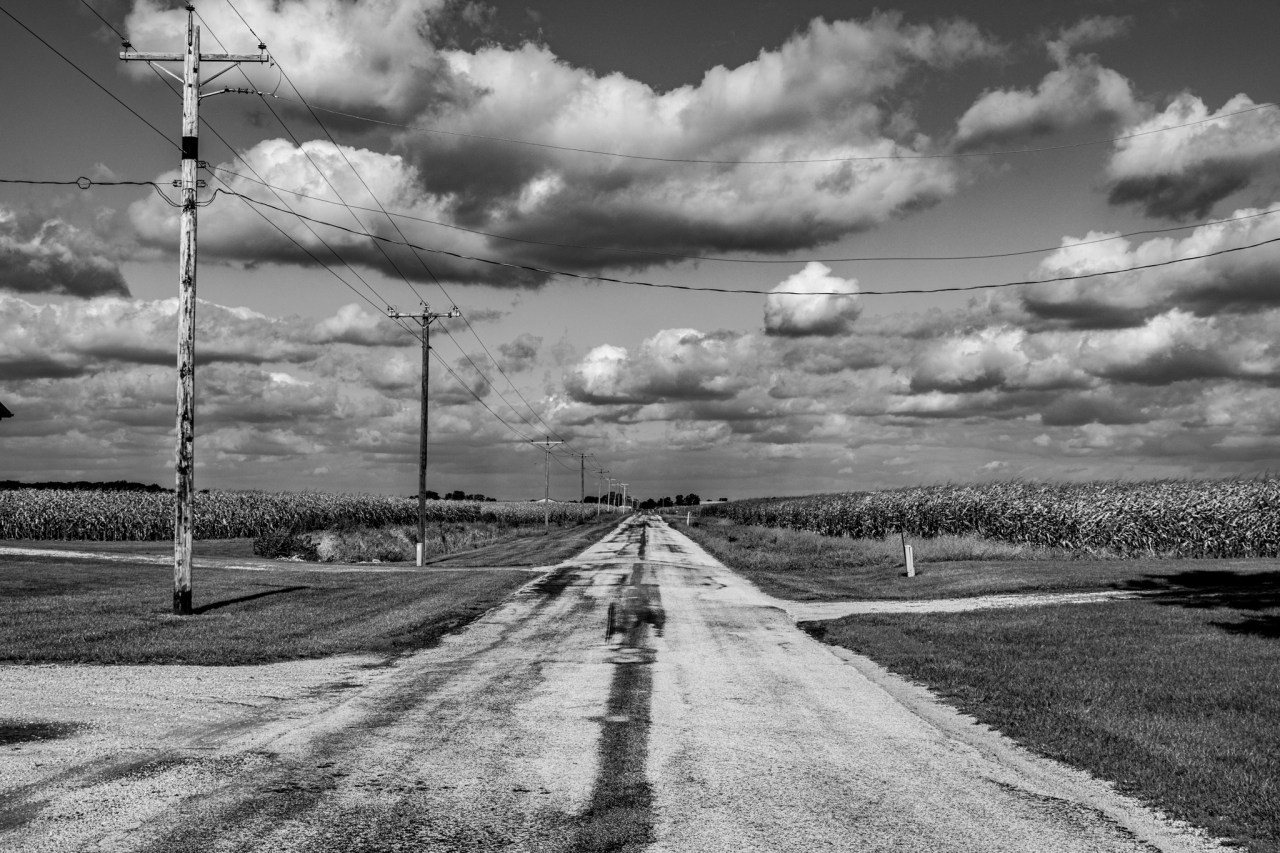
I love road trips and the main ingredient for a road trip is, well, a road – at least one. While a road passing beneath a canopy of autumn blazed trees begs for color, black and white serves a good road well, and a bad road even better. Continue reading
Maybe that’s because I don’t think my usual core of readers would be interested (That, even though I’ve told my friend Eden that I don’t really care what the fuck they like. I’ll write what I want and take what comes – or doesn’t come).
I love sports.
And sometimes I detest sports.
Why the dichotomy?
Because I’ve become a realist about sports, some might say a cynic and, in my most critical moments, some would call me a downright hater.
It wasn’t always this way. I used to think of sports as the great panacea, a nostrum for all the world’s problems. Athletics was, for me, that most pure form of human engagement. Sports was the classroom where the young could learn and hone values esteemed by society; dedication, hard work, perseverance, loyalty, leadership, patience, accountability and respect.
Hand two enemies a ball and they can become the best of friends.
I picked up those notions in my youth and carried them through to my early thirties.
And then I was struck – hard – by the reality of the darker elements of sports.
It was a disappointing realization at first; not unlike learning that there’s no Santa Claus, or that the love of your life is banging your best friend. As disappointing as spending your last buck on a hot dog and getting it served to you with ketchup slathered all over it
And so, I found the past week’s top stories in sports to be an interesting confluence of the good and the bad, the elements that inspire and dishearten, and frankly, disgust.
This week’s Lens Artist Challenge is led by Sarah of Travel With Me (link here) and she’s chosen a most prodigious challenge – three favorite photos.
How does one pick three favorite photos out of thousands? Okay, let’s be honest, how does one pick three favorites out of maybe a half a dozen. Most of my thousands are outright rejects. Then you winnow out the ones that are good but don’t qualify as favorites and what are you left with?.
I had just about decided to select three photos of four of my most favorite people – my grandchildren. Not because they’re really technically awesome photos but because I think my grandchildren are awesome. Call it, taking the easy way out.
And then I read Sarah’s loose, but certainly not mandatory guidelines which includes, “Choose three from different genres please, but those genres are up to you: macro, wildlife, street, landscape, architecture. Anything goes, but each must be an image you are proud of. Tell us a bit about each of your three photos please. Where you took it and when. Why you are pleased with it and have chosen it for this challenge.”
Well, that makes it all the more challenging.
Transamerica Pyramid
The photo below is of the Transamerica Pyramid in San Francisco. I shot this in color, looking straight up into a bright blue sky.
What I like about the photo is that it represents three relatively new phases in my photographic journey. Continue reading
September 10/11. 2021: Carter Lake, Iowa. I’d landed in Omaha but my airport motel was in a little enclave of Iowa called Carter Lake, just a short jet blast away from the Nebraska state line. Carter Lake, the only Iowan outpost located west of the Missouri River maintains an I scratch your itch and you scratch mine relationship with the Omaha airport, that itch being money – and the airport does most of the scratching..
In 1877, a flood redirected the course of the Missouri to the southeast creating a lake, and later, a lakeside town. The states of Nebraska and Iowa squabbled over territorial rights until it was all decided by the Supreme Court in 1892 in favor of Iowa.
My one night’s stay in Carter Lake was a restless one, but in the end I’m grateful for the pacer, the guy in the room immediately above mine, who spent most of the night walking around in his room; on his thin floor and my thin ceiling.
His was an interminable trek. First in circles, then a pause and then back and forth. There was no method, only madness. It was a migration without a destination.
On occasion, Mister Walker (the name I gave him when I wasn’t using more colorful handles) would stop and run the water at what sounded like full force. He could have been running a trickle, but in the middle of the night, fruitlessly seeking sleep in a lonely motel bed, every sound is magnified. A bug walking on the ceiling can be a pile driver.
He also spoke on occasion, though I couldn’t make out what he was saying. Was he on the phone? Was he talking to himself? (It seemed that he was alone). Maybe he was holding court with tormenting phantasms.
At the outset of his excursion it was the noise and annoyance which kept me awake. After a time though, that point at which I was giving up on the notion of a restful night, it was a mixture of astonishment and sheer curiosity that was pushing sleep aside.
What could he possibly be doing?
I wouldn’t have been astounded to find that he was staring at a human skull as he circled the room, bemoaning the demise of “poor Yorick,” his old buddy “of infinite jest,” who he once “knew well.”
The usual motel disturbance is the finite one of a couple commingling in an adjacent room. I can usually take comfort in the knowledge that this sort of activity will come, in a manner of speaking, to an end in a relatively short time. It might go on for fifteen minutes or have a duration measured, tragically for at least one participant, in mere seconds.
“Oh wow, that’s so surreal man.”
How often did I utter that in another time, in another life, in another reality. Times when I dabbled in herbal, uhh, curatives. Times when I was probably listening to The Jefferson Airplane. “ When the men on the chessboard Get up and tell you where to go..”
Hey man, the chessboard. so surreal?
Now that I’m a bit too old and wise for that sort of activity I like to find my surrealism through other avenues.
And so last Saturday I was browsing the photography sites and found Tracy’s, Reflections of an Untidy Mind (Great title. Wish I’d thought of it).
Tracy is the host this week of the Lens Artists Photo Challenge and she chose the topic surreal. My first reaction was, “I don’t think I’ve got anything to fit that topic.”
After a little browsing through the archives and some noodling around with Photoshop I stumbled onto a few possibilities.
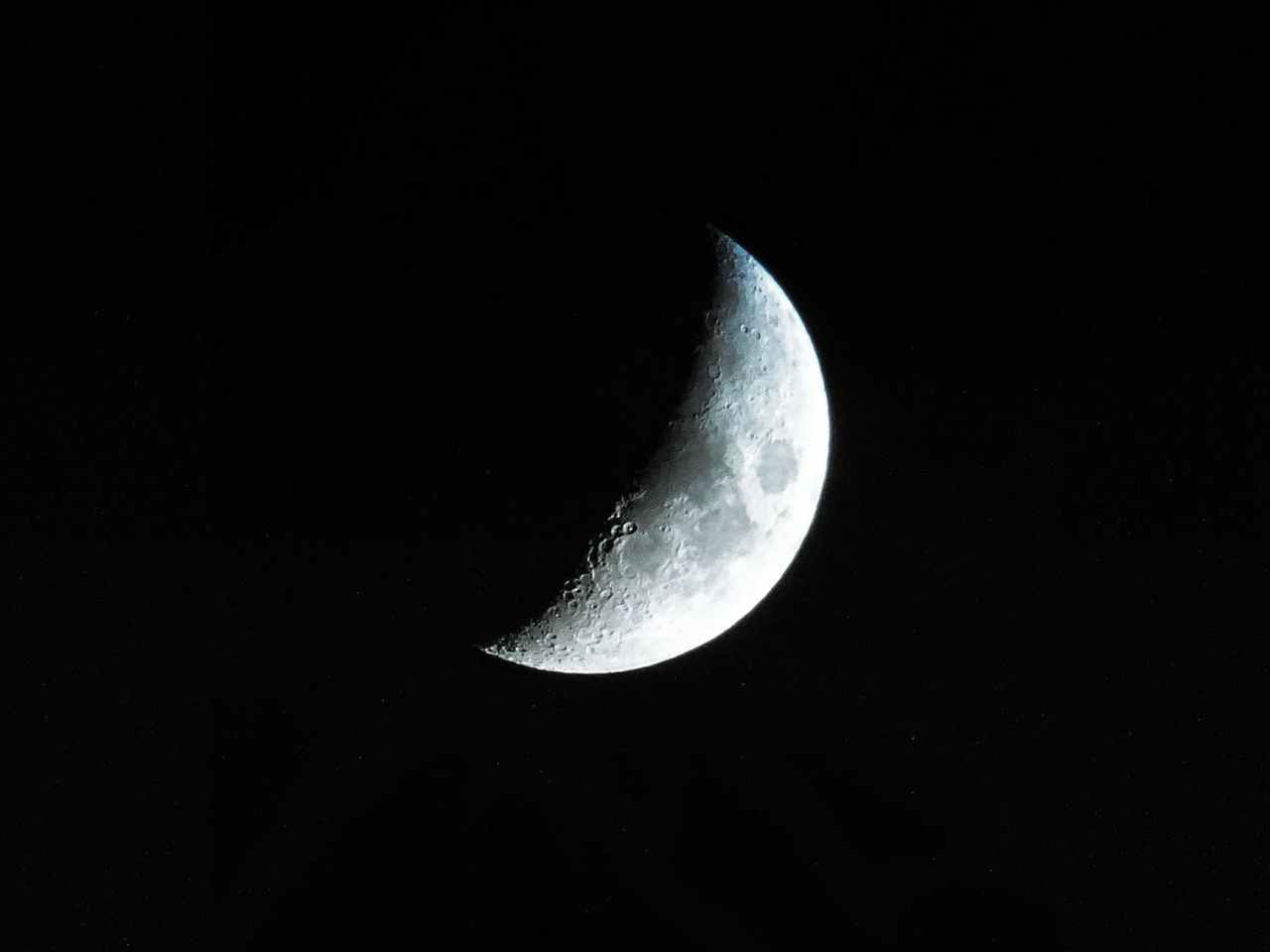
Can anyone guess what the banner photo is an image of? (Answer at the end of this post).
Photoshop has an editing feature called HDR (High Dynamic Range) toning. I’m not going to go into the nuts and bolts of it because, well, I’m only slightly versed in a few of the nuts and none of the bolts.
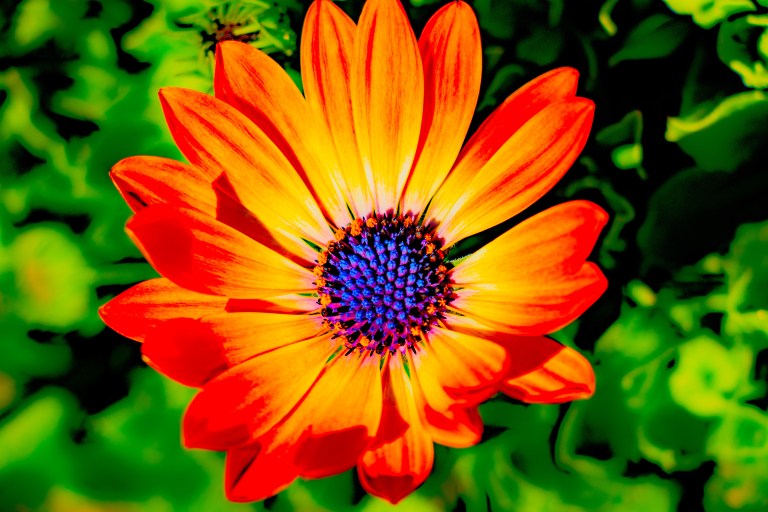
Conveniently enough though, the HDR menu contains a selection called surreal, which I used to edit a photo of a daisy.
“Flyover country.” It’s the pejorative heaped on anyplace that isn’t within a day’s drive of America’s two coastlines.
As someone who lives in the San Francisco Bay Area, I suppose that I’ve used the term with disdain when talking about the Midwest, as have my grandiose kinsmen from the shores of the east and west. I couldn’t say for sure but my guess is that residents of “flyover” states respond to “flyover country” with a middle finger and a ‘just keep flying over.’
How does the story go?
Midwesterners are proud, patriotic and pious. Hardy folk, mostly white and mainly conservative, born of hardy European stock who emigrated from hardy European countries. They’re described as being anything between friendly and suspicious and they have a particular dislike and distrust of so-called “elites” from the New York’s and San Francisco’s.
Indeed, in 2008, then presidential candidate Barack Obama was caught delivering the standard fare at a fundraiser, “And it’s not surprising then they get bitter, they cling to guns or religion or antipathy toward people who aren’t like them or anti-immigrant sentiment or anti-trade sentiment as a way to explain their frustrations.”
Obama was talking specifically about ” these small towns in Pennsylvania,” but his faux pas raised the ire and suspicions of much of Middle America. To add an enhancement to the crime, Obama was caught making the remark in San Francisco – yeah, elite central. It seemed like a self-fulfilling prophesy for both the “elites” and the “flyover” folk.
And so here I am, with a pandemic still in full flower, just landed in Omaha, smack in the middle of “flyover country,” on day one of over thirty more, driving through landlocked America. I’ve arrived to either validate or debunk, at least in my own mind, all of the notions about “flyover country.”
August 1st, 1804; A clear and fair dawn has greeted the Lewis and Clark Expedition. The party is camped on the western shore of the Missouri River, after having arrived the day before. The forty-four members of the expedition are unaware that their little camp will one day be a city of 843,000 – Omaha, Nebraska.
But for a smattering of earlier arrivals, mostly French and British fur traders, the expedition represents the first white men to arrive at this eastern edge of America’s Great Plains, an expanse of rich, verdant grassland encompassing over one million square miles.
Lewis and Clark have been exploring a pristine paradise, a veritable garden of Eden, where a bounty of food is available for the taking and one need only kneel by the river’s edge to taste pure clean water.
On this first day of the month, in celebration of his thirty-fourth birthday, William Clark dines on venison, elk and beaver tail, followed by a dessert of cherries, plums, raspberries, currants and grapes.
In his diary Clark notes, “What a field for a Botents [botanist] and a natirless [naturalist].”
In two days, Lewis and Clark intend to hold a council with representatives of two indigenous tribes, the Oto and the Missouri and so the captains have christened this camp, Council Bluffs.
Dawn breaks foggy on August 3rd but by 9 AM the fog has burned off and an hour later the emissaries from the two tribes arrive for the meeting.
In the condescending manner that would come to characterize White America’s negotiations with America’s original residents, Lewis begins by addressing the native representatives as “children,” and referring to President Thomas Jefferson as “the great father.”
“Children,” begins Clark, “your only father; he is the only friend to whom you can now look for protection, or from whom you can ask favors, or receive good councils, and he will take care to serve you and not deceive you.”
When done dangling the carrot, Lewis unveils the stick, warning that “one false step would bring upon your nation the displeasure of your great father, who could consume you as the fire consumes the great plains.”
The carrot would turn out to be a deceit, and the stick would be a promise fulfilled.
Were the Native Americans at that council realizing the beginning of the end of paradise, while Lewis and Clark were envisioning “progress?”
Twenty-one years later, Jean Pierre Cabane established a trading post on the site of the future Nebraska city.
During the bitter winters of 1846-47 and 1847-48, more than 600 Mormon pioneers headed for Utah, perished near this site, from exposure, disease, starvation and scurvy.
Less than ten years later, the city of Omaha was established.
Paradise was losing. Certainly the rape of Eden was made inevitable when the Mayflower dropped anchor, 184 years before Lewis and Clark made camp at Council Bluffs.
I wonder if we would call those Midwest states “flyover country” if American Manifest Destiny had, by some miracle, spared the great grasslands and plains, left untouched the oceans of grass and the palettes of wildflowers and allowed the vast herds to roam unmolested.
“We stood by and allowed what happened to the Great Plains a century ago, the destruction of one of the ecological wonders of the world. In modern America, we need to see this with clear eyes, and soberly, so that we understand well that the flyover country of our own time derives much of its forgettability from being a slate wiped almost clean of its original figures.”
~ Dan Flores, American Serengeti: The Last Big Animals of the Great Plains
Two hundred and seventeen years after Lewis and Clark: It’s 5:43 in the afternoon of September 10th 2021, and Omaha’s Eppley Airfield is as far from being paradise as anything could be.
To step outside of the air conditioned coolness of the terminal is to take a punch from the heat; steamy, sticky and stifling.
The gate agent announces the boarding sequence; special needs passengers, military, first class, and economy.
Walking past the proletariat towards the jetway and my first class seat I could almost feel their mixture of envy and hatred. Settled in my seat I feel the pain of the passengers filing past and back to damnation.
In truth, this will only be my second time flying first class, so I’m well acquainted with economy, the search for overhead space and squeezing into a seat. I know what it’s like having someone’s seat back in my lap and feeling my own seat back yanked from behind as a fellow passenger steadies himself while he shoe horns his way into his own seat in back of mine.
The previous time I flew first class Cora and I were returning from Richmond, Virginia and I had to be at work the next day. No day of decompression. From two weeks away from work, straight back to the office to face 500 emails, whatever work my office back up decided she didn’t feel like doing, and an ass chewing from my boss for having the audacity to take time away.
I decided to liquidate damn nearly every American Airlines mile I had and upgrade to first class.
I’m flying first class this time because COVID isn’t done yet and I’d like to have as much space between me and the rest of the public as possible.
That and the fact that the first class price wasn’t much more than economy.








 The Life in My Years