This week Tina of Travels and Trifles has challenged us to a Treasure Hunt. She’s proposed a list of treasure items which includes:
A pet or pets (yours or someone else’s)
The moon or the sun (extra credit for both in one image)
Clouds (extra credit if you also include rain or snow)
A reflection
A child (extra credit if with other family members)
An umbrella (extra credit if you include a person using it)
A truck (extra credit if you include the driver or what the truck is hauling)
Autumn foliage (extra credit if it’s something that only blooms in the fall)
Something fun you found on a walk
I can’t manage the extra credits above but there’s plenty of double dipping.
Clouds
Below is an alpine meadow near the summit of the Beartooth Highway a scenic 68 mile drive that begins in Red Lodge, Montana and ends at the northeast corner of Yellowstone National Park.
Below, Early morning at Port Clyde, Maine.
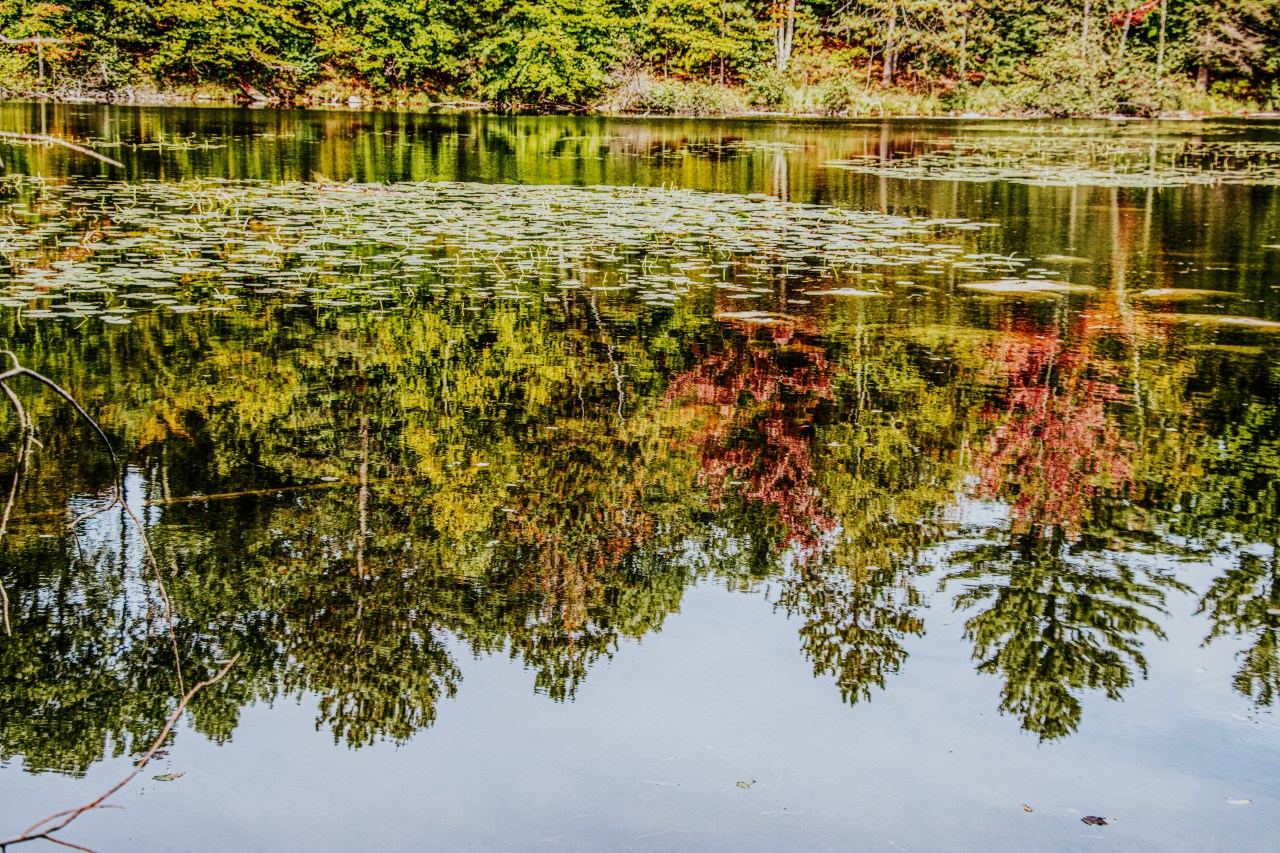
Reflections Banner image is of a random lake I passed by while driving through Wisconsin.
Below I’ve reflected on the urban scene. The first image is a reflection of the grand Le Château Frontenac, located in Quebec City’s Upper Town. The window is in a building located on Rue du Petit-Champlain far below Upper Town.
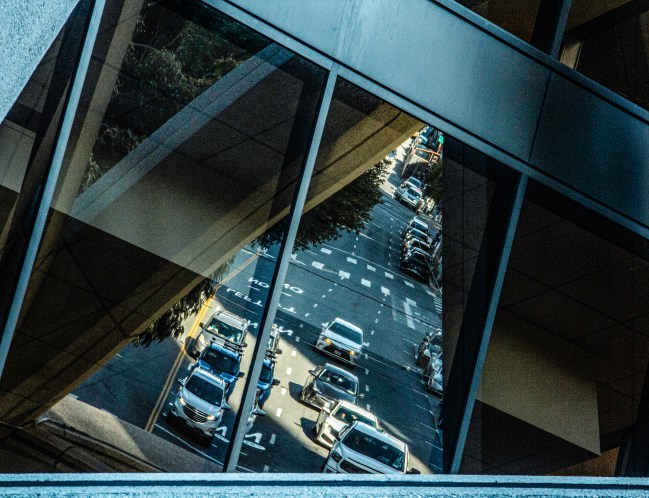
The TransAmerica Pyramid in San Francisco is one of my favorite architectural subjects, with it’s unique shape and numerous beams and angles. The photo below is a reflection in one of the Pyramid’s windows of traffic on Columbus Avenue.
Parke County, Indiana. Looking for the Mill Creek Covered Bridge, I turned left when I should’ve turned right. The road winds through some cornfields until the cornfields end and the road dips into a dark, woody hollow. It’s a foreboding place. A twinge of anxiety in my gut. Just about to the bottom of the hollow, I look to my left and there’s a shack, an old single wide, scrap part of things and stuff on a sloping lot. A guy tending a leaf fire looks up and glares at me through the smoke. It’s a dead end at the bottom. I turn around and driving past the sloping lot I notice a Confederate flag flipping in the breeze. The man’s glare hasn’t left his angry visage. A chill runs through me and I can only imagine how a lone Black man would feel. Actually no – I couldn’t imagine it.
***
Wisconsin is dairy country and where there’s dairy there’s naturally milk, and where there’s milk it’s just a short hop to cheese. Wisconsin is passionate about its cheese. Chauvinistic. In Green Bay football fans don cheese head hats, gigantic yellow wedges of foam ‘cheese’, to games.
Cheese curds are ubiquitous here. Pubs, restaurants, supermarkets, mom and pop stores, the household fridge and even, as I came to learn, the car’s dashboard.
The Buffalo River meanders through the southern edge of Mondovi, Wisconsin. The town is named after the Battle of Mondovi, where Napoleon’s army defeated the army of the Kingdom of Sardinia-Piedmont. How a town in Wisconsin came to be named after a Napoleonic tussle is a mystery to me.
In the Mondovi IGA grocery store, holding a package of cheese curds, studying it like one might puzzle over a Rubik’s cube.
A woman paused nearby.
“Excuse me,” I said. “I’m not from here.”
“Oh, welcome,” she said kindly.
“Thank you.” Holding up the package of curds I asked her, “What exactly do you do with these?”
“Well, they’re very good deep fried.”
I thought, well, no shit, everything, with the possible exception of liver, is good deep fried.
Since I didn’t bring a deep fryer along with me I asked, “Can they be microwaved?”
“Yes, but not for too long. They’re good as is. If you’re on a road trip you can set them on the dashboard and let the sun warm them up.”
In the end I bought them. During the course of a few days I had them microwaved and cold but they never saw the top of my dashboard. They were good I suppose. And then I was sick of them – and they weren’t good anymore. But I hadn’t had them deep fried yet.
***
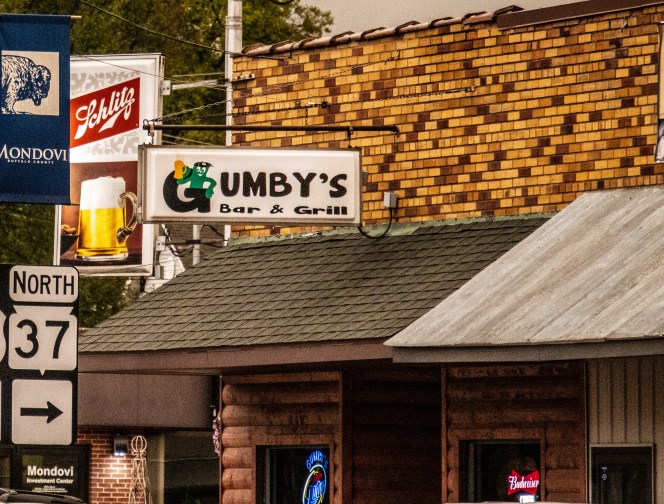
Gumby’s Bar and Grill, in downtown Mondovi. Mostly square, plain. A brick structure with a log façade and a sign that sports Gumby, that guy with the bulging eyes who looks like a stick of green gum partially split lengthwise. Gumby’s got his usual smile. Of course he does. He’s hoisting a mug of beer. That’s not the Gumby I remember. A Schlitz Beer sign over the door. I remember Schlitz. Do they still make it? “Schlitz, the beer that made Milwaukee famous, simply because it tastes so good.” How could I forget that old slogan from the days of my childhood? Me, and three old boys on their lunch break seated in a row at a plain Formica bar. Pizza sounded good. A bacon cheeseburger pie; beef, bacon, mozzarella and cheddar, and dill pickles.
“I’ve never had pickles on pizza before.”
“Neither have, I” replied the bar keep. “It’s the only pizza on the menu I haven’t had.” Not exactly a testimonial.
He was a tall young man, bearded with glasses. A sort of preppy, grad school look about him. Working his way through college, drawing beer and making small talk with barflies?
In the appetizer section, something called a cheese bomb.
I asked the bartender what a cheese bomb was.
”It’s a big square cheese curd. Good but greasy.”
“Deep fried?”
“Oh, yeah. Not something you should eat every day.”
In the end, I ordered the bacon cheeseburger pie and went away happy with dill pickles on pizza, but wishing I’d had the cheese bomb for desert.
This week, Tina Schell of Travels and Trifles hosts the Lens-Artists Challenge and the topic is opposites.
There are two possible takes on this topic. I would like to say that I could offer a selection of photos showing opposites in the same image. And maybe I have some of those. Certainly a personal challenge for the future.
And so I’m going with what is for me the path of least resistance; pairs of images at opposing poles.
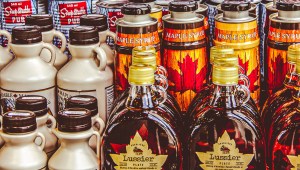
Sweet and pungent
The two photos below were taken at the Marche Jean Talon in Montreal.
A chapter in an occasional series of posts documenting a Spring 2021 road trip.
Continued from the post, Route 66: Diners, Twin Arrows And Trading Posts, (link here).
The van rocks and bumps as it grinds out of the dirt lot near Twin Arrows, Arizona. Lexi, my canine backseat driver is standing behind me, peering over my shoulder as we get back on Highway 40. She shifts glances between me and whatever we happen to be passing, tail swishing, nose twitching.
While Cora’s back at the motel, sleeping in, Lex and I are eastbound, on the way to Two Guns.
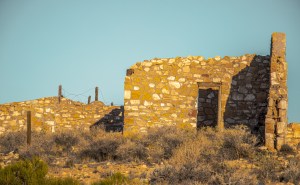
If you’re at highway speed and looking for it, Two Guns isn’t hard to miss. Unaware of the old stone ruins, though, they might flash briefly in the corner of your eye as an apparition from an era long past. You think to yourself, ‘What in the hell was that?’
It’s a momentary presence that flashes back to a scene from an old western; the climactic gunfight in the ruins of an old Southwestern town.
You might double back to confirm that what you thought you saw was what you really saw.
Highway exits? They’re like doors that lead to rooms off the main hallway. Exit signs convey the basics of what’s behind those doors. They tell you if there’s food: if there’s lodging; if there’s a gas station.
What exit signs don’t reveal are the sights, the stories and the lore locked in some of those rooms. Sometimes you just have to speculate whether or not there’s something worthwhile beyond the door.
But isn’t that the essence of a road trip? You see an exit sign, steal a glance off the highway and in the quickly waning moments before you’ve passed the exit, you either veer off or go on. In the case of the former you might stumble onto a rare find.
The latter? You’ll never know, will you.
In most cases you do pass by and press on. But the name Two Guns is compelling, a little bit mysterious, and very much Wild West. Hard to resist the urge.
The exit sign is simple. Exit 230 Two Guns ↗
Nothing else. Nothing hints of the tales of Two Guns.
The recent history of Two Guns (recent being 1920) is a version of the usual story of someone trying to make a go of it along the course of once popular Route 66 in the barren Southwest. Just another rendition of the many narratives that stretch from Oklahoma to the Pacific Ocean; of dreams, plans, success, failure and a final surrender to the onslaught of progress.
This week’s Lens Artists Challenge, selected by Sofia is Urban Environments (click on the linkfor Sofia’s take and other takes on Urban Environments).
Urban environments?
Well you’ve got your New York; your Boston; your Montreal; your Las Vegas; and your Los Angeles. All swell towns in their own right, and I’ve been to ‘em all..
But…
Give me San Francisco. And don’t call it Frisco, and really don’t call it San Fran.
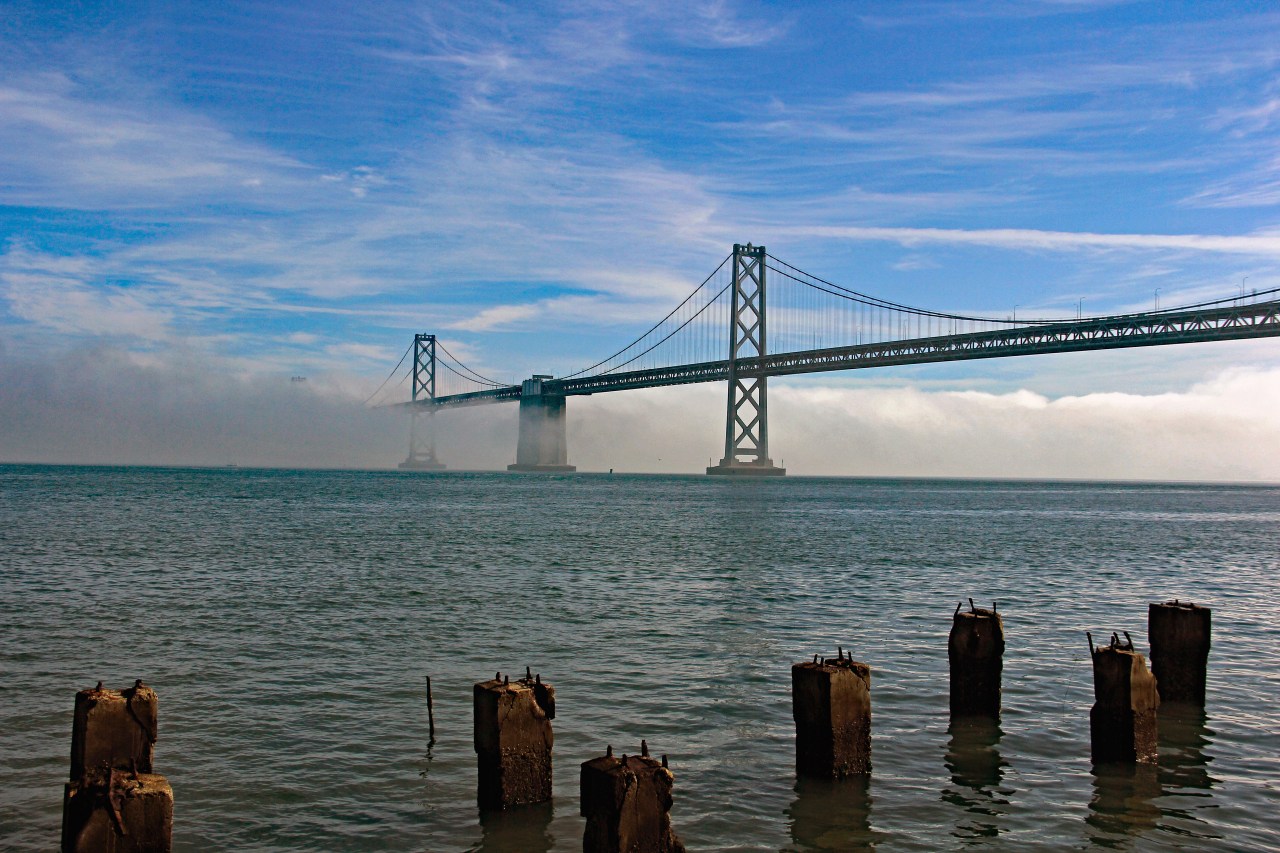
There’s three routes in, and two of those require a bridge. The Bay Bridge enters The City from the East Bay.
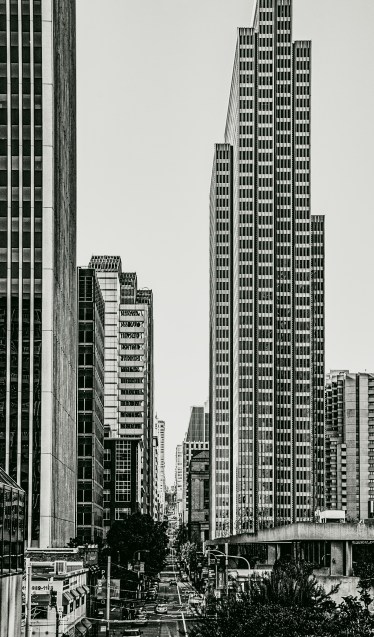
The Bay Bridge dumps you into downtown and the high rise canyon.
View up Sacramento Street from Embarcadero Center.
I’m a regular reader of the blog site, Anne the Vegan. Anne’s posts are usually about running or food but every now and again she writes eloquently about society; about events of the day; about justice and injustice. This evening she published a piece which stems from public criticism of Eliza Fletcher’s decision to go for an early morning run by herself. Ms. Fletcher was abducted and murdered, and in some circles the finger of blame has been pointed at her for doing something that I, a white male, have done, and felt safe doing, for over fifty years. As Anne points out in her piece, a flaw in our society holds women to a different standard. I can’t begin to understand or communicate the frustration and anger that women must feel, but Anne does so in a piece that is well written and powerful. Please scroll down to a link to Anne’s thought provoking piece.
I went for a 7 mile run yesterday, per my marathon training plan. Did I think about safety? I always do. I can’t afford not to. I’m a woman. I also thought about the abduction and death of a female runner as I ran. And I ran alone. On a college campus. And I couldn’t […]
“Sign, sign Everywhere a sign Blockin’ out the scenery Breakin’ my mind Do this, don’t do that Can’t you read the sign?”
Songwriter: Les Emmerson
Released in 1970 by The Five Man Electrical Band.
The Monthly Monochrome for August celebrates the sign, one of the most excellent of photo subjects.
Why such high praise for the simple sign?
Why indeed.
When I want to take a picture of a sign, it doesn’t give me a ration of grief like my tweener grandchildren do. Unlike dogs and tweeners, signs don’t fidget in the middle of a shot – unless you count neon signs that blink or flicker. They don’t complain about having to pose or stand still. They don’t look at the photo and get all pissy because they didn’t smile or because they blinked (even the neon signs don’t complain when they’ve blinked). In fact, they don’t complain about anything.
A photo of a sign always has a story attached to it. Otherwise what’s the purpose in putting up a sign?
Signs can be clever; they can be funny or they can be off putting; they can be quirky; they can be attractive; they can be confusing and confounding, and they’re usually, but not always, informative.
Signs can be like people. And why not? After all, people make them. Signs come in various sizes, shapes and colors – just like people. Just like people they can make you happy or piss you off. They can have their own politics and religions.
A sign can be bossy and stern like your, “No Trespassing – Violators will Be Prosecuted” placard, or, a sign can be polite, such as “Please Clean Up After Your Dog.”
But enough of this palaver. Let’s get to the main event.
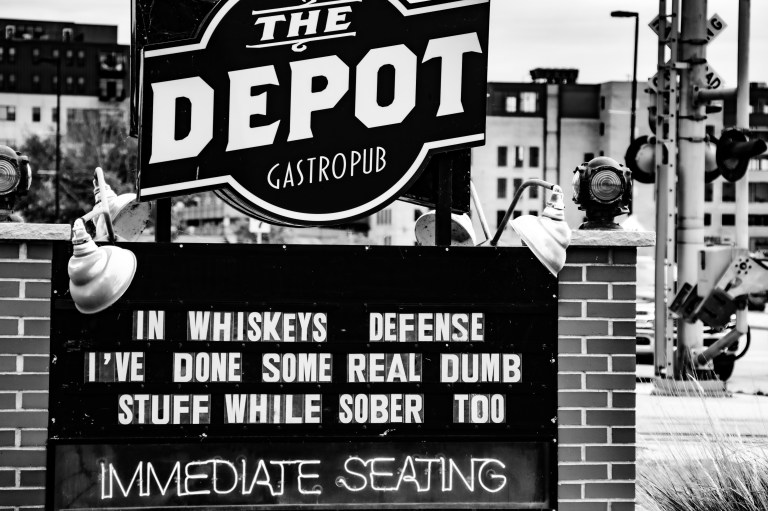
Green Bay, Wisconsin.
Attorney for John Barleycorn’s defense?
“Most writers like to maintain some sort of anonymity.” ~ Sheryl Crow
Sheryl’s dead wrong if you’re a blogger trying to interact with readers. That interaction has been exceedingly difficult on WordPress lately.
“Anonymity is the calling card of the fearful and the courage of the cowardly.”
~ Beem Weeks
I don’t know about that Mr. Weeks, but starting in this month of August, anonymity has been the blogger’s vexation. For me it began on August 10th when I noticed a comment on one of my photo blogs. The commenter wrote, “Great great GREAT monochromes. You are a master.” It was signed “anonymous” but the wording of the comment told me that the writer was a gentleman who has often commented on my photo blogs.
Shortly thereafter, my posts were being inundated by “anonymous” commenters and like the gentleman mentioned above, the wording of many of these anonymous comments seemed to hint at regular, known commenters.
Over the past weekend, I contacted two bloggers via email and found that they were having the same issue. One of the bloggers had contacted Jetpack, and she was told that she must’ve changed her settings (she hadn’t).
Two days ago (August 22nd), I contacted the WordPress help desk, described the problem and offered the suggestion that they actually look into the problem and not provide a “canned” explanation such as, ‘the commenter might not have been logged in”.
(Note: You should not appear as “anonymous” if you are a WP blogger and you are signed into your WP account. If you are not signed in you will indeed appear as “anonymous.”). Continue reading
A chapter in an occasional series of posts documenting a Spring 2021 road trip.
Today in America time is money and very few have time and money to call their own. If you work, the chances are that work won’t bless you with the time or the money to take the great American road trip. Whether by personal choice or the pressures of life, the destination has become the ambition and the journey an impediment. Indeed, the road trip is becoming a lost piece of the American jigsaw puzzle. ~ The author.
“The best travel throws sameness aside for a spell and seeks reprieve from the monotony of undeviation and bends the straight lines of our days into the thrill of unexpectation.” ~ Nathaniel Trenant in O America, by William Least Heat-Moon
May, 23rd, 2021. Flagstaff, Arizona.
The wind that’s followed us for days has finally blown itself out or, as my dad used to say, “blown this town,” whipping somewhere east where it can torment travelers in New Mexico and Texas.
It’s early morning, I’m up, Cora’s still asleep, and Lexi is bouncing around the room wanting to go out. She’s telling me that there’s adventures out there to be found.
It’s the usual routine every morning since we left home; I search around a dark room for my clothes, while trying to keep Lexi quiet, and then once I’ve collected everything I get dressed in the light of the bathroom, still trying to keep Lexi quiet.
Getting myself together in the dark is a much easier proposition than keeping Lexi quiet. Gordon Setters have their own canine language which consists of various tones, lengths and decibels of “rooo – rooo” and Lexi is talkative, every – damn – morning. Once I’ve got it together I gather my camera, leash up Lexi and we’re off.
After Lexi has taken care of business we take a drive, looking for things that we don’t know are out there.
Anne Chandler leads this week’s Lens Artists Challenge and she asks the burning question, “What’s your photographic groove?” (Please visit Anne’s website, Slow Shutter Speed, for her take and those of others).
Grooves? I’ve had more grooves than a 33 RPM album.
I’ve done macro, landscape, reflections, sports, oceans and other assorted bodies of water grooves. There’ve been clouds, bugs, railroads, old barns, broken down cars and brand new skyscrapers.
And now?
Well, now I’m grooving on monochrome, incorporating some of the old passions and adding others, most notably cemeteries – or more accurately, graveyards. For an explanation of the difference between a cemetery and a graveyard, go back two months to one of my previous posts.
I rarely shoot in black and white, preferring instead to shoot in color and then edit into monochrome. A color image can always be converted to black and white but the converse is not possible. As Emeril once said, “You can always add, you can’t take away.” Remember that the next time you have a jar of cayenne pepper in your hand.
Why black and white?
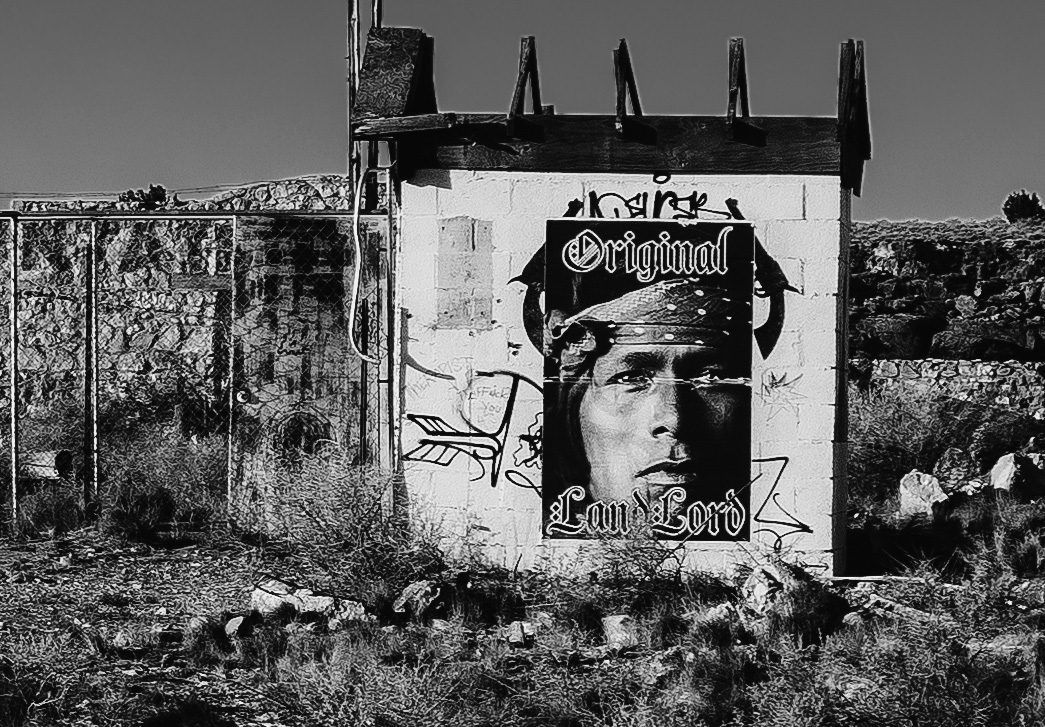
Because it lends itself to some of the moods I’m drawn to; the old, the forgotten, the decrepit, the desolate and the dreary. Yeah, I’m the life of the party. Old Edgar Allen Poe has nothing on me.
Some of the images in this post have appeared in previous posts.
Desolation
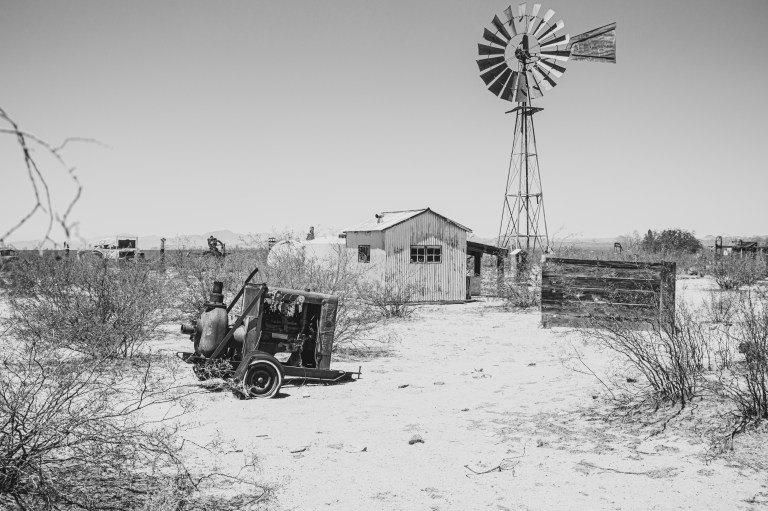
A road trip through the American Southwest can deliver you to places lonely and forsaken.
Below: Part of what’s left of the old mining town of Goffs, California in the Mojave Desert.
Goffs, California
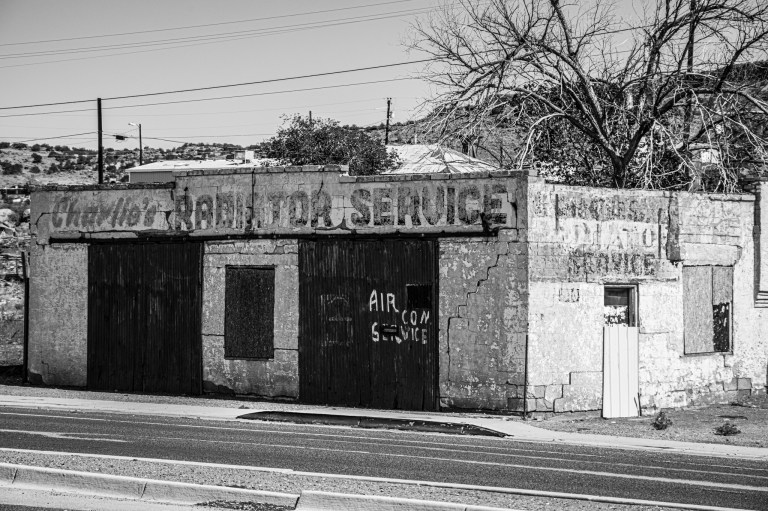
Below: In Grants, New Mexico there’s no service at Charlie’s Radiator Service.
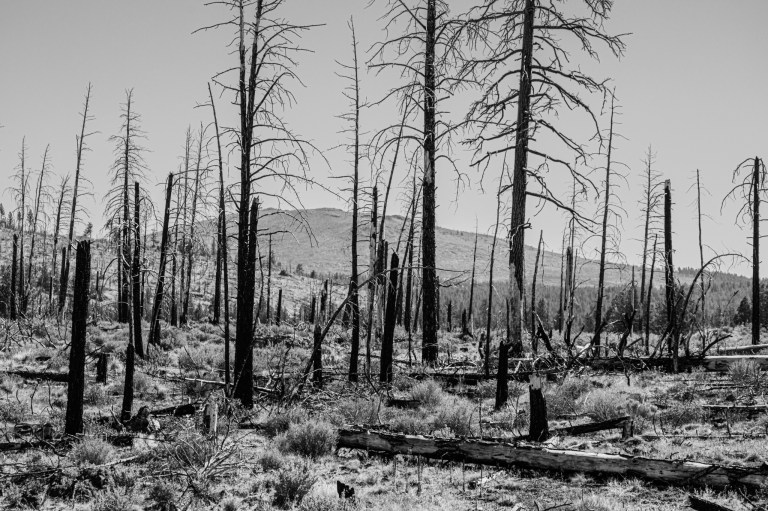
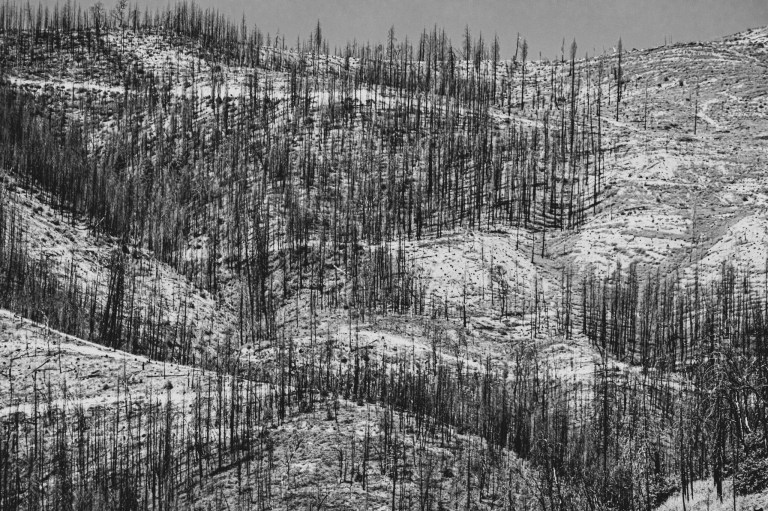
Can color properly convey the devastation wrought by a wildfire? Below: During the last leg of a 2021 road trip, we came upon the bleak remains of a forest in Northern California.
Roads
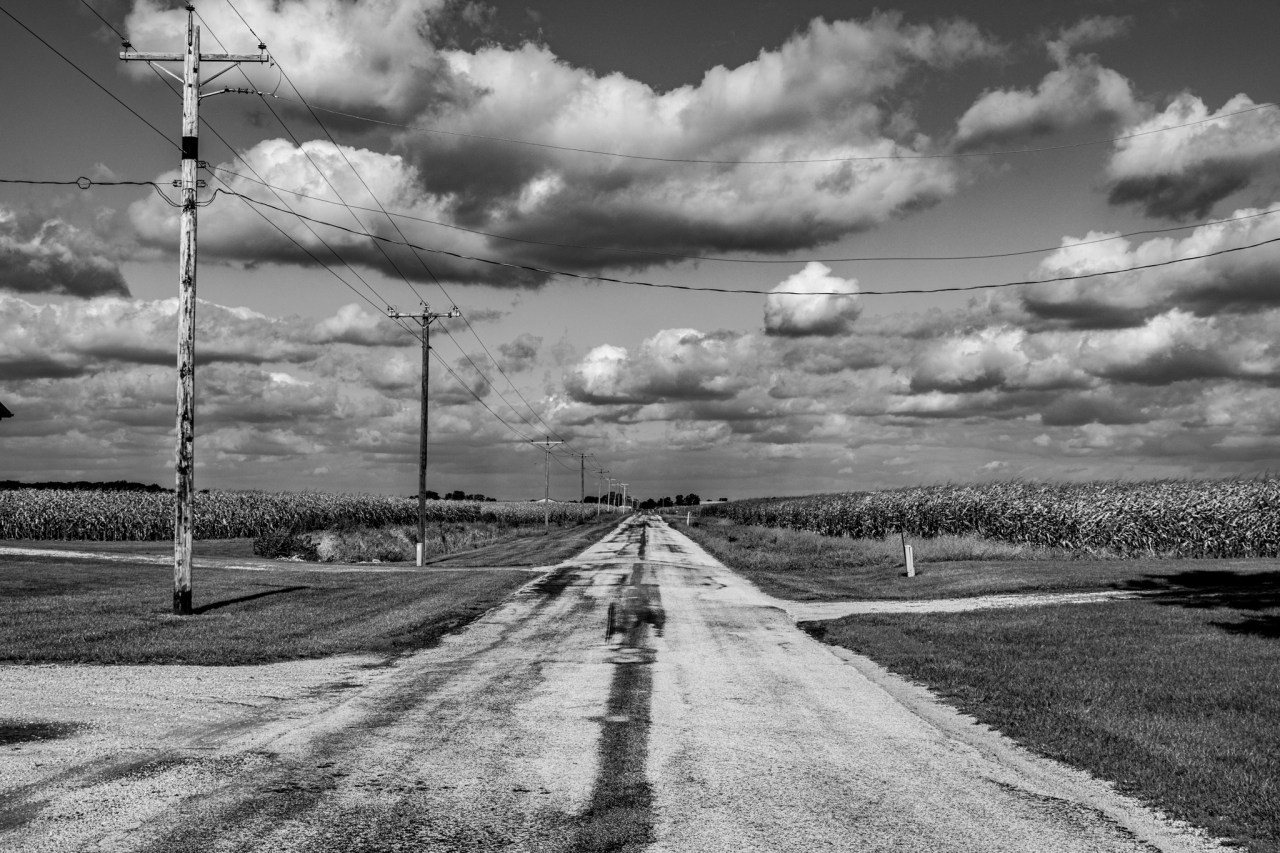
I love road trips and the main ingredient for a road trip is, well, a road – at least one. While a road passing beneath a canopy of autumn blazed trees begs for color, black and white serves a good road well, and a bad road even better. Continue reading









 The Life in My Years