
An American’s observations of a first time trip to France.
“Travel is not a reward for working, it’s education for living.” ~ Anthony Bourdain
We hit the first traffic of any consequence on the eastern fringes of Quimper. Quimper advertises itself as a village, but with a population of 64,000, I feel l have to call connerie (bullshit) on that description. Maybe, small city with a quaint old section that dates back to the Middle Ages would be more forthright.
The area was originally settled during the Roman era. By the late 5th century the settlement became a bishopric. Bishopric; that bring a memory from the haze of ages past. It’s a term that’s been rotting undisturbed in the deepest, dankest, cobwebbed dungeon of my mind, a thing from a college course on the Early Middle Ages and quickly banished to the catacombs of my subconscious the moment I laid my completed final exam on the professor’s desk.
Simply put a bishopric was a territory ruled under the secular and spiritual leadership of a bishop. It’s something on the current wish list of American Christian Nationalists – that is, as long as the bishop is an evangelical who has a preference for folks containing a minimum amount of melanin. But that’s for a different discussion.
Old town Quimper is on my list of places to visit, but with stops along the way from Trebeurden the drive has been long, and I’m not up for spelunking into the historic town center and navigating what is apparently rush hour traffic Maybe another time. Maybe not. One thing I’ve learned about travel, particularly in Europe, is that you can’t see everything. It’s a lesson learned from exhausting and, in the end, unsatisfying experiences.
After leaving Trebeurden we took a quick trip to revisit the Pink Granite Coast, stopping at Ploumanac’h along the way.
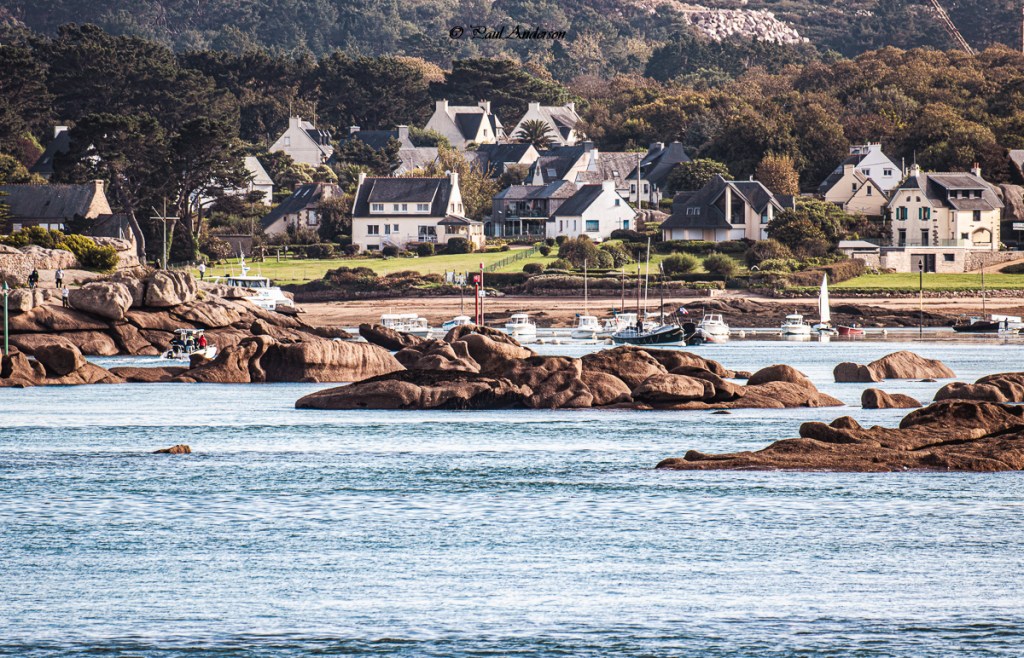
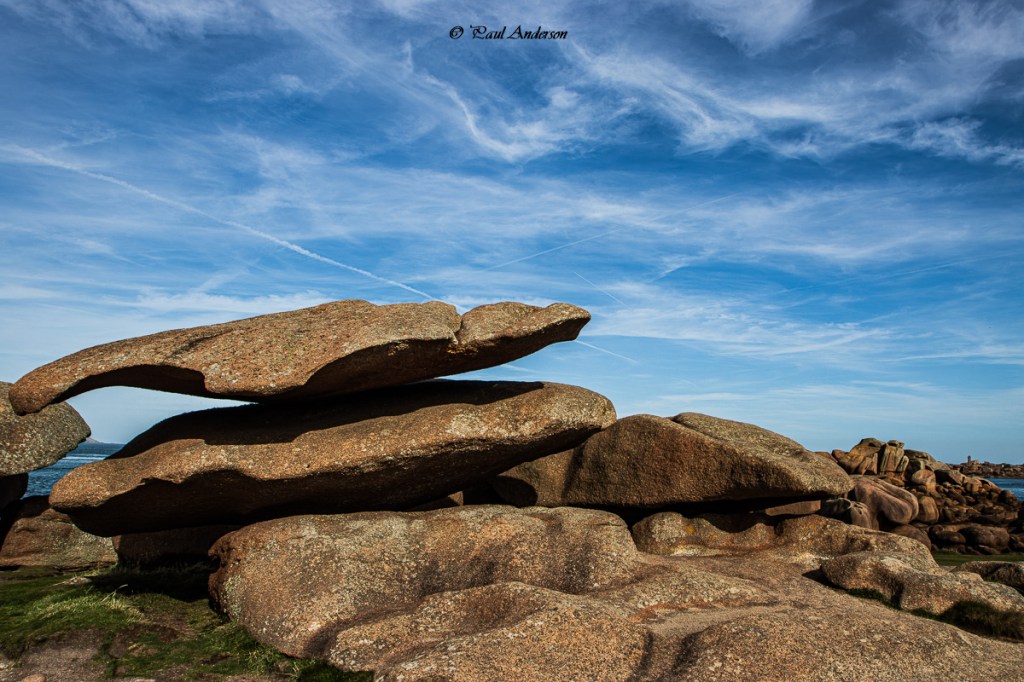
At the Côte de Granit Rose we passed plenty of hikers along the lightly rolling trails that wind along the shoreline. Nearly every person we encountered greeted us with a smile, a wave and a cheerful, “Bonjour.” God, I love the French.

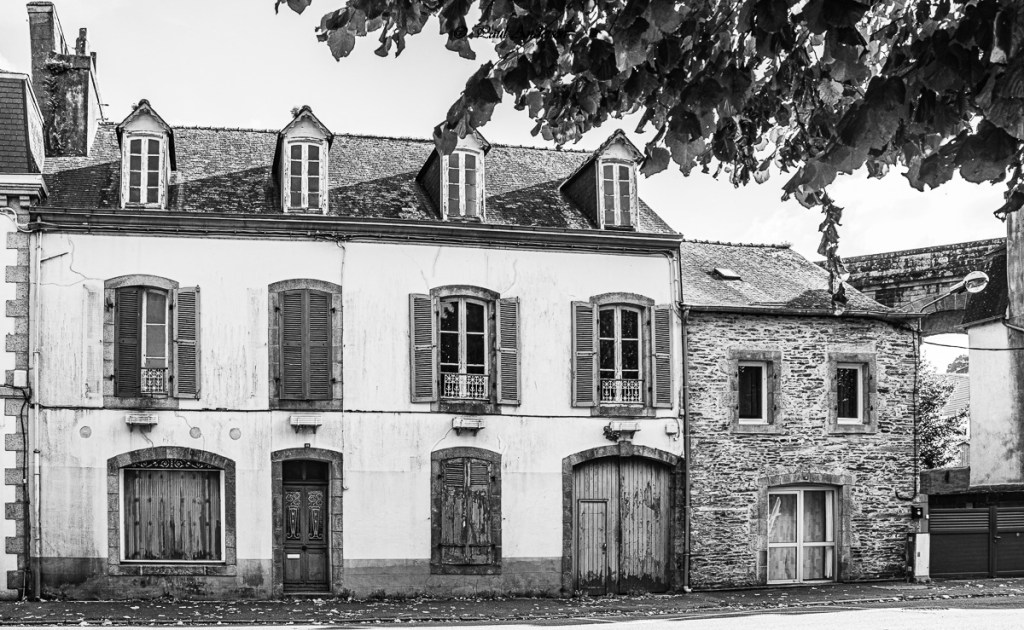
An hour’s drive on the E-50 took us past villages and country scenes towards our next stop, Château de Kerjean. (During this drive we make a brief stop at the village of Bodilis detailed in a previous post – link here)
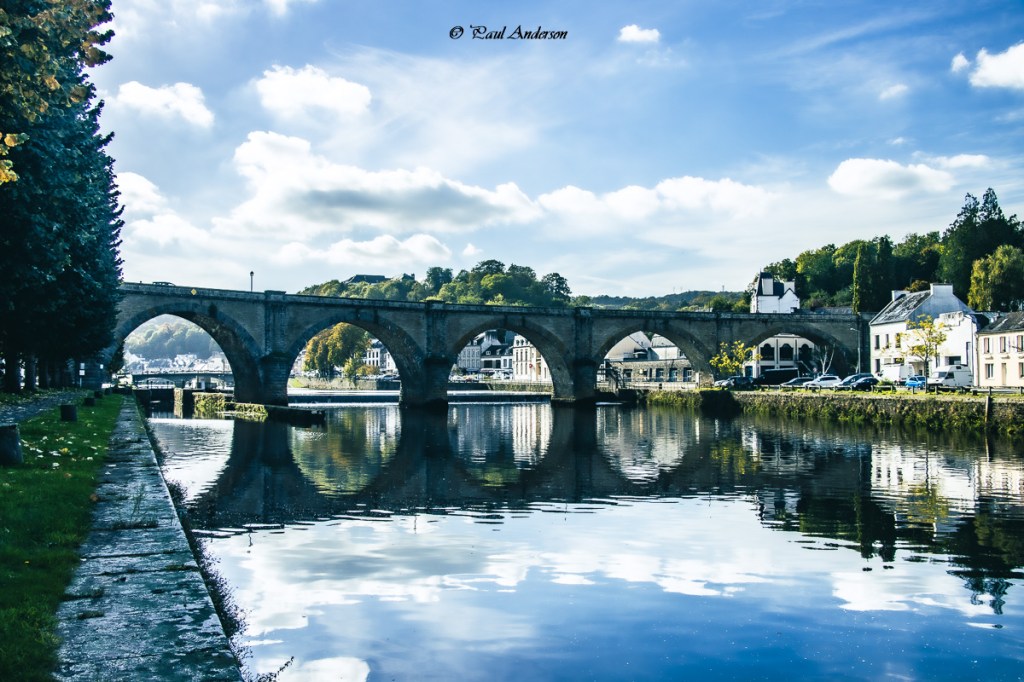
During midweek in October ours was the only car in the parking lot. From the lot, a long, grass lined path took us to the gates of the chateau.
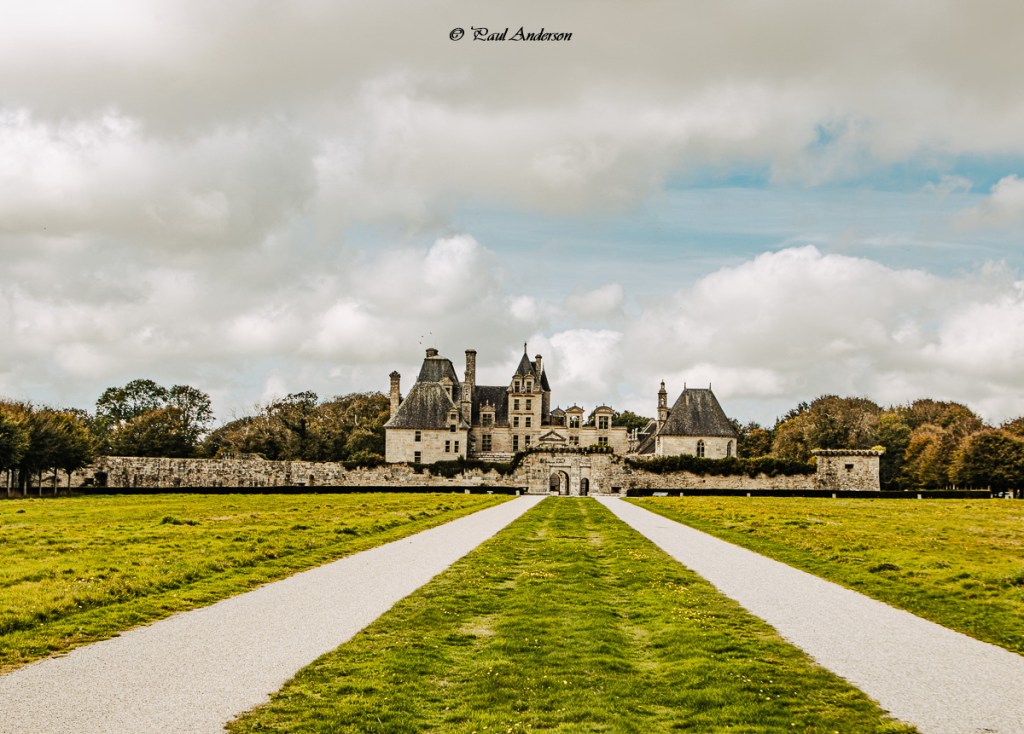
Built in the Renaissance-style in the mid to late 16th century, the heavily fortified chateau is enclosed by a ring of outer walls up to three meters in thickness. A rampart runs along the length of the gated inner wall. The living quarters, a chapel, various galleries and all of the service chambers surround a vast inner courtyard.
For some time, the chateau, which was originally built for the Barbier family, was the seat of an agricultural estate. A marriage between the Barbier and Coatanscour families in the 18th century prompted a growth in the estate. That all collapsed during the French Revolution, along with the head of the Marquise de Coatanscour courtesy of “Madame la Guillotine,” after which the properties were forfeited to la République.
Time, lack of care, and fire caused the chateau to fall into disrepair until 1911, when the French state took ownership and classified the chateau as a historic site.
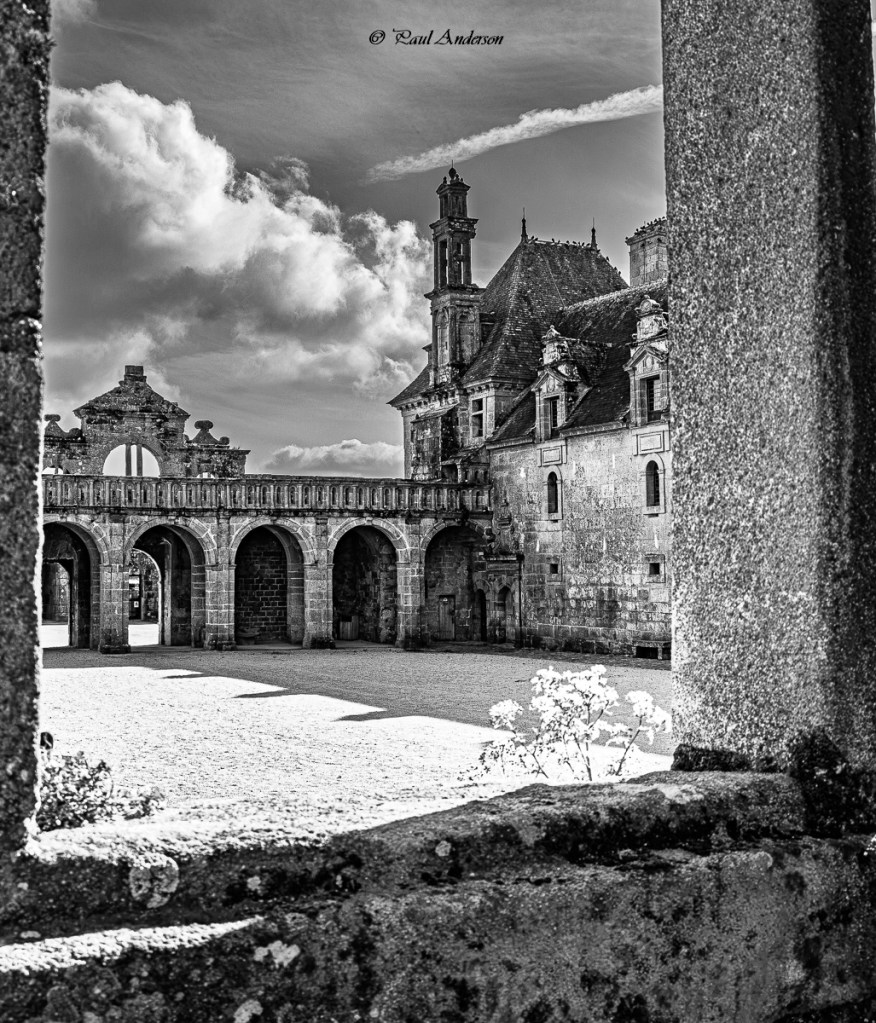
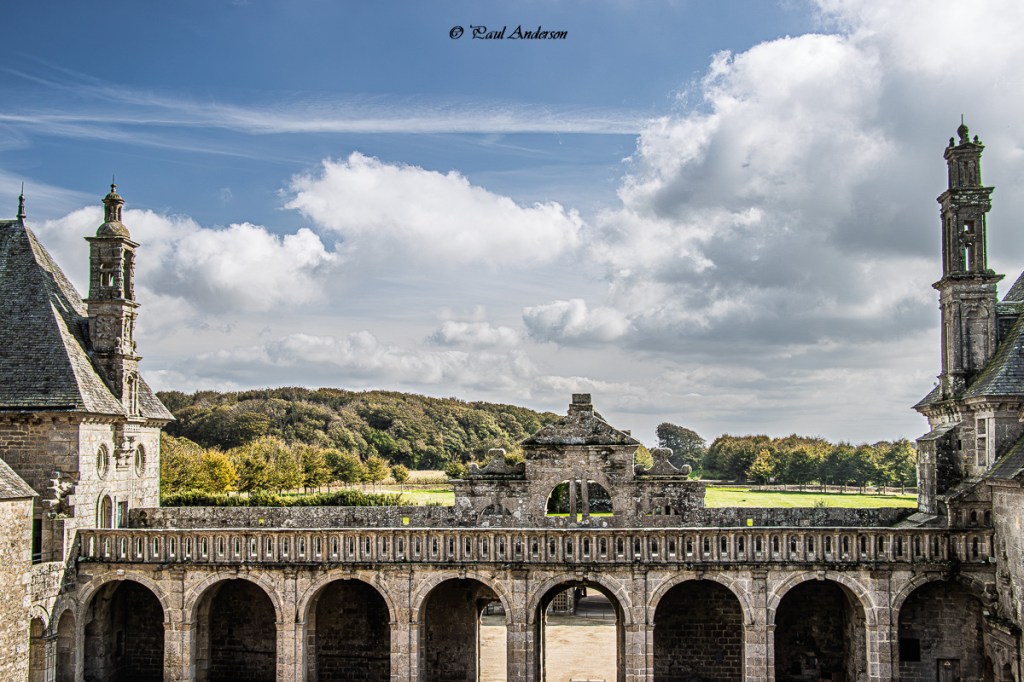
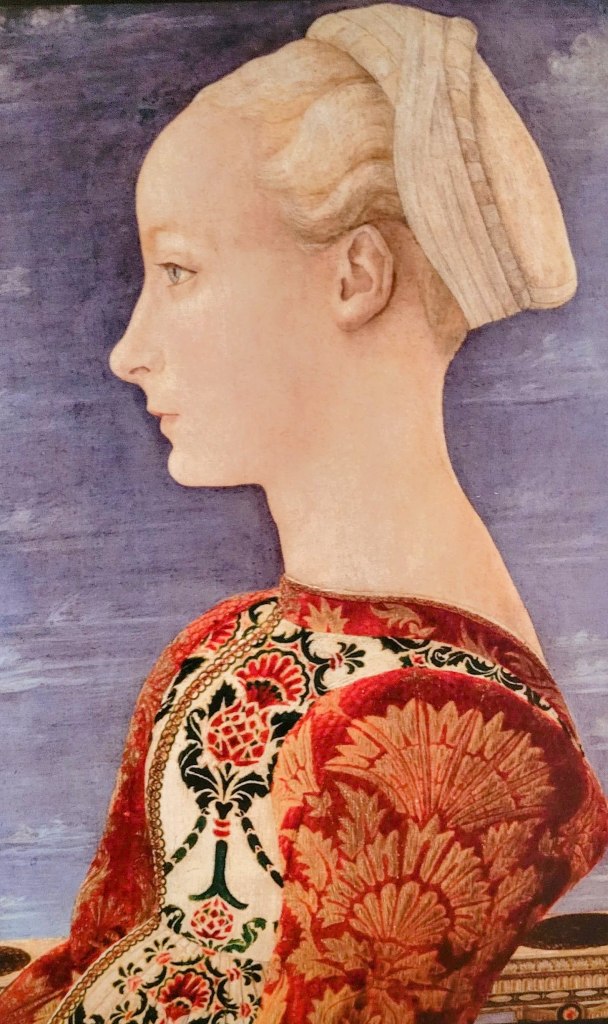
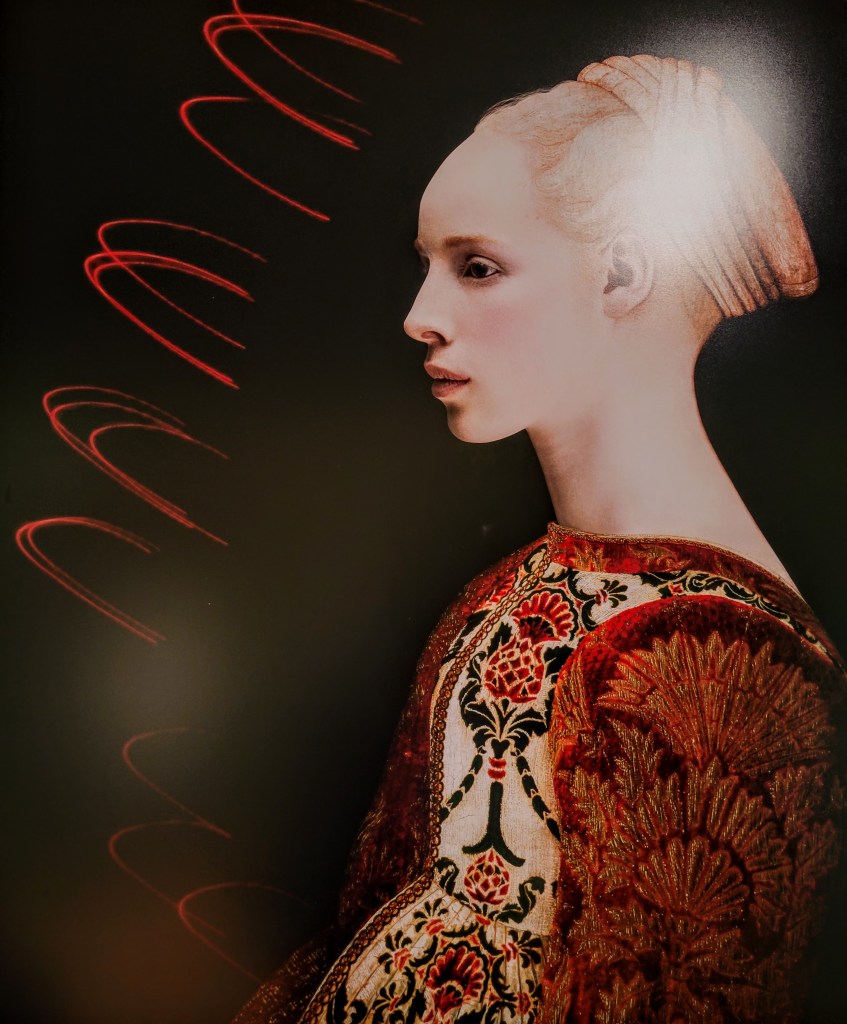
The Chateau de Kerjean is a fascinating, historical site but what captivated me the most belongs to the present. Within some of the chateau’s chambers was an exhibition featuring the work of Sabine Pigalle, described in her website as “a visual artist who primarily works with photography, is part of a new generation that navigates the blurred boundaries between reality and fiction.” In the gallery we saw Madame Pigalle’s reinterpretatin of old paintings and devotinal art.
Below are two photos I took inside the exhibition: On the left is the original painting, Portrait of a Young Woman by Antonio del Pollaiuolo. On the right is Sabine Pigalle’s interpretation.
Back on the road, we’re clear of the Quimper traffic and cruising along the D234 when Google Girl orders, “turn right!”
Turn right?
Where?
We cruise past a tree obscured entrance to a cross road. “Fuck me.”
We turn around, approach the intersection and Google Girl orders, “turn left!”
Missed it. Fuck me – again.
Another turn around and as I’m approaching the cross road, I slow to a crawl. There it is. Turn. No problem.
Except this will turn out to be one of those “rinse – repeat” scenarios because for some reason (age?), I will nearly always manage to miss that right hand turn.
It’s white knuckles on the JC handle for Cora. Hent Saint-Cadou is just wider than one lane, “Oh my lord,” she says. (Note: The JC handle is that little grip above the car door which the passenger grabs while shouting “Jesus Christ!)
From my point of view, it’s a beautiful countryside drive; green fields, old trees dappled with autumn colors and the occasional simple country home. It gets worse for Cora as the road chokes down to barely wider than one car width.
Right turn onto Chem. de Penfrat, which is even narrower. If Cora squeezes the JC handle any tighter I swear she’s going to draw blood – from the handle. Signs warn of cattle and horseback riders. We pass a farm on our right.
The tree lined road is guidebook worthy; cattle and horses grazing, barns built of stone, green meadows. I would love to stop and take photos but there’s really no place to pull over and I’m not willing to pull onto someone’s property.
We’re at a point where the road before us is about to squeeze down to the width of a path when a sign directs us to turn left. Narrower still, but it’s only a short entrance road that opens up into a wide meadow where sits our new temporary home – Chateau de Penfrat.
“Thank you, lord,” says Cora. Yeah, that’s how it works. I do the driving and He gets all the credit. And if there’s an accident
it’s my fault
not His.
Next time maybe He can drive from my seat. Then I could just sit back and enjoy the scenery.
Having arrived at a new destination at the end of a day’s drive, I just want to exhale and sit for a few moments. It’s not relaxation time yet. We still have; the check-in routine, check out the room, haul stuff out of the car, make sure stuff works, unpack the immediate necessities, plug in the cell phones, and finally
relax.
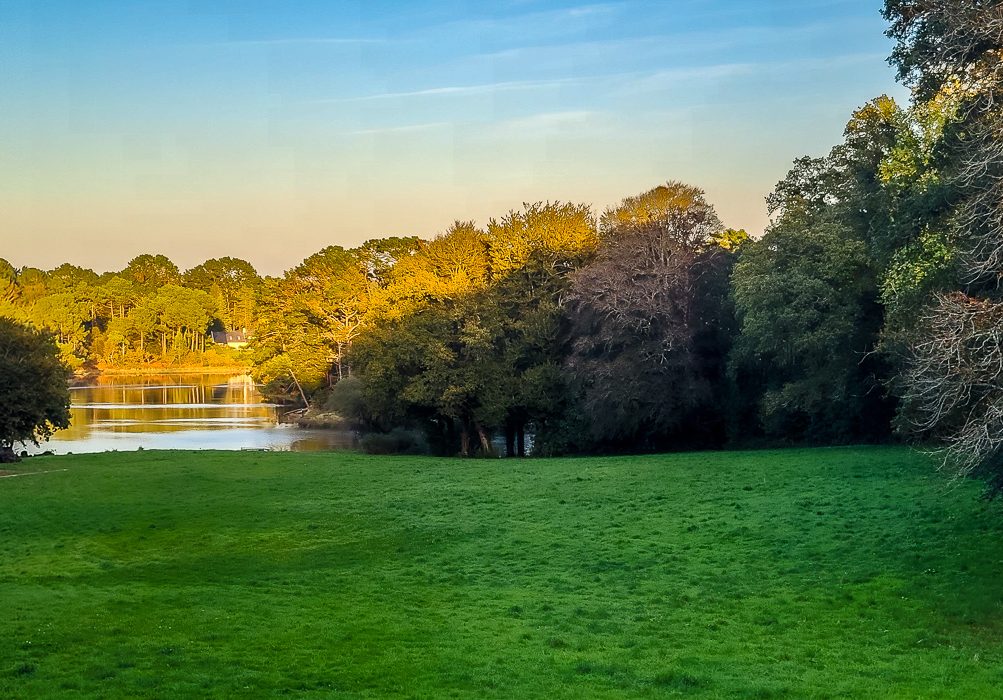
We’re in Gouesnach, in the south of Brittany. To the west is the Celtic Sea, to the south, the Bay of Biscay, both of which open into the Atlantic Ocean. From where I’ve parked the car I can see the Saint-Cadou cove, a tributary of the Odet River at the northern edge of the meadow.
Chateau de Penfrat is a bed and breakfast. Staying at a B&B was part of the overall plan, which included, an apart-hotel outside of the main tourist areas of Paris, a house in Normandy, a resort hotel in Northern Brittany, this B&B, and a cottage just outside of Tours in the Loire Valley. The purpose of the B&B is to be able to mingle with locals and other travellers.
Taking a peek through the windows of the front door I see that the back door is wide open. We go around, through the open door and take a peek into the kitchen. The man at the table, reading and holding a cigarette is startled.
“You came through the back. You should have come in through the front door.” He gives his lit cigarette an accusatory look. “And I shouldn’t be smoking,” he says as he stubs out the schmag.
“Sorry, I saw the open door.”
“It’s okay. I leave the back door open for my dog to go in and out.”
What a luxury, I think. If I left the door open for my dog I’d never see her again; out the door, follow her nose into the fields, dinner for the coyotes.
The dog shuffles in, as if he heard us talking about him. No wonder the innkeeper doesn’t worry. The dog might be as old as the chateau itself and it could take half the day for the old boy to make his way across the meadow. He looks up at us with the patience, and dignity that define an old hound.
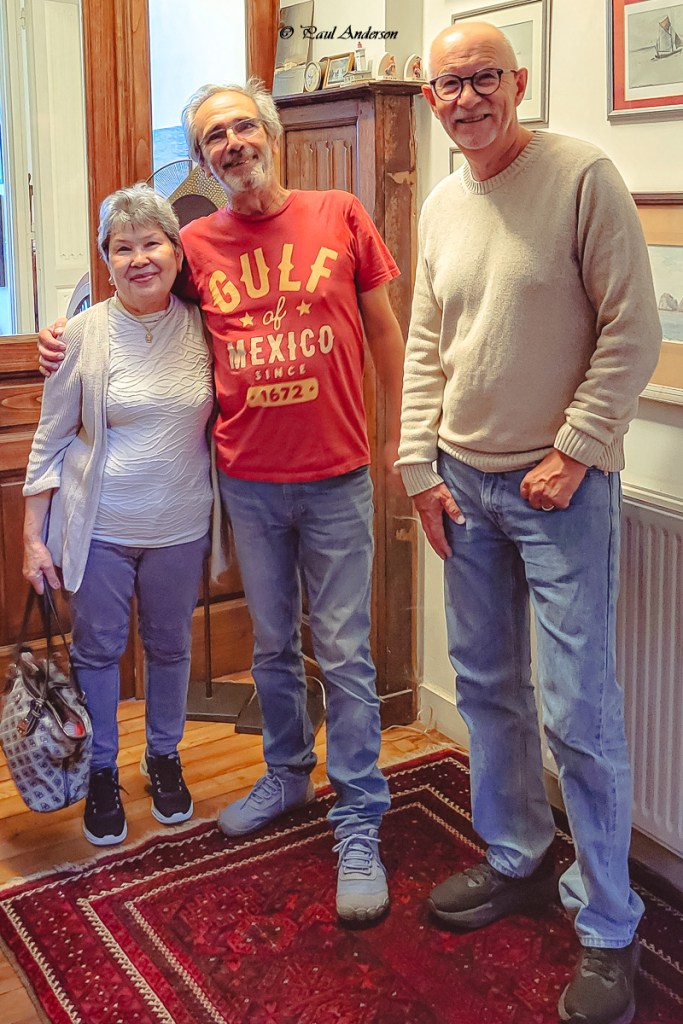
A few inches shorter than six feet in height, Patrick Viossat is a slender man, with a trimmed beard of salt and pepper. His neatly combed hair covers the tops of his ears while the front reveals the inevitable receding tide that comes with the years. From behind wire framed glasses, his eyes wear a sparkle of cordiality accompanied by a smile that turns up slightly on one side. It wouldn’t be a stretch to find Patrick in the pages of a novel set in 1960s Paris; a cigarette, and a glass of wine, reading Le Monde while seated at a café overlooking the Seine.
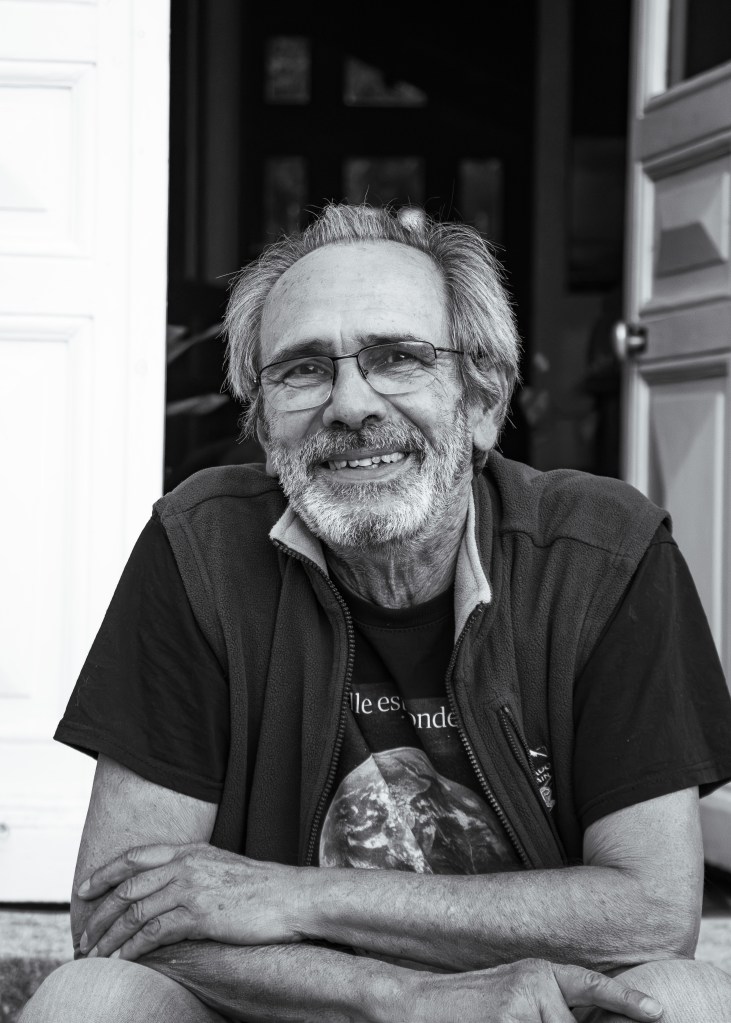
He’s wearing a red t-shirt that reads, Gulf of Mexico, Since 1672, an obvious dig at the American President who tried to change the world atlas. It’s a relief to me that he’s chosen that shirt to wear as it gives me the opening to settle the awkward dilemma that every American tourist faces when traveling abroad – Donald John Trump.
“Love your shirt,” I tell him, establishing that we’re on the same (correct) side. I add that I have a couple of shirts that he might appreciate, and I tell him about my No Kings in America Since 1776 shirt, and the one that says, Anti Trump AF (As Fuck). (After returning home, I box up the two t-shirts and send them to Patrick)
“We can talk politics later,” he says. “Let me show you your room.”
Designed by French architect Joseph Bigot, the 19th century mansion was originally built as a hunting retreat for the de Cambourg family. Now the home is a four room bed and breakfast operated by Patrick.
The home is a venerable gentleman with stairs and floors that creak like arthritic bones. The furnishings are all antique (Patrick tells us that he’s always shopping for old furniture and decor). Our room, the Southern Suite, opens into a sitting room, with a separate bed chamber and a separate bathroom.
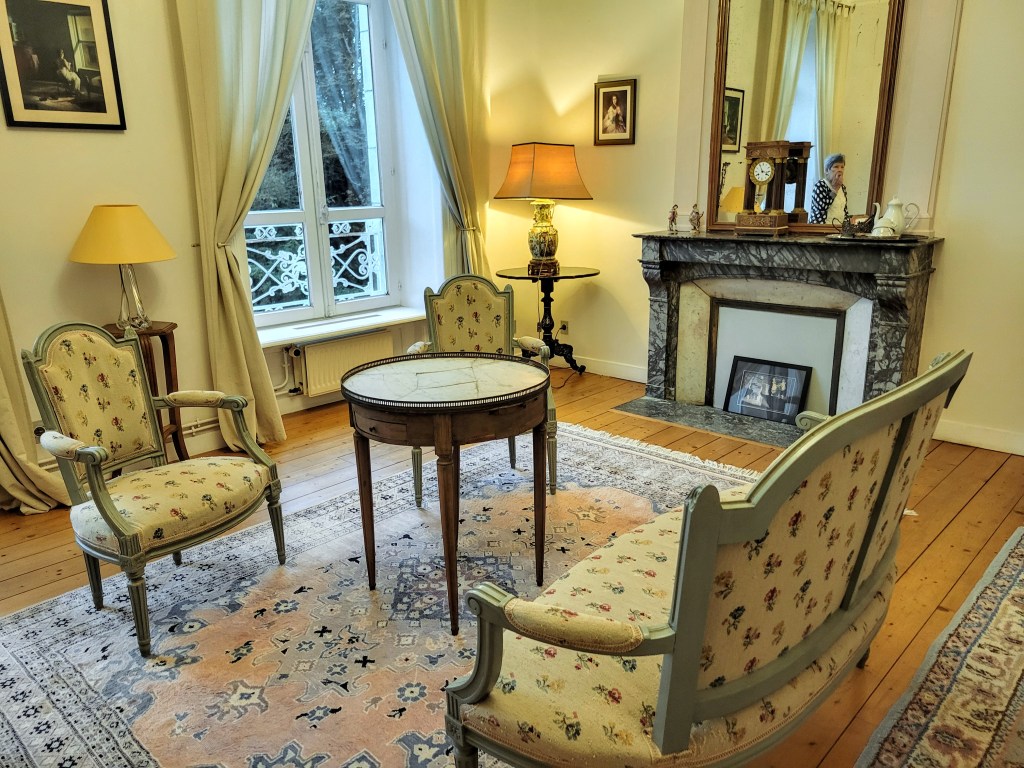
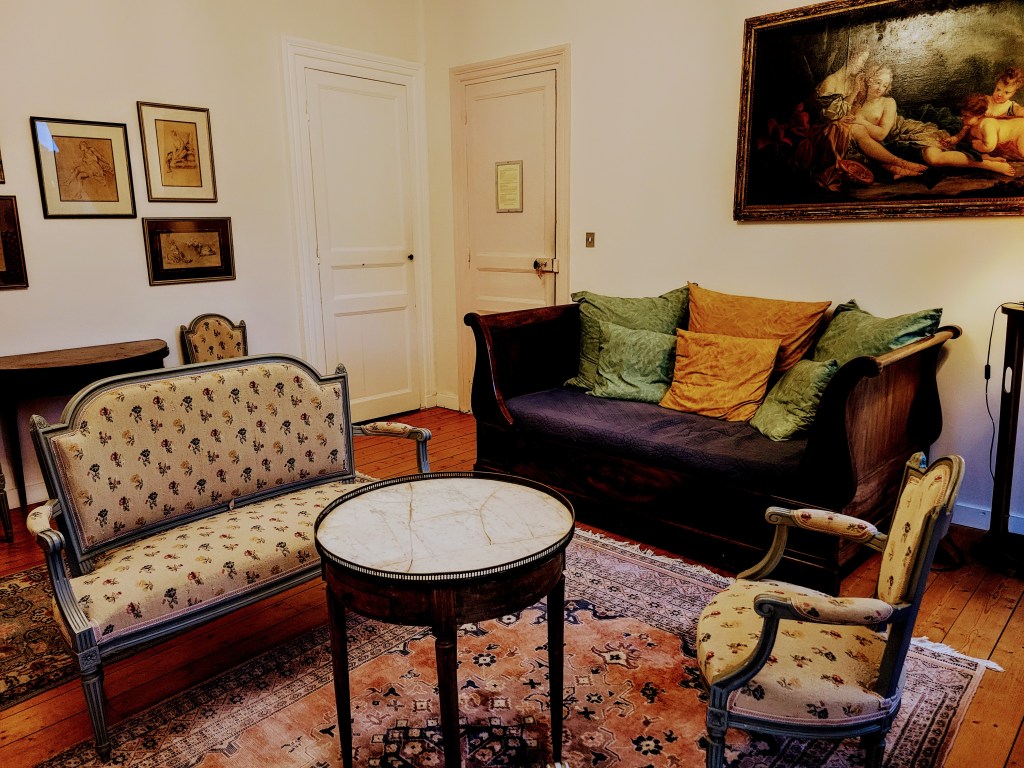
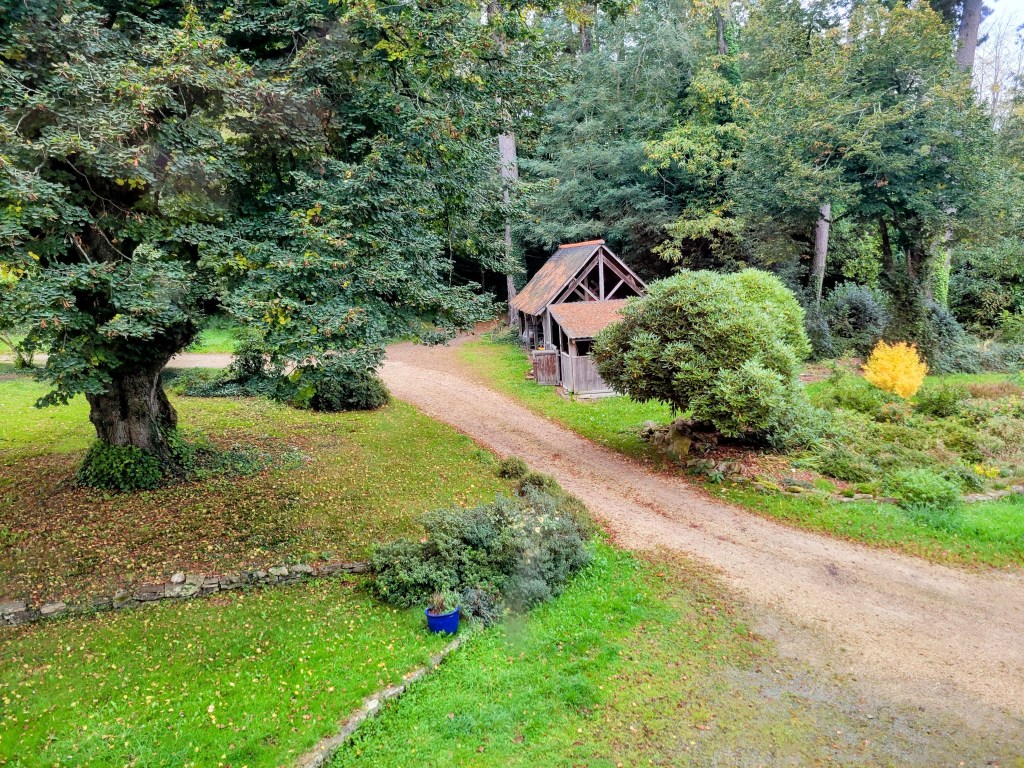
The windows look out over the meadow and the forest beyond.
At twilight we watch the late sun turn the Saint-Cadou Cove into gold.
Over the all too short course of our stay, I can’t help but be reminded of my three nights stay at The Old Rooming House in New Harmony, Indiana during a road trip that I took in the autumn of 2021. They’re both old, and creaky, and exude rustic charm and hominess (though the chateau doesn’t have the musty feel of the Old Rooming House).
What strikes me is the personalities of the innkeepers; Patrick and Jim Stinson. Older men, experienced in life and possessing a wealth of interesting stories. When I remarked about a row of saxophones in one of the rooms of the chateau, Patrick told me of his musician days, his love of jazz, and about his time working for an Oklahoma oil company. Jim Stinson told me about his time hitchhiking across America. It makes me realize that I could never be a proper innkeeper. I’m just not interesting enough.
While Cora relaxes in the room I go to the main sitting room downstairs where Patrick is holding court with a group of guests, all of them German (I find out later that Patrick is part German and has quite a following among German tourists). Patrick invites me to join. I like that I’m the sole American in the group.
The conversation switches between English and German. We exchange the usual opening pleasantries; where we’re from, why we’re travelling, where we’ve been and where we’re going. The group asks me about my road trips in America and I give them the nickel tour of over 15,000 miles of highways and side roads.
Patrick admits to wanting to take a road trip in America in a convertible, to which I suggest a gas guzzling 1960s version; a Corvette, a GTO, or a Mustang perhaps. It’s light hearted until Patrick admits that it will never happen. He doesn’t plan on ever returning to the United States, explaining that, while electing Trump the first time was bad enough, twice was too much to forgive.
All that I can offer is an apology, tell the group that I’m sorry that our government has made visitors feel so uncomfortable. It’s the apology that I find myself making all too often while I’m abroad; regrets that my country elected, not once, but twice, a boorish, unintelligent, unqualified, narcissist. The reaction is always kindness and understanding. They realize that all Americans aren’t MAGATs. I do have to wonder when the day will come when all of us, regardless of our personal politics, will wear the MAGA stain.
Not out of any inpoliteness, but out of curiosity and some amount of incredulity, the group peppers me with questions about American politics and life under Trump.
One of the guests begins to speak. “You know,” a long pause as he looks into his glass of wine as if he’ll find the right words somewhere in that vessel. He continues, “many decades ago we Germans had a problem similar to yours. It didn’t work out well for Germany and it didn’t work out so well for the world. I hope your country won’t repeat our mistake.” After another pause, the man finishes his thought. “But it does not look good for you.”
I’m immediately reminded of a similar remark made during our stay in Fussen, Germany by a resident who we shared our breakfast table with.
As evening approaches, Patrick suggests to me that we can get dinner a short drive away in Sainte Marine, where the mouth of the Odet opens into the Bay of Biscay. He tells me that he has a dinner engagement there and we can follow him into town if we would like.
Patrick negotiates the twists and turns of the narrow road like an F-1 driver and Cora’s hand latches like a leach onto the J.C. handle as I try to keep up. “We’ll have to come back in the dark,” she says.
“So much the better. At least I can see headlights before I see the car.”
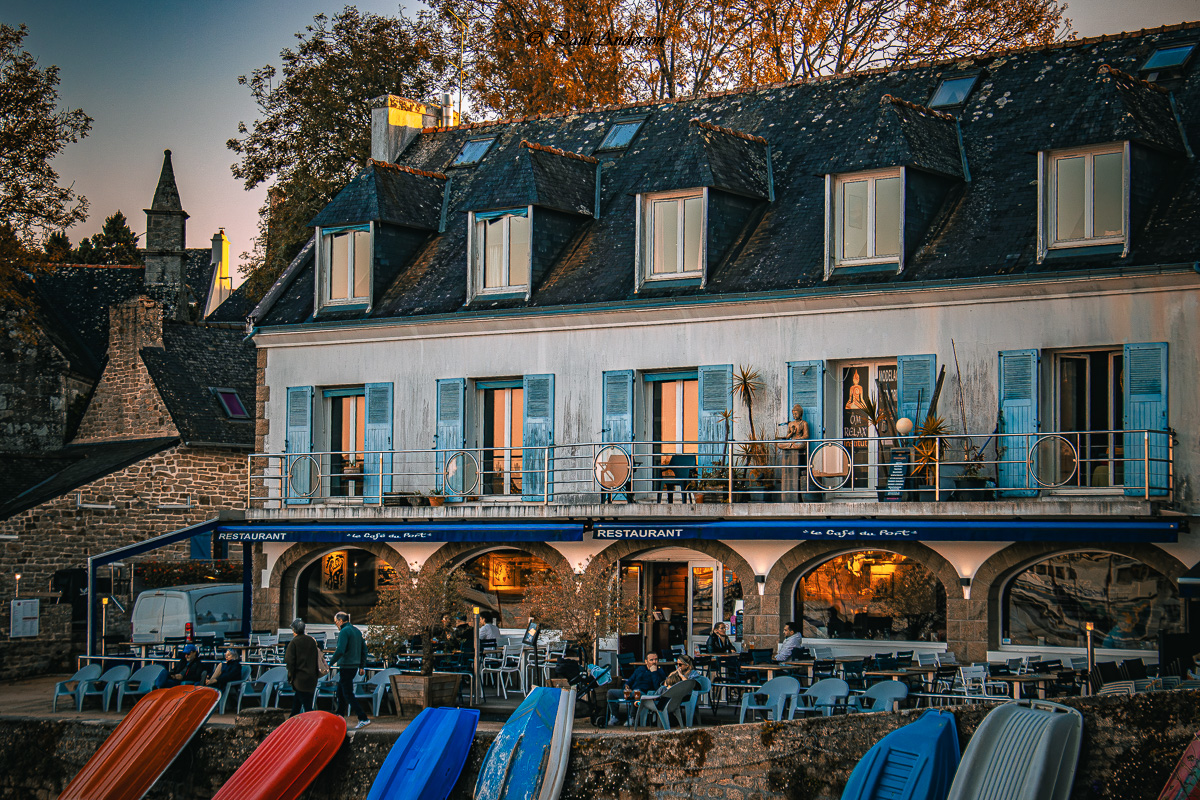
Sainte Marine is a quiet, laid back village; both resort and working fishing port. Le Café du Port is a beachfront restaurant that looks over the port, and the mouth of the Odet where the river empties into blue water.
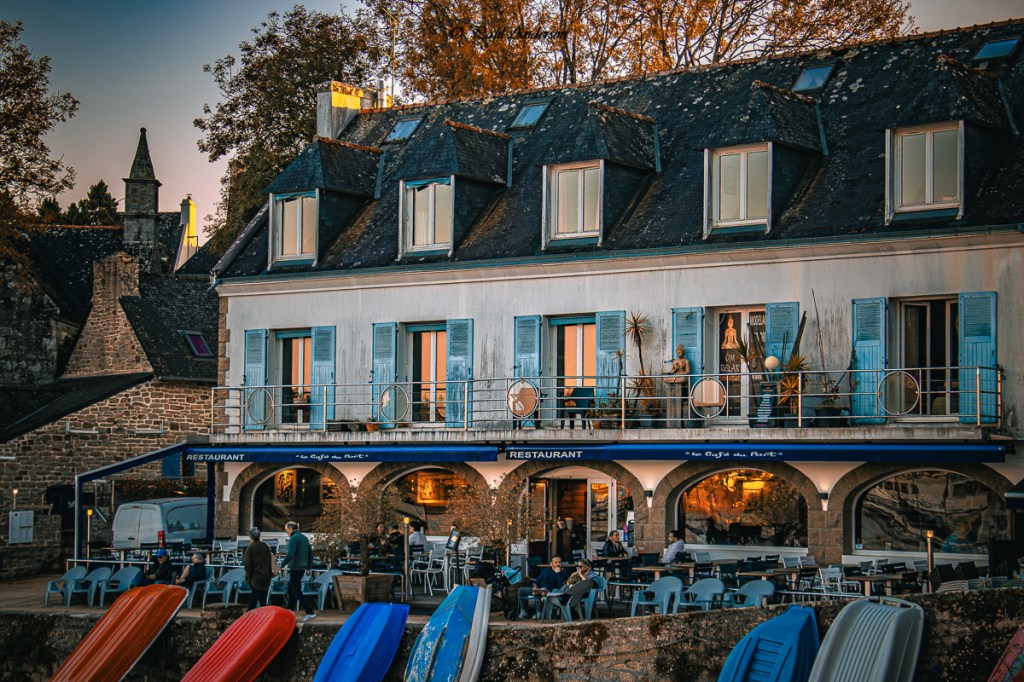
The menu, as are many in the area, is focussed on seafood. I’m starting with oysters. Because in the Bay Area oysters are priced like gold and they’re inexpensive here, I’ve been treating myself to those succulent little bivalves at every opportunity. Since Normandy my diet has been solely seafood. Well, that’s not counting the bread and the cheese. But other than that all seafood. Oh, and did I leave out the pastries? Yeah, lots of those too.
The seating is close, and we’re right next to a young local couple. The man looks at my plate and says, in English, “You like oysters.”
“I love oysters. And they’re so much less expensive than back home.” He asks where we’re from and when we tell him San Francisco, he’s effusive in his praise. He asks us about our travels and, obviously proud of Breton, asks us how we like it.
The woman’s English is limited and the man translates the conversation which at some point, as all of them eventually do, moves to the 400 pound orange imbecile in the room. Which leads to our apologies for Trump and the disclaimer that we didn’t vote for him and we think he’s an asshole.
America has gone from a destination and an occasional aspiration to a curiosity – a freak show. As with everyone we’ve encountered, the young man is friendly but curious. As always, the mortification is searing. I can’t blame these people for their curiosity. While Trump 1.0 was bad enough, 2.0 has been marked by a shocking hostility from the regime. The questions must come from the bewilderment and pain that arises when a trusted friend turns on you for no apparent reason.
The drive back on the narrow winding country road is slow but uneventful.
“Thank you Lord.”
At night the only sounds are of an owl somewhere in the dark, and the occasional creaking of the floor.
For breakfast, Patrick brings back a childhood memory – a soft boiled egg. Boyhood must have been the last time that I had one. That’s if you don’t count the time either Cora or I undercooked what was meant to be a hard boiled egg.
Mom always just put the egg on a plate with a piece of toast, so this is the first time that I’ve had a soft boiled egg served to me in . . .
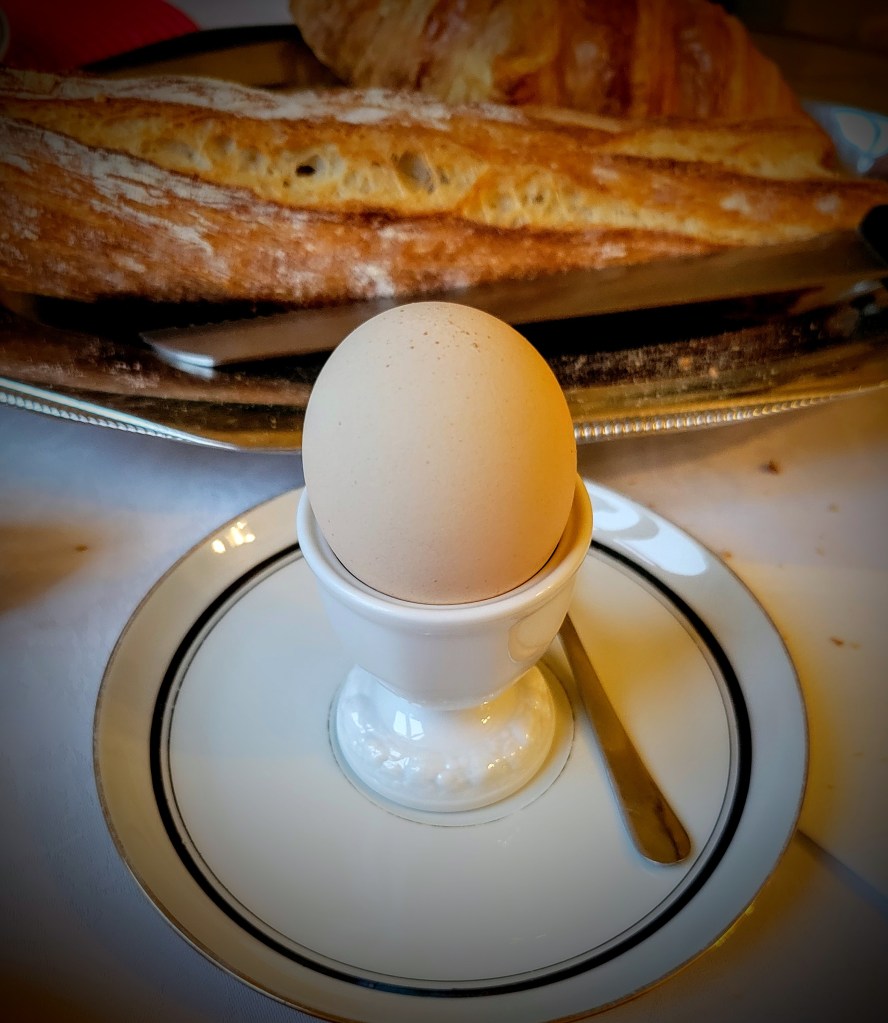
I’ve seen enough old movies to know that the egg cup is there to steady the egg while I hack off the top with a knife. I just hope that I won’t do it wrong and send a yolk laden missile at Cora.
A side table next to our dining table holds a baguette and an assortment of coissants. Off to one side of the room a sideboard carries an assortment of cheeses and pastries.
There’s always a melancholy that comes with leaving a place. Especially when you’re seventy and pretty certain that any particular place is a one and done. It’s a different kind of wistfulness when leaving a place like Chateau de Penfrat. Unlike a hotel, where guests exchange a wave, a smile and a brief greeting, at a bed and breakfast we’ve formed relationships, albeit brief ones. During our stay we used the chateau as a temporary home base from which we saw plenty of memorable places.
Of all the memories from the two days that we spent at Chateau de Penfrat maybe the most treasured will be . . .


What a nice visit Paul. Your description of how Trump is received in Europe was something I expected. It seems they have to get to know you and your politics before they can relate to you. I don’t blame them!
LikeLiked by 1 person
Hi Anne, I have to say that, by and large, people were friendly before they knew our politics. I did look forward to being able to distance myself from MAGA.
I think that they’re concerned and rightfully so. It isn’t as if the United States is a minor player in the world. The regime has shown how much negative influence a rogue U.S. can have on the world.
LikeLiked by 1 person
I love the rock formations on the Côte de Granit Rose! And your B&B stay sounds pretty much perfect. Your experience with the French and Germans you met is much as I would have expected. Most of us may have issues with your president but we don’t let that influence how we engage with individual Americans, and especially when we discover they’re not MAGA 🙂
LikeLiked by 1 person
Hi Sarah, As a mortified American who travels abroad I appreciate that I’m not guilty by association. I know that some Americans don’t like being questioned about our domestic affairs but I think the concern is legitimate. The United States is not a small nation and what it does has worldwide ramifications.
The B&B was the star of our accommodations. It’s the first time we’ve stayed at a B&B outside of the States. I think we’ll have to try that more often.
LikeLiked by 1 person
No reason to feel mortified if you’re not culpable. But you’re right about the worldwide impact the US can have.
LikeLiked by 1 person
I love the photos, the mixture of black and white thrown in. But your stay in at the bed and breakfast–wow. What a beautiful place! I guffawed at the GPS yelling at you how to get there, ’cause it reminded me of the most recent Vacation movie with Ed Helms and Christina Applegate and their GPS just screams at them in Korean the entire time, lol !! But you got there and hit it off with Patrick. I know I would be apologizing left and right and up and down if I was traveling outside the US too. In fact, just speaking with another author in email recently, I found myself apologizing about certain things. It sucks to feel this embarrassed and guilty by association, doesn’t it?
LikeLike