

An American’s observations of a first time trip to France.
It wasn’t too long ago that the idea of driving in Europe was on par with sky diving; everything is in a language I don’t understand, how do you get gas (in the usual manner?), the driving habits and traffic laws are different, maybe the roads are bad (immaculate actually, especially when compared to California roads which resemble the surface of the moon), all the cars are manual transmission (not true), and hell, maybe they drive badly (there are few places that harbor more horrible drivers than my home state of California). A lot of different ways to rationalize my cowardice.
Our first road trip was in Spain and the results were, well, mixed. No problems at all while we were on the highways. Stopping to get gas at the Spanish version of a travel center was a fun experience. The difficulties arose when we entered the villages where, for some reason, I was surprised that 12th century roads weren’t built for cars – especially cars driven by Americans who are used to roads that can accommodate the oversized and butt ugly Tesla Cybertruck (aka the swasticar).
Who but an American would think that there’s a parking lot in the center of a town that was built while Chaucer was busy writing The Canterbury Tales? After all, in America it’s not improbable that the city council of a historic town would green light the razing of 18th century history to make room for a strip mall or “affordable” housing. If Americans can be so cavalier about history, why would I expect the Spaniards to be different?
So just before we got to Caceres, a city founded by the Romans in 25 BCE, I gave the order to Google Maps, “set sail for the Plaza Major” (which was built in the 16th century). It was a harrowing journey getting there and once in the plaza, we couldn’t get out. That is until a friendly, if likely annoyed, minion of the law led us out. Later that same day I managed to put a dent and a sizable scratch in our rented Mercedes.
With our patience spent, and our stress levels and blood pressures redlining, Cora and I erupted into an argument over the idea of cutting the trip short, torching the Mercedes (or at least returning it to the nearest agency), taking the train to Barcelona and getting the hell back to the land of Hummers and broad plains of concrete.
In the end, reason prevailed, we continued the road trip and once in Barcelona dumped the car at the airport rental agency and used public transit. (The bill for repairing the Mercedes was a surprisingly low $300 dollars).
Two years later, we rented a smaller car in Vienna, and drove through Bavaria before leaving the car at the airport in Munich, and then taking advantage of public transportation. By the time we decided on a French road trip we’d learned our lessons.
Except for getting slapped with a penalty for not paying a toll levied between Paris and Normandy in a timely enough manner, driving in France was largely problem free. I wasn’t crazy about the many ways you can get hit with a speeding ticket in France (especially after having driven the Autobahn where speed is not a thing), and the “priorité à droite” (priority to the right) regulation that gives the right of way to drivers approaching an unmarked intersection from the right. PSA – before you drive in another country watch some YouTube videos.
After leaving Normandy, our stays included stops in Trebeurden, and Gouesnach in Brittany, and Tours in the Loire Valley. These were our temporary homes, bases of operations, from where we took day trips to local points of interest.
Tréguier
Half timber buildings characterize the village of Tréguier. The settlement dates back to the 6th century, when the Welsh monk Tudwal, founded a monastery in the Trécor Valley.
It’s a quiet town, albeit fairly large.
Photos below: The half timber charm of Tréguier.


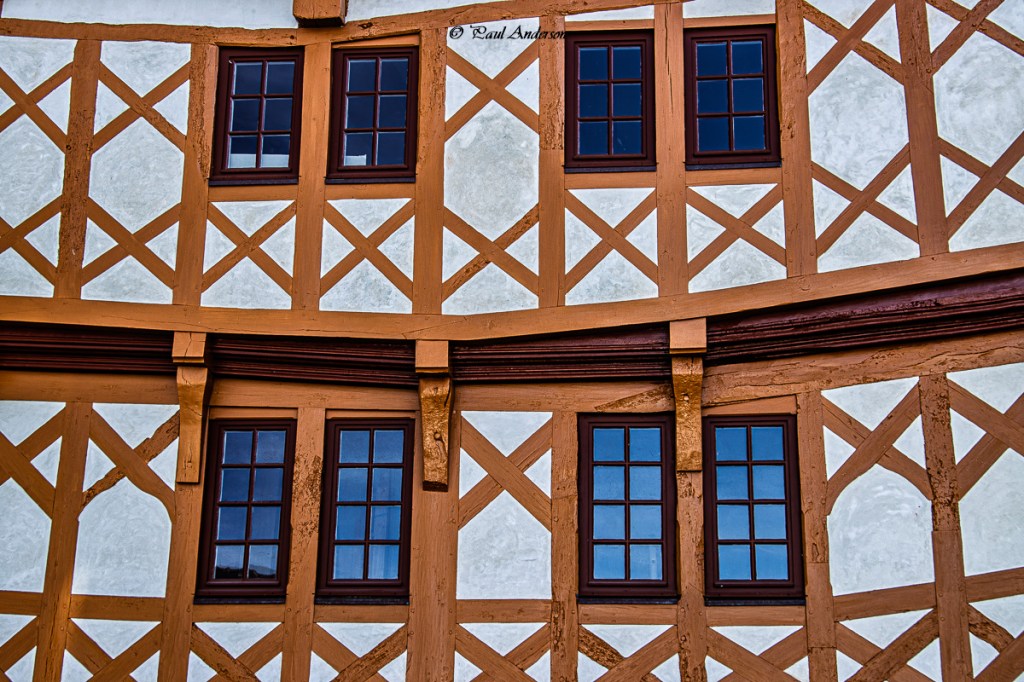
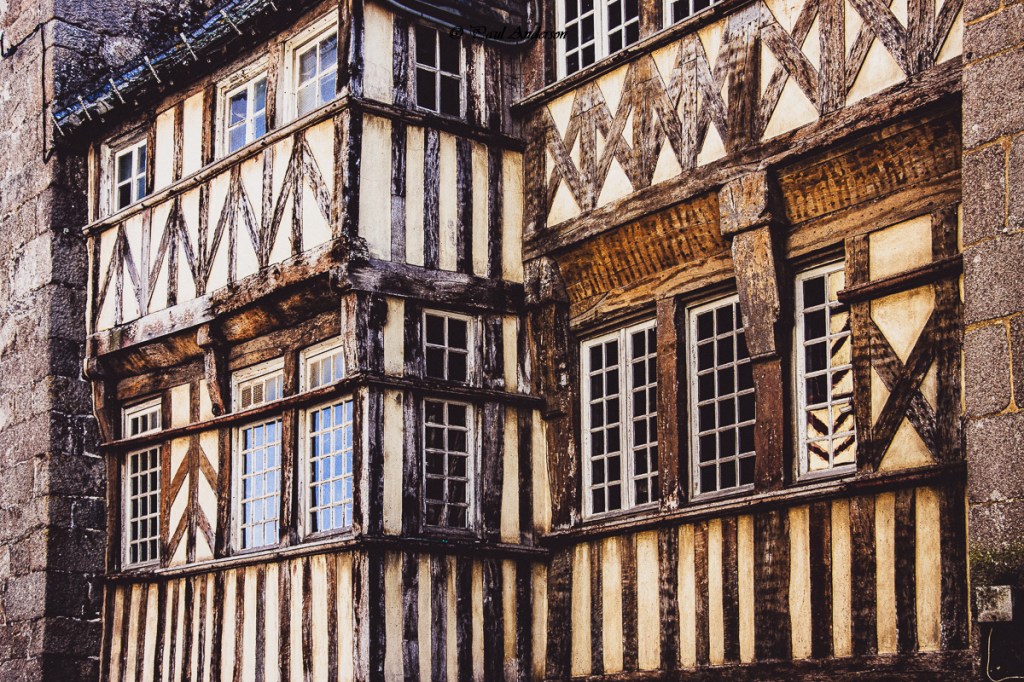
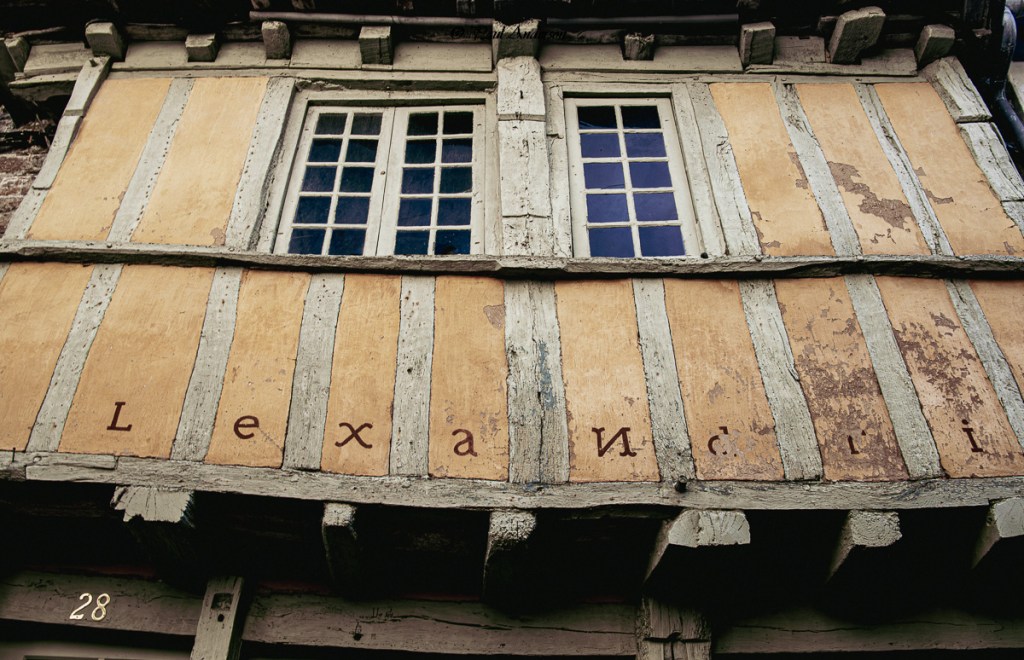
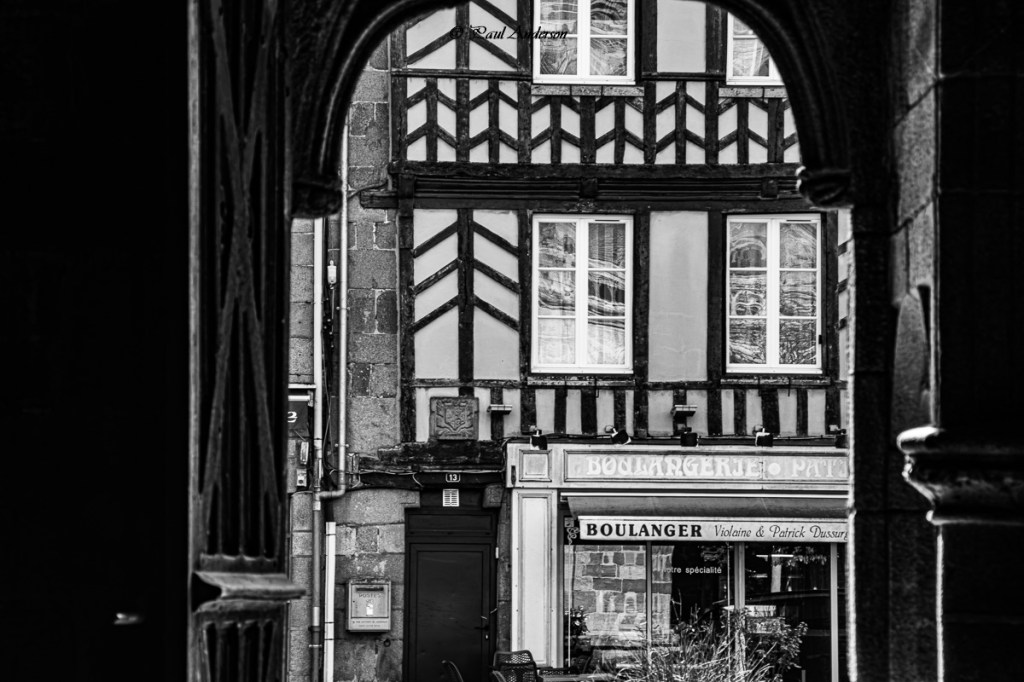
Construction of the Gothic, Cathedral of Tréguier was begun in 1339 with ongoing construction into the late 1700s.


After some walking we had lunch at a creperie. I think Cora was a little iffy on her savory crepe, but she liked the spoonfuls of my dessert crepe that she stole – after telling me she was too full for dessert.

Pont-Aven
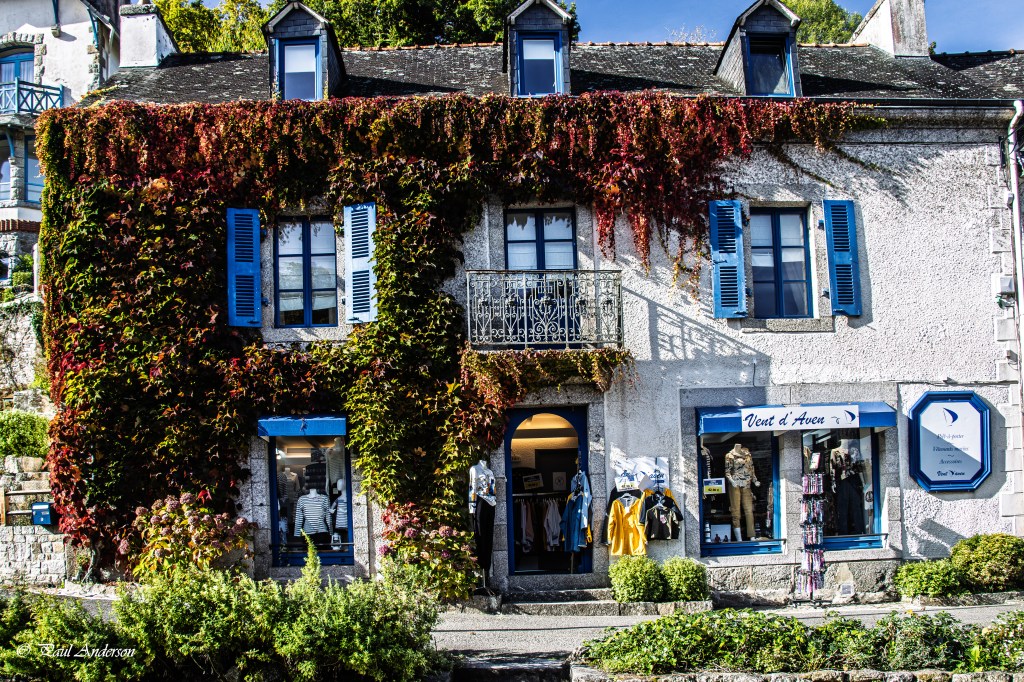
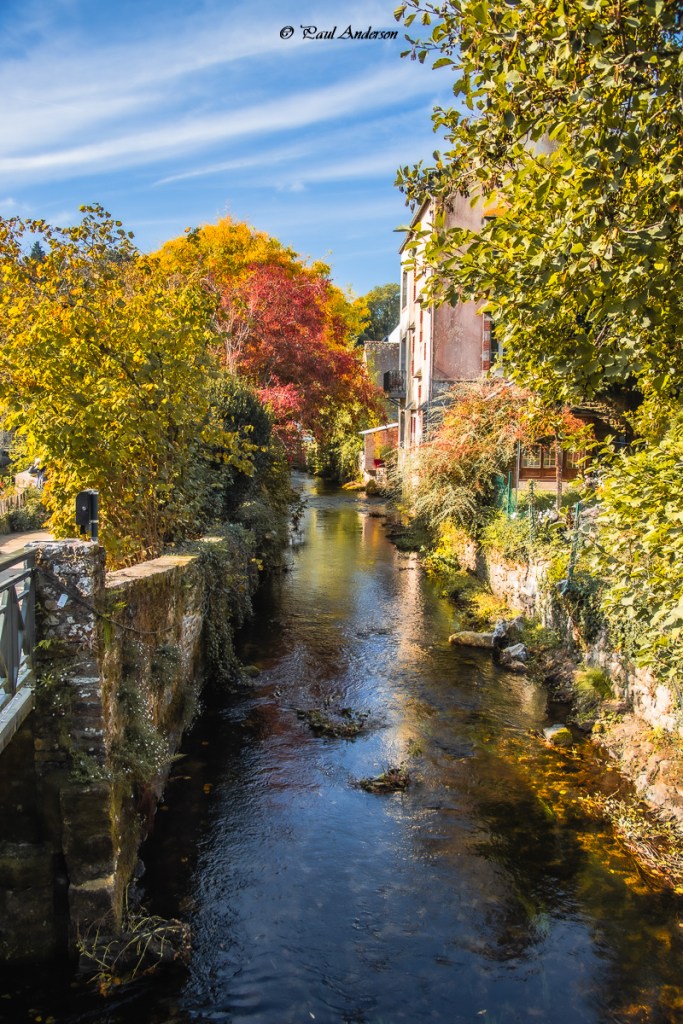
The Aven River passes gracefully through the center of this scenic village with roots that go back to the 17th century. Pont-Aven has been renowned as an artist’s community since the 1850s. when painters, seeking tranquility, fled Paris and its hoards of summertime tourists.
Paul Gauguin and French Post-Impressionist Émile Bernard spent time in Pont-Aven. They soon attracted a group of their contemporaries which became known collectively as the “Pont-Aven School.” Currently Pont-Aven is home to a number of galleries, as well as the Pont Aven School of Contemporary Art, which is made up of third-year university and honors students in art.
Millwheels on the river’s edge are the remnants of Pont-Aven’s history as a milling center during the days before it became an artist’s refuge. Gauguin’s painting, Watermill in Pont-Aven, hangs in the Musée d’Orsay, in Paris.



Locronan
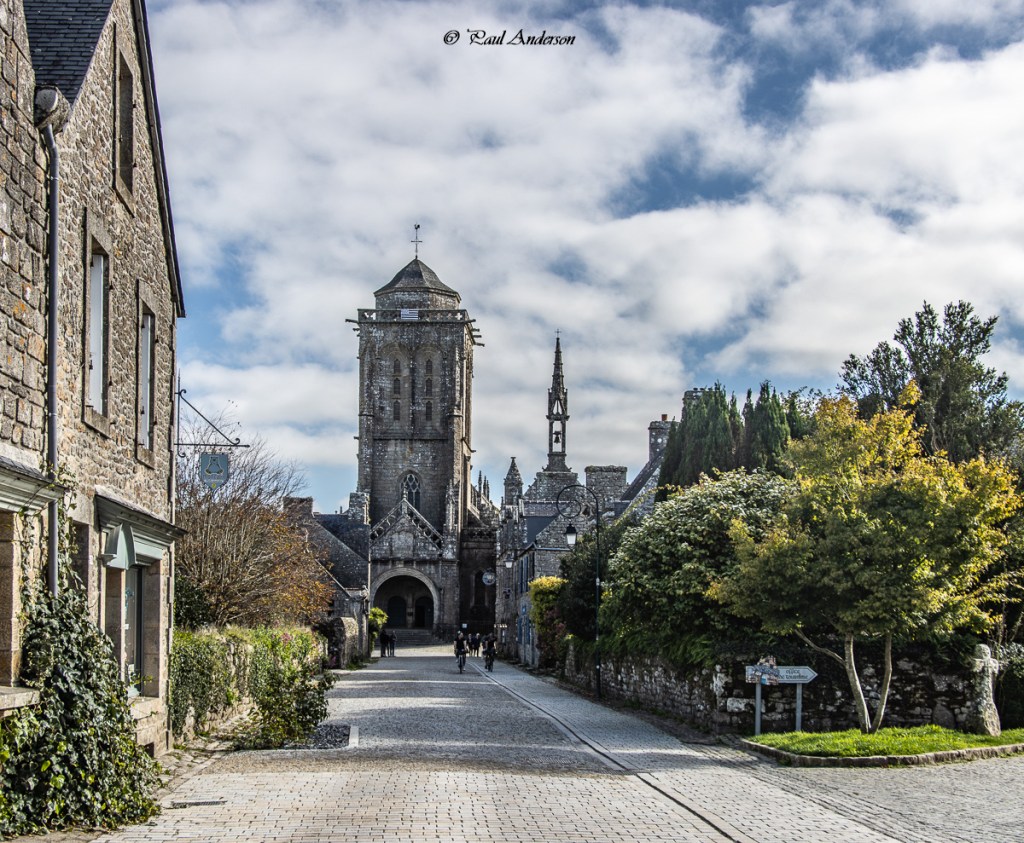
A visit to this 15th century village was decided early in the itinerary planning. Designated as one of the “Les Plus Beaux Villages de France” (Most Beautiful Villages of France), I was sold when I saw Locronan in a YouTube video.
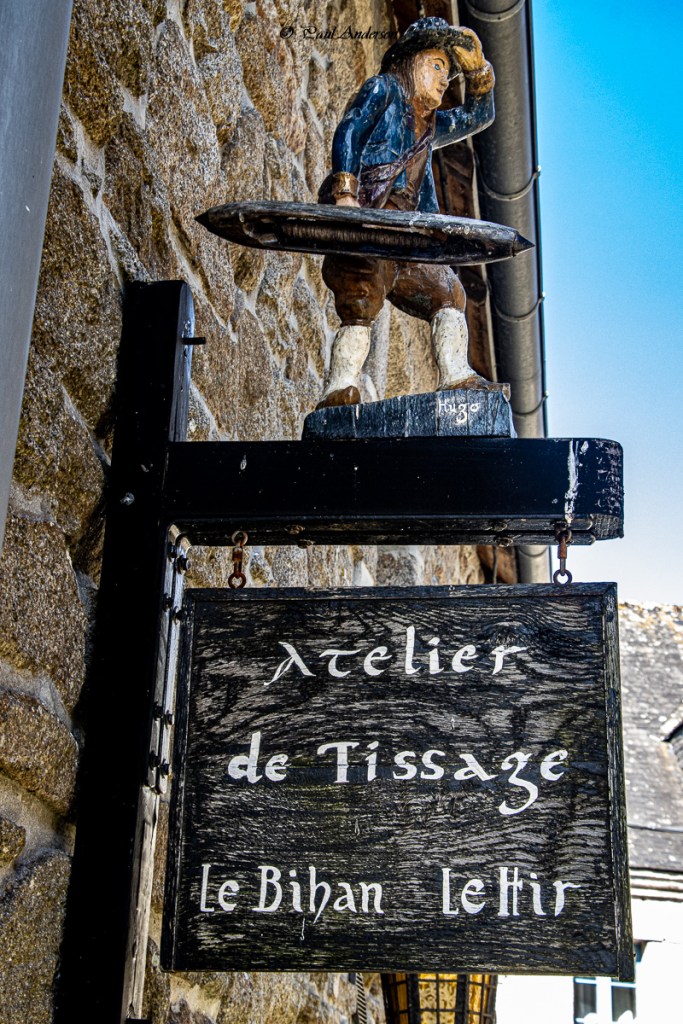
Locronan is one of those villages that has managed to preserve its historical presence while resisting the lure of commercialization. A place like Locronan isn’t immune to souvenir shops but whatever is there doesn’t intrude on the village’s charm. With the exception of necessary vehicles, the historic section is a pedestrian only zone.
The name Locronan means “hermitage of Ronan” a paean to Saint Ronan, a 6th century Irish missionary who came to this area of France to, depending on your point of view, educate or indoctrinate the local populace.
The great thing about travelling during the shoulder season is that during our visit, Locronan’s cobblestone streets were relatively free of annoying tourists (said the annoying tourist).


The days were long yet fullfilling. It would take us a year to see all of the villages listed on tourist sites and in books. Along the route we would see the steeple of a church built when our own nation was little more than a beachhead, and we had to debate over making an extra unplanned stop. Most of the time we proceeded past and were left to wonder what it is we might be missing. But we’ve come to recognize that we can’t see everything.
Not every stop was rewarding. The coastal town of Concarneau was on our itinerary. A visit to Concarneau is a tale of two cities; a modern inland town and a walled medieval town located on an island just offshore, accessed by a foot bridge.
From the mainland, the Ville close de Concarneau (Closed City of Concarneau) surrounded by granite ramparts is a look back to the 14th-century. Once inside, I was reminded of San Francisco’s Pier 39. Today the old walls “protect” a collection of candy shops, restaurants, and souvenir shops. We took a quick walk from end to end. Concarneau was supposed to be our lunch stop but, figuring that lunch within the walls was probably priced for tourists, we searched the main town for a place to eat.
The waterfront is very picturesque and tempting but too many of the restaurants displayed what I consider to be a red flag; gigantic menus complete with pictures of the food.
Concarneau turned out to be one of the few disappointments over the course of three weeks.


Those villages all look beautiful. I especially like the look, and sound, of Pont Aven, while the half timbered houses in Tréguier are lovely! I sympathised with your initial concerns about driving in Europe. Although we’ve done multiple road trips in the US we’ve shied away from driving in France because, while it is relatively easy for us to drive on the ‘wrong’ side in the US, where roads tend to be wider and more open, the thought of doing so on rural French (or Italian, or …) roads is more daunting.
LikeLike
Hi Sarah, After having ridden with my Italian uncles in Italy and being scared witless, Italy is the proverbial no fly zone as far as getting behind the wheel. I had contemplated driving from Munich to Poland but the rental company charged a surcharge for driving in Poland.
Pont Aven was one of the most charming villages we visited. I wish we had explored more but, while we didn’t try to see everything we did try to see a lot.
LikeLiked by 1 person
Quaint villages, beautiful churches and amusing driving stories; a great post to greet me in the morning. Thanks Paul. I remember trying to drive in Israel. I can’t read Hebrew without vowels and the street signs didn’t have vowels. Add some one way streets and bus only streets, we gave up the car!
LikeLike
Hello Anne, I’m glad that my piece was able to bring a morning smile.
For the most part, the European street signs are the universal ones that we now see in the U.S. The ones that give specific directions are a little problematic – hence Google translate. When we were in Montreal, the signs were of course in French. We would often pass by large parking lots full of cars. The lots were marked Avis. My first thought was that the rental company Avis has a huge presence in Canada with all of those lots. Then it dawned on me that avis in French translates to “notice” The signs were warnings to not park in private lots.
LikeLiked by 1 person