
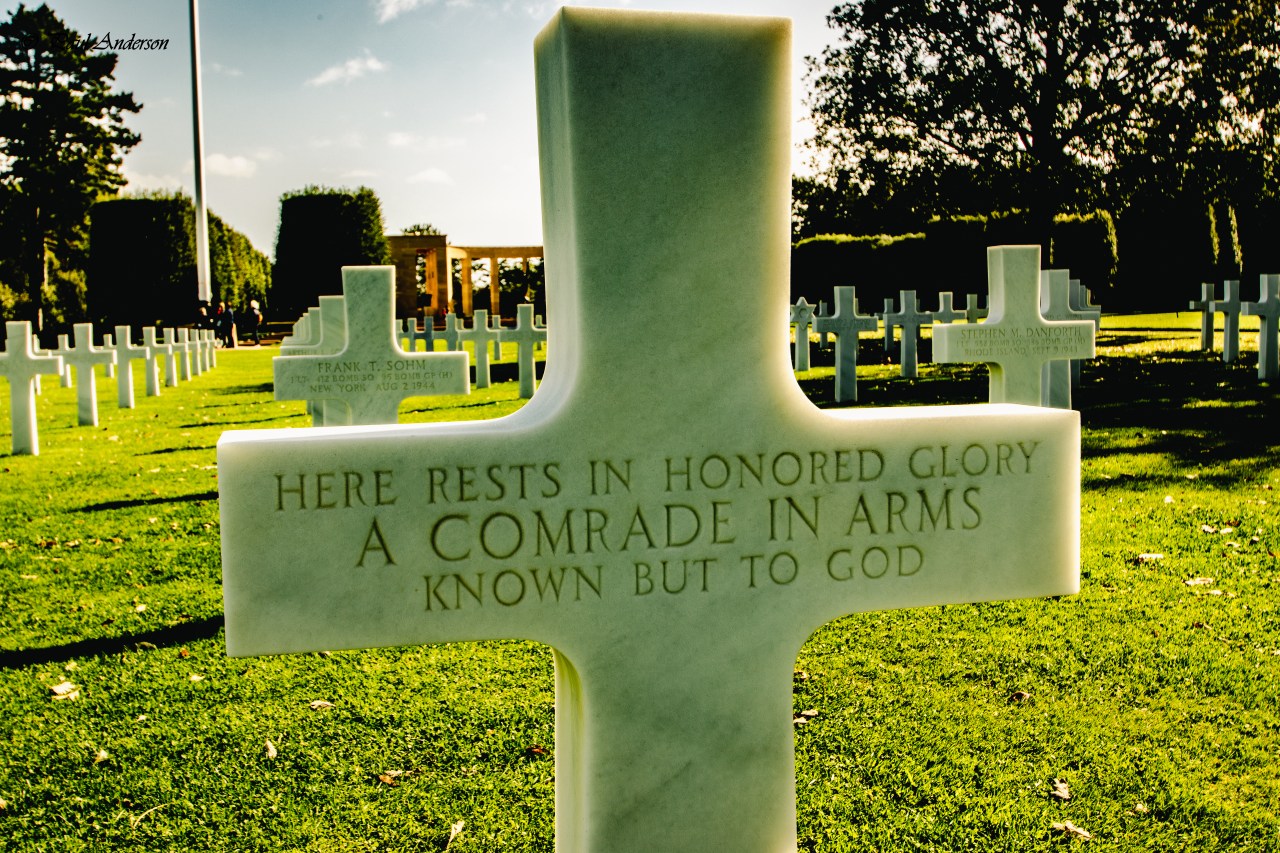
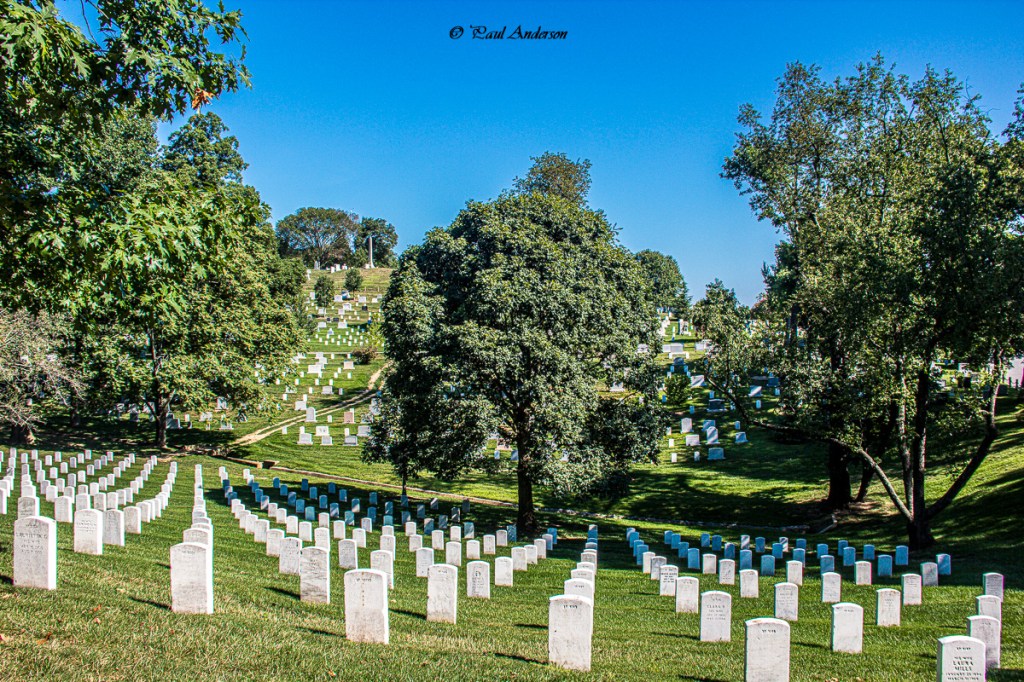
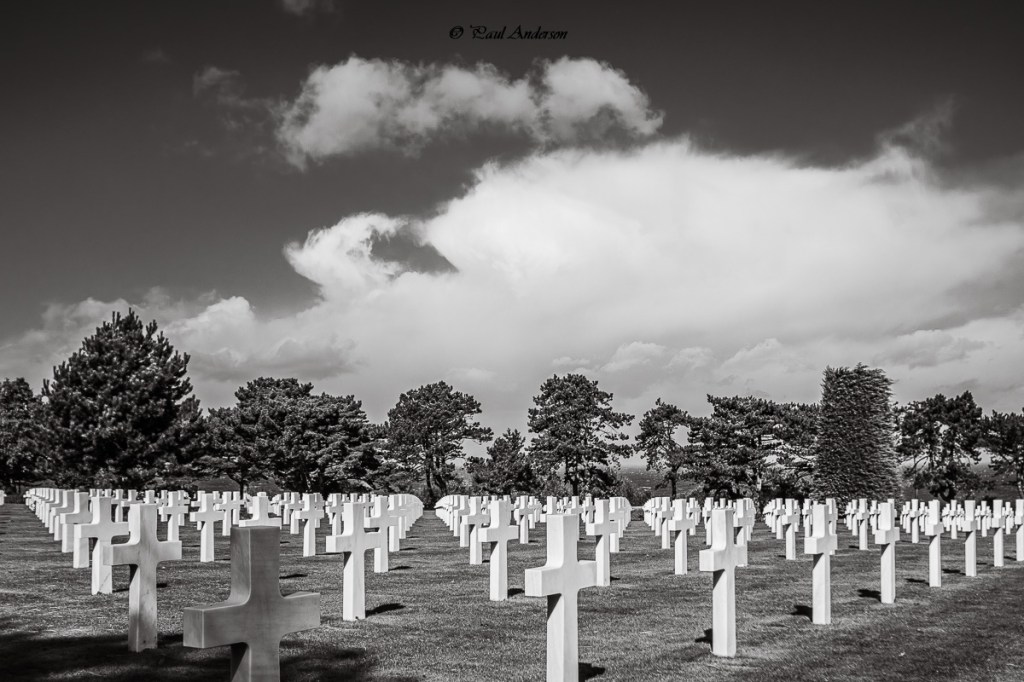
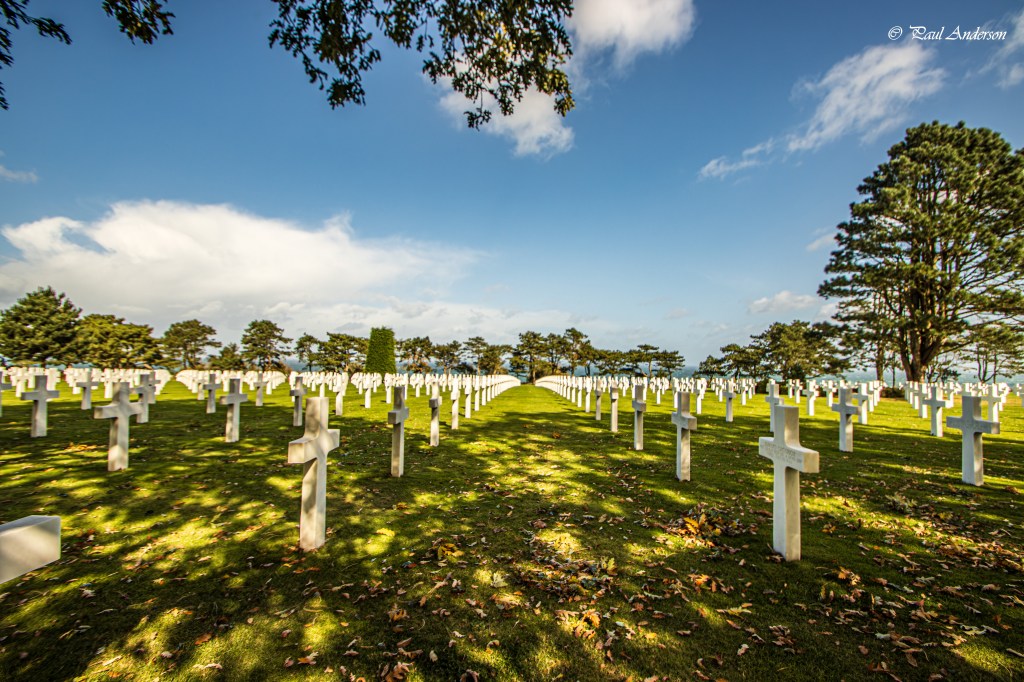
You walk in reverence, overwhelmed by the sheer number of white markers that shine bright in the midday sun. At Arlington the gravestones go on and on until they disappear over a short rise and continue on, unseen. On a sweltering July day in Gettysburg they march in lines from the bright unrelenting sun, to fade into the dark, under canopies of shady green groves. At the Presidio of San Francisco the departed rest on a bayside hill and keep watch over the Golden Gate Bridge in the distance. At Normandy the markers stand out against the backdrop of blooming white clouds, blue skies and a roiling English Channel.
Every now and then, for no particular reason (unless you are a comrade, or friend, or family), you stop and read; a name, a date of birth, a date of death, and possibly a short description. These are the final resting places of the men and women who accepted the duty to country, the commitment to be sent to a land, maybe one they’ve never heard of, to take arms against young men and women not so different from themselves.
Cora and I have walked the cemeteries at the Presidio of San Francisco, Arlington, Fredericksburg Virginia, Gettysburg, Appomattox Court House Virginia, and Omaha Beach. In the nation’s capitol we’ve touched the gleaming ebony face of the Vietnam Memorial.
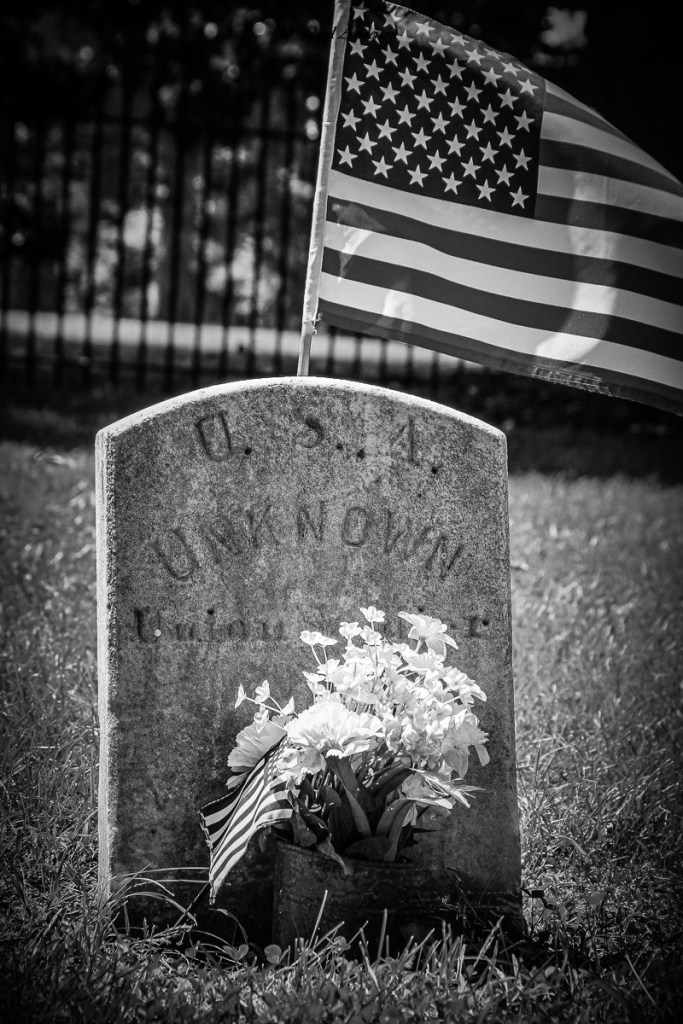
For Cora and I they are names of people unknown to us. For so many others they are the never forgotten faces in photo albums and camera rolls. Memories of holidays, graduations, weddings, births, joys and sorrows, and ultimately the last full measure.
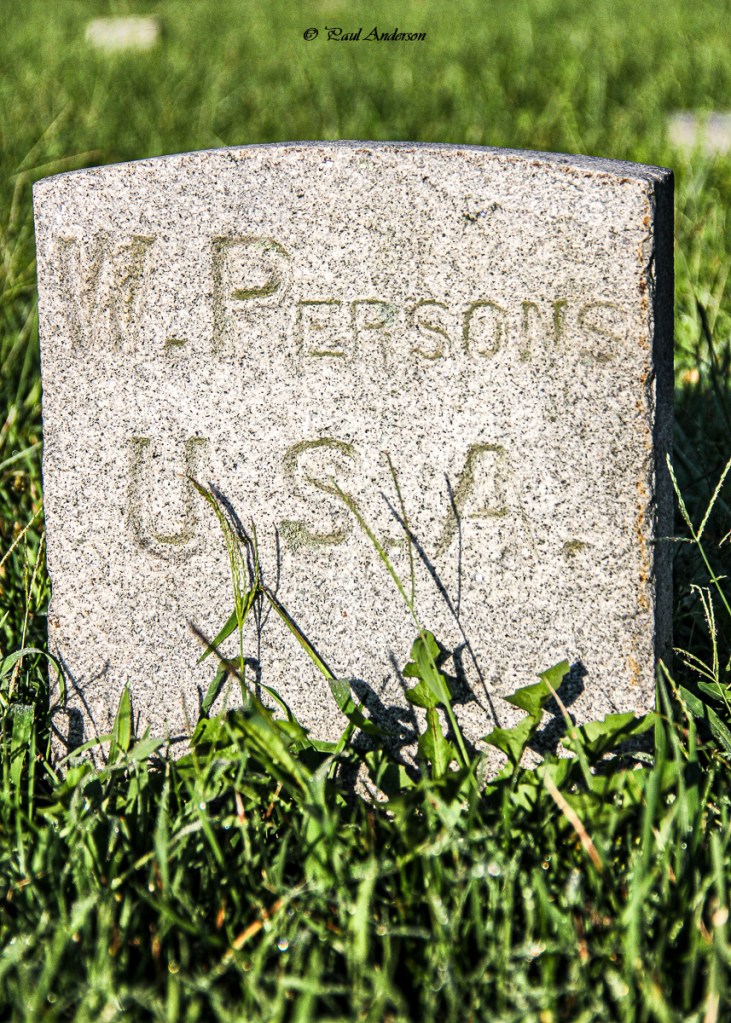
It was called Decoration Day when I was a child. When first coined, the name reflected the day’s original purpose as stated by General John A. Logan, who led an organization for Northern Civil War Veterans. “The 30th of May, 1868, is designated for the purpose of strewing with flowers, or otherwise decorating the graves of comrades who died in defense of their country during the late rebellion, and whose bodies now lie in almost every city, village and hamlet churchyard in the land.”
Beware of the politicians
When the soldiers to be, signed their names on the recruitment papers they knew that the day might come when it be their final. They signed in good faith. They signed, trusting that the men and women charged with making the decision to send them off to war would be made wisely and in equally good faith.
And yet too often, leaders who hold so many lives in their hands make the decision impulsively and with lack of foresight. We’ve seen war trivialized, scenes of combat sanitized as if it’s a video game, and the combatants replaceable avatars. They issue orders and send mothers’ sons and daughters into the fray with the insouciance of someone who knows he’ll not have to shoulder the rifle. The politicians aren’t tasked with pulling the trigger or pushing the button that releases the bombs. It’s on the young man, barely old enough to shave and not yet old enough to order a beer, to trust that the task he’s been burdened with, to kill, is justified.
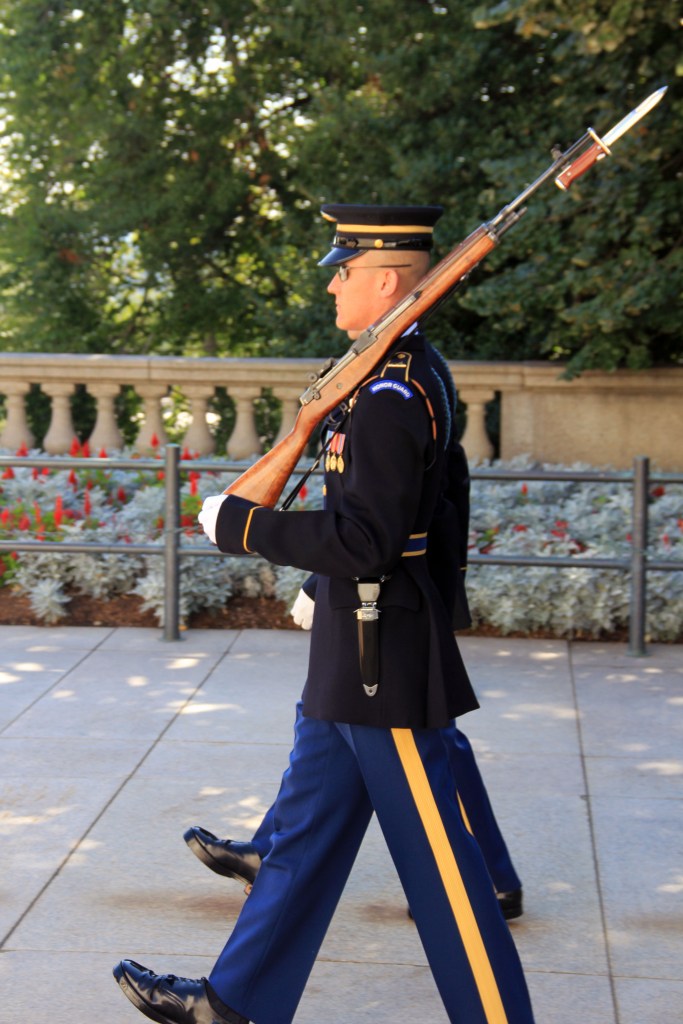
When is war not a war
Between June 25, 1950, and July 27, 1953, as many as 1,789,000 U.S. soldiers took up arms on the Korean Peninsula. During that period the United States dropped 635,000 tons of bombs and 32,557 tons of napalm, and an American general urged the use of nuclear weapons.
And yet, it wasn’t a war, because Congress never authorized the bombing, the shooting, the taking of prisoners, the civilian casualties, and the destruction of property. And so President Harry S. Truman conveniently gave it another name. A “police action,” he called it. No more benign than a traffic stop. By the end of the war that was not a war, 36,515 American soldiers were dead.
Beware of the politician who claims that acts of war are not acts of war.
Beware of the politician who wages war over personal pride.
The history of war is a history of vain old men who send soldiers to war to satisfy their egos.
On May 27, 1964, Lyndon Johnson said to National Security Advisor McGeorge Bundy, “I don’t think it’s [South Vietnam] worth fighting for and I don’t think that we can get out. It’s just the biggest damned mess that I saw…What the hell is Vietnam worth to me?…What is it worth to this country? …this is…a terrible thing that we’re getting ready to do…”
Less than a year later, Johnson gave the green light for the aerial assault on North Vietnam called Operation Rolling Thunder. Five months later two combat divisions were sent to Vietnam.
Not wanting to be seen as the president who “lost” Southeast Asia to Communism, Johnson went against his own better judgement. In the end, 58,281 Americans were dead, 303,644 were wounded, and America lost the war.
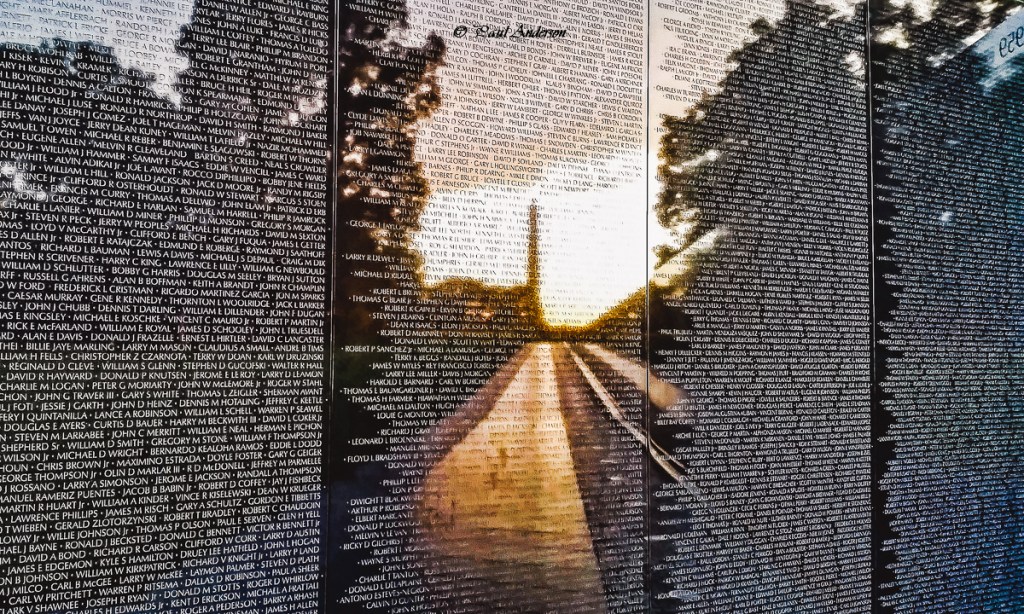
Beware of the politician who sows false seeds to justify war
In October of 2002, the world was warned that Iraq possessed a deadly arsenal of weapons of mass destruction and that it was incumbent on the United States to unseat that country’s dictator, and sieze the weapons. Eight years and nine months after the start of hostilities, 4,492 Americans had perished and 32,292 had been wounded.
The dictator was unseated but there were no weapons of mass destruction.
On Memorial Day we honor the fallen. Some would say that politics should not intrude on this solemn day but on what better day than Memorial Day to remember and heed the words of the military theorist Carl von Clausewitz, who said, “War is not a mere act of policy but a true political instrument, a continuation of political activity by other means.”
Politics and war can’t be separated. It is, after all, the politicians – the presidents, the dictators, and the kings and the queens – who send other people’s children, other children’s mothers and fathers, to fight the fight.
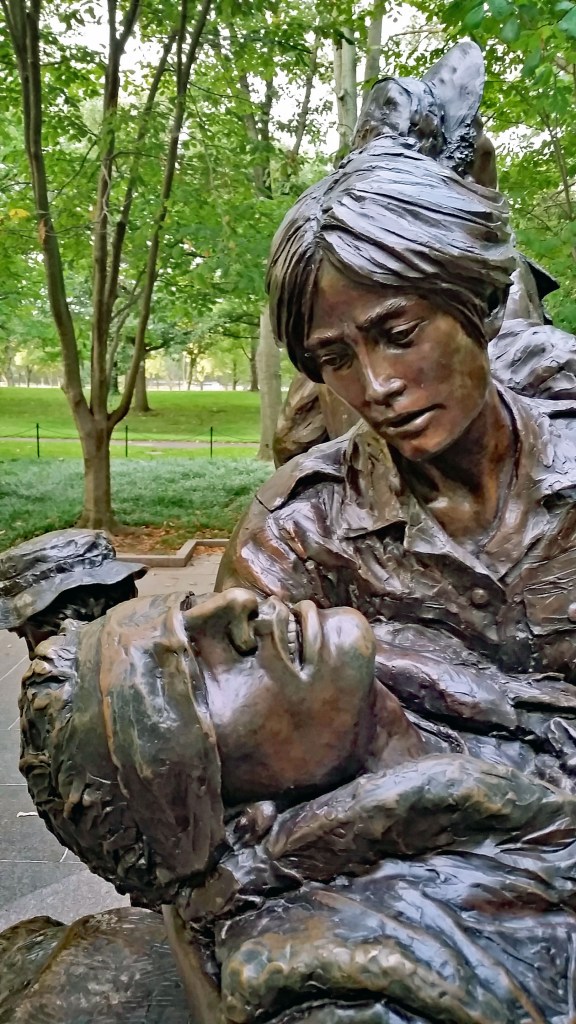
Its Memorial Day 2026 –
remember the lessons of the past,
by all means remember the fallen
and
beware of the politicians.
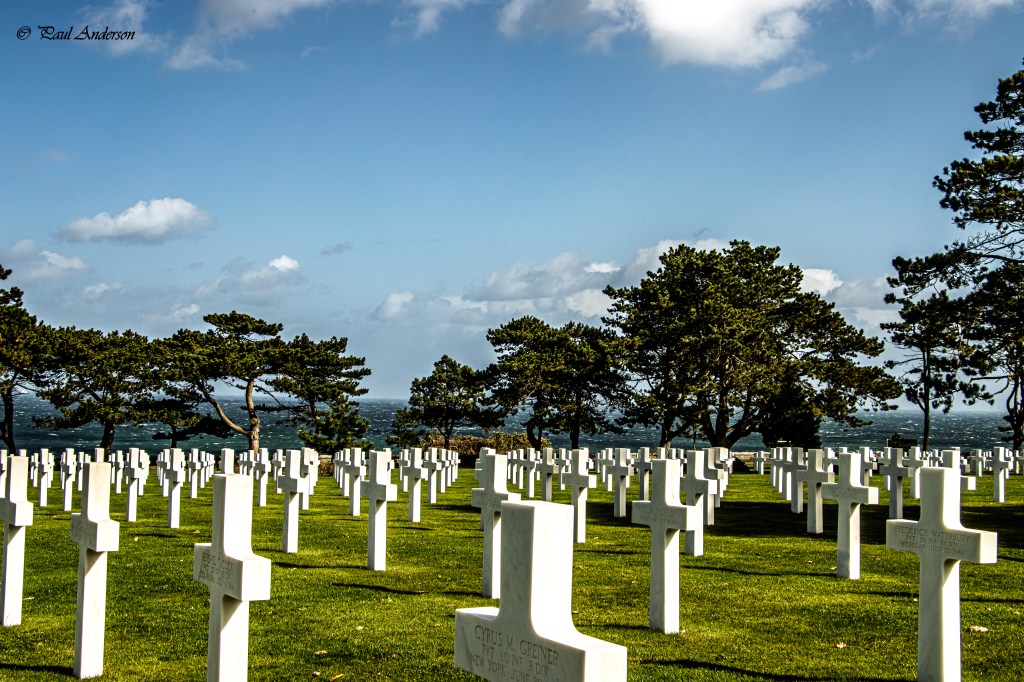


War sucks!
LikeLiked by 1 person
Yes it does.
LikeLiked by 1 person
Well said, Paul.
LikeLiked by 1 person
Thank you Audrey.
LikeLiked by 1 person
A very apposite post – well said. I sometimes feel occasions such as your Memorial Day and our Remembrance Sunday are seen as opportunities to glorify war rather than focus on lives lost and the often questionable reasons why.
LikeLiked by 1 person
Hello Sarah, I agree about the days of remembrance being used to glorify war.
Our Memorial Day 2026, is observed under the dark cloud of a president who makes partisan remarks and tells jokes when he should use well thought out solemn words, and a secretary of defense who treats war as a no holds barred video game.
LikeLiked by 1 person
Hi Paul,
I hope you had a day of remembrance and reflection.
I’m always struck by the images of cemeteries. We all end up there in one form or another and yet, men have continued to wage war throughout time. It’s a human obscenity.
LikeLiked by 1 person
Hello Eden, And men will continue to wage war. What should trouble us all is that it has become easier and more impersonal to wage war using drones and surveillance. And now the United States has a president and a Sec – Def who treat it as a macho video game. Maybe we need to go back to the days of trench warfare and bayonet charges for leaders to take waging war more seriously.
LikeLiked by 1 person
There is nothing more affecting in Europe than visiting one of the WWI memorial cemeteries. All the dead – the far too many dead – of whatever nationality – British, American, Canada, India, France, Germany … command equal respect from the silent visitors who come to honour their memory. As far as I know, none of my own ancestors gave their lives, but it doesn’t prevent my feeling a sense of loss and of anger at those wasted lives. All visitors seem to share that experience. But nothing changes. We never learn.
LikeLiked by 1 person
World War I: “The war to end all wars,” said Woodrow Wilson. That worked out well didn’t it. It should’ve been. It was one of the constliest and most savagely fought wars in history. If the world couldn’t learn from that one then the die was definitely cast.
LikeLiked by 1 person
Definitely. I gather your current war is running into billions now. And that’s only the money side of it ….
LikeLiked by 1 person
The government is claiming 29 billion. I would characterize that as a fabrication. As you say, that’s just money side. The rest? A lot of things that will not be easily restored.
LikeLiked by 1 person