
‘Mer·i·ca
/ˈmerəkə,ˈmərəkə/
nouninformal•US English
America (used especially to emphasize qualities regarded as stereotypically American, such as materialism or fervent patriotism).
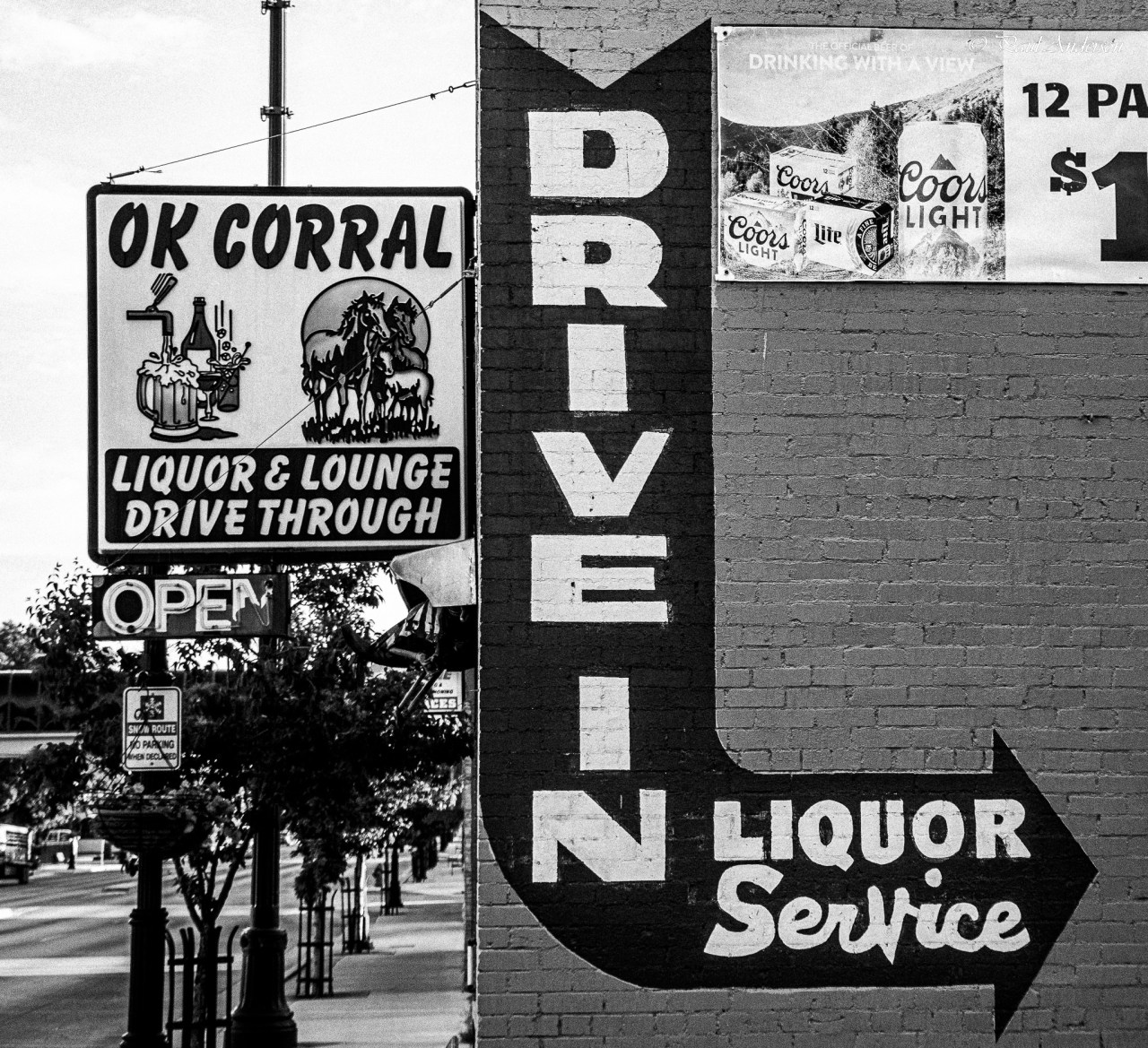
Banner photo: A drive through liquor store in Sheridan, Wyoming. What could possibly go wrong?
Strip the color from an image and what are you left with?
An ordered story.
A quiet, pointed narrative free from the screaming intrusion of color.
It was the works of three photographers who inspired me to pick up a camera when I was approaching my teenage years.
Ansel Adams, the genius who captured the magnificent colors of the American landscape while doing it all in monochrome.
Dorothea Lange, whose black and white images of America’s Great Depression still go straight to the heart.
David Douglas Duncan, whose documentary photos captured the emotions and tragedy of war. Maybe it was Duncan who captivated me the most. Duncan brought the faces of war to the American living room.
And so naturally when I picked up a camera, I shot everything in
color.
It was only recently that I realized my first photographic love.
Black and white.
Following are some photos of ‘Merica in mono.
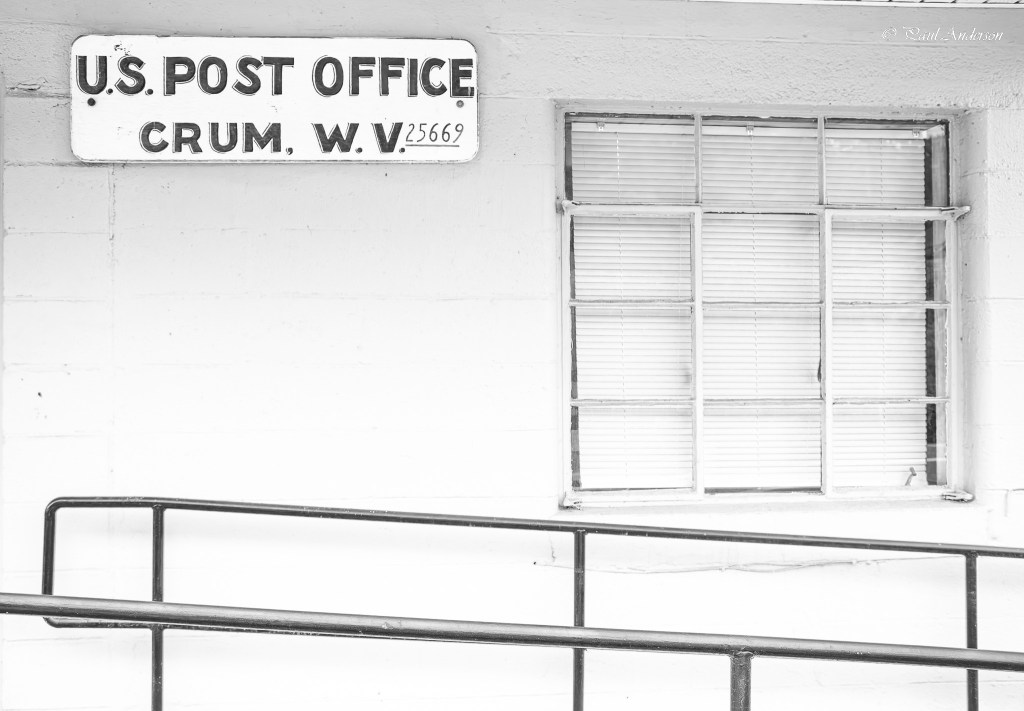
Crum, West Virginia.
This may have been the most welcome sign I saw on the afternoon of October 14, 2021. It was the waning days of a six week road trip and I was lost in the hollers of West Virginia. Once in the rolling forested hills, Google petered out and I drove for a good hour looking for a connection or anything that would tell me where I was so that I could turn to the paper map sitting next to me. It was not a pleasant drive in the country.
Between the proliferation of MAGA signs, Confederate battle flags and the hard stares I got from some locals I had to wonder what had happened to that famed Southern hospitality. It certainly didn’t reside in the heart of the man who glowered at me while he tended a trash fire. as I passed his plot of ground where his ramshackle double wide sat. I’d reached a dead end and on my way out of the cul de sac his scowl seemed even more menacing. When I told a friend of mine that I’d been through the hollers of West Virginia, he said, “Oh hell no. That’s not for me. That’s duelin’ banjos country.” That friend happens to be Black.
A victim of the death of coal, Crum, population 143 suddenly just appeared in a clearing in the West Virginia forest. It’s one of those, ‘don’t blink or you’ll miss it,’ towns. I didn’t blink. I still didn’t know where I was until I spotted the post office. Crum provided the starting point on the map that led me to Huntington.
Berea, Kentucky
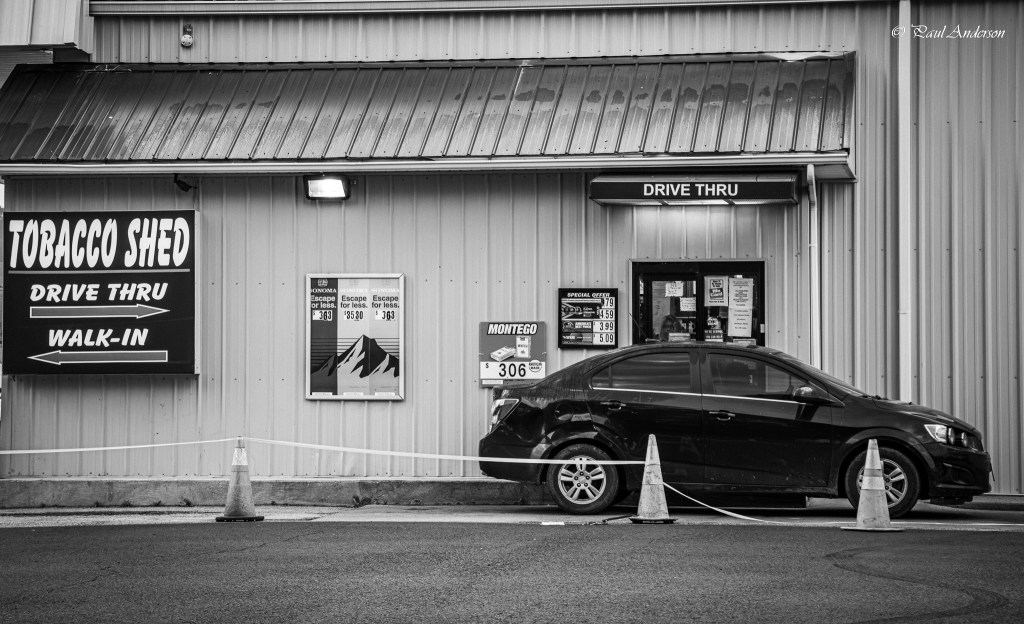
The following day, driving out of Kentucky and headed for Indiana I spotted a marvel of ingenuity; a drive thru cigarette shop. If you’re a smoker you probably bank as many breaths as you can, so if you can skip the walk to get your coffin nails so much the better for your
health?
Oh My God Part One: Somewhere in West Virginia
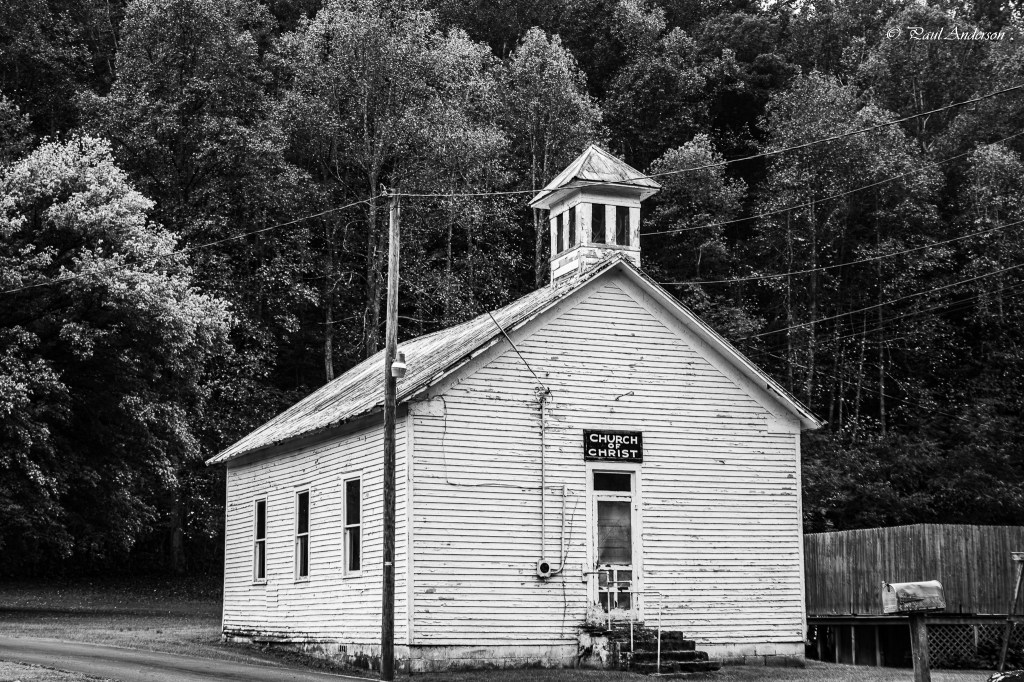
You can’t travel more than an hour in ‘Merica’s South or Midwest without seeing the trademark little white churches.
Oh My God Part Two: Somewhere in Kentucky
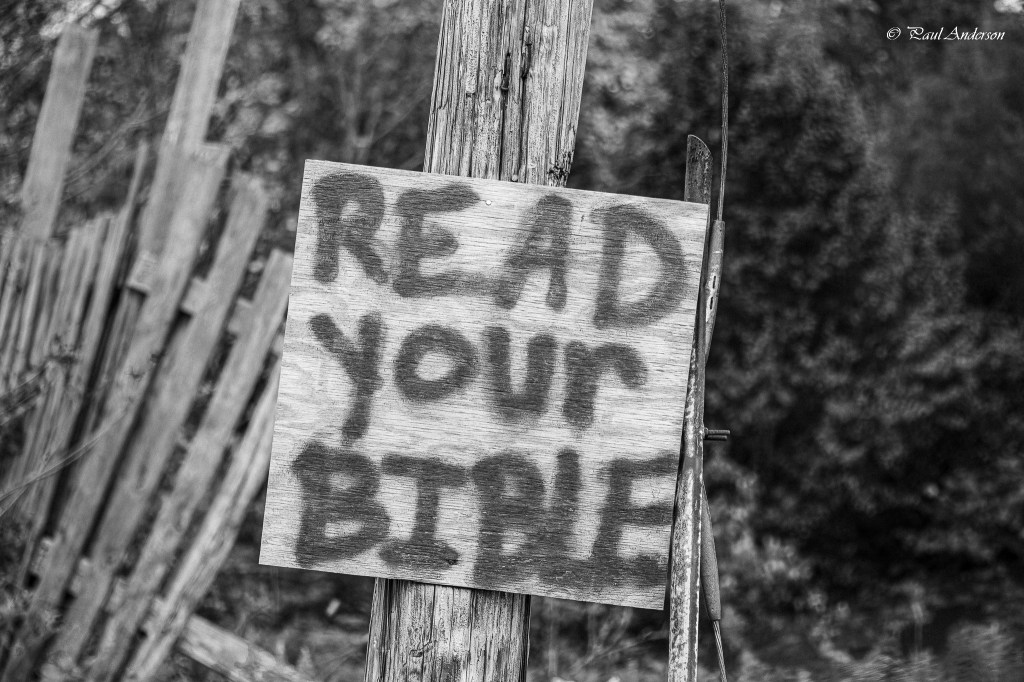
I came upon this random admonition nailed onto a fence post on a country road while driving thru Kentucky. This sign wasn’t the first one I saw that counseled, in stern terms, the importance of a godly life. And it wasn’t nearly the last. Scripture has it that God is everywhere and that’s certainly true in the South.
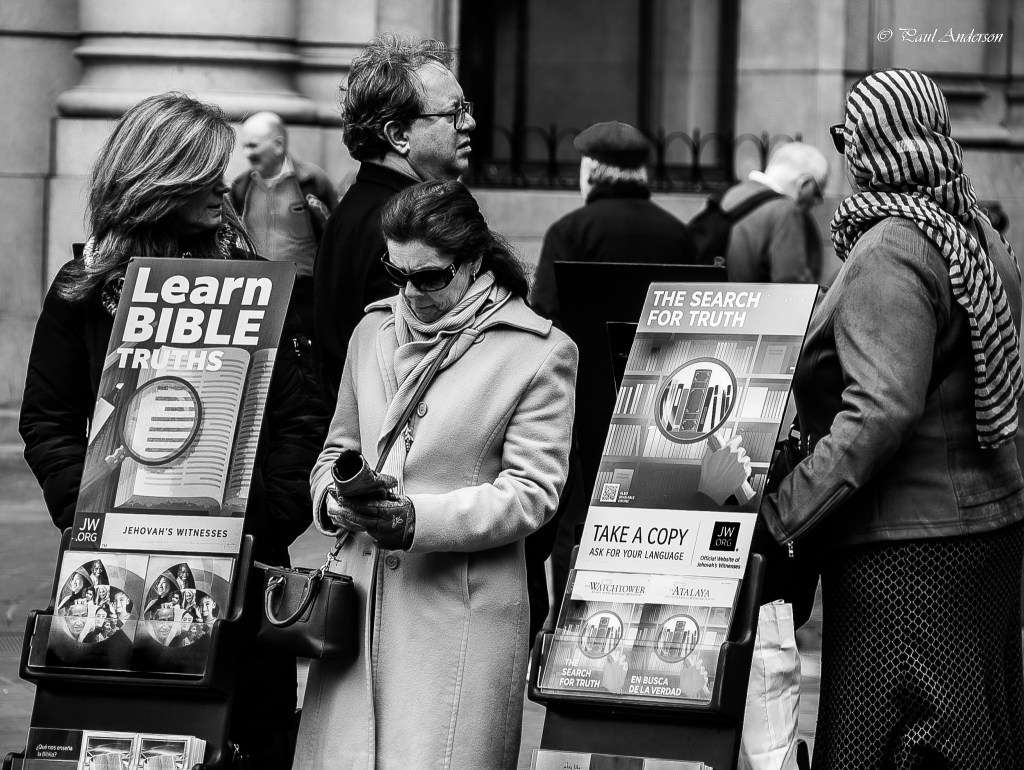
Oh My God Part Three: Peddling religion isn’t just a rural phenomenon. These Jehovah’s Witnesses were located near the busy cable car turnaround on Powell Street. No shortage of people who might need some old time religion there. It’s where you’re just as likely to see a Rastafarian huffing on a spliff, an entrepreneur hawking cable car key chains, a pick pocket or two, or just some random naked guy yelling at no one in particular. The hectic crowd was searching for something but it wasn’t these ladies’ version of “truth.”
Stuck in time
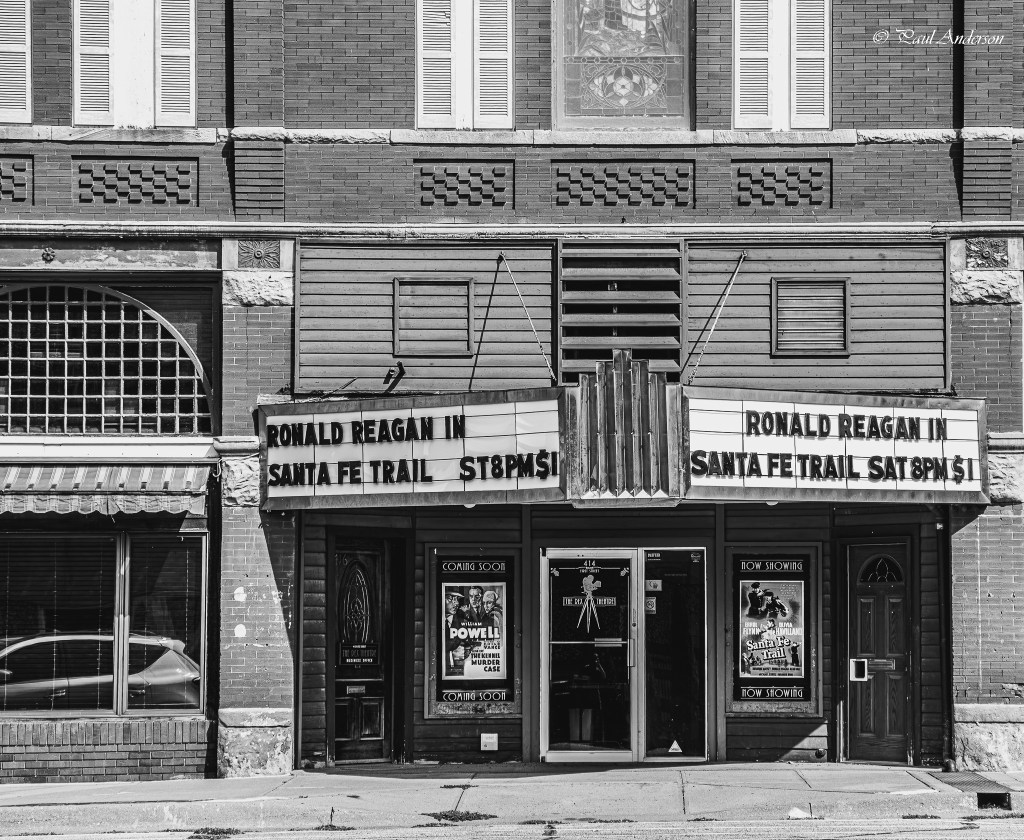
Glenwood, Iowa is a charming little town in west Iowa, near the border with Nebraska. It was the first day of my road trip and I stopped to look around. Glenwood has a typical rural town square with a green park in the middle. I stopped and bought some microwave popcorn from a Cub Scout at a fundraising table. I figured it would come in handy over the next six weeks of life in cheap motels. The movie theater shown below was showing an oldie but a not so goodie for the price of one dollar. Still too much as I wouldn’t watch Ronald Reagan if the admission was a dime.
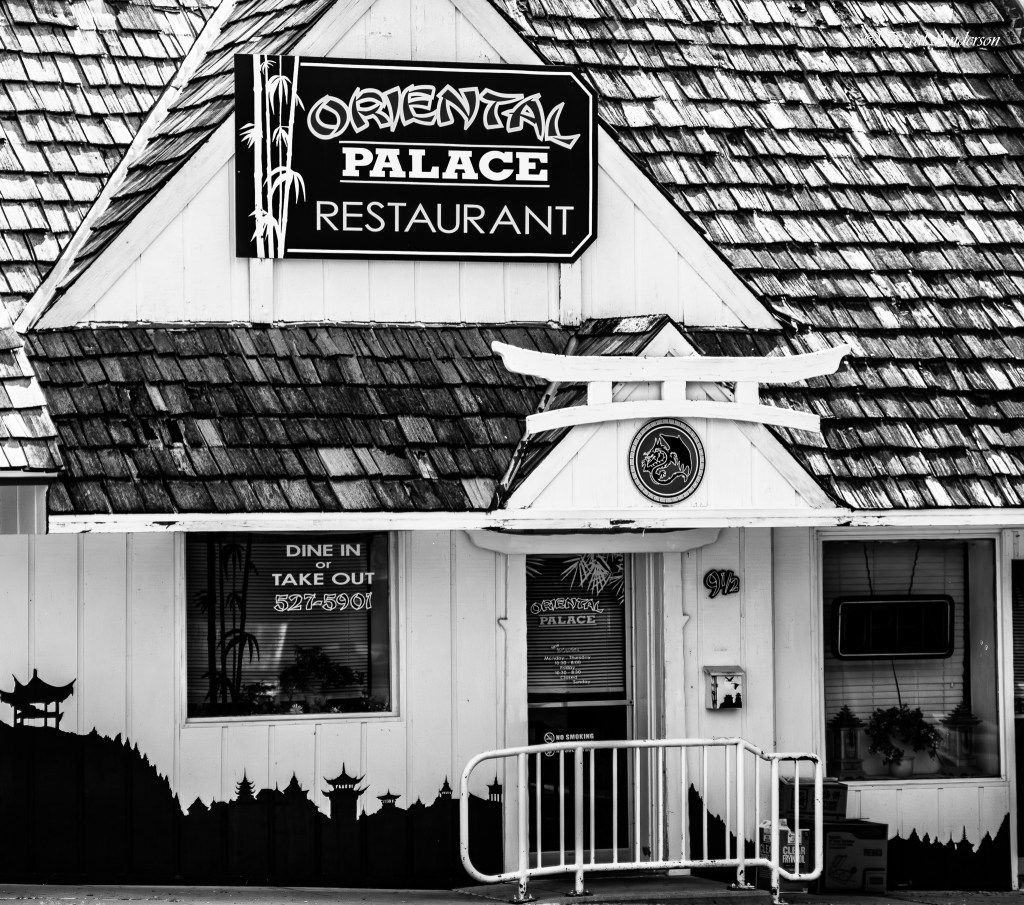
Around the corner from the movie house was a Chinese restaurant with a name you will never see in San Francisco’s Chinatown. You might see Jade Palace or Peking Palace or Dragon Palace but you will never see Oriental Palace. That became officially inappropriate some decades ago.
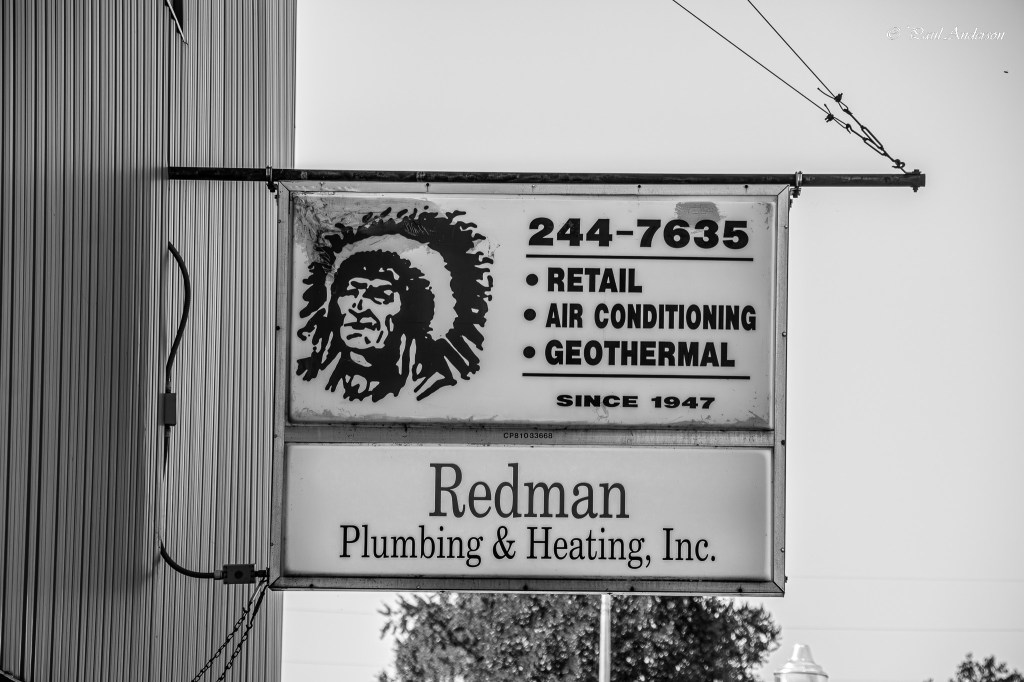
A plumbing company in Columbia City, Indiana. Inappropriate since 1947.
Route 66
Highway 66 is the main migrant road. … 66 is the path of a people in flight. … 66 is the mother road, the road of flight. ~ John Steinbeck, The Grapes of Wrath
There’s no better place to sample ‘Merica than on Route 66, the Mother Road. You haven’t taken a road trip until you’ve driven Route 66. It was the pilgrimage road for Americans heading west, for California, the land of milk and honey. They headed west for a new start, for family vacations and, during the Dust Bowl, an escape from ruin.
Route 66 started in Chicago and terminated in Santa Monica. It was populated by motels, diners, and all manner of strange attractions, started by people who were certain they would strike gold with their, sometimes harebrained, ideas. With the upgrade of the Federal Highway System much of Route 66 was bypassed and dreams of riches were turned into nightmares of ruin.
What’s left of Route 66 has become a 2000 mile long attraction. Driving Route 66, or what’s left of it, isn’t just a drive, it’s a mission.
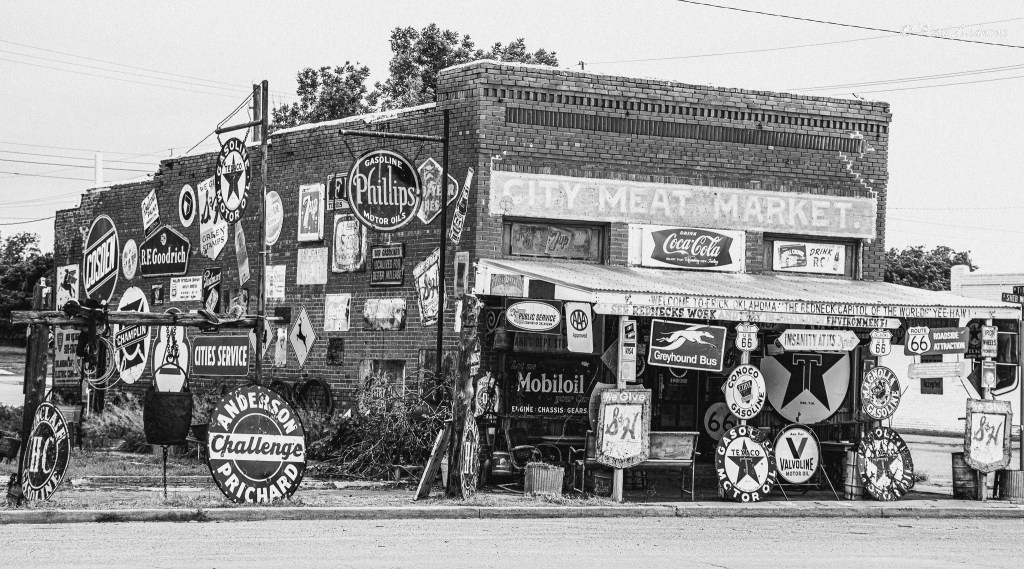
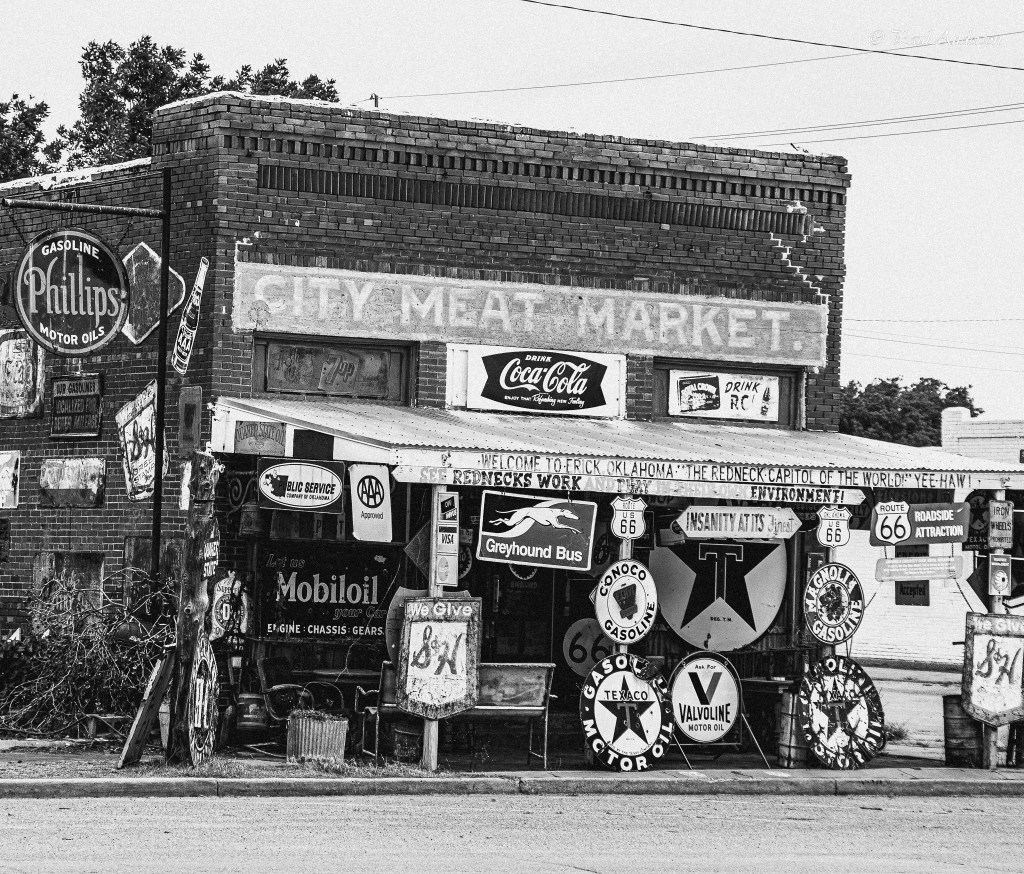
The two photos below are of the old City Meat Market, the oldest building in the little town of Erick, Oklahoma. Festooned with vintage signs it has been reborn as the Sandhills Curiosity Shop. And it is a curiosity.
“This highway, if you just think about it, is peppered with hope; it is peppered with tears.” ~ Angel Delgadio, co-founder of Arizona Route 66 Historical Association,
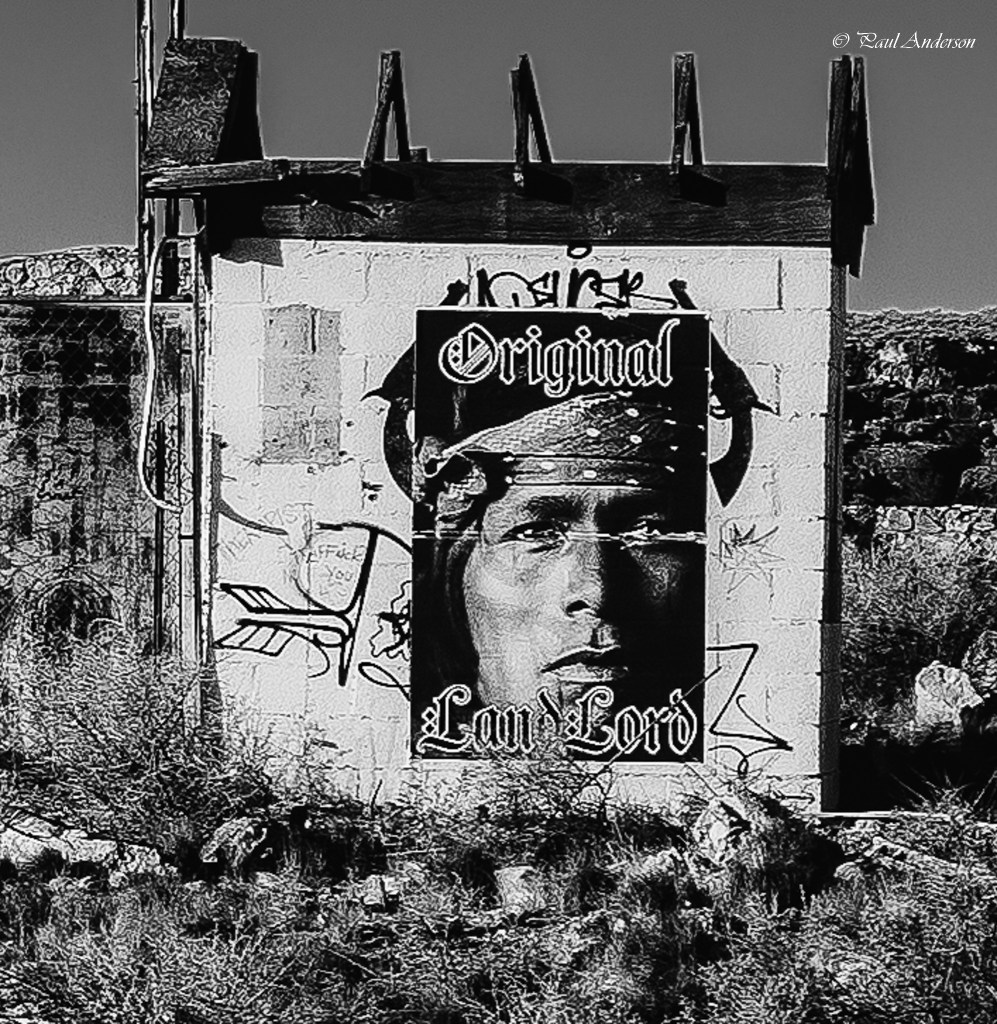
Below: Two Guns, Arizona was a tourist stop on Route 66. Now a collection of rattlesnake infested stone ruins, in its heyday Two Guns featured a trading post, a zoo, a gas station, and the legend of an Apache death cave. For more on Two Guns, visit my post, The Twisted Tales of Two Guns Arizona
Iowa
Stoner Drugs
In the Spring of 2021, Cora and I were on a road trip that took us along Highway 237 in Iowa. I don’t know what it was that made me take the exit to the town of Tabor. It was probably as simple as “Let’s see what’s in Tabor.” Because ‘let’s see what’s there,’ is the essence of a road trip.
If you call Tabor, the classic small town U.S.A. you wouldn’t be far off. In the spring the town is surrounded by endless acres of stubby emerald green corn. Main Street is a short few blocks with all of the small town essentials; a City Hall, an ice cream shop, a family restaurant, an auto repair shop, and a volunteer fire department. The surrounding neighborhoods are tree lined and hushed. It’s the home of Tabor College, a Christian institution. Every October, the town turns out for the Tabor College homecoming celebration, complete with a parade.
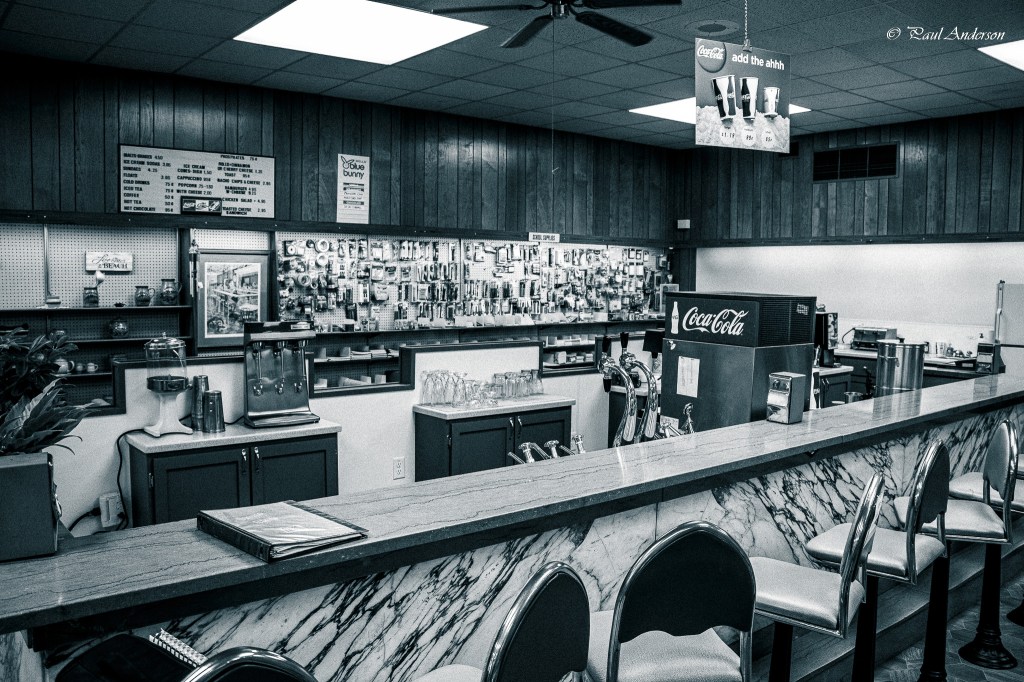
On a spring day, I’d parked in front of a classic old drug store with the wonderful name, Stoner Drugs. I went in briefly and saw that it was the real old school drug store with a bona fide lunch counter. We didn’t stay long but the place stuck with me. I mean – Stoner Drugs. It’s a classic. Take that from an old stoner.
It’s October 21st, 2021 and I’ve found myself back in Tabor. Over the summer and into fall the short green spring corn grew into fields of tall brown stalks that a man could get lost in. Most of the corn has already been harvested. The town itself hasn’t changed except the springtime decorations are long gone, and Tabor is trimmed in Halloween and harvest adornment. The anticipation of the warm season of sunny rebirth has been replaced by the realization of cold, dark days ahead.
It’s lunchtime and I’m at the Stoner Drug lunch counter, which has gotten rave reviews on social media. I’m in anticipation of the not quite world famous chicken salad sandwich and a vanilla milk shake. The shake is good. The chicken salad is – meh. Still, the nostalgic experience makes up for the middling chicken salad.
Ottumwa
The two-hundred mile drive from El Paso, Illinois to Ottumwa, Iowa was one of the most miserable I’ve ever taken. I’d spent most of the night at the emergency ward in a hospital in Bloomington, Illinois, and as anyone who’s been in an E.R. knows, sleep is impossible without the help of heavy sedation.
I wasn’t offered that benefit.
After a drive that took longer than it should have due to stops for catnaps, and coffee or Dr. Pepper I arrived at Ottumwa. I would loved to have taken pictures of the stately old brick buildings of the historic downtown, but I had to satisfy myself with a bowl of soup in the hotel restaurant and an early bedtime in a quiet room (I’ve learned to reserve either a corner room or a room at the end of a hallway). The next morning I got up early enough to take a picture of the lobby of the historic Hotel Ottumwa. There’s nothing really to distinguish the lobby itself itself for the harmony of rectangles.
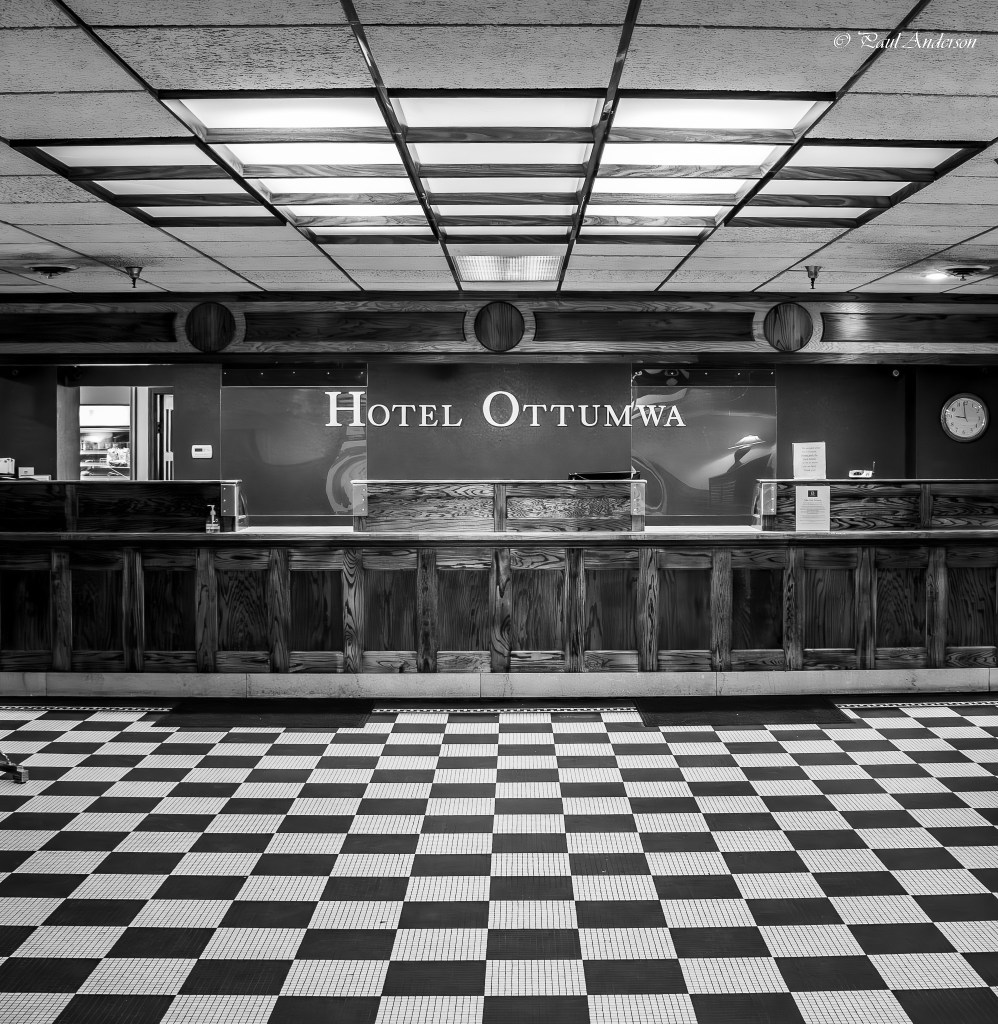
(Fun fact: Ottumwa is the hometown of the fictional character, Corporal Walter “Radar” O’Reilly, of MASH)
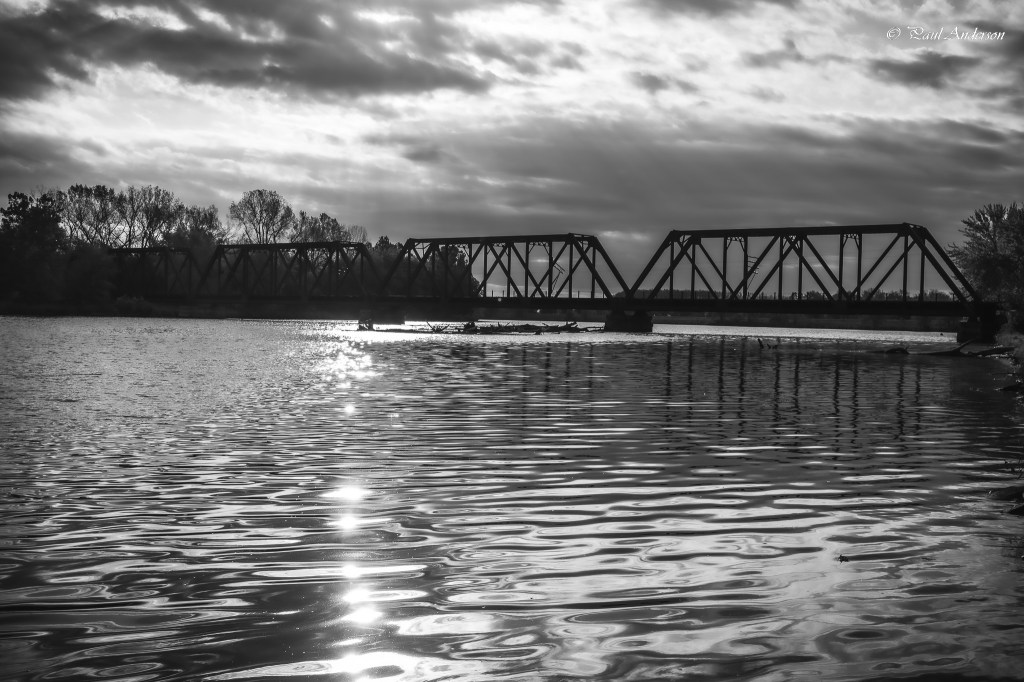
I left Ottumwa before six in the morning, headed for Omaha, my last stop before flying back home. I stopped on the bank of the Des Moines River to watch the sunrise. Listening to the lapping river waters I enjoyed a breakfast of yogurt, salami, cheese and a bit of bread that was on the verge of going stale. I could’ve stopped in a diner for an omelet or biscuits and gravy but I can get greasy breakfast fare at home. What I can’t get is an autumn sunrise over a river in the heartland.
A nation divided
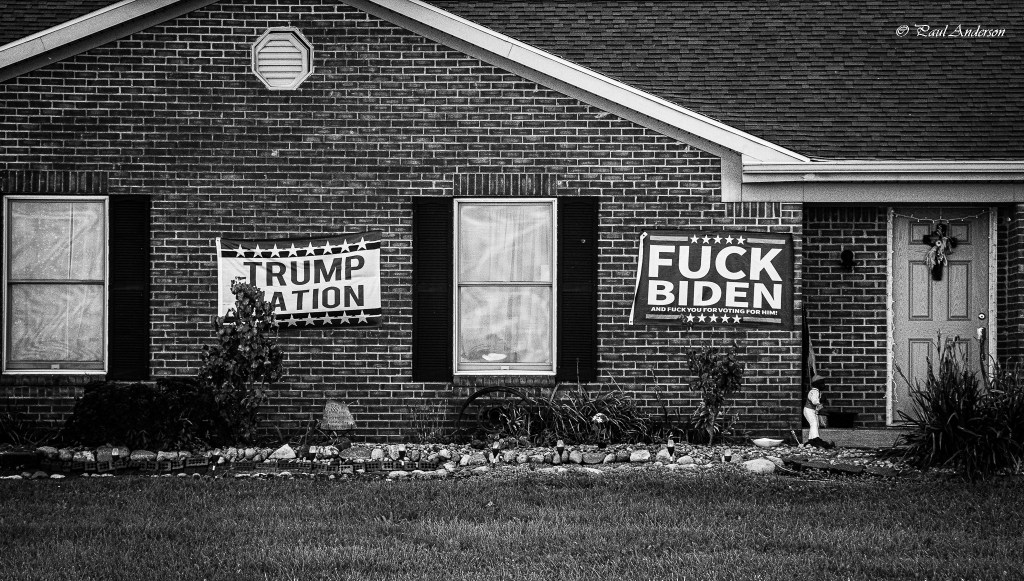
Even after Biden won in November of 2020, I should have known that it wasn’t settled. Presidents come and presidents go, except for the one who refused to go and the legion of followers who wouldn’t let him go. Nearly a year after the election of 2020, while driving through the Midwest the signs of division were displayed proudly, angrily and defiantly. They weren’t one offs. The bitter denial was everywhere; on homes, on grazing land and farmlands, in store windows and at pop up shops on the side of the road where you could buy anything your cold MAGA heart desired, from a ball cap to a giant flag.
I often eschewed my Spotify playlist in favor of listening to the local radio stations. Local radio stations and small town diners are a good way to taste the flavor of a community. In 2021 the flavor was decidedly bitter.
Below, this homeowner in Indiana made his feelings quite clear. (A close look to the right left of the front door reveals a lawn jockey, an old vestige of the Jim Crow era)
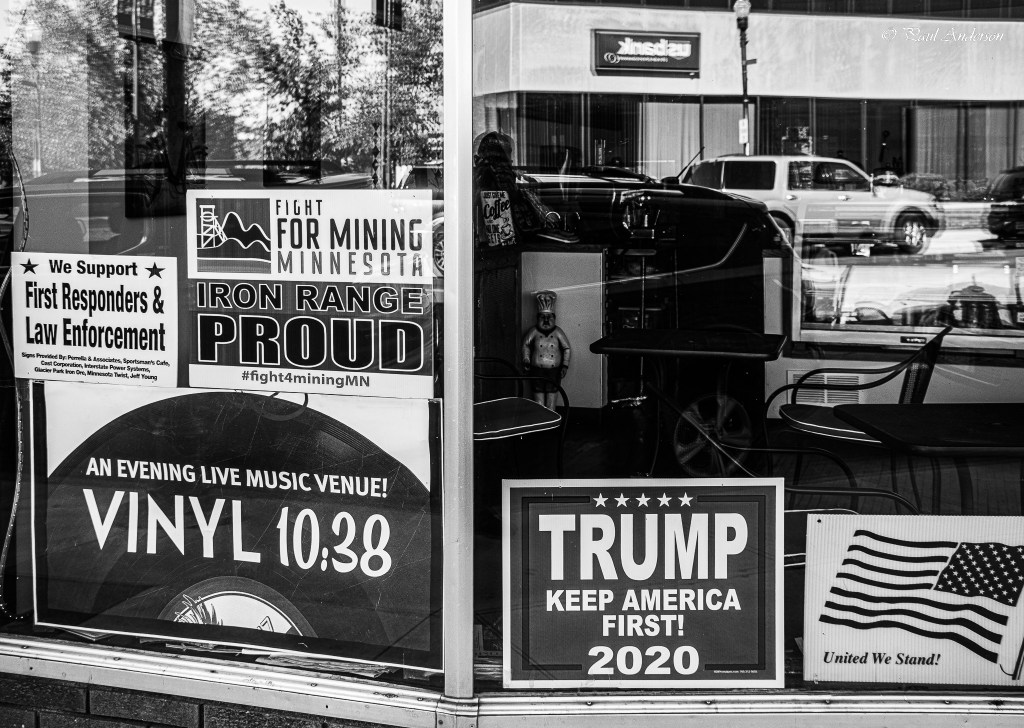
I guess it was a kind of a pilgrimage that made me stop in Hibbing, Minnesota where Bob Dylan grew up. Below is a sign in a store window in Hibbing, where mining is king.
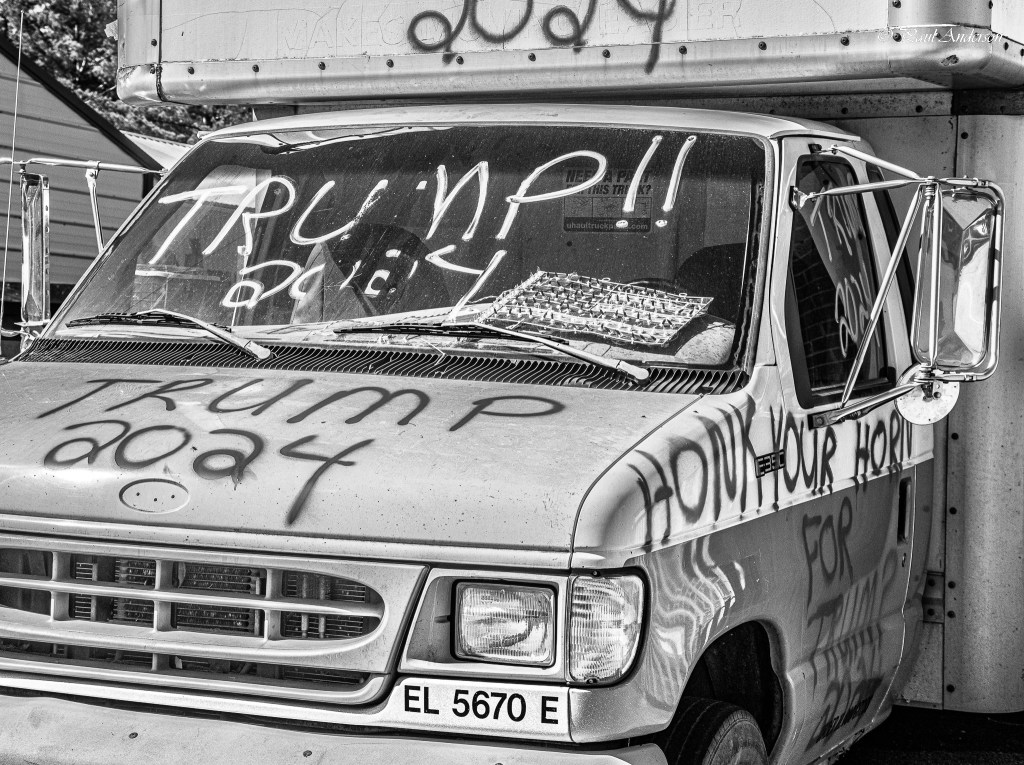
In a small Wisconsin town, the owner of this old U-Haul was already planning for the 2024. Sadly he was prescient.
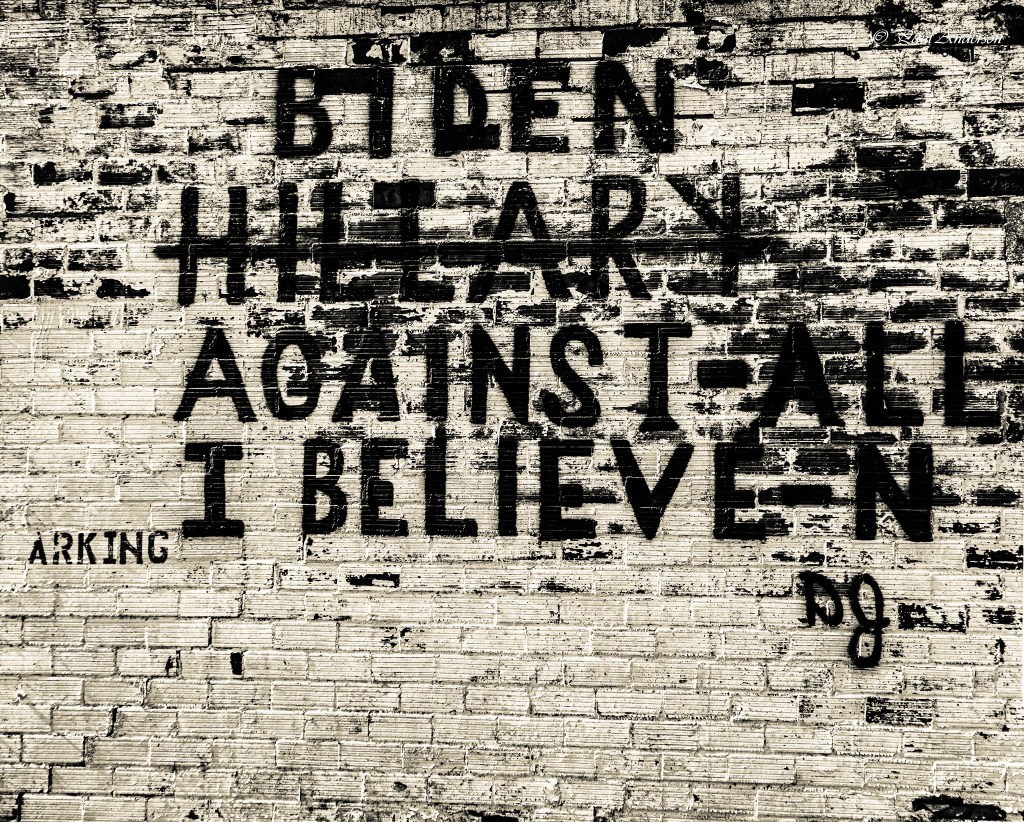
In small town Indiana a muralist named D.J. made his feelings known in a 2021 amendment to the 2016 original work.
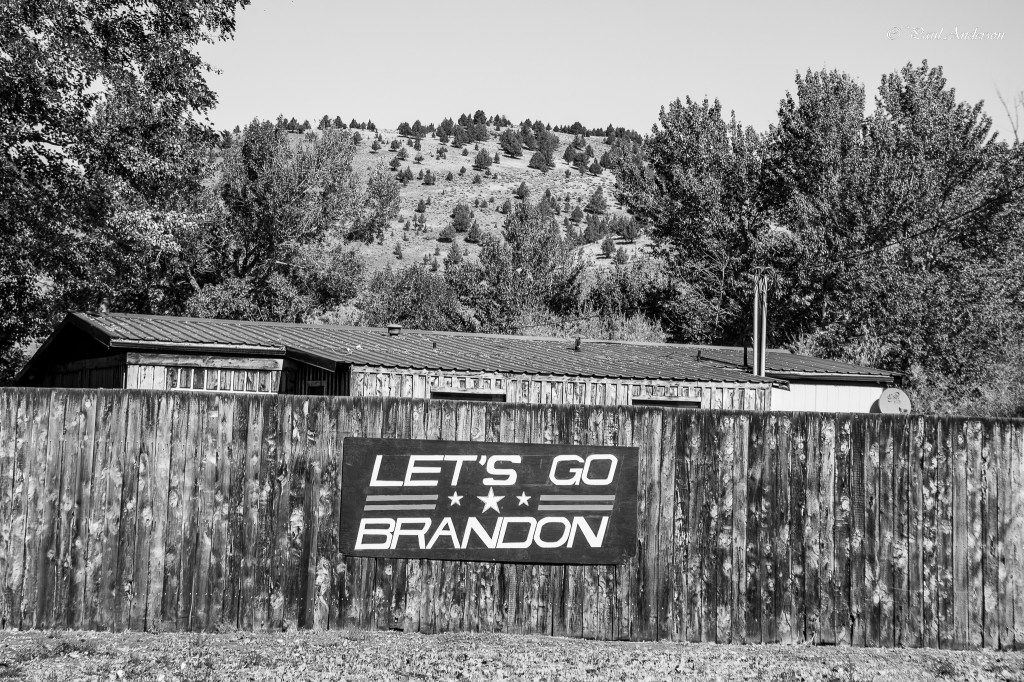
One year and eleven months after the 2020 election the owner of this fence had still not gotten over it. (“Let’s Go Brandon” had become MAGA-speak for “Fuck Biden)
Ten years after Donald Trump announced his first run the strife continues unabated. A United States – sundered. Below, Hercules, California
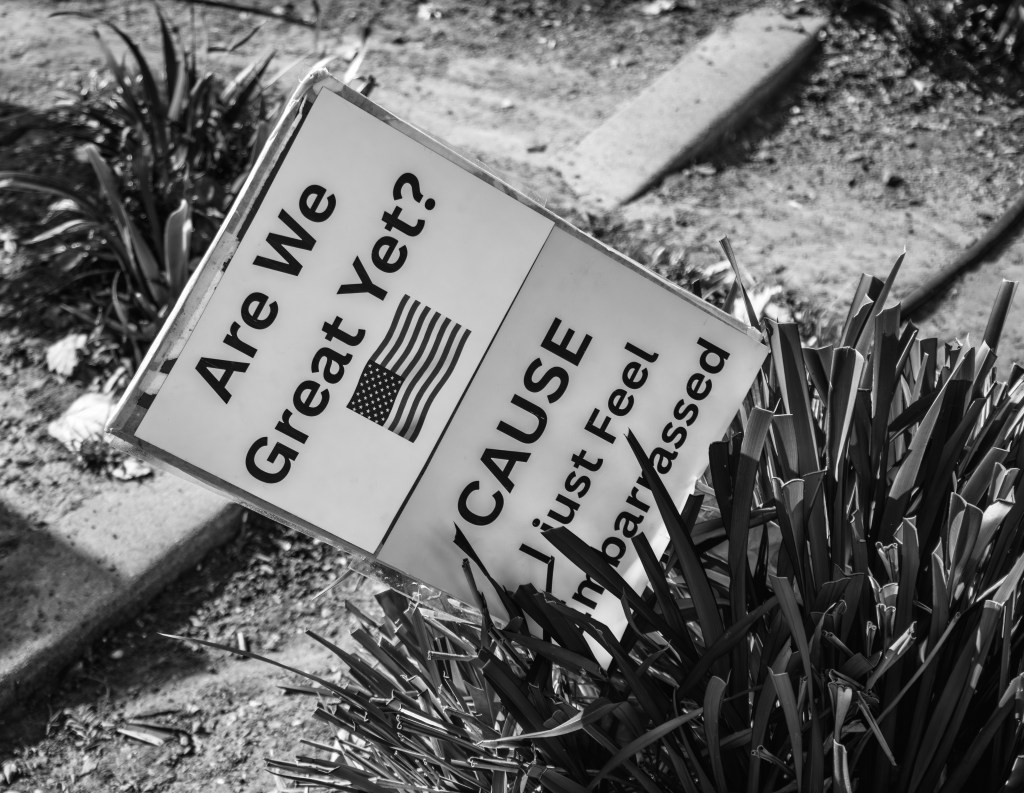
Scenes from the Road
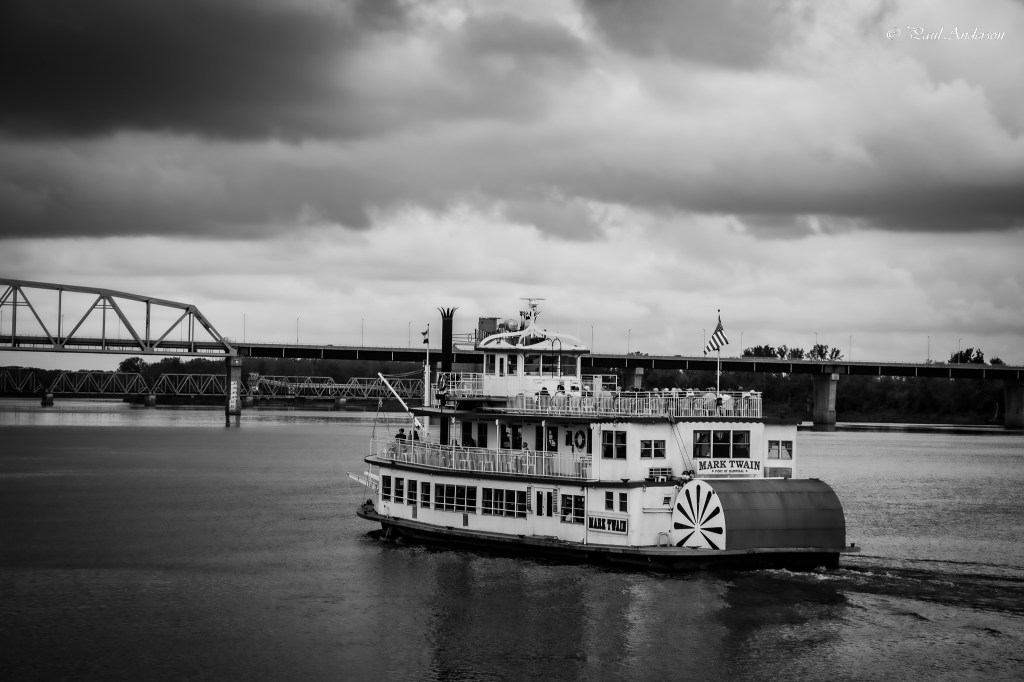
I stayed one night in Hannibal, Missouri, where Mark Twain grew up. Another pilgrimage. Hannibal struck me as a depressing place. It seemed that almost everyone smoked and from the humorless motel clerk to the shoppers and check out clerk in the super market everyone seemed to hate their lives.
Still, Hannibal brought back wonderful memories of my father reading The Adventures of Huckleberry Finn to me at bedtime. When I was older, dad and I would often share favorite passages from Mark Twain’s books. As I was leaving Hannibal, I caught sight of a steam boat plying the Big Muddy.
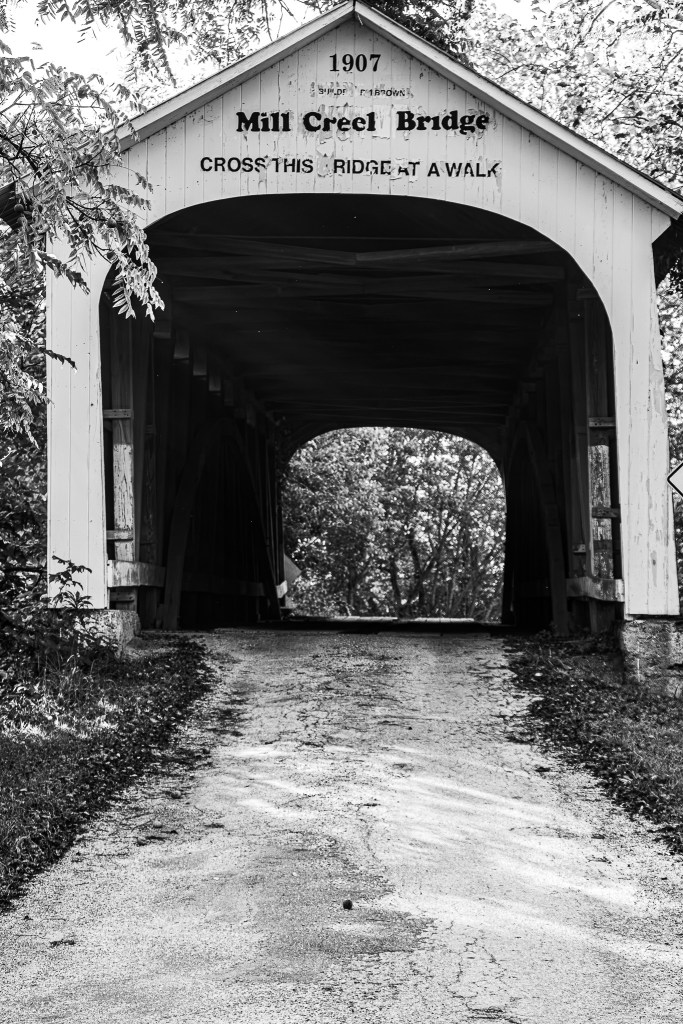
In Parke County, Indiana I stopped to visit the annual Covered Bridge Festival. At the Mill Creek Bridge I met a couple who had just taken up residence in Indiana. We talked about the festival, sports and California which they had just left. They were from Los Angeles and they spent much of our conversation telling me about the downfall of California – too expensive and too liberal.
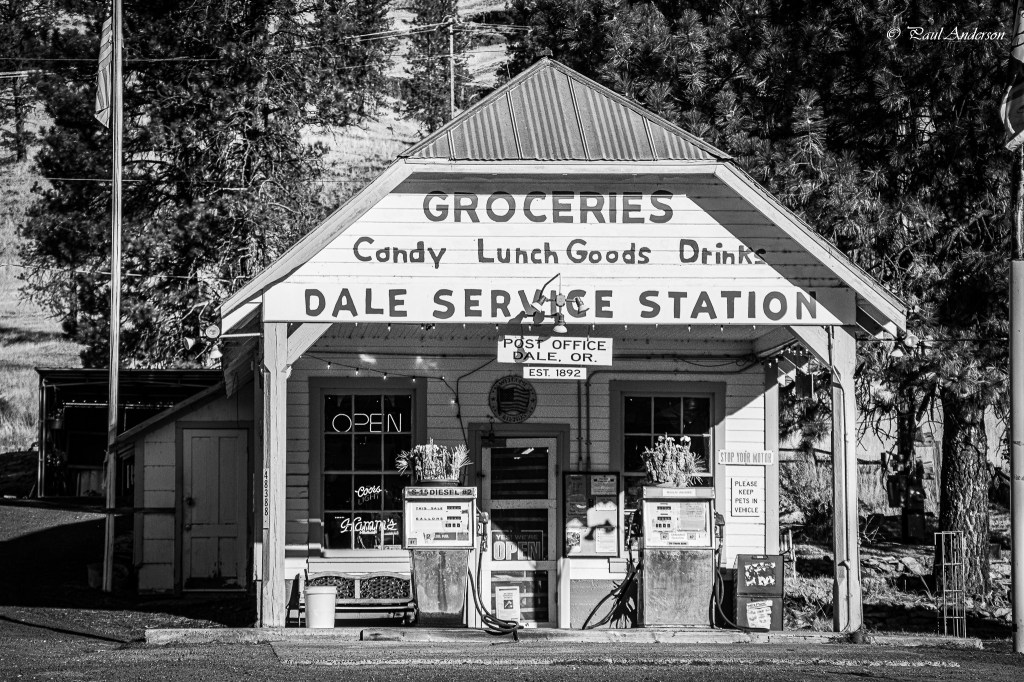
In 2022, I made a brief stop at Dale, Oregon. Very briefly. The image below is of Dale – in its entirety.
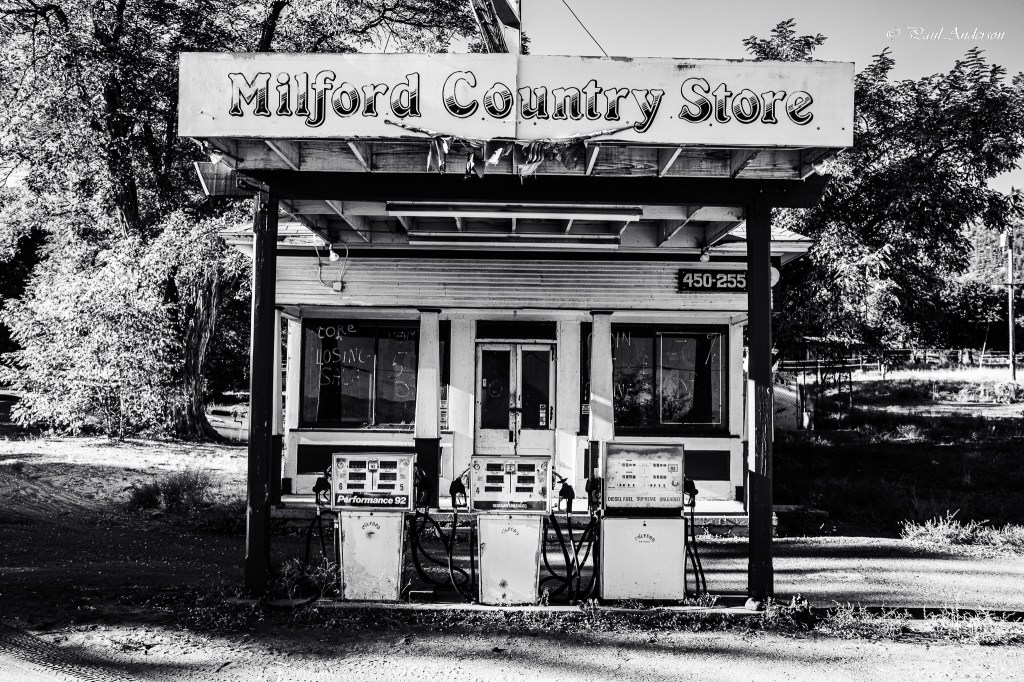
In Milford, California a sign scrawled on the window tells a brief story of the end of the line. “Goin out of business. Everything 50% off.”
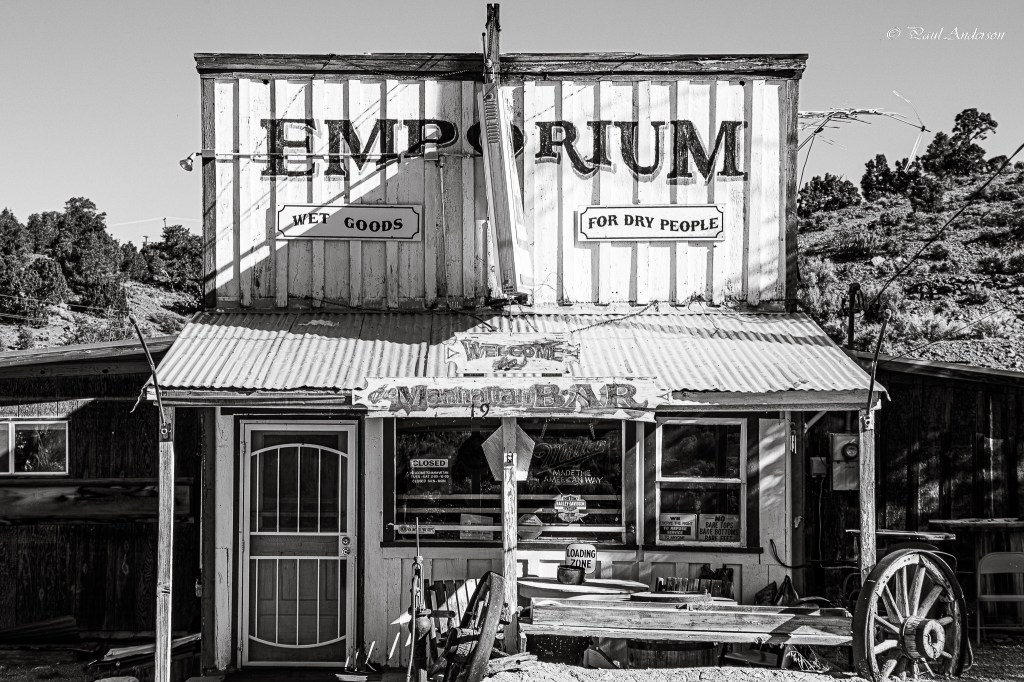
Born of a silver mining boom, Manhattan, Nevada is 50 miles north of Tonopah. With a population of 124, Manhattan with the hopeful motto, Town of New Beginnings, is literally at a dead end. Nevada State Route 377 ends at Manhattan. Below is the Manhattan Bar which is also the town’s only motel.
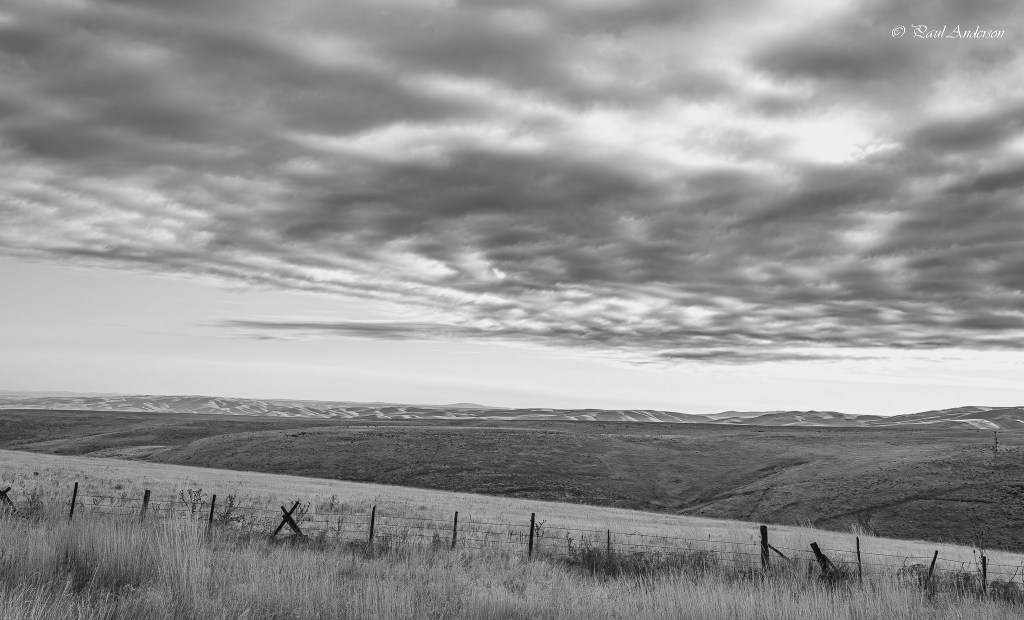
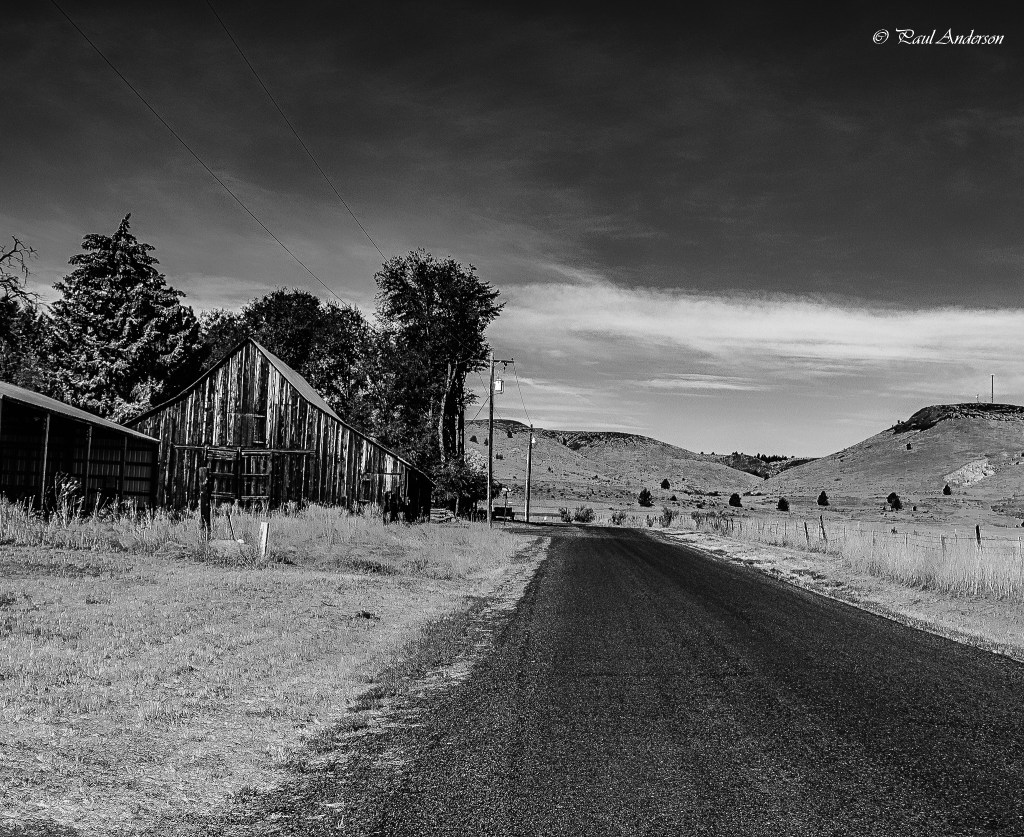
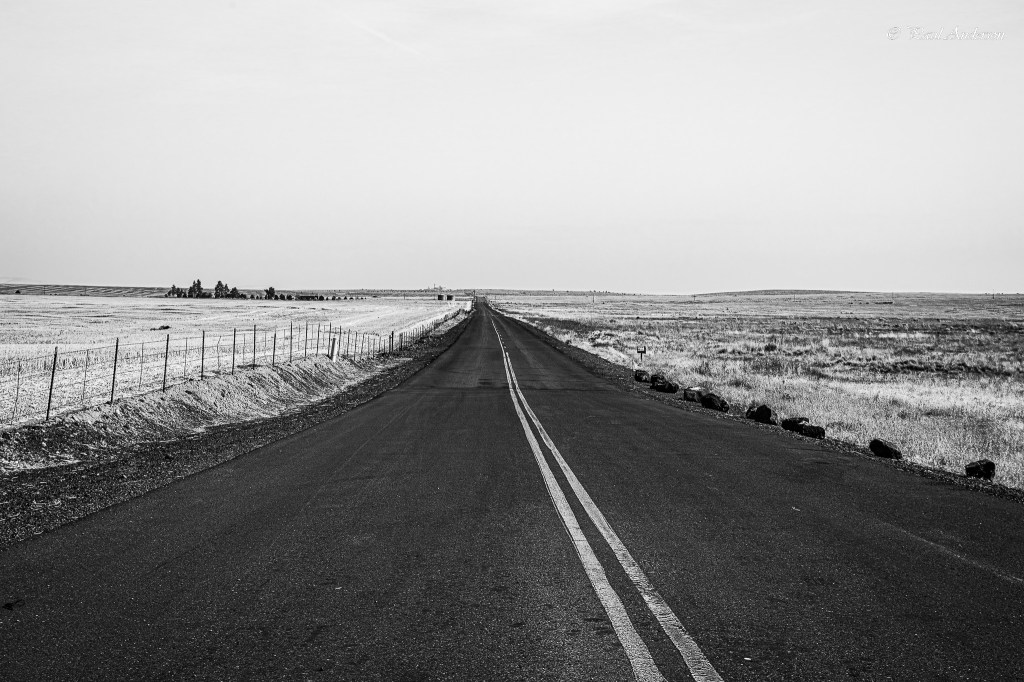
In Eastern Oregon I found vast, seeming endless, stretches of grassland.
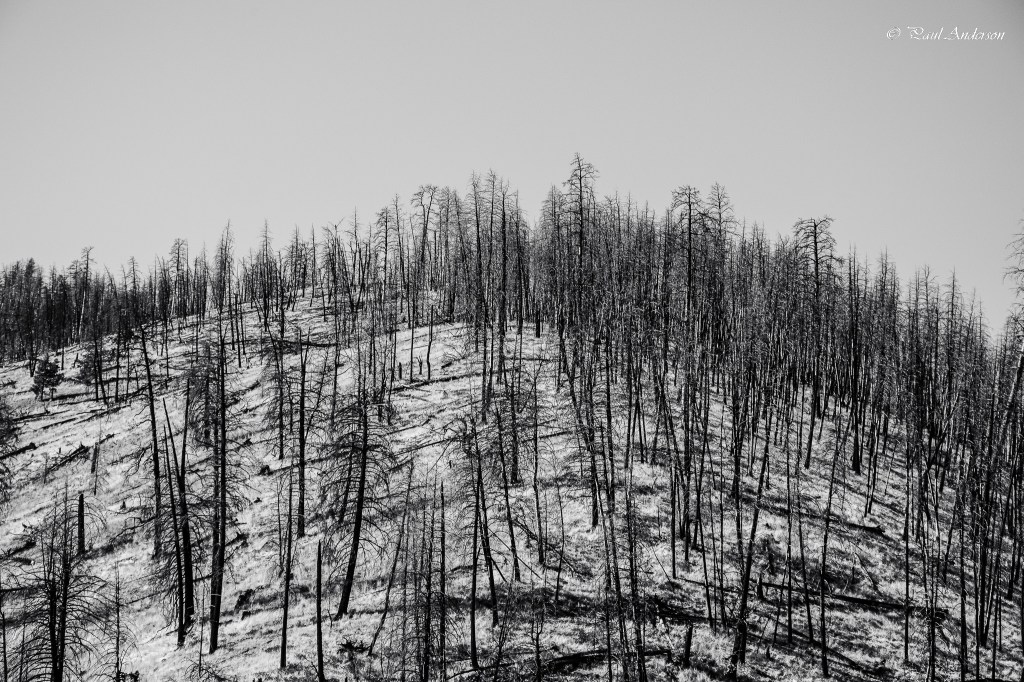
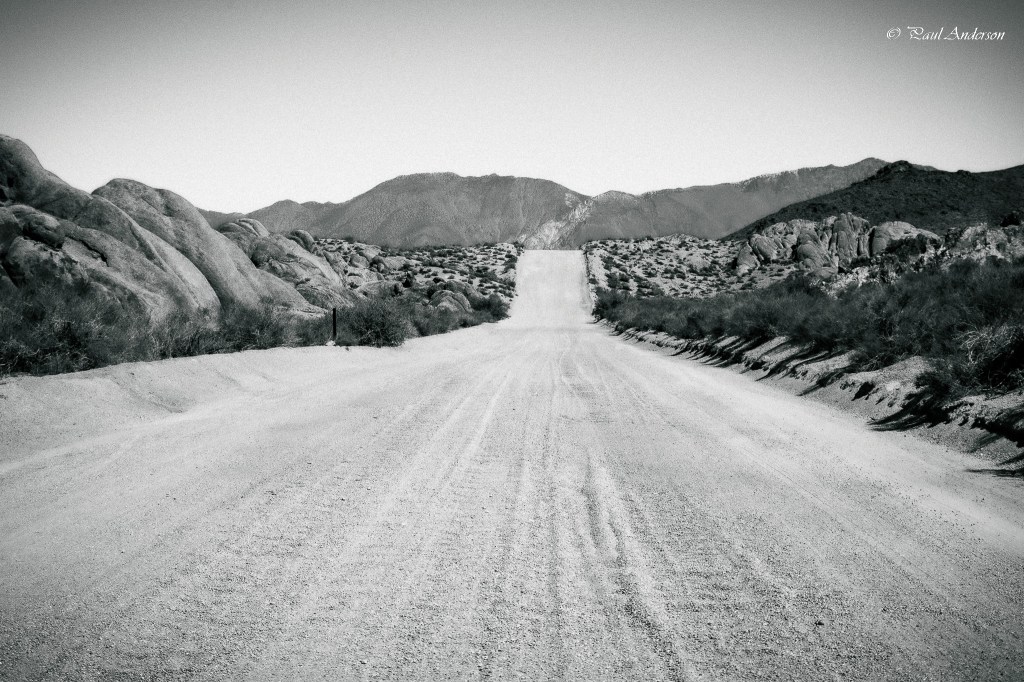
And rolling mountains where wildfires ravaged the landscape.
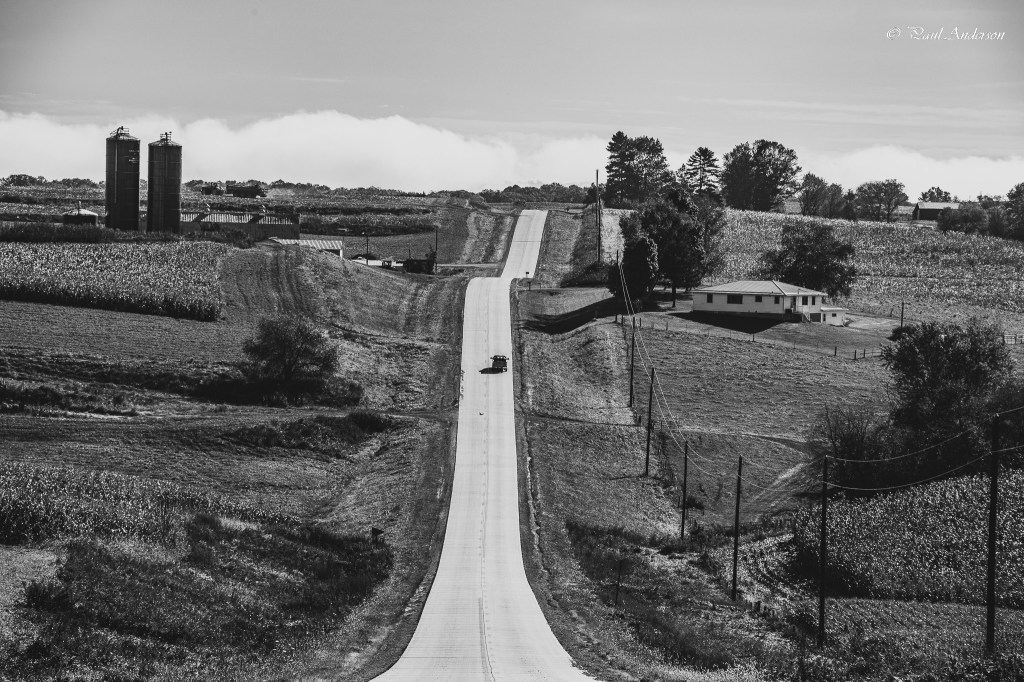
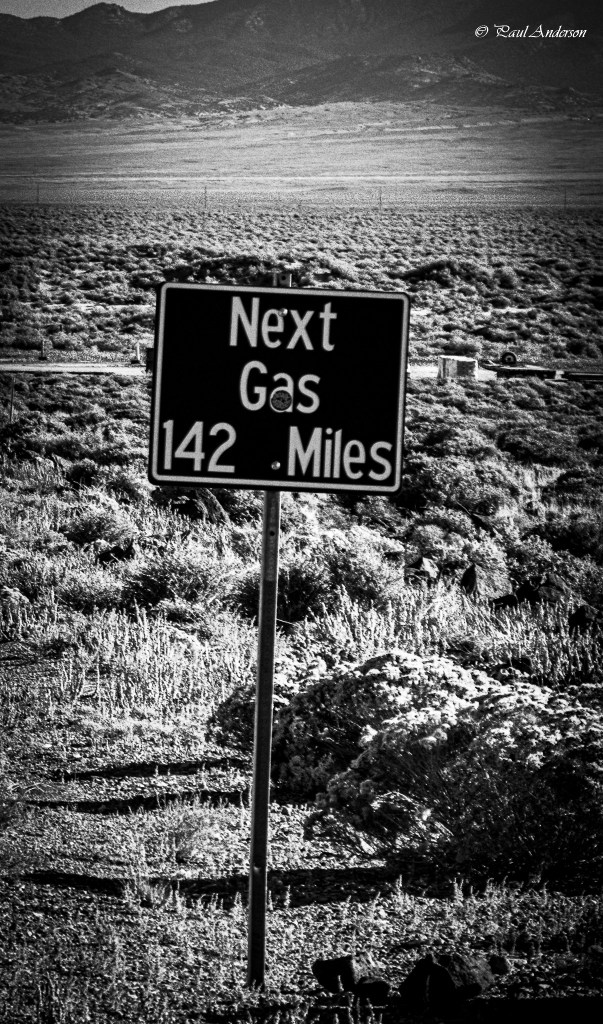
All of it connected by
the road.


Although it paints a depressing picture of some parts of the US at least, I nevertheless really enjoyed this post. B&W really suits your images of small town America, especially the buildings. It was also a very interesting read, again capturing much of what I like (and also despair of) in those typical small towns.
I know and admire both Ansel Adams and Dorothea Lange, of course, but haven’t come across David Douglas Duncan – I will certainly look him up.
LikeLiked by 2 people
Hello Sarah, Apologies for the late reply. Your comment caused me to reread my post. I guess it does have a depressing tone about it. At the time the trip fascinated me and I have an urge to do something similar (though my wife would put her foot down and let the air out of all four tires). Maybe it’s the state of my country right now that makes it difficult to apply a more postitive spin.
Thank you for reading and commenting.
I’ve included a link with a short piece on David Douglas Duncan.
Wishing you a Merry Christmas and a Happy New Year.
Paul
https://www.npr.org/sections/pictureshow/2018/06/08/618301773/david-douglas-duncan-photographer-of-wars-and-picasso-dies-at-102
LikeLiked by 1 person
Thank you for that link, I’ll certainly follow it up. Merry Christmas to you too 🎄
LikeLike
What a beautiful post Paul. It brought back memories of our cross country trip in 2013. We traveled in our 31 ft. 5th wheel trailer. Lessons: there are two Americas–the coasts and the middle, they all hate California, the middle hated Obama (who was president at the time), people on the east coast don’t travel much in RVs, the east coast has our history and the west coast has the beauty. I could go on. Thanks for the memories.
LikeLiked by 1 person
Hello Anne, I apologize for the late response. This isn’t a way to keep a loyal reader.
I would like to take another road trip around America. I’m certain that my wife would lock me in my room if she caught wind of the idea.
I think that everyone should try to find the time to travel their own country on the road. One doesn’t get to feel the pulse traveling by plane or by train, or even on an organized bus tour.
Your observation about the middle of the country hating California reminds me of when I was in Walker, MN and I had a brief conversation with one of the staff members of the hotel I was staying at. When she learned that I was from California she expressed her sympathies.
Wishing you a Merry Christmas and a Happy New Year.
Paul
LikeLiked by 1 person
I enjoyed this photo-essay, Paul. Lots to think about here.
LikeLiked by 1 person
Hello Audrey, Apologies for the late response.
“Lots to think about.”
A previous commenter pointed out that the piece “paints a depressing picture,” and I have to say that I don’t disagree. When I put this together I think that I was influenced by the current state of the country.
Thank you for reading and commenting.
Have a Merry Christmas and a Happy New Year
Paul
LikeLike