
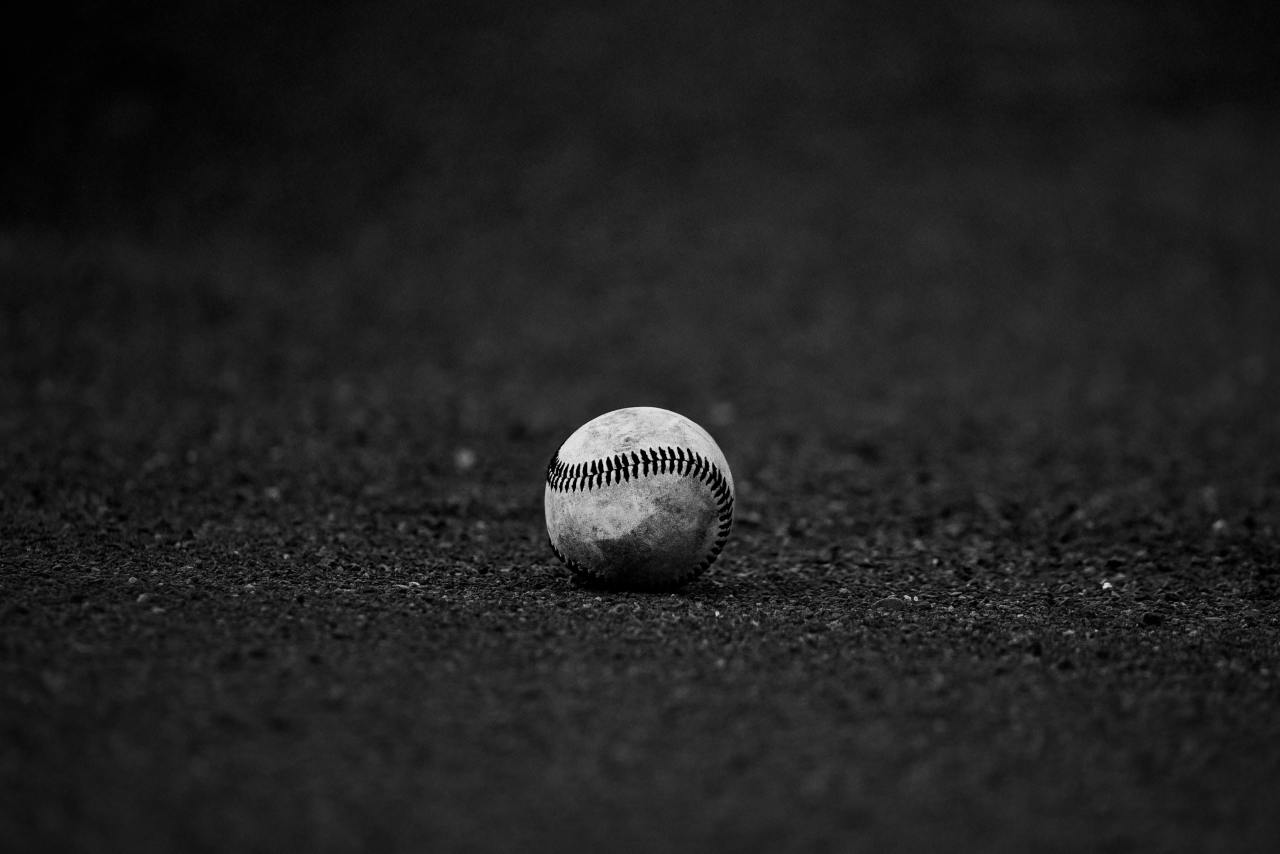
It was an unusually large crowd at the Oakland Coliseum on the final day of the Oakland Athletics home season. Some came for the love of baseball. Some came as fans of the team. Others came to pass a sunny afternoon at the ball yard.
The rest? The rest was most of the crowd, and they came for the wake. Someone dies and the family, friends, loved ones, and hangers on come to remember the departed. It’s that odd mixture of sorrow and joy, bereavement and comfort, tears and laughter, closure and commencement. Maybe commencement is the hardest part. You move on. But to what?
The last pitch on this day wasn’t just the last of a season, it was the final pitch of an era. After years under the ownership of a penny-pinching billionaire named John Fisher (according to Forbes, Fisher is worth 3 billion dollars), the A’s are pulling up stakes and moving to, well, God knows where. Fisher certainly doesn’t.
For the foreseeable future (3 years is the stated timeline), the team will play 85 miles up Interstate 80 in little Sutter Health Park, home of the minor league Sacramento River Cats. Yeah, it’s come to that – MLB in a minor league park.
After squatting at Sutter Health Park, the team is expected to move to a new stadium in Las Vegas, although depending on what news you hear or when you hear it, that move may be a pipe-dream – on again, off again.
And if it’s off? Off to Portland? Salt Lake City? Charlotte? Nashville? Some city starving for major league ball, and if you’re willing to accept Fisher, you are fuckin-A starving.
Why move?
Fuck if I know – at least not the gritty details.
The owner, John Fisher, was the chief instigator in making the move a self fulfilling prophecy with his propensity to trade away on field talent, or simply let them walk away, and his obtuse and inept approach to finding a stadium solution. At times, one might have thought that Fisher himself was trying to sabotage a Bay Area stadium.
True, the A’s needed a new stadium. For years, the Coliseum has been a dump. Built a short distance from San Francisco Bay and 22 feet below sea level, a healthy rain and backed up pipes had been known to bring flood waters into the players shower area. The stadium has long been in need of a facelift, some TLC, and, oh yeah, there’s a mountain behind the centerfield wall that needs to be razed. None of that will happen now.
In 1968, the Coliseum was the shiny new home of the former Kansas City A’s. Compared to frigid, windy, and sterile old Candlestick Park, the home of the San Francisco Giants, the Coliseum was state of the art.
In the full flower of its youth the Coliseum had a friendly feel. Above the last row of the outfield bleachers there was an emerald green lawn dotted with yellow flowers (green and yellow are the A’s colors).
In the 1970’s the Oakland A’s, under the ownership of the eccentric Charlie Finley, became a baseball dynasty (three straight World Series titles from 1972 to 1974 and five division titles from 1971 to 1975).
Finley sold the A’s to congenial Walter Haas, and the team continued its success, winning three consecutive pennants and the 1989 World Series.
Over the course of fifty-six years, Oakland fans saw too many baseball giants to mention here (I’ll mention the one who still captivates me; Reggie Jackson).
Part of the beginning of the end of it all came when Oakland’s City Council got on bended knee and gave Oakland/Los Angeles/Oakland/Las Vegas Raiders owner, Al Davis (a sort of Darth Vader of the sports world) a metaphorical blow job by ripping up that pretty little lawn and yellow flowers and replacing it all with an ugly behemoth of a 20,000 seat grandstand that came to be known as Mount Davis.
Mount Davis was the carrot that lured Davis and his Raiders back to Oakland after he had broken the hearts of the team’s fans by moving the team to Los Angeles (years later, Al’s son Mark would once again break Raiders’ fans hearts by moving the team to Las Vegas).
The unraveling continued when John Fisher bought the team. Under Fisher’s ownership, the team developed excellent young talent. Rosters that were made up of gritty, wet behind the ears youngsters and savvy old managers somehow contrived to get into the playoffs before always falling short of the mountain top.
Whenever the team was on the verge of sustained success, rather than open the checkbook, ownership either traded away key players or allowed them to leave via free agency. The roster was a revolving door that fans could never relate to. Why buy a player’s jersey if that player would soon be bound for the New York Yankees?
Over the years, attendance dropped as it became clear that the fans and the community were mere means to Fisher’s end of enriching himself.
For his part, Fisher wanted a new stadium, but on his own terms – that is, the city would foot the bill. To the credit of Oakland, the city demurred. Having scores of problems, along with a city government that was more often than not, a poster child for dysfunction, Oakland wasn’t about to carry the freight for a tight fisted billionaire. One has to wonder if Fisher ever really wanted a new stadium in Oakland. Under revenue sharing, MLB was carrying some of the “small market” A’s financial baggage. If the A’s actually built a stadium, the MLB teat would run dry.
After a few half-hearted attempts at a new stadium in the Bay Area failed, Fisher cut a deal with Las Vegas. Oakland could have retained the A’s while the Vegas facility is being built and when Fisher offered, Oakland responded with a “fuck you very much.”
For years I watched the American League’s Oakland A’s from a distance. Being the stodgy old bastard purist that I was, I could never swallow the American League’s designated hitter rule (all of baseball has since adopted the DH so I’ve made my forced peace).
I kept my distance until the late 1980’s when I started working at the Oakland International Airport, about a three minute drive to the Coliseum. Major league ball played in a pleasant stadium mere minutes from work was an offer I couldn’t refuse.
In 1989, the A’s made it to the World Series and I was blessed to be able to see two games. Check that off the sports bucket list. I took my good friend and best man Scott, who is not just a baseball fan but a walking baseball encyclopedia. It was such a pleasure to be able to give him the opportunity to live that dream. After the series was delayed by the Loma Prieta earthquake, the A’s won that Series.
The following year I brought my wife to the World Series. The A’s lost in four to the Cincinnati Reds.
I left baseball when the steroid era turned the game into a farce. When the steroid era ended I made peace with baseball and adopted the San Francisco Giants.
I watched the A’s final, final game on television. The Texas Rangers went down in the ninth, two strikeouts and a ground ball to short.
Done. It all seemed so anticlimactic.
The A’s players congratulated each other after the win as they always do. Kool and the Gang’s, Celebration was played over the stadium’s sound system as it had for decades after a victory. That’s where convention ceased.
Instead of heading to the locker room the players remained on the field and took a last look around as the music of Oakland’s Tower of Power filled the stadium. Some of the players filled little glass jars with a handful of infield dirt, a memento of the home they’re now former home. Manager Mark Kotsay took to a microphone, thanked the fans, and said goodbye. The players milled about for a bit before drifting off to the locker room. Many said a few goodbyes and thank yous to fans along the fences. A few autographs were signed, the players dribbled out, while on television the post-game show was an extended death-song.
The fans didn’t leave. There were last looks, around at a stadium that’s going to host soccer and, at some point, probably be demolished. Last looks and lost looks. Selfies, hugs, lots of tears, and a scattered chant of “Fuck John Fisher.”
Hell it’s just baseball.
Yeah.
Just baseball.
If you ignore everything else.
Let’s start here; baseball haters and the baseball ambivalent will never understand the juice that flows through the veins of the fan. Haters can jump off here.
For the baseball fan, every season is it’s own life story. In February, the shortest month in number of days, but in all its dreariness, gloom and tedium, seemingly the longest, the fan becomes aware of the impending birth of a new season. Every birth brings with it the hope for a winning season and a successful ending. Even the most pragmatic fan of the very dreck of the league starts the season with the naive notion that the goodness of his team will somehow prevail.
John Fisher took that all away.
Once baseball grips you it literally (if you count spring training, a 162 game season, and the playoffs) grips you for half of your remaining days.
It’s just baseball. Damn it, look at all the serious shit going on. Two wars (at least), famine, shootings, overdoses, high prices, and a political environment that makes a toxic superfund site look like a clean room.
Maybe that’s the point. Baseball is one of those things that you turn to as a restorative. A home run, a well turned double play, a diving catch or a wicked curveball with no perceptible bottom to it can soothe the soul. As author Tom Swyers put it, “Four out of five doctors prescribe baseball for whatever ails you. The fifth guy is a quack.”
John Fisher took that all away.
Baseball is a communal thing. Slower than football or basketball, at a baseball game you have the chance to make a temporary friendship with the stranger next to you. I was in Chicago at a White Sox game this past summer. I’d been chatting with a woman from Texas who was seated behind us. She was on her own baseball pilgrimage to various stadiums. As the game progressed it was announced that the great Willie Mays had passed away. Knowing I was from San Francisco, the woman put a gentle hand on my shoulder and whispered, “I’m so sorry for your loss.”
In baseball there’s a kinship that transcends rivalry.
John Fisher took that all away.
A stadium is a memory box. It’s a place where wishes are granted. It’s where you see history made. The “will you marry me” questions are posted on scoreboards, and weddings are celebrated at home plate. Fans, ushers and concessionaires become like family
John Fisher took that all away.
John Fisher bought the A’s for none of the right reasons. Most of the filthy rich who can afford to buy into the world of team ownership understand that they are also buying a fiduciary responsibility. They’re buying a community asset.
The team provides employment and revenue, and becomes a part of the support system for local institutions and charities.
Fisher was never interested in any of that. For him the team, the fans and the community were all a means to the end of a fluffed up bank account. Just a grift.
Fisher and his frontman Dave Kaval, a guy with all the panache and believability of a carnival barker never once visited the stadium during the final season. Not even the last game. For her part, Oakland Mayor Sheng Thao, who has on more than one occasion been tarred as one of the villains in the drama, had the fortitude to show up on the last day and the grace to stay in the background, leaving the day to the fans and the players.
I couldn’t begin to put into words what A’s fans were feeling, but it just so happened that in a random exchange of texts my friend Kailiana, a relatively new fan, wrote the script for me.
“It was the start of my fandom and holds so many memories for me – it was the start of my relationship with Kevin. It was one of my first real outings with his family, our best friends, we’ve made traditions every year for the past 7 years. It was just heartbreaking knowing how much deeper these things go with others who hold it so dear to their hearts too.”
“And here I am crying again. Excuse my French… But fuck John Fisher..”
“I just got done watching a broadcast with Brody Brazil and Dallas Braden.. ugh, just the heartbreak – I am so going to miss them covering the Oakland A’s.”
“And a flood of memories just filled my mind – I’ve had maybe a good 20 min cry just thinking about all the opening days, just hanging out at home watching games, Kevin and I would watch interviews and broadcasters covering postgame, we’d send each other updates, I became friends with a few of the players wives after only being a fan for maybe 1-2 years (they actually would write me back on social media), meeting players and Bob Melvin during fan fest, having a few of them give me birthday shoutouts, we got to go to one of the games for the 2019 wildcard series the A’s played in, the kids jamming out to the music, enjoying the crowd, cheering for the players, just so many great experiences. I fell in love with baseball because of Kevin, and for that, it will always hold such a special place in my heart. It is one of the things we really bonded over and really made me so happy and I looked forward to those things with him. I know there will be new memories to make, but just for this to be taken away from us and so many other faithful, longtime fans just makes my heart hurt that much more for how hard others must be taking it.”
John Fisher took that all away.
Note: I did the final editing of this post while vacationing in Vienna. I’ll be traveling for three weeks. During that time posts will likely be non-existent and responses spottly and late. Thank you for understanding
 The Life in My Years
Hi Paul,
Didn’t realize the team is leaving. 😦 I was never huge into baseball, but did go to games in Montreal as a kid. That city hasn’t had a baseball team in … well forever I guess. It’s poorer for it.
Have a great time in Vienna!
LikeLiked by 1 person
Hi Eden. A sports franchise done right can bring a lot to a city, and right doesn’t have to mean winning (though that’s definetly value added). Oakland has, over the past few years lost its professional football, basketball and baseball teams. The losses are just one symptom of a city that is ailing in so many ways.
LikeLiked by 1 person
I can understand and empathise with the problems of an owner who’s in it for himself rather than the team and the sport, as our football / soccer team Newcastle United had such an owner for years (now thankfully gone). But it seems very odd to me that a team called Oakland Athletics could play anywhere other than Oakland!
LikeLiked by 1 person
Hello Sarah, The oddity that you mentioned is the easiest part, especially if you’re a billionaire. Simply order new uniforms and new letterhead.
Teams don’t move often but when they do it’s usually because a petulant owner is mad because the public won’t fund their new playground.
The San Francisco Giants (the team I follow) nearly moved to Florida. The deal was all but done and the move set until Peter McGowan stepped into the breach. He bought the team, got private funding for a beautiful stadium that looks out over San Francisco Bay. The stadium has been paid off and now the organization is making more money than it knows what to do with.
LikeLiked by 1 person
So when a team moves like that, do they change their name and adopt that of their new home? Could a team still be called ‘San Francisco’ Giants if playing out of Florida?
LikeLiked by 1 person
Hi Sarah. If they had moved to St Petersburg Florida, they would have likely been the St. Petersburg Giants. Just writing that gave me the creeps.
There was one American Football team, the Cleveland Browns that moved to Baltimore and the because the Browns was so deeply associated with Cleveland, the team was told to take another name – the Ravens.
The Ravens was chosen because Edgar Allen Poe met his wife in Baltimore and settled there.
LikeLiked by 1 person