
An American’s observations of a first time trip to France.
*Normandy Landings
Gold Beach, October 2, 2025
It’s chilly, windy, and threatening rain when we arrive in Normandy.
We’re renting a house in Ver Sur Mer, a small community near Gold Beach. Gold Beach isn’t a name that the local tourist bureau thought up as a gilded draw for tourists. The approximately five-mile-wide stretch of sand between Port-en-Bessin and La Riviere Mer (just east of Ver Sur Mer) that makes up Gold Beach, was likely named in 1944 by British General (to become Field Marshall) Sir Bernard Montgomery.
Gold Beach, Eighty-one years ago
At around 05:30 on the morning of June 6, 1944, the area was rocked by a naval bombardment, while seven kilometers off shore in a pitching twilit sea, elements of the British 50th (Northumbrian) Infantry Division and No. 47 Commando of the Royal Navy were being loaded from ships onto landing craft.
At 0:615 the boats were launched on a journey that would take approximately one and a quarter hours. Upon landing on the beach, the British soldiers faced fierce resistance by the German defenders but by the end of the day the beaches were secured and nearly 25,000 Allied soldiers had landed at Gold. The cost was approximately 1100 British casualties, with 350 killed.
Gold was just one of five landing beaches that were assaulted on June 6th, 1944. In addition, Allied soldiers were parachuted or transported by glider farther inland.
In all, it was the largest amphibious and airborne assault in history, 160,000 men, 5000 vessels and 11,000 aircraft. And it all took place on the shores up and down the Normandy Coast. The peace of the region was shattered in the dark, early hours of June 6, 1944. The ground was pounded by a naval bombardment while aircraft roared overhead.
Most people are drawn to France by Paris, the City of Light, or for the chance to break out the Speedo and bake under the summer sun by the crystal blue waters of the French Riviera. There’s food, culture, food, the arts.
And did I mention food? The French may not have invented cooking but they sure as shit elevated it.
And it doesn’t hurt that France is conveniently located right next to four other popular destinations; Germany, Italy, Spain, and Switzerland. And it’s just a short Chunnel ride from the U.K. “Hey Sheila, since we’re in the neighborhood why don’t we drop by and see what the French are up to,” said Norman.
D-Day brought Cora and I to France. Everything else is whipped cream on the eclair.
It started with New York. With everything American going sideways and listing to the right, we were afraid that leaving the country, (unless the leaving was permanent), might be a bad idea. It wasn’t so much the leaving but the potential problems reentering as U.S. Customs has been feeling its violent, unconstitutional oats since January 20th. We originally had planned on New York, until the Big Apple was taken off the menu because of an unexpected illness, thus setting aside any further talk of travel.
One evening in June, inertia compelled me to pull up a documentary about the D-Day invasion. Cora stopped what she was doing in the kitchen and through tears we watched. Tears over the bravery and the sacrifice. Maybe it was sorrow over ideals that were fought for by so many brave men; ideals that have been fading from a troubled nation’s memory and falling into disfavor. The documentary ended and I said to Cora, “Fuck it, let’s go to France.”
It was that simple.
After six days in Paris, we’re pulling out of the Sixt rental agency at Paris’ CDG airport. I could’ve rented a car a few blocks from our apartment in Paris, but, as the old saying goes, I may be dumb but I’m not stupid. I prefer leaving Paris by car from the outskirts rather than from within the turbulence of the Parisian traffic storm.
I had an iron grip on the steering wheel coming out of the airport and for about the next hour as we negotiated a series of interchanges, exits and innumerable roundabouts just getting out of the Parisian environs.
With Saint-Germain-en-Laye in the rearview mirror the sphincter has loosened a bit and Cora has stopped praying under her breath. I can tolerate the supplication but if she ever breaks out the rosary beads, we might be having a come to Jesus discussion.
We’d planned on stopping by Monet’s house just an hour out from Paris but we’re already running late. Besides, Claude is probably not home anyway, and if he is, I hear that in France it’s frowned upon to drop in uninvited. Check in time at the rental house is four o’clock, and we’re just about right on time.
VRBO used to be straightforward and simple. You’d show up, someone would hand you the keys or you could just punch a code into a drop box, get the keys and once in, read the instructions in a little booklet on the kitchen counter. That’s nostalgic now.
The day before we left Paris I got an email with a link that had all of the instructions, the do’s, the don’t you dares, and the implied threats of reprisal if we touched the thermostat. In a previous trip I would’ve trusted the internet and pulled the email up on arrival. I’ve learned that, depending on where you are, the internet is a fickle beast and its good policy to copy paste into my notes or do screen shots to make sure that the vital information I need is readily available.
That doesn’t mean that I read carefully. You know how it is with men and instructions? And so, while I’ve found the place, I can’t get in. The keypad at the front gate isn’t working. I punch in the numbers in the instructions and the keypad stares at me with dead eyes. Double check the address. Punch in the numbers.
“Fuck me.”
After a number of tries, I slap the gate in frustration
and
the gate moves.
A more detailed look at the instructions. “The gate is unlocked. Slide it open.”
Idiot.
I slide it open and shout at Cora, sitting patiently in the car, “We’re in business.”
The property is great. A gigantic yard that my dog would love to romp around in and play chase with the little robotic lawn mower – if she were with us. A nice living room, a dining room and a spacious kitchen. Not a lot of basic staples. We’re going to be doing some shopping.
We’re waiting for Cora’s cousins, Marian and Ayen (short, somehow, for Cyrene which is a cool name that I would use if I were her) and their mom Tita Theresa, 92 years and going strong. Oh yeah, there’s also a three-legged chat (cat). The three ladies and the three-legged chat are coming by train from Lille where they relocated to from Oregon (a completely different story).
With the hugs, tears, laughter, and gossip done it’s off to the store where my sweet wife turns into Drill Sergeant Cora. We get a shopping cart and she’s barking orders. Ravioli is on the menu, she decides. Three packs.
“Isn’t that a lot?” I offer. Boiling water is like Viagra for pasta – it grows – a lot.
“No, there are five of us.”
Six if you count le chat. And with all this pasta maybe we should count him. And a few neighbors too.
Salad makings, basics like fruit, milk, and juice. Cheese and bread of course
because
France.
Le chat didn’t eat, we didn’t invite the neighbors and
we have pasta for days.
October 3, 2025
It’s sopping outside. Overnight I heard the wind raging through the trees and the barrage of rain against the bedroom window.
Ironic.
D-Day was delayed by weather. The invasion was originally planned for June 5th, but a storm over the channel forced a delay. No delay for us. We’re bound for the D-Day museum at Utah Beach and then a guided tour in the afternoon.
Wakey, wakey, eggs and bakey
and
leftover ravioli.
I’m usually one for getting out the door early. Fuck breakfast. Gimme a cup ‘o strong, black coffee and let’s get out the door. If I want food I’ll grab something later. I know that with the cousins getting together after years, my usual routine will be scrubbed from the itinerary. It’s raining anyway.
It’s a long leisurely breakfast with good conversation, eggs, sausage, bread, coffee and
ravioli.
Lots and lots of ravioli.
The route to Utah Beach takes us past a series of villages. Each village is pinned by the tall spire of an old church steeple. This is my first experience driving through these small French communes. The roads are narrow and in some places there are choke points where it’s only one lane. Before these choke points there are signs with parallel arrows in opposing directions. One arrow will be red and the other black. The black arrow has the right of way through the choke point.
I can feel Cora praying.
I’m having a hard time concentrating on the roads because I’m just fascinated by the antiquity. These villages are all quiet. A few shops, fewer pedestrians and, thank God, even fewer cars.
The rain and wind are intermittent but it’s clear that the weather won’t clear off today.
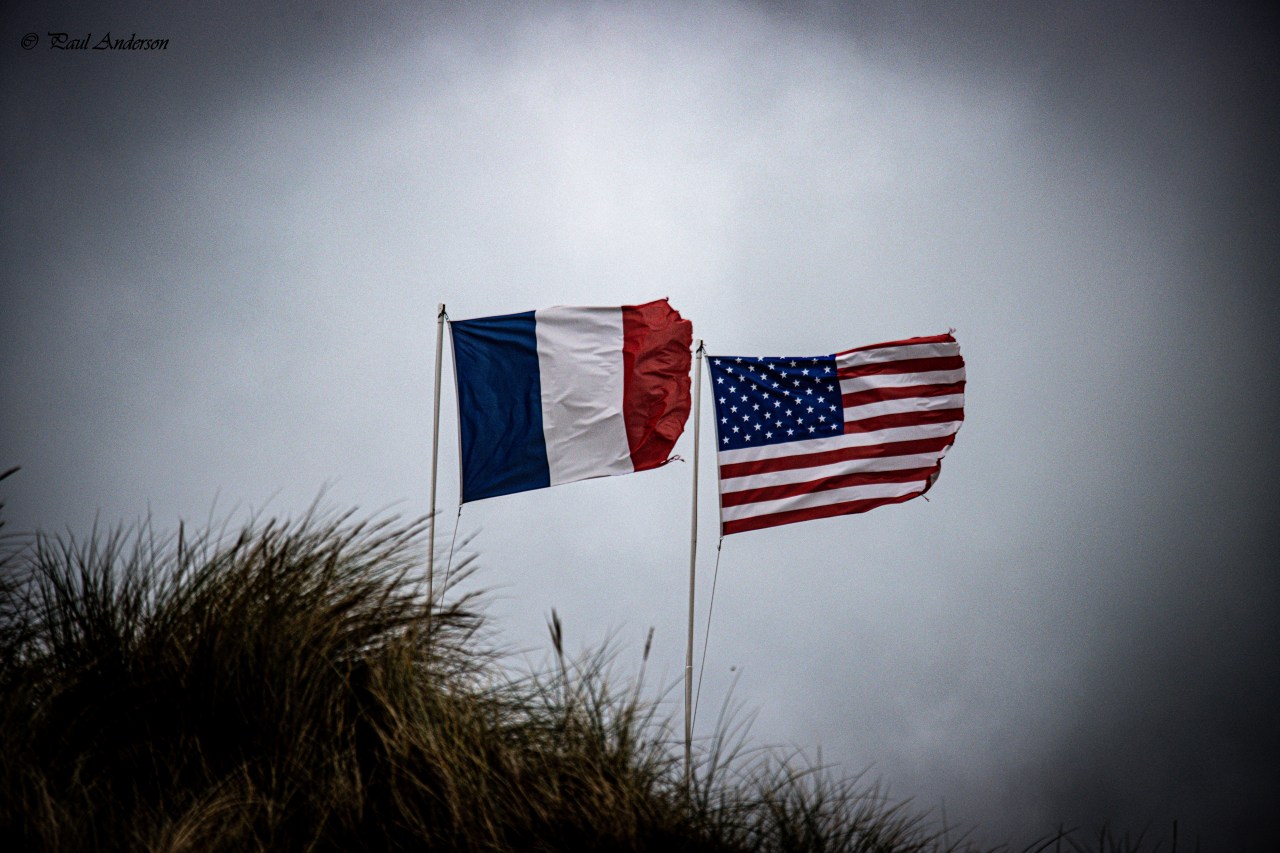
One thing becomes very clear during our drive through Normandy; it’s been over eight decades since D-Day, the Débarquement de Normandie, and in this region of France it has not been forgotten. Streets, businesses, parks, and monuments have been named after the events of June 1944, and the people who took part. The Union Jack, the Stars and Stripes and the L’Unifolié (Canadian flag) fly proudly and reverently beside the French Tricolor.
The local beaches, once bloody and strewn with the instruments of war, are clean and inviting for summer visitors. But D-Day is the main tourist industry in Normandy. There are half-day to multi-day tours of the D-Day sites, along with souvenir shops, lodgings, restaurants, and taverns that are D-Day themed. Somehow the French have managed to dodge the tacky and kitschy. In Normandy the day is venerated, and its heroes, whatever their nationality, adored.
Out here, Donald Trump’s outrages towards Europe and the French haven’t overshadowed the light of le Débarquement. Out here, the draft dodging Donald Trump is a pathetic, cowardly, orange cipher compared to the heroes of June 6th, 1944.
For this American who has, for the past ten years been ashamed of his own country, there is rebirth of national pride. We done good here.
Le bocage (the hedgerows)
As we get closer to the beaches, it dawns on me that we’re driving past the infamous bocage. They were serious and deadly traps.
For years I’d read about the fighting in the hedgerows of Normandy on June 6th and during the days that followed. What’s the big deal? A row of bushes? I’ve got a hedge that separates my yard from the HOA common area.
You don’t fully appreciate the hedgerows until you’ve seen them first hand. The hedgerows of Normandy are not a row of garden boxwood designed to keep the Welsh Corgi in and the neighbors out. Centuries old, the dense, thorny, and on average five meters tall hedgerows of Normandy, were planted into steep earthen berms, in interlocking networks that separated plots of farmland and grazing land.
On D-Day the bocage became natural bunkers and hid lines of fire from the allied invaders, while impeding the progress of men, vehicles and materiel. For the defenders, the hedgerows provided compartmented killing fields against soldiers entering a plot. Tanks trying to go over the berms had their vulnerable undersides exposed to German fire.
An American Sergeant, Curtis G. Culin, of the 2nd Armored Division’s 102nd Cavalry Reconnaissance Squadron is credited with the idea of repurposing scraps from German tank traps to make tusk like assemblies that were mounted to the fronts of tanks. Now, instead of soldiers hacking their way through the bocage or tanks trying to pass over the berms, the Allied tanks simply could cut through the hedges.
We’re driving through a region alive with a history that far predates D-Day. The history of the Bessin region goes back to the days of William the Conqueror. It is in this region that William the Conqueror assembled his fleet for the invasion of England in 1066.
Just a few minutes outside of the village of Sainte-Marie-du-Mont we pass a statue that is, for me, unmistakable. We’ll hit it on the way out.
Utah Beach
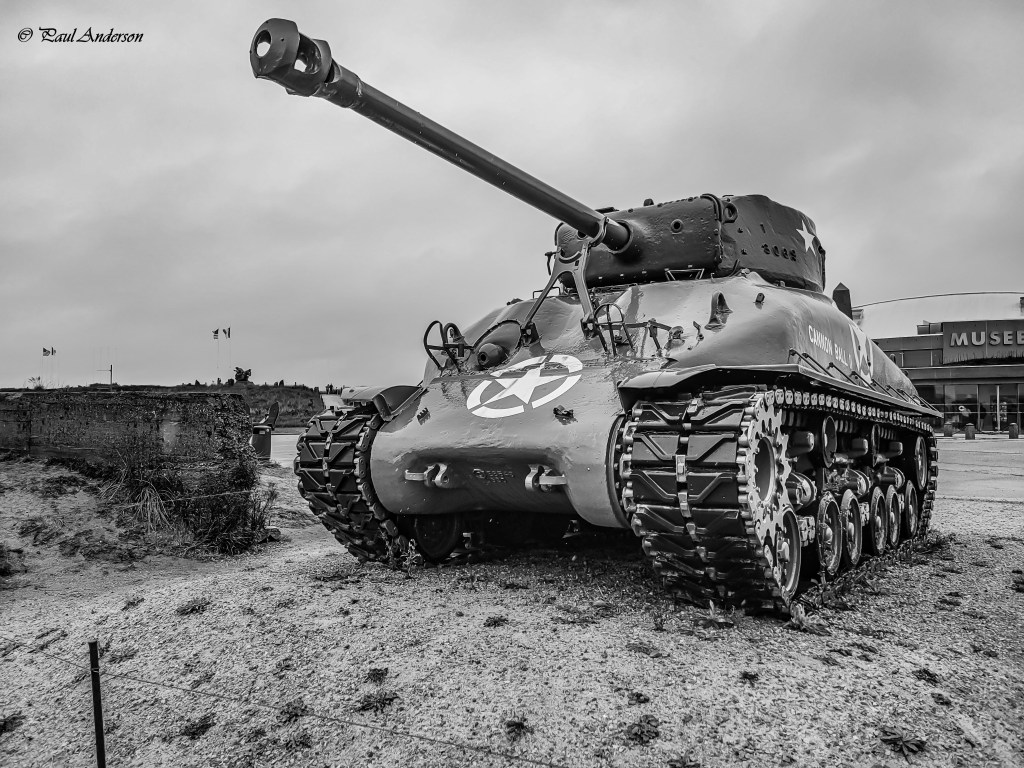
The rain isn’t heavy, but windblown and slapping at us from the side. Thankfully this morning’s plan is mostly indoors; the Utah Beach Museum. Before going into the museum, we walk around the grounds to look at the monuments. A Sherman tank, a red granite obelisk looking over the beach, a memorial to the U.S. Navy’s participation in Operation Overlord and a monument to the Higgins Boat, the landing craft that transported the soldiers to the hell on the beaches.
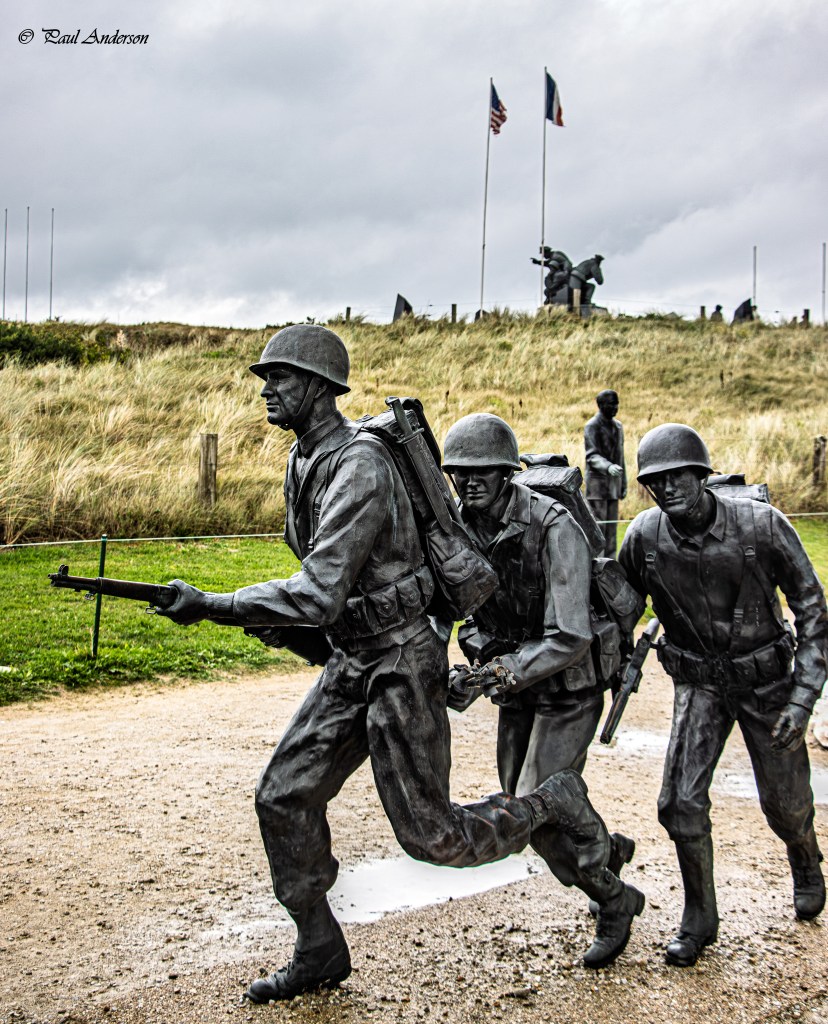
No matter how windy and miserable the weather is I have to walk on the beach. Waves slam the fawn sand on a billiard table flat beach. Some meters back from the tides the green, shore plants waving in the wind like spring wheat add some color.
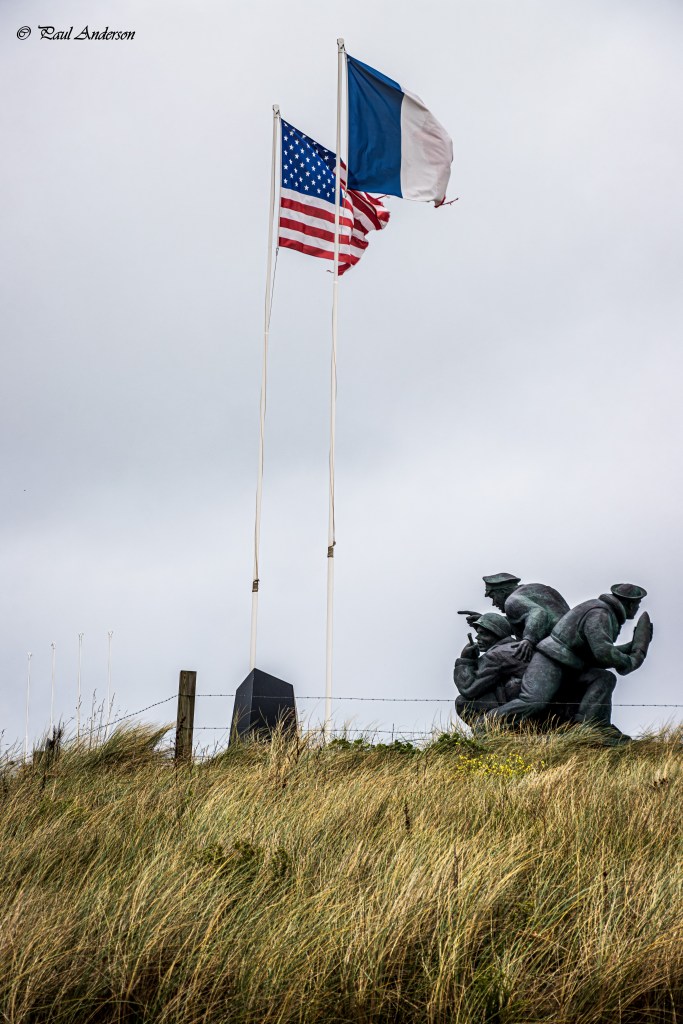
Looking out to sea, it’s impossible to imagine what the German defenders saw and felt; scores upon scores of landing craft, and an armada of warships further out spitting flame and death – and the deafening roar or war. I turn around to try facing the land and try to imagine the unimaginable; what the young men experienced as the gates of their landing boats dropped, exposing them to the deadly fire from the defenders. On this now peaceful, albeit storm lashed beach, it is impossible to fathom the unfathomable. Out by myself on the beach I don’t even try to hold back the tears.
The museum is a must see if one wants to understand the importance, complexity, and scope of the D-Day invasion. It is also a testament to the bravery of the men on that historic day. But, like trying to imagine the scene on that day 81 years ago, understanding the bravery is futile.
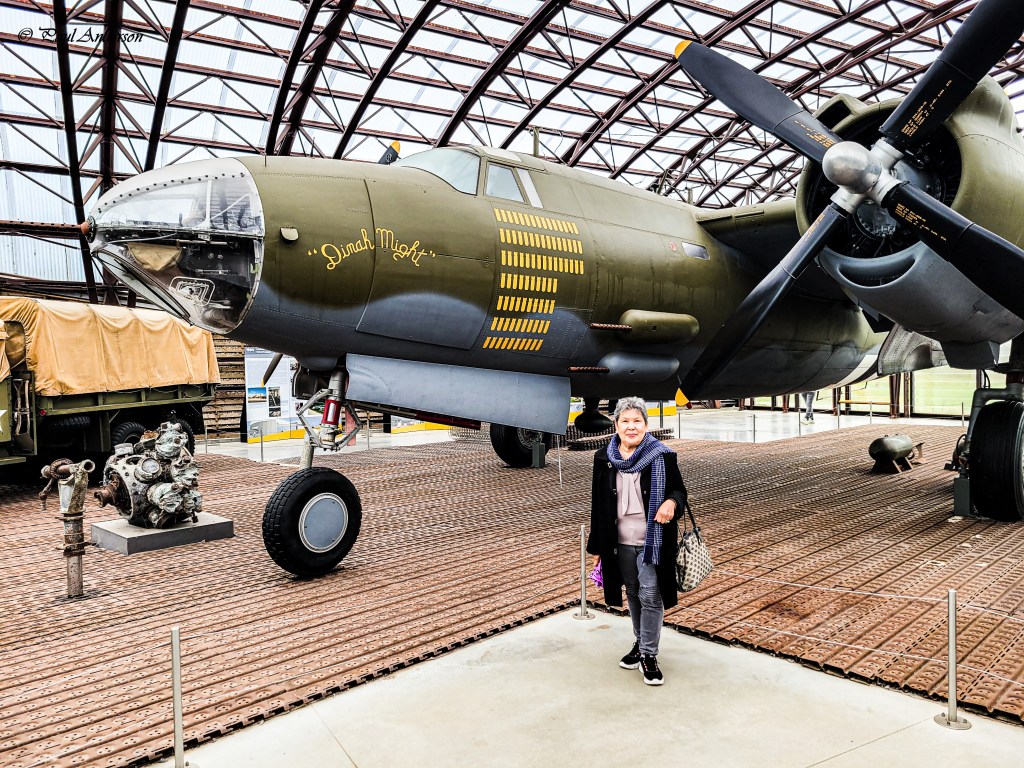
We’ve spent hours at the museum. Because of the sloppy weather and the late hour, we decide to skip the tour we had planned for this afternoon. We hope for better weather tomorrow when we visit Omaha Beach and the American Cemetery.
Major Richard Winters Memorial
The statue of the crouching soldier sits in a small clearing in the farmlands and hedgerows along the D913 leading from Utah Beach. I’d noticed the statue on our way to Utah and promised myself that we would stop on the way back. Truth is, before we left for France I promised myself we would stop at the Richard Winters Memorial.
The memorial is a tribute to the men of Company E, 2nd Battalion, 506th Parachute Infantry Regiment, 101st Airborne Division. Winters was a lieutenant and executive officer of Easy Company until he was pressed into command after 1st Lt. Thomas Meehan was killed, when the C-47 he was riding in was shot down by German anti-aircraft fire.
From the U.S. Army website: Nearby, at Brecourt Manor, Winters led a dozen paratroopers in an attack on four enemy 105 mm howitzers firing on a Utah beach causeway. With little guidance, Winters directed his Soldiers to hit the gun from the flanks, using a trench to attack one at a time. All the guns were destroyed, eliminating a threat to troops coming ashore. For his actions, Winters earned the Distinguished Service Cross.
Easy Company continued to fight, taking part in the failed Operation Market Garden and later being credited with helping in the defense of Bastogne in the Battle of the Bulge.
The exploits of Easy Company were chronicled in Stephen Ambrose’s book, Band of Brothers and in the subsequent mini-series of the same name.
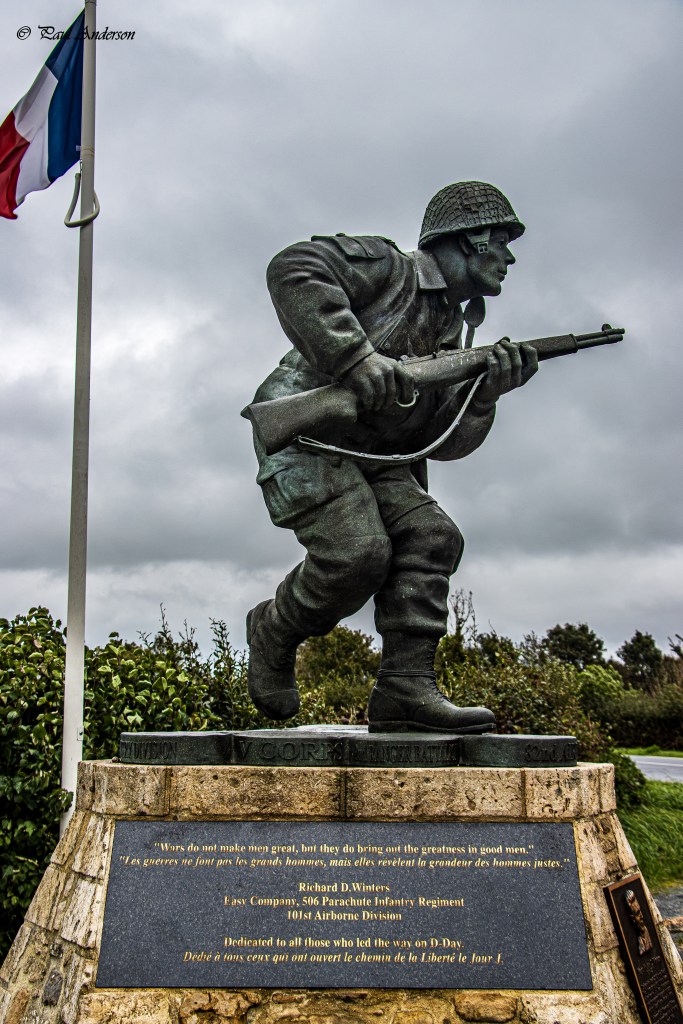
Sainte-Marie-du-Mont
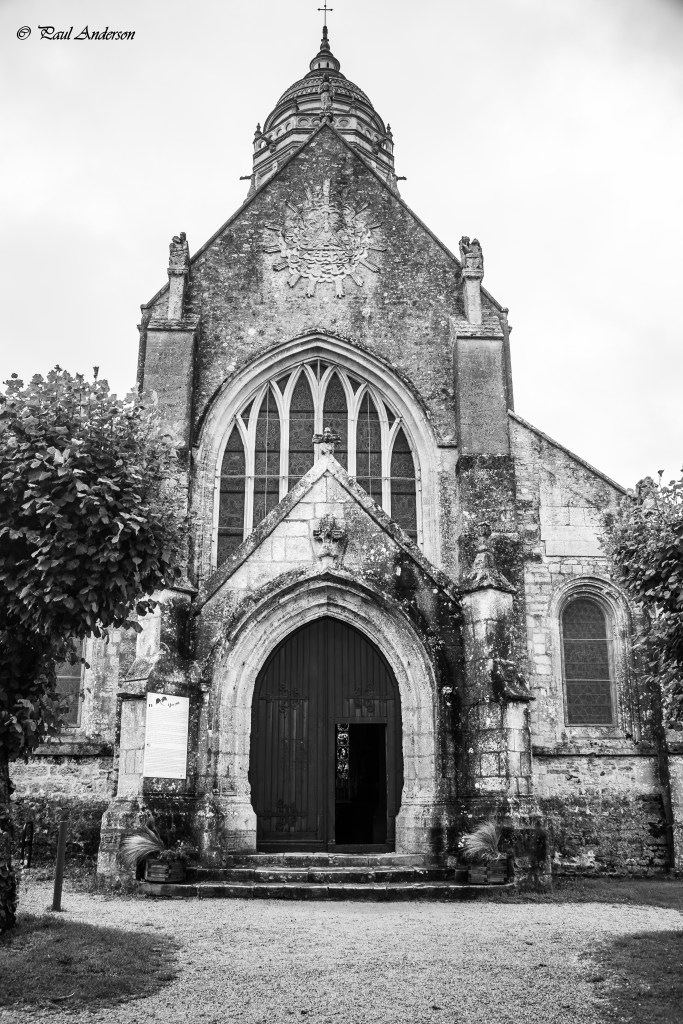
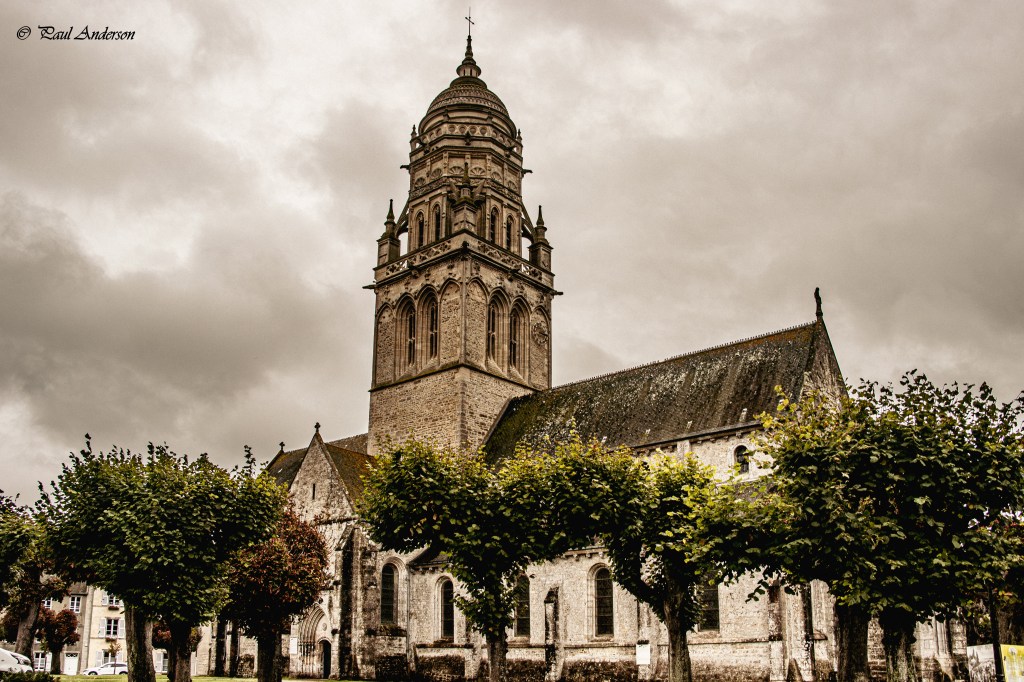
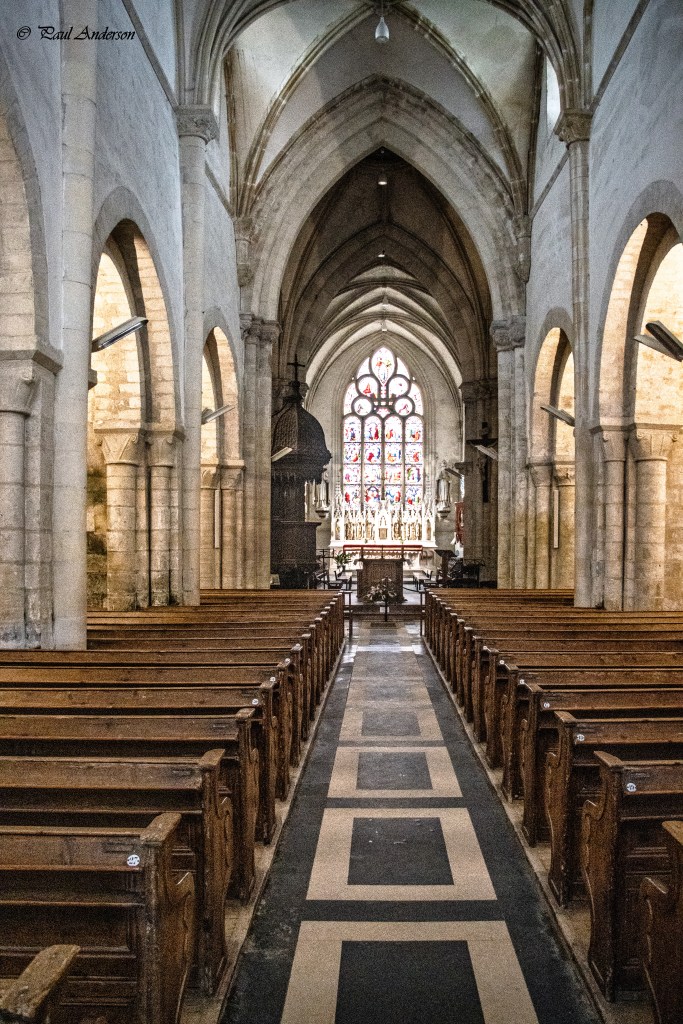
Rising from the Place de l’Église, in the village of Sainte-Marie-du-Mont is the bell tower of an 11th century church, Notre-Dame de Sainte-Marie-du-Mont. On June 6th, 1944, the village was occupied by members of the German 191 Artillery-Regiment, who used the church tower as an observation post. A battle for the village took place between the occupiers and American Paratroopers from the 101st Airborne Division.
Below: Images of Notre-Dame de Sainte-Marie-du-Mont
It’s a long drive home with a stop at the grocery store for tonight’s dinner. Sergeant Cora has put pork chops on the menu, and I ask for a side of potatoes. I don’t know why I want to buy starch, because we still have plenty of
fucking ravioli.
 The Life in My Years
An incredibly moving account of your visit to Normandy, albeit amusing at times (ravioli-gate?!) However many documentaries and films you see, it’s hard to properly fathom what these beaches would have looked like on that day, nor what the soldiers experienced, but your words certainly bring the scenes to life vividly, as they do the present day scenes there too.
LikeLiked by 1 person
Hello Sarah, I think what struck me the most were the hedgerows and the appreciation that is still so prevalent, not just in that area but in other parts of France. We spoke with a young couple in Brittany who were at least two generations removed, ane they expressed their own recognition for the events of that day.
LikeLiked by 2 people
HI Paul,
Great post, delightfully humorous despite your chronicle of a difficult time in history. Have you seen STORMING JUNO?
“D-Day brought Cora and I to France. Everything else is whipped cream on the eclair.” << This line goes down as many memorable ones in this essay.
Ravioli grows, but I get the feeling Cora would prefer more than less. You didn’t go hungry, that’s for sure!
LikeLiked by 1 person
Hello Eden. No you cannot go hungry during a vacation in France. We’re on our way to Italy next year so there will be no shortage of ravioli – unless we opt for coq au vin for three days in a row.
Based on your recommendation I saw Storming Juno last night. Stay tuned.
Thank you for reading and commenting
Paul
LikeLiked by 1 person