“Western fully understood that he owed his existence to Adolf Hitler. That the forces of history which had ushered his troubled life in the tapestry were those of Auschwitz and Hiroshima, the sister events that sealed forever the fate of the West.” ~ The Passenger by Cormac McCarthy
Cormac McCarthy’s fictional character, Bobby Western, and I share a common beginning. Western’s mother and father met while working on the Manhattan Project, the enterprise that built the atomic bomb which would have been forestalled but for Hitler starting a worldwide dust up. My own debut also came about as a result of World War II.
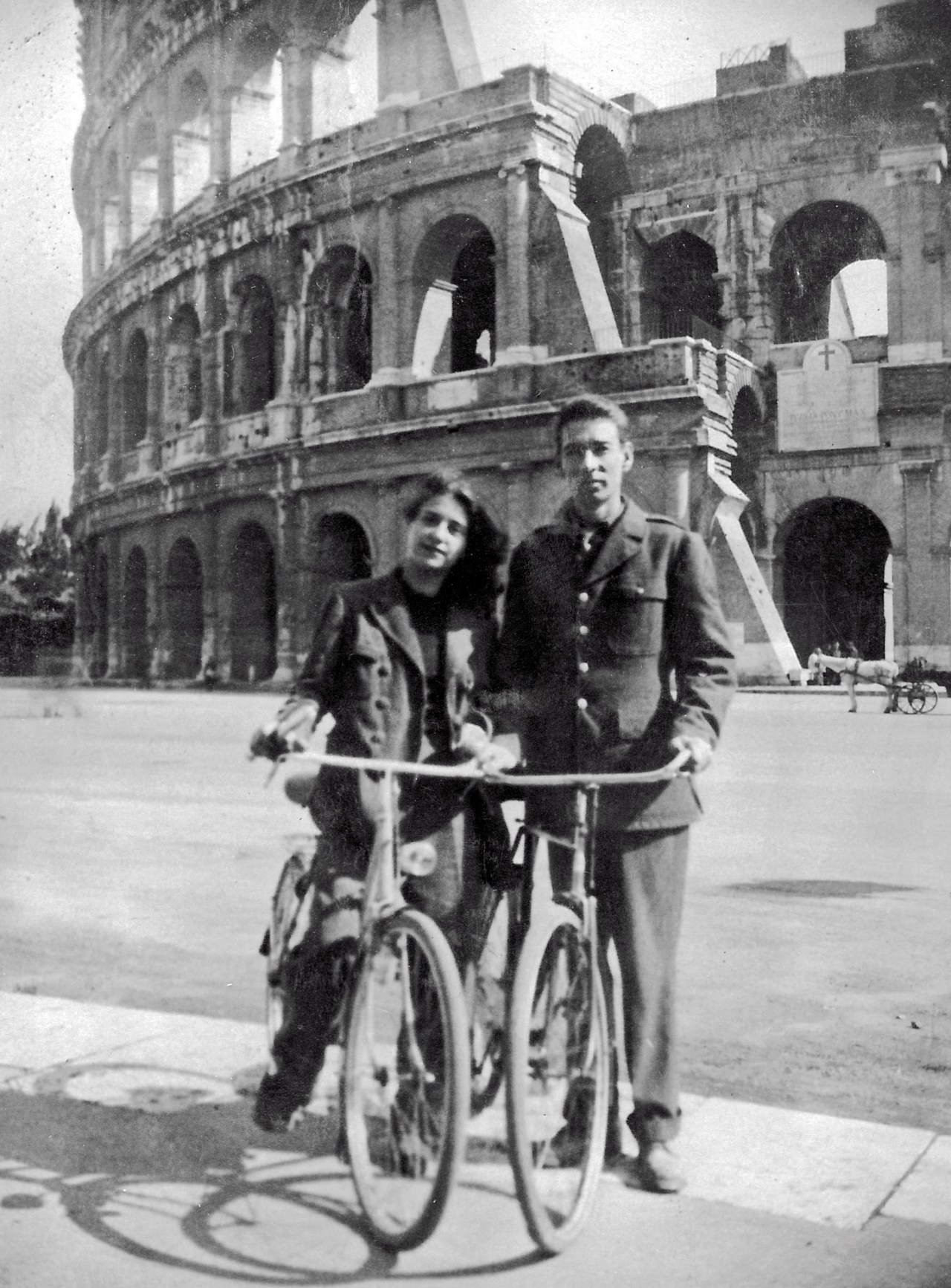
While I was aware that my parents met in Rome sometime during the closing months of World War II, I didn’t know the particulars of their chance meeting. My parents never volunteered to tell me how they came to meet and I never asked. They were never very forthcoming about their past. Hard to say why. I guess we just weren’t close in that way. It wouldn’t be a stretch to say that in some ways we were strangers to each other. We just weren’t close in many ways, particularly my mom and I. When I moved out of the house and into an apartment with my friend Scott, Mom and I didn’t part on good terms. We’d had enough of each other. It’s hard to say whether she felt sorrow over my leaving or if it was just plain old good riddance. The chill thawed over time, warmed by my marriage, and warmed even more by the birth of her grandson, Matthew. He was the apple of her eye.
It was my wife who spilled some of the details of my parent’s meeting. I guess it was during one of those late night, woman to woman talks at the kitchen table when my mother told Cora the story of the American Sergeant who was relaxing in a park in Rome, and saw the young Italian girl who was walking her dog, a terrier named Tommy. Tommy’s leash somehow got tangled and when the girl struggled with dog and leash, the sergeant approached and helped her gain control. That’s it. The story begins there, and that’s where it was left. That short story and hundreds of photographs and letters in various boxes, bins, bags and albums left a puzzle that will never be completed. There’s nobody left to offer anecdotes or clues.
Back when I was a tweener/teener, that is to say the olden times, when describing Mick Jagger as spry wasn’t meant as a compliment to a nimble octogenarian rocker, and Dick Nixon was seen as the ultimate in political corruption (Little did we suspect), my three favorite magazines were Playboy, Mad, and Sports Illustrated.
Playboy, for a pimply faced kid’s obvious reason, but also for the oft doubted reason that there was some good copy to be found between bare boobs and bottoms. “Oh sure you liked the writing,” said the doubter. No, really, Playboy is where I discovered not just the female mysteries that parents of their innocent boys didn’t want them to know about. It’s where I discovered the likes of Kurt Vonnegut, Norman Mailer and Jean Shepherd (He’s the guy who wrote A Christmas Story. You know, “You’ll poke your eye out kid.”). I remember trying to stifle my laughter at midnight whenever I was reading a Shepherd short story under the bed covers by flashlight. Since I knew that my parents wouldn’t be down with their kid gawking at the naughty bits I hid the copies that I managed to get my hands on in a field behind the house (Under the mattress is too obvious).
Mad was something I shared with my dad because we shared a love of satire.
And then there was SI. In 1970, a copy of Sports Illustrated ran you 60 cents and it was worth every penny; hell a hundred times that. Sports Illustrated was my first subscription, one that I kept for more than a decade. Every week, I looked forward to the new issue’s arrival in the mail. It took me maybe an hour to devour it cover to cover and I kept stacks of them in my closet.
It’s a Britishism; one of those slang phrases from across the pond that has us Americans scratching our heads trying to solve an expression that sounds contradictory at best and at worst, like downright gibberish.
“Too clever by half,” was coined in 1858 by George J. Whyte-Melville in his book,” The Interpreter, and it means “too smart for one’s own good.” It was a futile head spinning exercise for me to try and squeeze the meaning from the idiom. In the end, I failed at it and turned to Google. And it’s possible that Google doesn’t have it right either.
***
During the course of the past year or more, President Biden has been hemorrhaging support from the progressives who helped lift him to office in 2020. It’s been impatience and anger over a variety of issues that includes gun control, student debt and climate change. It hasn’t helped that during his 2020 campaign, Biden made an implied promise that he would be a one term transition to a strong bench of potential candidates for 2024. His decision to run for reelection ran counter to polling that made it clear that Americans do not want to see a rerun of Biden versus Trump. To make matters worse, if not downright dire, support for Biden has been cratering among progressives over the administration’s handling of the war in Gaza.
Those voters, mostly progressives, and I consider myself a progressive, who plan on sticking it to the old man, for whatever reason, are being ‘too clever by half.’
I can speak about Biden annoyance because I’ve experienced it, I’ve written about it and I’ve spoken about it to anyone who will listen. I’ve railed against Biden on this very site, going so far as to promise not to cast a vote for him in November. I’ll admit it. I was being “too clever by half.” I was dead wrong.
***
While bashing Joe Biden, I’d managed to push aside the memory of four years under Donald Trump. Quite frankly, I don’t know how on Earth I could forget the incompetence, the tens of thousands of lies, the kowtowing to the world’s autocrats and the divisiveness that man sowed in America and around the world. And it hasn’t – fucking – stopped.
In normal times a former president would write a memoir, take to the rubber chicken circuit and fade quietly into history, as America separated from the previous administration and moved on. I wish that I could say that there’s been a separation from Trump, but we haven’t been able to enjoy a single fucking solitary second of separation. It’s been a fire hose gush of whining and threats and vile rhetoric and outright unmitigated bullshit from a man who is promising to the world that he intends to be America’s first autocrat.
“Good food is very often, even most often, simple food.”
― Anthony Bourdain, Kitchen Confidential: Adventures in the Culinary Underbelly
Food. Glorious food. Pure food. Real food. Food that you can taste just by looking at it. Food that you never knew could smell so fresh and look so perfectly beautiful. This is the food that was always featured on the Travel Channel, before Travel Channel morphed into bizarre bullshit that has nothing at all to do with travel. It’s the food that you would swear must be Photoshopped.
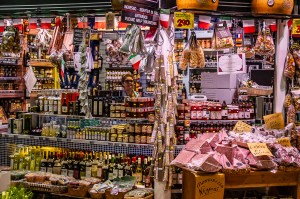
Tomatoes by the thousands. Cherry tomatoes; dazzling, little crimson orbs hang in clusters from the top rails of booths and look down at their larger, plump cousins of different varieties and colors; bright red, green, purple, black, and some decorated with stripes of orange. A sea of green vegetables broken up by islands of bright orange carrots and gleaming yellow and red peppers and gleaming purple eggplant. It’s autumn in Rome and seemingly bottomless baskets of chestnuts are surrounded by a variety of squashes.
Butchers wielding razor sharp knives slice steaks from giant roasts and with their mallets pound slices of veal paper thin. There’s a boundless selection of meats here, where the butcher is as likely to have rabbit in his case as he is pork chops.
At the fishmongers, there are fish and seafoods of untold varieties, colors and sizes; filets, steaks, roasts and whole fish. While the variety is endless, there is one thing that they all have in common. These fish stare, in their eternal repose, through eyes as clean and clear as newly polished glass, just as they did when they swam alive and free. That’s how you know that the fish here is as fresh as you’ll get.
Over on the other side of the great hall, a tall slender young woman made even taller by her deadlocked hair that’s stacked and bound in a burnt orange scarf, slices strips of lasagna from a giant sheet of fresh pasta. The girl stacks the strips on a scale and looks to the attentive customer for approval. The customer, a middle aged woman, pauses for a moment of serious consideration and then points at the sheet. “Di piu, (more)” says the customer. The girl slices a couple more strips, pauses, and glances back at the customer. “Va bene (is that good)?”
“Bene,” the customer.
At the delicatessen, rows of whole shanks of prosciutto hang above display cases filled with cheeses of all types and textures. The deli man reaches up and snips some sausage links from a meters long, coiled rope of goodness that dangles over a display of salamis; sopressata, calabrese, finocchiona, and, of course, a great log of mortadella, it’s face daubed with slivers of pistachio and splats of fat.
This, is Mercato Trionfale, just a short walk from Vatican City in Rome.
At one of these deli booths a young woman deftly shaves slices of paper thin prosciutto from a whole shank. Back home in America the prosciutto is sliced on an electric slicer somewhere in the nether regions of the deli section. Here at Trionfale, it’s done in front of the booth, where the young woman puts on a show, wielding a scalpel sharp knife with the concentration and precision of a surgeon.
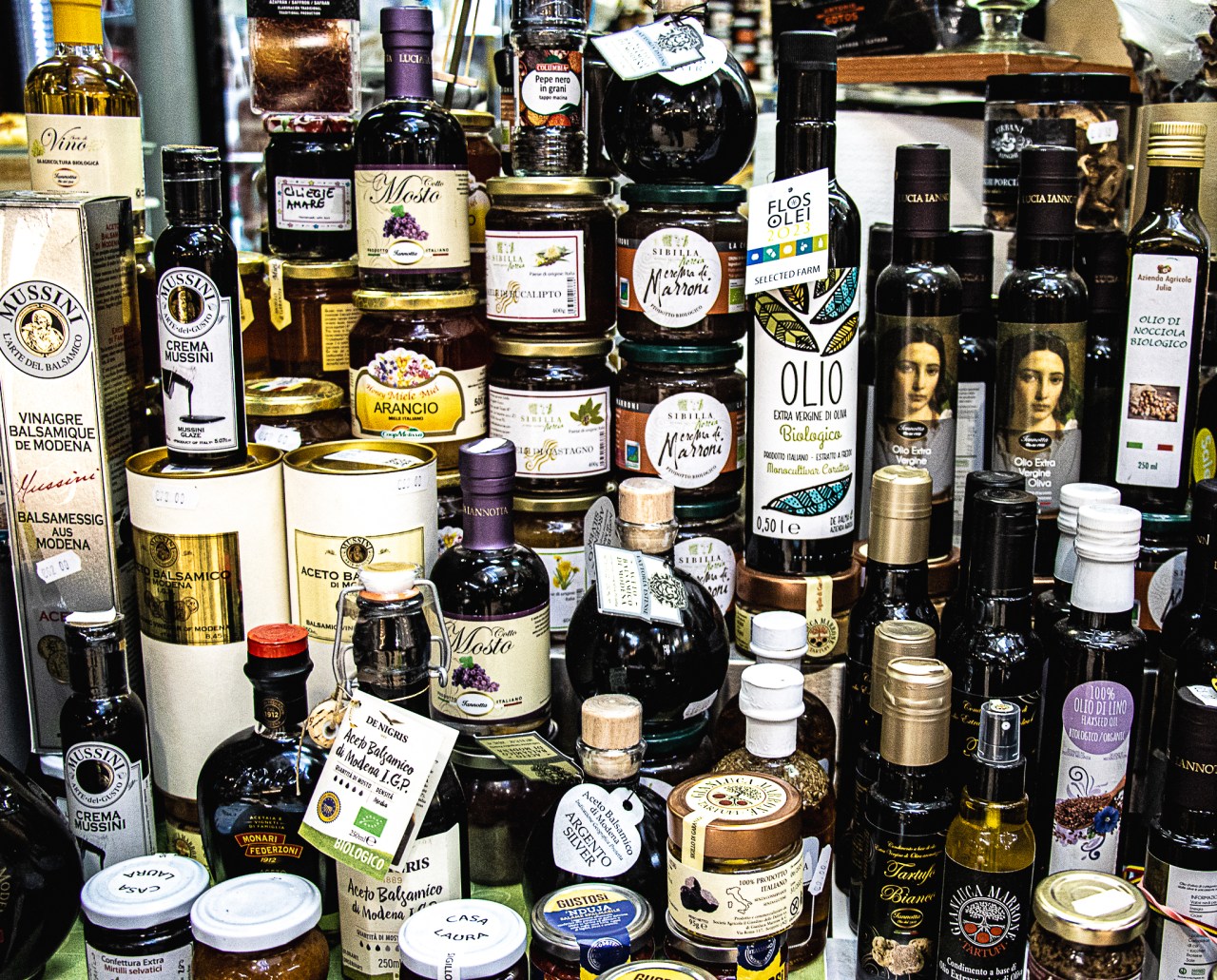
Bottles and tins of olive oil rest on shelves behind stacked jars of olives, condiments and preserves. Wine merchants offer wines from Piedmont, Tuscany, Lombardy, and Liguria. There are breads, pastries, dried fruits and rolling hills of bulk spices. Mercato Trionfale is an homage to all that’s good and right about food.
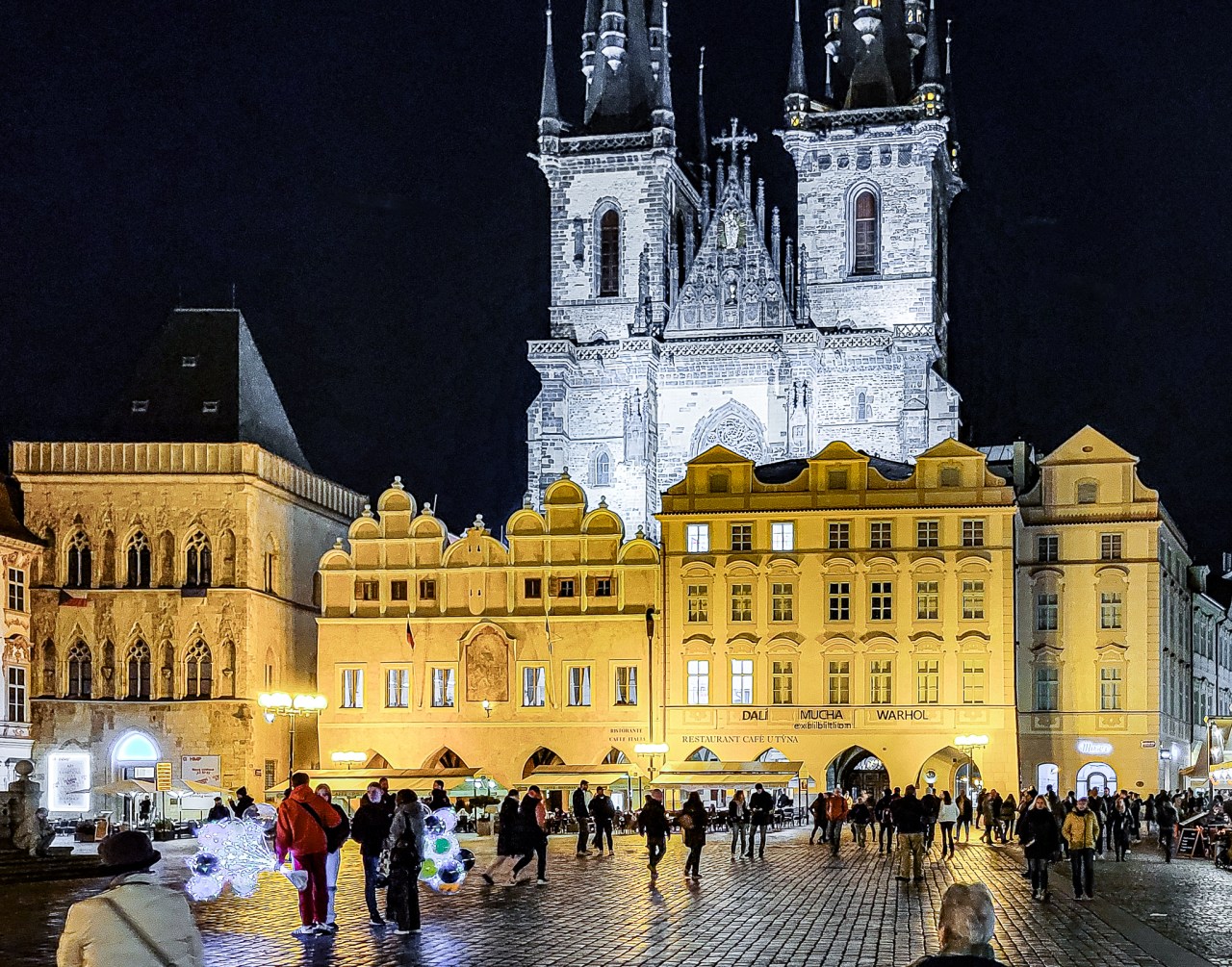
If the breeze is just right, the aroma hits you just as you’re stepping off Dlouhá Street into Staroměstské náměstí, Prague’s Old Town Square. It’s a savory, intoxicating blend of a wood fire and slowly roasting meat.
The smell is reeling me in. And why not? This smell is built into the human’s sustenance DNA. Oh sure, you might be a militant vegan, but buried somewhere in your genes is the olfactory memory of juicy roast. It’s the original smell of cooking, the aroma that goes back nearly two million years before the abomination called tofurky, when man first married meat, fire, and smoke. And oh what a beautiful marriage it was. I would’ve volunteered to be the best man at that marriage; except that it was well before my time. Hell, I’d have volunteered to be the flower girl.
***
Scientists call it the Maillard reaction, a response that occurs when heat hits sugars and proteins. Maillard, schmaillard; scientists and doctors have an annoying habit of sucking the air out the balloon of life with their frigid, barren dialects.
This is meat over a fire and it’s the same siren that beckons from a ramshackle looking barbecue joint somewhere in the American south. A little old place with a small mountain of hickory logs stacked against a brick smokehouse. Every now and then a stooped old guy will toddle out to the stack, grab a log or two, and feed a fire that’s slow smoking racks of ribs; meat off the bone deliciousness that will be served up wrapped in butcher paper, and sold out by sometime before sundown. Maillard, my granny’s fanny.
But this is Prague. It’s not Memphis, or Kansas City or some roadhouse outside of bum fuck Mississippi. Why am I smelling barbecue here?
***
As we walk across the square, past the ebony statue of Jan Hus, who was himself barbecued at the stake in 1415 for having the effrontery to challenge the Catholic Church, and on towards Staroměstská radnice, the looming town hall, the aroma escalates with each step. Past the horse drawn tourist carriages we see a row of kiosks. Some are selling souvenirs, others are selling beer and still others are selling trdelník, the Czech street dessert.
Two of these kiosks have roaring wood fires off to the side, and over each fire are rows of huge hams in varying stages of doneness, rotating on a spit. The ham is called prazska sunka. These meat mongers also offer gigantic sausages, which are sizzling on flat top griddles.
The two are nearly identical except that one offers manhole cover sized potato pancakes as a side order and the other offers something that is more intriguing.
We walk to the second kiosk and stare in hungry wonder at a giant pan that you could bathe a couple of large dogs in. Bubbling in the pan is a street food called halusky, a mixture of potato dumplings, cabbage, spices and bacon. Bacon? Of course, bacon.
A temporary return. So, WordPress offers this fantastic service of sending the site owner all of his/her posts in a zip file in the event that the site is going to be closed down. I took advantage of that service only to find that the file is only useful if you want to publish the posts again on a new WordPress site. Not so fantastic after all. Well, it’s going to take some time for me to go through all of my posts and copy and paste them into my own document file. I have until April to finish the copy and paste. I’ve been in Europe for three weeks now and while I’m writing, I’m certainly not doing any copy and paste. That’s for when I’m home watching sports.
Meanwhile –
We quit the main room of the Reduta Jazz Club just as the band began its final song. Best to miss one song and skip the line at the coat check. Coat check at the Reduta is mandatory. The place is small and customers are sitting cheek by jowl at small tables. No room and no tolerance for bulky coats or backpacks. As we waited in line to check our coats a man in front of us argued so insistently to be allowed to keep his coat with him that one would have thought he had a kilo of blow hidden in the lining. In the end he harrumphed and walked out.
As we were waiting to get our coats after the show, a woman in front of us snatched her coat from the clerk and remarked, “The music was not so good tonight. I don’t know if I will be back.” Well why did you stay for all three sets? The young man behind the counter offered the woman a disinterested shrug, as if to say, “I just man the counter, man. Got a beef about the music? Talk to the band.”
Contrary to the opinion of the critic, Cora and I found the show to be good, club worthy music. The band isn’t ready for a stadium tour, but how many really are? A mix of New Orleans Jazz, some old jazz standards, and a dusting of blues and pop from “back in the day”; “the day” being the musical genres during and before my childhood. For a time, I enjoyed the music that my parents listened to until “the day” passed and I discovered The Beach Boys and then the bands that came with the so-called British invasion. That was when I entered my teenage years and became a music “critic,” much in the vein of coat check woman, dismissing my parents’ music as “not so good.” When I hit my forties I had an epiphany and realized that I’d been nothing more than a twenty-five years long music snob.
***
Cora and I step outside into a crisp night where a crowd, mostly young, and mostly smoking, is milling around on the sidewalk on Národní, a major street, busy with cars, buses and trams. This is a different world from Stare Mesto, the old town. where our hotel is located. Národní is asphalt and modern. It reminds me somewhat of San Francisco’s Market Street, but only in a physical sense. Both are wide boulevards with buses and trams, and both are well lit. That’s about where the similarities end.
Národní
In a human sense there’s no comparison. Narodni has life. It has a soul, and vibrancy. There are no discernable threats, no shady looking characters here, nothing to raise the hairs on the back of your neck and put you on alert. Market Street, at almost any hour, is a boulevard in need of a biblical flood; a multitude to wash away its crime, its strange denizens and its overall filth. Businesses on Market aren’t waiting for the flood. Tired of criminals and weirdos, they’re closing shop and moving out. I feel safe walking Narodni at night. An evening walk on Market Street feels like a suicide mission. Prague, like the other European cities I’ve visited, Madrid, Barcelona, and Granada are in full vigor. San Francisco is on a ventilator.
In a few meters we turn onto Na Perštýně; back to narrow, cobblestoned, fourteenth century streets. The old world cobbles are charming but a full day of sightseeing raises hell with your ankles.
The fourteenth century philosopher, theologian and martyr Jan Hus, an icon of Czech history, wouldn’t recognize today’s Na Perštýně. He might appreciate it though. Hus became famous for being an iconoclast. Continue reading
The twelfth in a series of occasional posts about tripping along U.S. Highway 395.
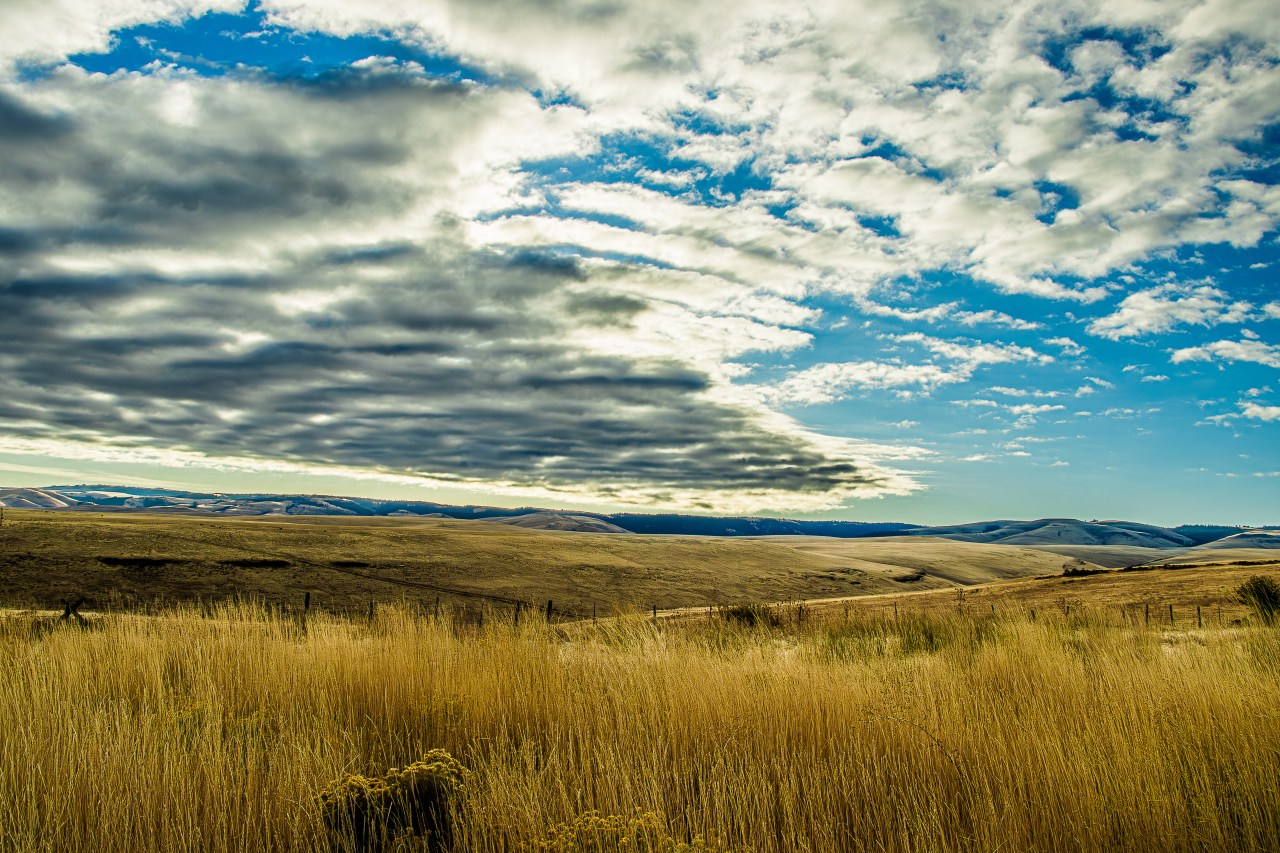
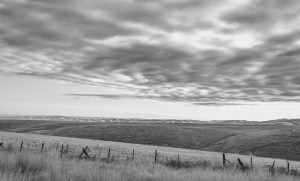
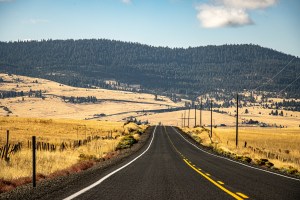
I’m southbound out of Pendleton, Oregon on Highway 395, a two lane sluice through broad fields of ranchland on either side of this solitary highway. Acres of yellow cheatgrass undulate in a light breeze and a bright morning sun just topping the horizon transforms the landscape into an ocean of shimmering, golden waves.
Highway 395 is billed as one of the loneliest roads in America and out here? Yeah, that’s no lie. Over the course of 30 minutes, not including passes through the towns of Pilot Rock, and Nye, I’ve seen two or three cars and one big rig.
An hour out of Pendleton and I’m gaining altitude towards the summit of Battle Mountain. As the road snakes up the mountain, blonde grass is replaced by the lush green of a pine forest. After topping the 4270 foot summit the highway dips back into undulating ranchland and tall grass.
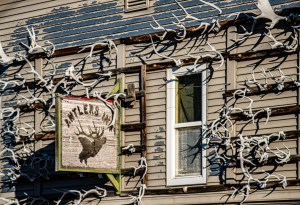
Ukiah, Oregon, population 159, and the two main features are a panoramic view of the surrounding hills, and the Antlers Inn, which from all appearances is an overnight haven for sportsmen. and aficionados of stuffed, dead animals. The front of the building, guilded with rows of antlers that were shed by local elk, is just a preview of what’s inside; a veritable herd of various dead animals, stuffed and mounted.
According to the gospel of Yelp, The Antlers is, to put it mildly, Spartan. One reviewer described the bed as being an old army cot. No phones, no television, no radio and no private bathroom. I’m reminded of Roger Miller’s old song, King of the Road; “No phone, no pool, no pets. I ain’t got no cigarettes.”
The countryside here is beautiful and the town has a rough hewn charm about it. I’m not a fan of hunting, especially trophy hunting, but I’m not at all averse to being off the grid or shared bathrooms, so as I leave Ukiah behind I’m a bit sorry that I didn’t decide to spend a night here and get a chance to explore and meet the locals. I wish that I’d at least taken some time to slowly cruise the side roads to get a better feel for the place. I feel like I’m in too much of a rush.
***
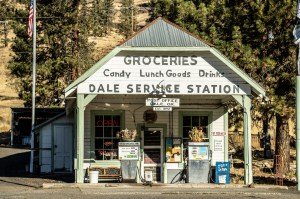
Twenty minutes down the road I arrive at Dale. The population of Dale is in the neighborhood of 270, but as I pass through, which only takes a matter of seconds, I can’t really spot anything that resembles a neighborhood. A general store, two pump gas station (one for diesel) and post office, all packed into one building, likely also serves as the informal (formal?) community center.
***
A Hamms Beer sign in the store’s window wrings out a pang of personal nostalgia. Hamms is an old, weak and watery, old school brew that was shilled on TV by a cartoon bear to a jingle that touted it as “the beer refreshing,” “from the land of sky blue waters.” Mom and dad sipped on Hamms while lounging on the backyard patio, Giants baseball on the radio, and me splashing around in our above ground pool. Memories of the last vestiges of what boomers fantasize as a sort of golden age of suburban life.
***
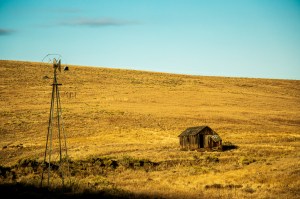
Many of my road trips through ranchland like this have been on two lane roads that roll and twist between fields divided into parcels defined by barbed wire fences.
Before barbed wire, most cattle grazed on the wide open range. In 1873, a fellow named Joseph Glidden put a coffee mill to use to make barbs that could be applied to wire fencing. He wound up in a patent dispute with another inventor, Lucien Smith, who invented the first such fencing seven years earlier. Glidden survived the dispute in a ruling by the U.S. Supreme Court and promptly marketed his invention. Glidden’s improved fence allowed ranchers to confine their stock, thus reducing the threat of cattle rustlers, and freeing them to more securely increase the size of their herds, all leading to an increase in the availability of beef.
Glidden’s invention, which enriched him to the tune of about a million dollars, altered the food economy, while changing the storied narrative of the American West. The “devil’s rope,” as it was called, removed much of the open land that nomadic Native American tribes called home. It also brought about the demise of an American icon – the open range cowboy.
I’m driving through something of a throwback to the days before Glidden’s “devil’s rope.” Out here much of the ranchland is still open range. Moving south from Dale I’m seeing, more and more, signs warning motorists that this is open range country, where you’re as likely as not to run into a cow meandering along the road. Run into one, literally, and you’ll be left on a quiet road with a thousand or so pounds of raw steak and burgers, a hacked off rancher, and the promise of a hefty auto repair bill.
***
I’m the only one physically in the car but still, I carry two companions. Apprehension, the first of my riders, makes himself known on those occasions when I’m driving those stretches of Highway 395 that live up to its lonely billing. While I knew all of that lonely shit going in, there are times when the remoteness is disconcerting. I’m not one for traffic but I wouldn’t mind seeing more than a car or two an hour.
My wife keeps reminding me, “You’re not that young anymore,” and while that’s true I’m still not ready to assume the role of the geezer who’s content to go to the city park to feed the ducks and then toddle off to the senior center for bingo. It isn’t so much my age that makes me nervous, as the possibility that I’ll get hit with a bout of atrial fibrillation. It’s a condition that strikes me a couple times a year at most. In theory, and usually in practice, my meds will kick my wonky heart back into normal rhythm. When the meds don’t work, it’s off to a hospital to have my heart shocked back into sinus rhythm. I’m dogged by the realization that hospitals are in short supply out here in very, very rural Oregon.
***
My other companion is exhilaration. There’s nothing complicated about this fellow. He just keeps reminding me that life is short and I should do what I enjoy, while I can, before that time when bingo is the highlight of the day. He reminds me that if I run into a calamity, I’ll figure it out. And who knows, the bingo days may never come.
***
The road roller coasters from flat as a billiard table grassland, to ripples that turn into rolls. that steepen with an ascent into pine forests, all followed by the inevitable descent to the flats, where the sequence starts all over again.
Road to Frenchglen
Plopped into the middle of the sea of green/gold grassland is Long Creek, population 173, give or take. As I drive into town, I pass an expansive red building, the Long Creek Mercantile. This combination feed store, general store and cafe advertises itself as the home of the “Worst Darn Breakfast.” Translated, that probably means it’s pretty fucking good. I’m tempted to stop for a break but knowing that there’s still 165 miles till I get to Frenchglen, and, being certain that uncertainty might be a certainty, I decide to push on.
A few minutes out of Long Creek is Fox, a few scattered buildings, a white church and some ranches scattered about the region. The closure of the town’s post office twenty years ago essentially marked the demise of Fox’s viability as a town.
Two minutes down the road from Fox, there’s even less of Beech Creek.
Mount Vernon is about thirty minutes down the road, and apprehension is screaming in my ear. I’m verbally asking myself what’s changed over the course of just one year, when I’d covered over 8000 miles, on a solo road trip through the Midwest. I keep talking to myself. “Fuck this, maybe I am getting too old for this sort of thing. Maybe Cora’s right. Hell, I’ll be 69 a week from now. Maybe I should take bus trips like a family friend likes to do.”
I answer myself, “Fuck it. I’m here. It’s not like I’m going to be able to take an off ramp for the Bay Area. Hell, the off ramps here are few and far between and whatever off ramps there are simply lead to a more desolate form of desolation.”
***
I’ve arrived in Mount Vernon and I can safely say that this isn’t the city in New York State, nor is it George Washington’s home in Virginia. This Mount Vernon is smack in the center of Oregon’s John Day Valley and was named after settler David W. Jenkins’ black stallion in 1877. The stallion’s stable, a stone building surrounded by a fence, is still standing just outside of town, a shrine of sorts. I wonder if, after sauntering to that stable in the sky, old Mount Vernon (the horse), was stuffed, and now stands ignominiously in some nearby podunk museum.
Mount Vernon is an all-American small town, all festooned with American flags; cloth ones, vinyl ones, new ones, tattered ones, flags painted on the sides of buildings and gigantic flags mounted on the beds of gigantic pickups. No doubt, I’m in the US of A.
***
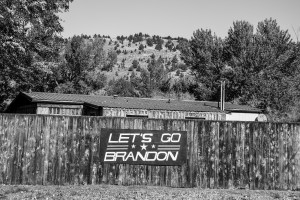
Out here there’s no dearth of reminders that I’m in mega MAGA country. In an area where there’s an American flag on damn near every other building, I’m seeing an almost equal amount of MAGA signage and more than a sprinkling of fuck Biden signs.
The prevailing politics of northeastern Oregon. Let’s Go Brandon is MAGA-speak for fuck Biden
I suppose it’s a good thing that my Black Lives Matter t-shirt is sitting in a drawer at home – libtard bastard that I am.
***
The highway heads due east towards John Day. There’s an interesting history to this junction town. People were drawn to the area when gold was discovered in 1867. Many of the early residents came from China, mostly bachelors (female immigrants were not allowed) who were seeking work and riches in the mines.
One of the town’s earliest buildings, a trading post and stage stop, was erected in 1864, and its primary customer base was from the Chinese community. By 1871, under Chinese ownership, the building was known as Kam Wah Chung & Co. John Day’s growing community was made up largely of Chinese residing in a section called Tiger Town. Kam Wah Chung & Co saw its boom times during the late 1880’s when it was bought by three Chinese immigrants, Lung On,Ye Nem, and an herbalist, Ing Hay, who went by the nickname “Doc”.
For years, Kam Wah Chung & Co served the community as a general store, an apothecary, a doctor’s office, a boarding house for migrant workers, and a community center. The mercantile part of the business died with the passing of Lung On in December 1940. “Doc” Hay continued the apothecary until 1948, when he was forced to retire and live out his years in a Portland nursing home.
Slated for demolition, the Chung Wah building was saved by the John Day Historical Society, which acquired the building in 1968, and later transformed it into a museum.
Once largely Chinese, the ensuing decades saw the community’s makeup change to one that is now 88.4% white. The Asian community makes up 1.84% of the population.
I follow the signs in town that lead to the Kam Wah Chung museum which is home to the largest intact collection of Chinese medicine and formulas. Tours are offered but the place is all booked up when I arrive. Fuck me.
***
Back on the road.
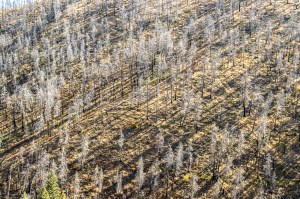
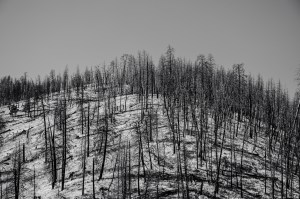
From John Day, the highway resumes its southerly course. Just outside of aptly named Canyon City, I’m driving through a canyon in the Malheur National Forest. The shoulders that loom over the winding road are denuded of a once lush forest. A wildfire turned a once abundant woodland into scarred slopes of blackened toothpicks. The road straightens out and I pass the charred corpse of a horse trailer.
Malheur isn’t a stranger to wildfires. It’s a devastating kinship that will last into the unforeseeable future.
The sun casts eerie shadows on a scorched hill in Malheur NF
Malheur NF Oregon
Past the burned area, I’m back in ranchland. Farm and ranch equipment that appear to be on their last legs, yet still serviceable, litter the open fields. They aren’t burned out or rusted out. They’re just there. Do they belong to someone? Did they wear out their usefulness? Why? Do we toss out machinery just as we toss out old Hamms beer cans?
***
I take a short break just south of Seneca, where autumn is in its full green and orange glory, a palette against a background of dark hills. But for the occasional roar and swoosh of a passing big rig, the road here is quiet. My apprehensions have been pushed aside by the pleasant, peaceful hush.
Before the town of Burns, I wonder just how Poison Creek, which I just passed, got its name.
Burns is the last real outpost of civilization before I veer off 395 to Frenchglen. The car needs gas and I have to piss like a racehorse. Sam’s Service is a little white building, painted with blue trim. The place looks worn, but the gas is cheap and, damn me, I gotta pee. A couple pumps, a working service bay, a Coke machine, a minimal store and a stocky Paiute gas jockey behind the counter.
“Fill it?”
“Please.”
“Gotta bathroom?”
“Round back.” He hands me a key.
“Thanks.”
The bathroom? Not the Ritz and that’s for damned sure, but. I just need to take a leak. The door sticks. When I get in, lo and behold there’s a condom dispenser. Not that I’m in need of a rubber. I just thought those dispensers went out with rotary phones. Business done and I have a short panic attack when the stubborn door seems to have me locked in. A good yank – out. The gas jockey cashes me out, and I’m back on the road. The car is full and I’m comfortably drained.
Burns is my cutoff. Highway 395 heads west but I’m going south on Route 205 to Frenchglen, an hour away. During my research, Frenchglen looked intriguing.
There are basically two places to sleep in Frenchglen, the historic old hotel, or the backseat of your car. I opt for the former. When I made my reservation, the proprietor asked if I wanted to reserve a spot at the community dinner. Otherwise, she warned, it’s a long ass drive to a restaurant.
I reserved.
***
I intend to stop at the Sunset Valley Cemetery. I’m fascinated by old graveyards and Sunset Valley shows up, just barely, on the internet. Google Girl tells me I’m there but – nothing. I scan the horizon but all I see is a ranch off to the left. Fuck me. Continuing on the road, I take a quick glance in the side mirror and see that I’ve passed a little arch that looks to be graveyard-ish. I turn around and as I approach the arch, a closer look reveals a tiny, overgrown cemetery. A dirt road leads to the ranch I’d seen when I originally passed. and what looks to be a route to the graveyard. I stop at a turnout where a barbed wire gate leads to the cemetery and rangeland. From where I’m standing, I can see the cemetery but the gate is rickety. I give it a little tug and it feels as if the whole thing is going to fall at my feet. Fuck it. I’m not going to be the guy who let some rancher’s herd slip out onto the highway. Besides that, from a distance, this little cemetery has the look of a private family graveyard, possibly belonging to whoever lives in the ranch house down the road. Yeah, I’m not going to intrude.
***
The land here is stark, barren and uniquely, and hauntingly beautiful. Miles back, I couldn’t see anything but trees. Out here, the view stretches out forever. Every now and then I pass a dirt road that leads to… Who knows?
This is old land, a place once populated by the Paiute and Bannock tribes. It’s a land that saw the passage of pioneers and is now home to hardy folk who raise cattle and cherish solitude. I couldn’t live here. Too many empty miles between the things I want and need.
***
This is a land with a violent history. The year 1878 saw the last of the local Indian wars, when members of the Paiute and Bannock tribes banded at the foot of the nearby Steens Mountain. Battles ensued, further north at Murderers Creek, and later at the mouth of Cummings Creek, and again, in the Fox Valley. In the end, the indigenous tribes were vanquished and scattered to nearby reservations. Because that’s how it worked in America – from sea to shining sea.
***
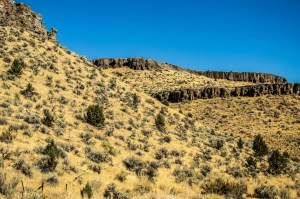
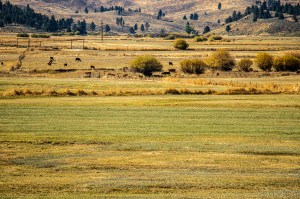
The highway winds through more open range. I can sense that Frenchglen is close. Off to my left the land is flat as a board till it hits the high country that’s topped by Steens Mountain. Just to my right, the land rises to bluffs that loom over the road. I’m dog tired, and I’d like to haul ass and get to my destination, but the road is a series of turns and that flat land to the left is dotted with cattle, some just skirting the highway’s edge.
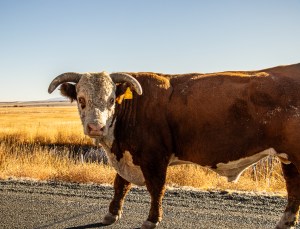
Rounding a corner I screech to a halt when I come up on a bull meandering down the road as if he owns it, and, given our current stand off, he does. The bull turns and looks at me with what seems like a “what the fuck are you looking at” expression.
What are you lookin at?
Knowing he has the upper hand he continues to amble down the road while I follow, slowly and at a distance, all the while keeping my eye in the rearview mirror for a car that might round a blind curve and drive up my tailpipe. Finally the bull wanders onto the nearby field. A few more bends in the road and there it is – Frenchglen.
Road to Frenchglen. On my right, the road rises up to looming bluffs
The eleventh in a series of occasional posts about tripping along U.S. Highway 395.
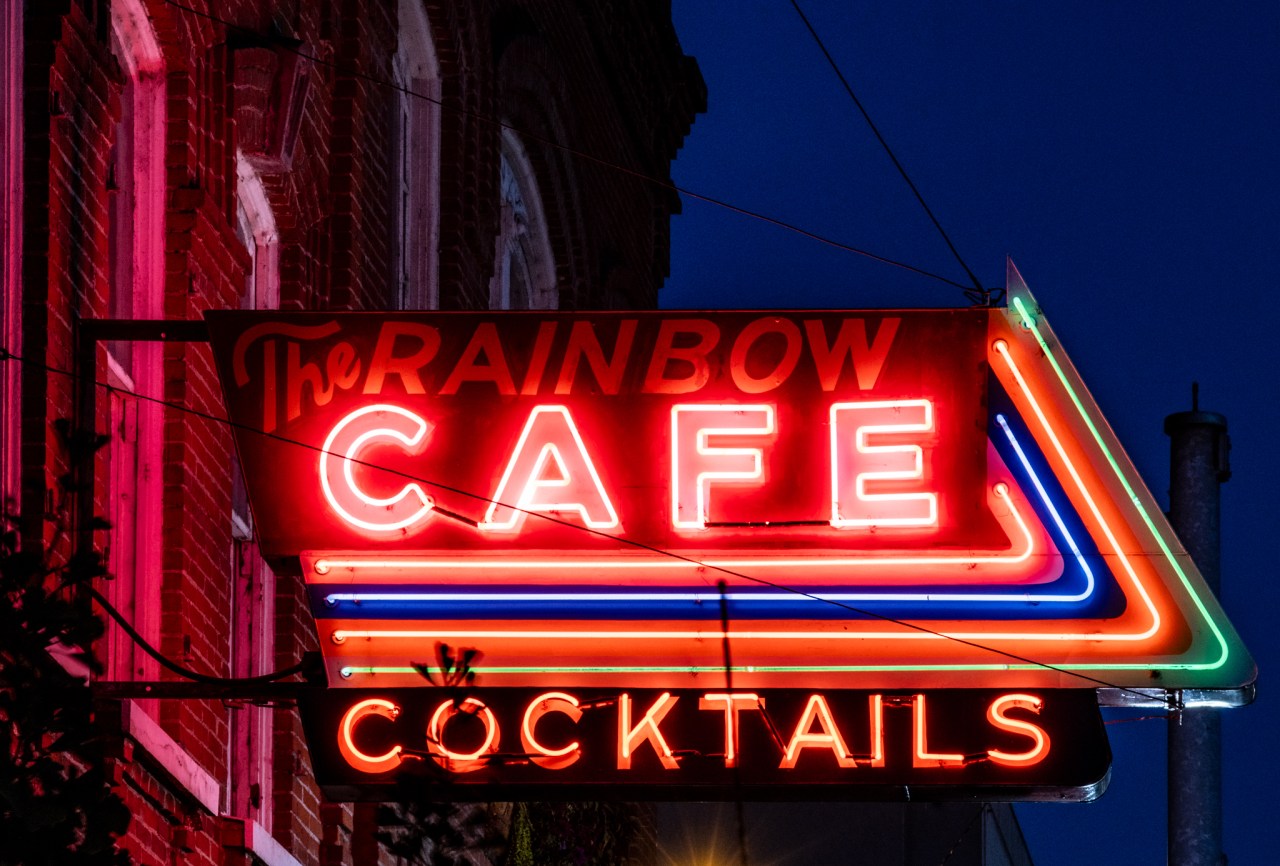
It’s seven in the morning and it’s toasty inside The Rainbow Cafe in Pendleton, Oregon. Outside it’s, as my daddy used to say, colder than a well digger’s ass. That is, the temp is somewhere south of 30 degrees. I’ve never dug a well, and to the best of my knowledge, dad never did either, so we’re taking the well digger at his word.
Seated at the counter of the Rainbow it’s easy to feel the congeniality that’s a constant in small town coffee shops and diners. It’s a warmth that registers on no thermometer other than the one that resides in the human soul.
The room is filled with chatter and clatter; friends talking and laughing and the sounds of utensils on white china, all to the backdrop of goodness sizzling on a flattop. Comforting aromas fill the room. A nutty scent of coffee, a spicy, fennel tinged whiff of frying sausage, and the sweetness of maple syrup brighten the morning before the sun has cracked the horizon.
The front door creaks open, and there’s a barely discernible pause in the chatter as everyone turns to see another acquaintance walk in. A few hellos and how are you doings, all aided with some good natured joking as the newcomer heads for a seat. The waitress greets the man by name, and before he’s even seated she’s meeting him with a china white mug of coffee that trails a contrail of steam. She asks him if he’s “gonna have the usual.”
The Rainbow has been at the same location on Main since 1883, and bills itself as the oldest bar in Oregon. Like any claim of oldest or first, (Oldest steakhouse, first hamburger, original hotdog) this claim is a subject of debate between the Rainbow, and the Pioneer Saloon and Restaurant, somewhere down south in Paisley, Oregon. It’s doubtful that the argument will be solved over a sit down and some shots and beers. These types of claims, born from myth or time twisted facts, die hard.
Anyone born before 1996 most certainly knows where they were and what they were doing 22 years ago, this day.
My wife and I were getting dressed for work. I was at the bathroom sink when my wife called me over to the television. On weekday mornings we kept the little TV in the bedroom on, as we got ready, so that we could monitor the traffic reports. An accident on the Bay Bridge, even before six in the morning, could gridlock the entire Highway 80 corridor for miles, and late into the morning. We weren’t so much interested in the news. What could possibly be happening at six in the morning (even on the East Coast, three hours ahead)? How much havoc could Congress wreak at the beginning of the day?
Almost immediately, Cora called me over to the television. I stood in front of the TV to see a replay of an airliner hitting a skyscraper. I had no idea that it was the Trade Center. I blew it off as a freak accident and continued getting myself together. A few minutes later I heard Cora, “Oh my God.”
It was 6:03 and a second plane had hit another skyscraper and we were frozen, frozen with the rest of the nation and much of the world. And like the rest of the nation, we knew that we were at war. With whom, we didn’t yet know.
As we continued to get ready for work we wondered if we should even be going to work. Sure some people are essential; first responders, teachers, doctors, medical staff. Cora and I? Just office schlubs.
I went to work that day, as did Cora. I remember listening to the news all the way through the drive. Our son, who was at Santa Clara University, called me as I was rounding the turn on Highway 80 into Berkeley. He asked me if I’d seen the news and I responded that, yes, I had. We talked until I got off the freeway in Emeryville.
Much of the remainder of the day was, and still is, a blur. As the morning wore on, my coworkers and I were largely in the dark about what was transpiring. We spent much of our time on the phone with friends, family, vendors and customers, passing information, both real and pure speculation. Many of those contacts drifted from their offices as places of business shut down for the day. At some point, Cora, who was working at Clif Bar, in nearby Berkeley, called to say that they were closing for the day.
We stayed.
Not because we were dedicated, but because Dick Cotter, the owner of our company, a miserly, old skinflint, didn’t see the need. It surprised me, but at the same time I figured, ‘fucking par for the course.’ America was under attack, the biggest since Pearl Harbor, and he was afraid he might miss out on a dime of profit if he shut down for the day.
This was a day when people who could’ve been, should’ve been, with their families. We stayed all day long. Stayed and spent most of our time trying to glean whatever information we could.
“The Pentagon was hit,” came a report.
“People are jumping,” came another.
My son called to tell me that the South Tower had collapsed.
I guess it was my wife who called to tell me that the North Tower had collapsed.
And still we stayed. Stayed and shuffled our feet in place in the parking lot, looking up in the sky in vain, trying to catch a glimpse of the occasional fighter jet that screamed overhead, while we exchanged hunches and rumors. Someone heard that the Golden Gate Bridge was a target. Or maybe the Bay Bridge. What about the TransAmerica Pyramid? The Air Force was going to start preemptively shooting down airliners. Supposition mixed with uncertainty, mixed with fear, mixed with anger, mixed with the disbelief that we were not being told to go home.
Eventually we drifted out of the office as our eight hours were completed. One thing that stays with me about that day is that Cotter never relented. Sat in his office, like the old curmudgeon he was, probably forcing himself to remain oblivious to the tragedy that was occurring on the other side of the nation, all the while worrying if the events of that day might affect the bottom line.
***
The people of a nation clung to each other. We wept when we saw, either in real time or in replay after replay, the horrors of that day. And when we didn’t weep, we raged, wanting that eye for an eye.
Ten days later, we wept again, but for a different reason. The tears were a cathartic release as baseball returned to New York. Every American was a Mets fan and every fan rose in awe and jubilation when Mike Piazza hit another, “shot heard round the world,” homering in the eighth inning to seal a win for the New York Mets. Baseball came to apply a salve to our collective wound.
As the events of September 11th were made clear, the best of what America can be strode to the forefront. We were all of one mind and one goal. We were one America that the world stood in solidarity behind.
Of course the worst also showed up, uninvited, as it is wont to do. Anyone who vaguely looked like they came from the Middle East was subject to verbal and physical abuse. Women wore hijabs at their own risk. Conspiracy theorists crawled out from under wet rocks, putting forth theories that the 9/11 attacks were part of an ‘inside job.’ Well, why not? In the internet age a conspiracy, no matter how abhorrently false and hurtful, is a good way to gain attention and fluff up your bank account.
We went to war in Afghanistan seeking justice and much of the nation was behind that.
The tenth in a series of occasional posts about tripping along U.S. Highway 395.
Antelope, Oregon marks the terminus of State Route 293 and the junction with State Route 218, which takes me back to U.S. 97 and the one time, “Wool Capital of the World.” Route 218 is just as isolated as 293 which brought me to Antelope. The isolation doesn’t make it unattractive.
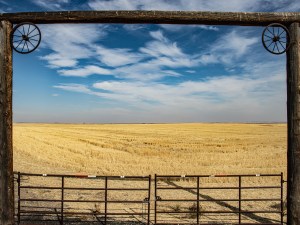
This is Oregon’s grassland, where ranching and wheat share top billing. I’m navigating past a sea of grain. Yellow-gold reaches out for miles and an occasional breeze whips up rolling amber waves – just like the song goes. At a junction I come upon a wooden gateway that frames the shimmering body. It’s desolate out here, but not unnerving. I’ve been on secluded roads and felt uneasy. This isn’t like that. This might be out in the middle of nowhere, but it doesn’t feel that way. I’m in middle Oregon’s sea of tranquility.














 The Life in My Years